






Art exhibition 'Nguyen - Lang du cung Son': Bringing traditional lacquer into contemporary life
WVR - From October 30 to November 4, taking place at the Vietnam Fine Arts Museum, the art exhibition "Nguyen - Lang du cung Son" introduces art lovers to lacquer works by eight artists: Nguyen Van Bang, Nguyen Thi Tien, Nguyen Dinh Van, Lily Lai, Bui Thi Mung, Hoang Ngoc Nhung, Nguyen Thuy Duong, and Cao Phuong Thao.
Latest
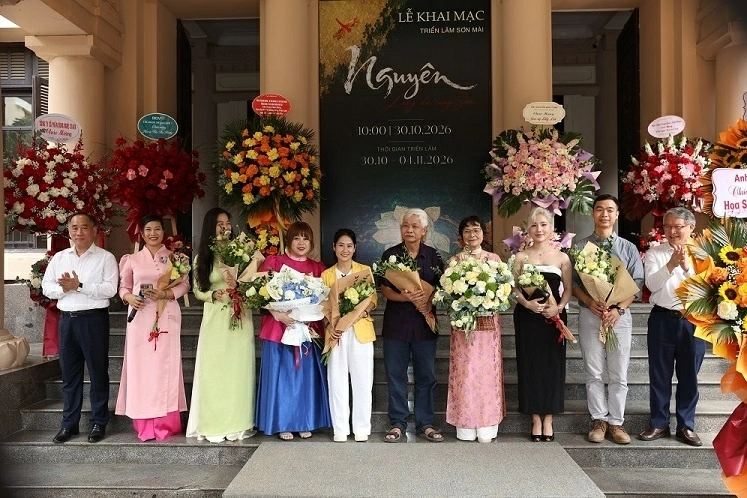 |
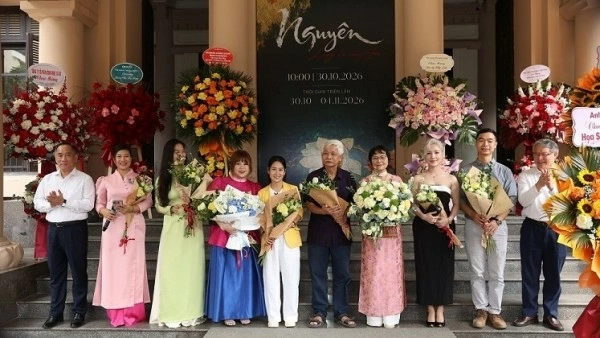
| The authors take a commemorative photo at the exhibition's opening. (Photo: Nhat Ha) |
The works at the exhibition reflect various creative directions, from landscapes, flowers, still life, and portraits to Buddhist imagery and reflections on inner life. On the traditional lacquer base, each artist chooses their own themes, color schemes, and composition techniques.
Besides the familiar colors of traditional lacquer such as vermilion, black, cockroach brown, along with gold and silver, the works also showcase explorations in color combinations (such as blue, purple, orange, pink); surface treatment and material combinations, expanding expressive possibilities and carrying the contemporary artist's sensibilities.
Traditional lacquer in contemporary artistic sensibility
Nguyen was formed from the connection of individuals interested in traditional lacquer. Here, artists have a space to work, exchange techniques, critique works, and learn from each other. This collaborative practice allows each person to approach different material handling methods while seeking directions that align with their interests and experiences.
In terms of creation, Nguyen does not aim to establish a unified style or theme for its members. The connection lies in the material foundation and professional exchanges, while theme selection, composition, or color handling is developed according to each individual's creative personality. This spirit is quite evident in the works at the exhibition.
Among the displayed works, artist Nguyen Van Bang introduces creations in abstract and semi-abstract styles, focusing on landscapes and life-related associations. Buoi sang o ban Sin Suoi Ho originates from a field trip to a highland village; Nhung manh ghep evokes thoughts on life's elements, while Nep gap draws inspiration from the image of folded paper or fabric.
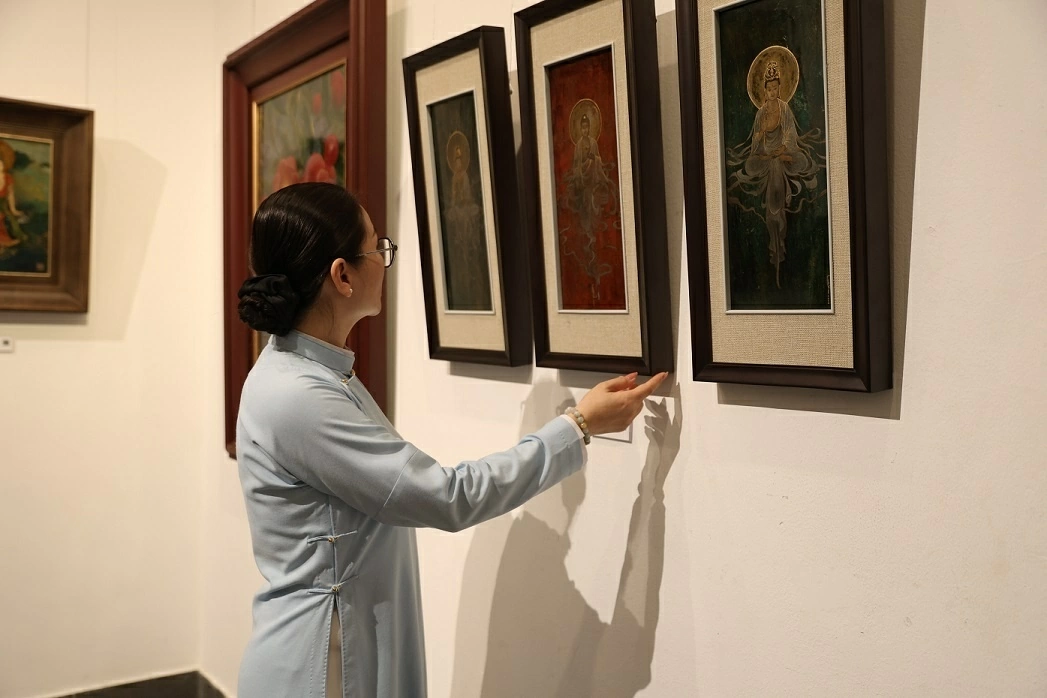 |
| Artist Bui Thi Mung draws inspiration from Buddhism and everyday life, aiming for values of compassion, wisdom, and peace. (Photo: Nhat Ha) |
Having been attached to lacquer for over 45 years, artist Nguyen Thi Tien pursues themes of landscapes, flowers, and still life. The three works introduced at the exhibition include Phong canh Yen Chau (2019), Sen trang (2023), and Xuan (2024). When creating works about lotus flowers, she pays attention to the shape, color, and transformation of the plant through different growth stages, seeking to express these observations in lacquer.
Nature is a consistent source of inspiration in the works of artist Nguyen Dinh Van. Images of trees, animals, and familiar landscapes are explored through a unique perception of color, light, and space. Meanwhile, artist Lily Lai focuses on women, motherhood, and the movements of inner life.
Artist Bui Thi Mung draws inspiration from Buddhism and everyday life, aiming for values of compassion, wisdom, and peace. The imagery of lotus flowers, flower colors, and hometown rice fields evokes a connection between spiritual contemplation and familiar landscapes.
The diversity in themes is also linked to how each artist observes life, selects details, and transforms emotions into images. On the same material base, individual experiences and interests create different expressive directions, contributing to the rich artistic landscape at Nguyen.
For the artists at Nguyen, being attached to lacquer also means choosing a slow-paced working rhythm amidst a hurried life. The creative process provides a quiet space for the artist to confront their inner emotions and thoughts, allowing them to imbue their works with personal experiences. Thus, the value of a painting extends beyond its visual form to its ability to resonate with the viewer.
A work can evoke past times, bring a sense of peace, or stir positive emotions. The attachment to lacquer, therefore, also stems from the desire to create works capable of connecting individuals with themselves and those around them.
Inheriting techniques, expanding expressive potential
For the artists at Nguyen, inheriting traditional lacquer techniques begins with using natural lacquer, understanding material properties, and practicing diligently through each stage. Understanding the material helps artists better control the creative process, while exploration opens up new possibilities from the inherent characteristics of traditional lacquer.
Natural lacquer is extracted from the sap of the lacquer tree (Rhus succedanea), primarily grown in Phu Tho. The material has high adhesion, flexibility, and water resistance. Notably, natural lacquer dries in high humidity environments. When applied in multiple layers, combined with materials like red pigment, gold, silver, eggshell, or mother-of-pearl, and then polished and surface-treated, the underlying colors and details gradually emerge, creating the depth, gloss, and light-catching ability characteristic of Vietnamese lacquer paintings.
The crafting process requires artists to calculate lacquer layers, control techniques, and adapt to material changes. The result after each polishing can differ from initial expectations, opening up new handling possibilities.
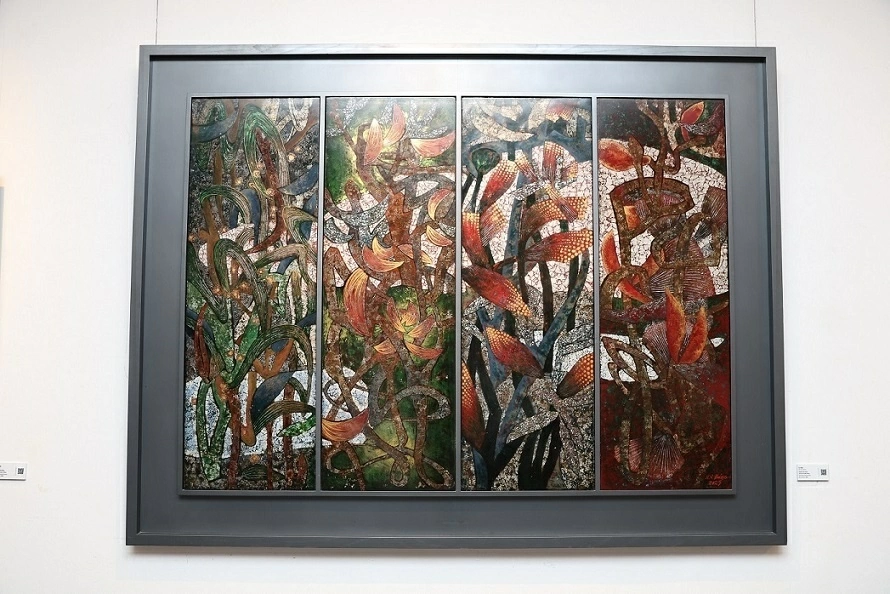 |
| On the traditional lacquer base, each artist chooses their own themes, color schemes, and composition techniques. (Photo: Nhat Ha) |
Discussing the relationship between the artist's initiative and the unpredictable changes of the material, artist Lily Lai shares: “I want to master the material, but I don't want to strip it of its mystery.” According to her, the surprises during the polishing process do not mean leaving the work to chance. Artists still need to have a creative mindset, experience, and observational skills to recognize suitable effects and decide which details to retain and which to continue refining.
With years of experience in creation and teaching, artist Nguyen Van Bang believes that lacquer is a valuable indigenous material with much potential for exploration by future generations of artists. According to him, the vitality of lacquer depends on the creative capacity of the artist. Inheriting traditional techniques should be accompanied by new thinking and explorations in creation, rather than merely replicating the methods of previous generations.
Through the exhibition, the authors aim to introduce the public to lacquer works with diverse themes and expressions. Besides enjoying the artworks, visitors also have the opportunity to learn about the crafting stages, gaining insights into the characteristics of natural lacquer and the laborious process behind each painting.
In addition to the completed works, the Organizing Committee has arranged an area displaying lacquer samples at various crafting stages. Visitors can observe the process of creating lacquer layers, polishing, and finishing the painting surface. This provides the public with an opportunity to understand the characteristics of natural lacquer, the technical requirements, and the meticulousness involved in the creative process, while also recognizing the labor values behind each artwork.