



The Heritage Train: Bringing Thai Nguyen's tea culture closer to tourists
From the tea introduction space on the train carriage to experiences in famous tea regions, the “Journey to the Land of Tea” offers a way to promote Thai Nguyen's tea culture through real-life experiences. This railway tourism product not only connects Hanoi with local destinations but also creates opportunities to bring the story of tea trees, tea makers, and the identity of the Land of Tea closer to both domestic and international tourists.
Latest
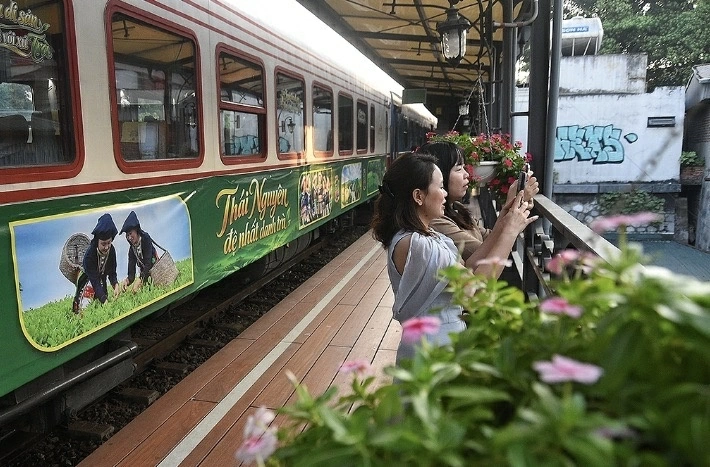 | ||
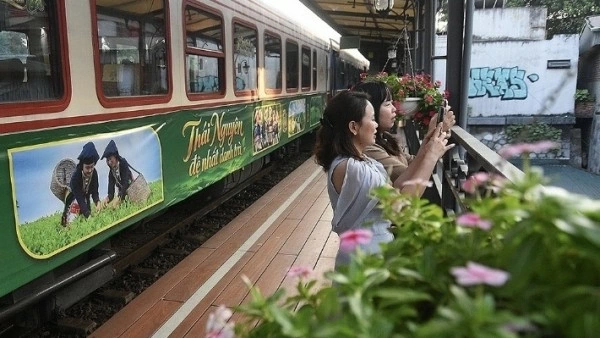
| Tourists checking in.
|
When Tea Culture Becomes the Highlight of the Journey
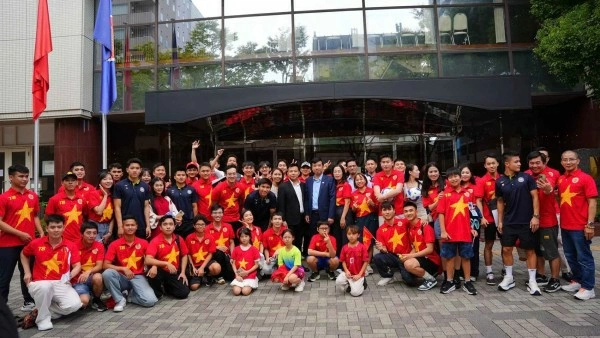
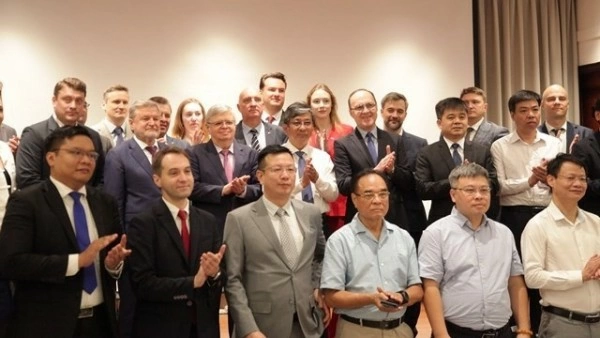
On October 9, the Department of Culture, Sports and Tourism of Thai Nguyen organised a survey programme for the Hanoi – Thai Nguyen tourism train product, themed “Journey to the Land of Tea”. The program was attended by over 220 delegates, including representatives from management agencies, travel businesses, tourism experts, journalists, KOLs, and travel bloggers from Hanoi and Thai Nguyen.
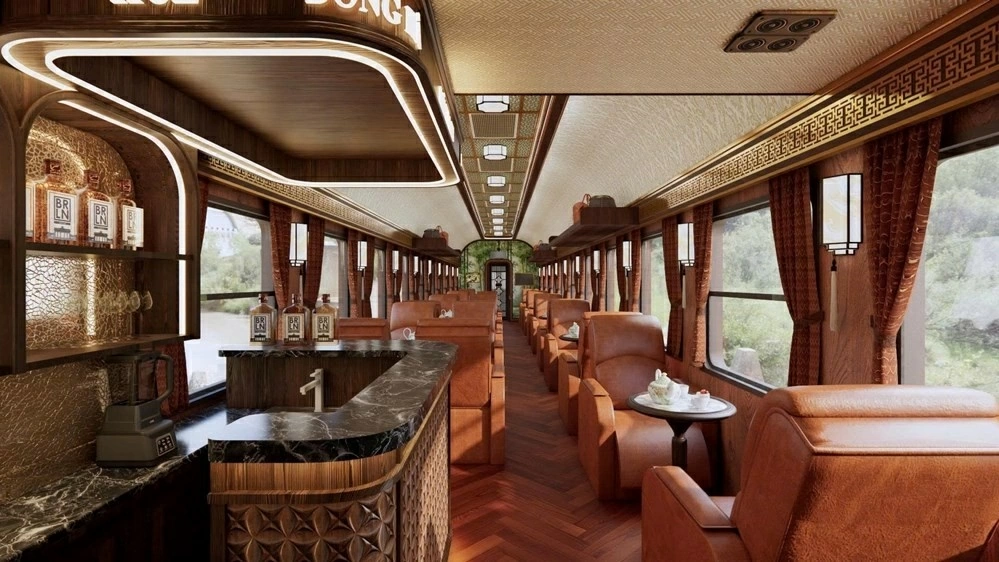
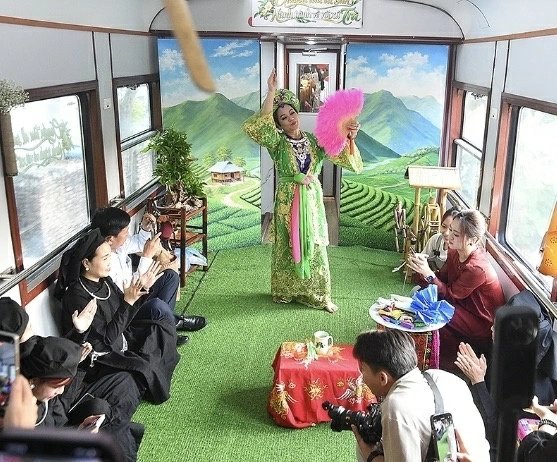
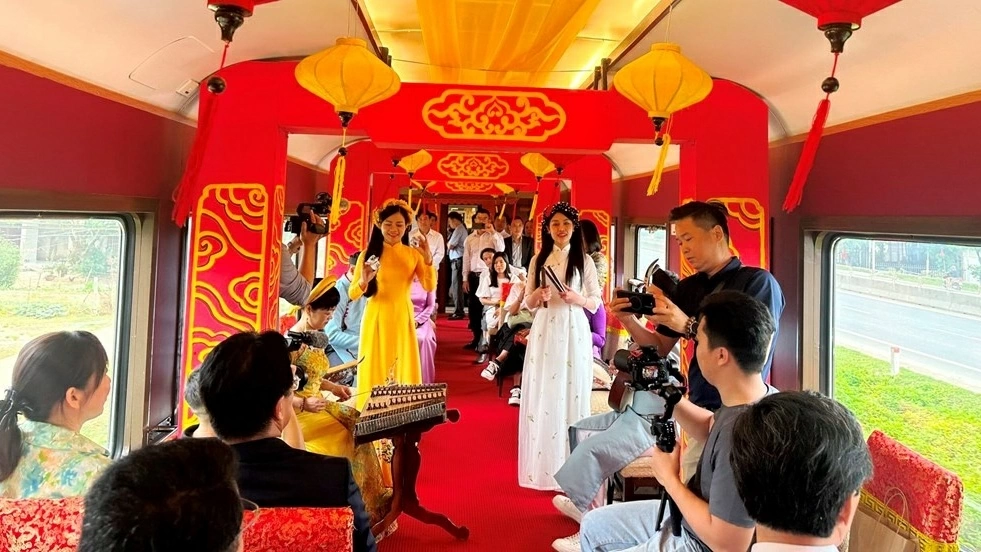
On the train departing from Hanoi Station and stopping at Luu Xa Station, spaces introducing tea products, OCOP products, and promoting local tourism were arranged, creating highlights for passengers to experience. After the railway journey, the group continued to visit destinations associated with the province's culture, history, and community tourism.
The noteworthy aspect of the model is not only the addition of a new tourism route but also the way tea culture becomes part of the experience right from the start of the journey. Instead of only knowing Thai Nguyen tea through products for sale or introductions, passengers can explore the story of the land famous for its tea craft firsthand by visiting production facilities and local cultural spaces.
This approach also expands the method of promoting agricultural products. Tea is introduced not only as a quality product but also as one that carries the story of the land, people, and cultural practices. When tourists learn about the tea-making process firsthand, meet producers, and experience tea tasting, the value of the product can be fully appreciated compared to simple promotional methods.
Therefore, the heritage train can be seen as a mobile space for introducing tea culture, connecting media activities with tourism experiences. It is important that each activity on the journey highlights the uniqueness of Thai Nguyen tea, from product quality to the cultural values that have been preserved and developed over generations.
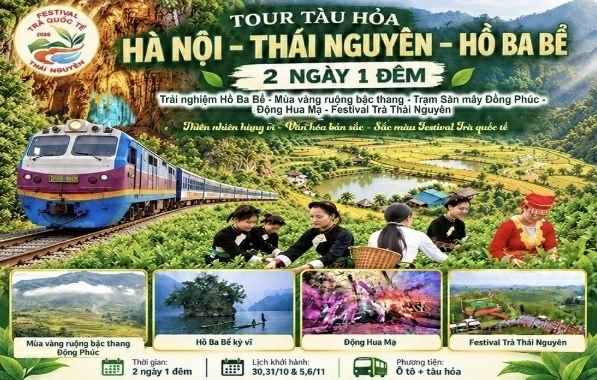 |
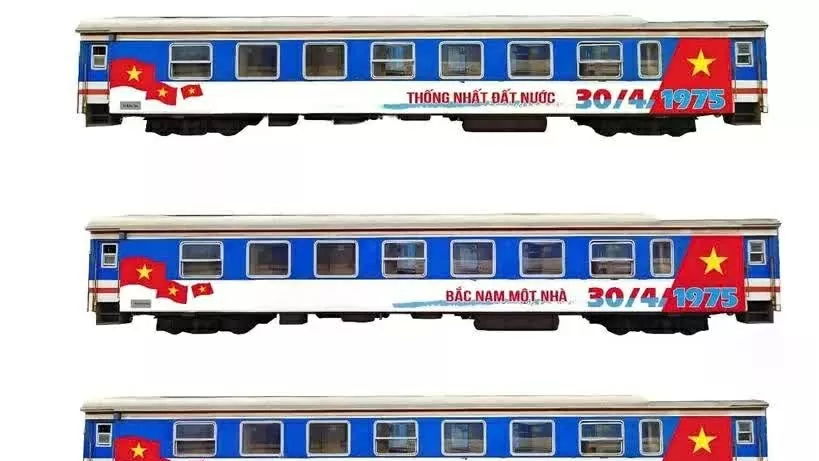
| The Heritage Train: Bringing Thai Nguyen Tea Culture Closer to Tourists. |
From Raw Material Regions to the Story of the Thai Nguyen Tea Brand
The scale and quality of products are the foundation for Thai Nguyen to develop tea-culture-associated tourism. The locality currently has about 22,200 hectares of tea, with 204 OCOP tea products rated from 3 to 5 stars, including 6 products achieving 5-star national level. These figures show that tea is both an important agricultural product and a resource capable of creating a unique identity for the destination.
However, the advantage of the tea area size or the number of recognised products will only truly become a tourism attraction when connected to specific experiences. Tourists need the opportunity to visit raw-material regions, learn about tea plant care, observe the processing, taste the products, and listen to the stories of those attached to the craft.
During the survey program on October 9, the group visited the Tan Cuong Community Tourism Site, the Tien Yen Tea and Community Tourism Cooperative, and the Hao Dat Tea Cooperative. These are direct connection points between tea products and tourism activities, helping the journey expand from introducing products on the train to experiences at the facility.
Combining tea regions with community tourism allows tourists to get closer to local life. Tea makers are not only producers but also storytellers about the product, experience guides, and cultural values associated with the craft. Through this, tourism activities have more opportunities to create value for the community, while also expanding channels for product promotion and consumption.
This is also a suitable direction to enhance the value of the Thai Nguyen tea brand. A tea product can be known for its quality, but visiting the tea region helps consumers better understand its origin, production process, and the people who create it. The connection between the product and the local story can thus help strengthen customer trust and motivate cooperatives and production facilities to invest in quality and service.
For Thai Nguyen, promoting tea culture does not necessarily require large-scale programs. Organising good experiences in raw material regions, building engaging explanatory content, introducing products suitable for each customer group, and maintaining service quality are also important factors to create sustainable attraction for the Land of Tea.
Connecting Heritage, Expanding the Image of the Land of Tea
Besides tea culture, the journey also connects with places of historical and cultural value, including the National Historic Site of 60 Youth Volunteers of Company 915, Team 91 Bac Thai, and the Thai Hai Ethnic Ecological Stilt House Village Conservation Area.
This combination expands the story of Thai Nguyen, from a famous tea region to a destination with multiple layers of value to explore. If tea culture is the highlight of the journey, then historical sites, ethnic cultural spaces, and community tourism will add depth, providing more options for tourists.
In particular, connecting destinations within a program with a clear theme helps overcome the approach of tourism by individual locations. Tourists can start by learning about tea culture, continue exploring community life, and expand their experience to historical sites. Each destination adds a distinct slice, contributing to a more diverse image of the land and people of Thai Nguyen.
From a promotional perspective, this is also a way to create more appealing media material. Images of tea regions, tea-tasting activities, stories of producers, and experiences at destinations can help the public approach the locality more visually and intimately. Inviting travel businesses, media, KOLs, and travel bloggers to participate in the survey on October 9 also helps introduce the product to broader audiences.
However, the reach of media is only the first step. The long-term value of the product needs to be measured by its ability to attract visitors, the quality of the experience, the level of connection with travel businesses, and the practical benefits for tea production facilities and local communities. These are the factors that determine whether a journey organised during an event can develop into a regular tourism product.
From Festival Highlight to Long-term Tourism Product
According to the province's plan, six Hanoi – Thai Nguyen tourist trains are expected to be organised during the International Tea Festival – Thai Nguyen 2026, from October 30 to November 7. The trains aim to facilitate tourists' participation in the Festival, exploration of tea regions, visits to historical sites, and exploration of local culture.
Linking the railway product to the Festival creates an opportunity to bring tea culture closer to the public, at a time when the locality is focusing on promoting its tea brand. However, the significance of the model will lie not only in the number of trains serving the event but also in its ability to maintain attraction after the Festival ends.
To achieve that, it is necessary to continue perfecting the experience program, ensuring convenient travel, reasonable connections between train stations and attractions, and building service packages tailored to each customer group. The content introducing tea also needs investment, so that each journey not only includes tasting activities but also helps tourists better understand the tea region, production process, and the product's cultural value.
Coordination among the tourism sector, railway units, travel businesses, cooperatives, and tea production facilities will play an important role. When parties collaborate to build the product, promotional activities can be more closely aligned with market needs, and tea makers have more opportunities to reach tourists and introduce their products.
“Journey to the Land of Tea” is thus not merely a trip from Hanoi to Thai Nguyen. It is an opportunity for the locality to bring tea culture to the centre of the tourism experience, connecting agricultural products with heritage, landscapes, and community life. When organised methodically and maintained regularly, the train can help tourists not only remember Thai Nguyen tea for its flavour but also better understand the land and people who create that brand.
| Lessons from Vietnam: Bringing Khan Academy into the classroom Following their visit to Tien Thang B Primary and Lower Secondary School in Hanoi and conversations with the Khan Academy Vietnam (KAV) team, Michael and ... |
| Vietnamese train journey scores on international rankings WVR - The Vietnam Central Heritage Connection and The Vietage by Anantara routes have been voted by readers of Condé Nast Traveler (USA) as among ... |
Tags: