



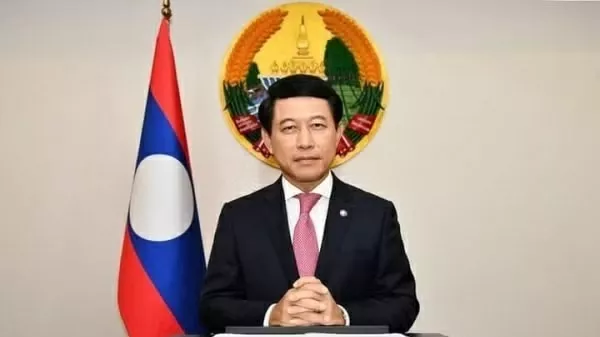
Lao PM Saleumxay Kommasith’s visit to Vietnam and attendance at 12th CLMV and 11th ACMECS Summits: Strengthening bonds and strategic cohesion
WVR - Sharing with The World and Vietnam Report, Vietnamese Ambassador to Laos Nguyen Minh Tam emphasized that the official visit to Vietnam by Lao Prime Minister Saleumxay Kommasith and participation in the 12th CLMV Summit and 11th ACMECS Summit is a significant occasion to strengthen Vietnam-Laos relations, while also promoting connectivity and cooperation in the Mekong sub-region.
Latest
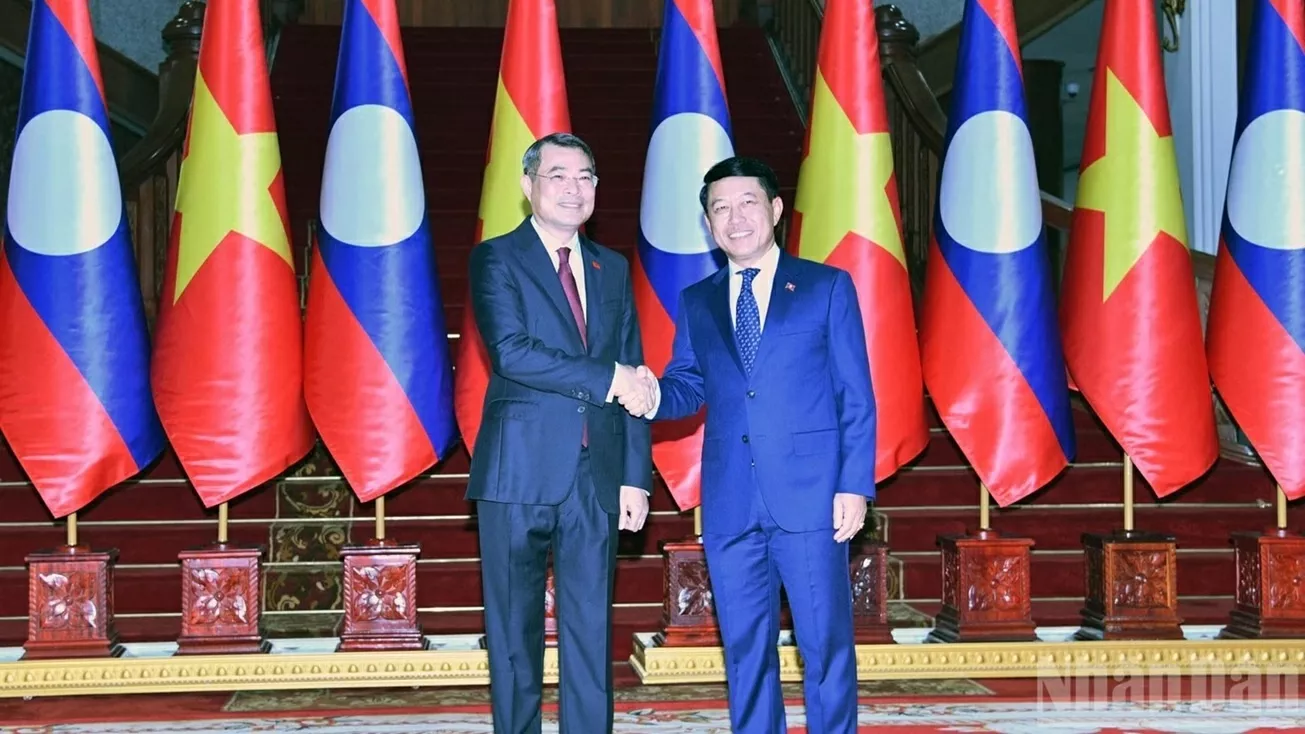 |
| Prime Minister Le Minh Hung and Lao Prime Minister Saleumxay Kommasith in Laos, in October 2026. (Photo: Thanh Giang) |
Ambassador, could you please elaborate on the significance and key focuses of Lao Prime Minister Saleumxay Kommasith's official visit to Vietnam and his participation in the 12th Cambodia-Laos-Myanmar-Vietnam Cooperation Summit (CLMV - 12) and the 11th Ayeyawady-Chao Phraya-Mekong Economic Cooperation Strategy Summit (ACMECS - 11)? Also, what is the role of host country Vietnam?
At the invitation of Prime Minister Le Minh Hung, Lao Prime Minister Saleumxay Kommasith and his spouse will officially visit Vietnam and attend the 12th CLMV Summit and the 11th ACMECS Summit from November 27-28. This is a particularly significant diplomatic event, strategically important for the bilateral relations, while also contributing to the promotion of cooperation in the Mekong sub-region.
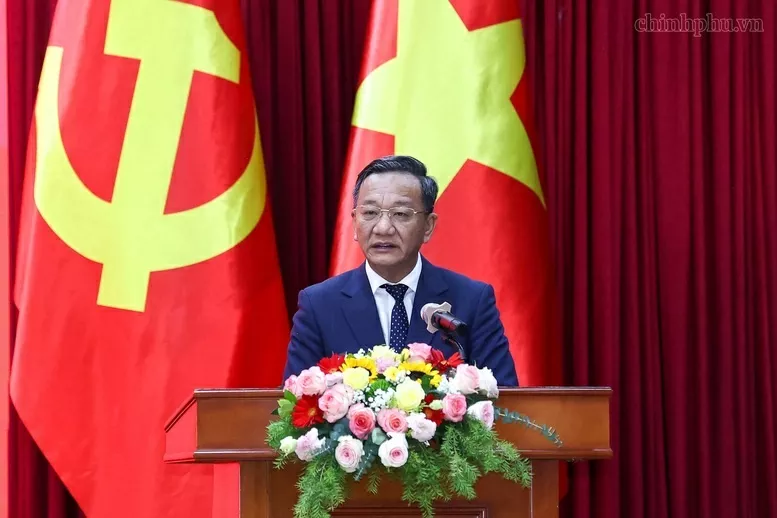 |
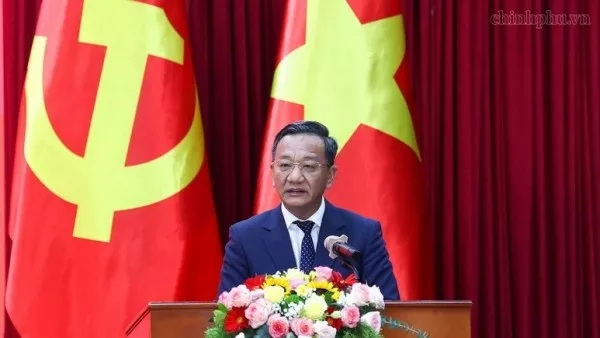
| Vietnamese Ambassador to Laos Nguyen Minh Tam. (Source: VGP) |
This is the first official visit to Vietnam by Saleumxay Kommasith as the Prime Minister of Laos, and also his first bilateral foreign visit since being elected as Prime Minister by the 10th Lao National Assembly. Choosing Vietnam as the first bilateral destination reaffirms Vietnam's high priority position in Laos' foreign policy, while consistently continuing the tradition of close, trusted, and steadfast relations between the two Parties, States, and peoples across generations of leadership.
The visit takes place as both countries are actively implementing the Resolutions of each Party's Congress and the socio-economic development goals and plans in the new phase. Following the official visit to Laos by Vietnamese Prime Minister Le Minh Hung in October 2026, this visit by Prime Minister Saleumxay Kommasith will create strong political momentum, contributing to strengthening political trust, enhancing strategic exchanges, and promoting the concretization of high-level agreements into practical cooperation programs and projects, bringing tangible benefits to the people and business communities of both countries.
Regarding Mekong sub-regional cooperation, the participation of the Lao Prime Minister in both summits demonstrates Laos' regard for regional cooperation mechanisms, while affirming a spirit of companionship and close coordination with Vietnam on multilateral forums. This is an opportunity for member countries to assess cooperation results, identify priorities, and propose solutions to promote integration in the coming period. The focus is on enhancing connectivity in transportation infrastructure, logistics, trade, investment, and energy; promoting digital transformation, human resource development, climate change response, and sustainable management and use of Mekong River water resources. CLMV plays a crucial role in narrowing the development gap, improving competitiveness, and economic integration of member countries; ACMECS focuses on promoting the connectivity of economic corridors, trade, investment, and mobilizing resources for joint cooperation projects.
For Laos, participating in the two summits is also an opportunity to promote potential, enhance connectivity with countries in the region, and leverage resources in terms of capital, technology, and management experience from development partners to serve socio-economic development goals, gradually maximizing its advantages and role as a connecting nation in the Mekong sub-region.
As the host country, Vietnam will actively and responsibly contribute to building the agenda, promoting consensus, and proposing practical cooperation initiatives that align with the needs and interests of member countries. At the same time, Vietnam will act as a bridge between countries in the sub-region and development partners, international organizations, and the business community to effectively mobilize resources for priority areas. The success of the two summits is not only reflected in the declarations and cooperation orientations adopted but, more importantly, in the ability to transform those commitments into specific, feasible programs and projects that bring tangible benefits to the countries and people in the region.
With Vietnam's thorough preparation and the active participation of Prime Minister Saleumxay Kommasith and leaders of member countries, the official visit to Vietnam and the two high-level summits will be successful, creating new momentum for Vietnam-Laos relations, while contributing to building a peaceful, stable, united, connected, and sustainably developing Mekong sub-region.
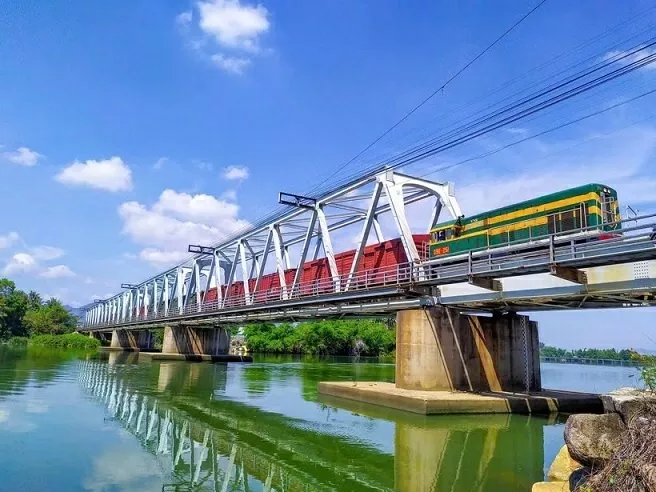 |
| A passenger train of the Vietnam National Railway Corporation. (Source: TTXVN) |
The theme of the 12th CLMV and 11th ACMECS Summits is “connectivity”. How can Vietnam and Laos promote cooperation to highlight the importance of connectivity within the CLMV and ACMECS frameworks?
Choosing “connectivity” as the overarching theme of the 12th CLMV and 11th ACMECS Summits holds strategic significance and meets the development requirements of the Mekong sub-region in the new phase. Amidst global economic fluctuations, continuously changing supply chains, and economic linkage methods, enhancing connectivity is crucial for countries to leverage complementary advantages, expand development space, improve competitiveness, and enhance adaptability and resilience to external fluctuations. Connectivity should not be limited to transportation infrastructure but should be comprehensively implemented across economic, trade, investment, energy, institutional, technology, and human domains.
With their geographical positions and roles, Vietnam and Laos have favourable conditions to become key links in promoting sub-regional integration. Vietnam has advantages in port systems, market scale, transportation networks, and connectivity with international maritime routes; while Laos holds a central land position in the Mekong sub-region, with significant potential in resources, energy, and connectivity with neighboring countries. Effectively leveraging these complementary advantages will not only benefit each country but also contribute to strengthening integration among CLMV and ACMECS members. The two countries should focus on three key solution groups:
Firstly, prioritize connectivity in transportation infrastructure, logistics, and sub-regional economic corridors. The two countries need to continue coordinating to address difficulties and promote key connectivity projects such as the Hanoi – Vientiane expressway and the Vientiane – Vung Ang railway; while upgrading border gates, connecting transportation routes, and logistics infrastructure. Notably, the effective utilization of Vung Ang port should be promoted, facilitating Lao goods' access to international maritime routes through Vietnam's port system. Additionally, connectivity in East – West and North – South economic corridors should be enhanced, developing multimodal transport and simplifying customs procedures. This will gradually reduce logistics costs, shorten transportation times, and enhance the competitiveness of goods from countries in the sub-region.
Secondly, strengthen connectivity in economics, trade, investment, and energy, gradually forming linked value chains among economies. Vietnam and Laos should encourage businesses from both countries to expand investment and cooperation in highly complementary fields such as high-tech agriculture, agricultural product processing, processing industries, mining linked with deep processing, and logistics. Simultaneously, promote electricity system connectivity, develop clean and renewable energy, and enhance cooperation in ensuring energy security. More importantly, expand cooperation models involving businesses from multiple countries in the region, thereby forming cross-national production, supply, and consumption chains, helping CLMV and ACMECS countries integrate more deeply into regional and global value chains.
Thirdly, enhance institutional connectivity, digital transformation, and people-to-people exchanges. The two countries need to continue improving mechanisms, policies, harmonizing regulations related to trade, investment, transportation, and import-export; simplifying administrative procedures, facilitating the flow of goods and business operations. At the same time, strengthen cooperation in digital infrastructure, e-commerce, cross-border payments, and information sharing, creating a favorable environment for economic connectivity. Alongside, increase people-to-people exchanges, tourism cooperation, training, and human resource development, especially between localities sharing borders. These are crucial factors to ensure connectivity is not only reflected in infrastructure projects but also reinforced by the bonds between businesses and people of the countries.
Vietnam and Laos need to proactively connect bilateral cooperation initiatives, programs, and projects with the CLMV and ACMECS frameworks; while enhancing coordination with member countries, development partners, and the private sector to mobilize resources, ensuring the consistency and effectiveness of connectivity activities. When connectivity between Vietnam and Laos is strengthened and effectively utilized, it will serve as a crucial foundation for expanding integration with countries in the sub-region, contributing to building a cohesive, dynamic, resilient, and sustainably developing Mekong economic space.
With political determination and close coordination among member countries, the theme of “connectivity” at CLMV 12 and ACMECS 11 will not just remain a direction but will gradually be concretized through practical programs and projects, bringing long-term benefits to the nations and people throughout the sub-region.
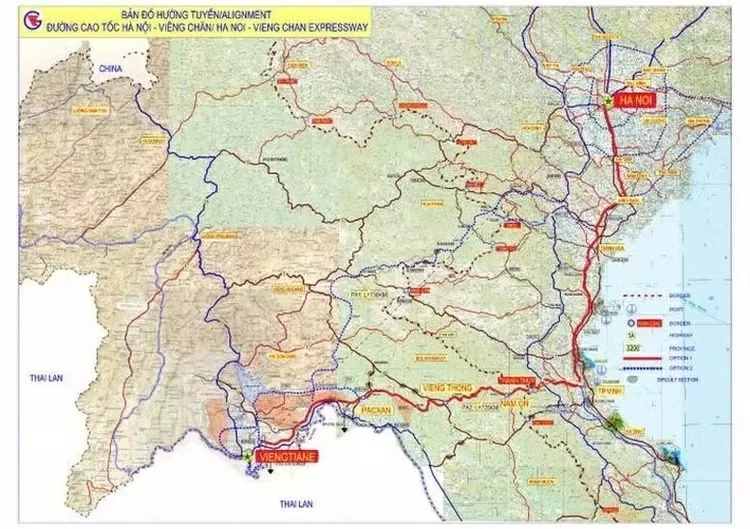 |
| Route map of the expressway connecting Vientiane Capital with Hanoi Capital. (Source: Ministry of Construction) |
How does the Ambassador assess the pace of high-ranking delegation exchanges between Vietnam and Laos recently, and what role does this play in promoting new contents in Vietnam-Laos cooperation as well as in sub-regional cooperation mechanisms like CLMV and ACMECS?
It can be affirmed that recently, high-ranking delegation exchanges between Vietnam and Laos have been maintained regularly and continuously with a vibrant pace, and the content is increasingly substantive and effective. Visits, contacts, and meetings between high-ranking leaders of the two Parties, States, Governments, and National Assemblies, along with exchanges between ministries, sectors, and localities, have contributed to strengthening political trust, enhancing understanding, and fostering bonds between the two countries. This is not only a vivid manifestation of the great friendship, special solidarity, and comprehensive cooperation, strategically linked between Vietnam and Laos but also reflects the consistent political determination of the leaders of the two countries in continuously nurturing and developing this special relationship.
Especially in the context that both countries have successfully organized Party Congresses and consolidated leadership apparatuses for the new term, maintaining high-ranking delegation exchanges is crucial in ensuring continuity, consistency, and unity in bilateral relations. Through direct contacts, leaders on both sides promptly exchange strategic issues, evaluate the implementation of achieved agreements, agree on major cooperation directions, and provide guidance on resolving emerging difficulties and obstacles. It can be said that high-level delegation exchanges are one of the key mechanisms to transform political trust and strategic cohesion into concrete, specific cooperation results.
One of the prominent meanings of the current pace of high-level delegation exchanges is to drive the Vietnam-Laos relationship to develop with new, deeper, and more substantive contents, especially in concretizing the content of “strategic linkage”. Besides continuing to strengthen traditional cooperation areas such as politics, defence, security, and foreign affairs, the two countries are focusing on enhancing economic linkages, connectivity in transportation infrastructure, logistics, energy, trade, and investment; while expanding cooperation in science and technology, digital transformation, education and training, and high-quality human resource development. The goal is not only to expand the scale of cooperation but more importantly, to enhance the interconnection, complementarity, and interwoven interests between the two economies, linking each country's development strategy with the long-term interests of the other.
The two countries need to continue leveraging each other's strengths and development conditions. Vietnam has advantages in market, production capacity, technology, integration experience, and connectivity with international markets; Laos has a strategic geographical position at the centre of the Mekong sub-region, resource and energy potential, along with connectivity capabilities with mainland Southeast Asian countries. Effectively combining these advantages will open up new cooperation spaces, creating conditions for both countries to jointly develop linked projects, supply chains, and value chains with high complementarity.
Not only significant for bilateral relations, the close bond and strategic cohesion between Vietnam and Laos is also a crucial foundation for the two countries to enhance coordination in sub-regional cooperation mechanisms, especially CLMV and ACMECS. Through delegation exchanges and regular consultations, both sides have the opportunity to share information, agree on priorities, and coordinate positions on issues of mutual concern; while promoting practical cooperation initiatives on transportation connectivity, logistics, trade, investment, energy, human resource development, and sustainable management of Mekong River water resources.
Particularly, Vietnam and Laos can leverage their role as a bridge, promoting the linkage between bilateral cooperation programs and projects with common initiatives of CLMV and ACMECS, enhancing coordination with member countries and development partners to mobilize resources and improve implementation effectiveness. Through this, cooperation between the two countries not only brings direct benefits to each side but also contributes to narrowing the development gap, strengthening economic integration, and enhancing the adaptability of the entire sub-region to regional and international fluctuations.
With a deep foundation of political trust, the regular attention and direction of leaders of the two Parties and States, along with the determination and efforts of all levels, sectors, and localities, the pace of Vietnam-Laos delegation exchanges will continue to be maintained and effectively utilized. This will be an important driving force to bring the great friendship, special solidarity, comprehensive cooperation, and strategic cohesion between Vietnam and Laos to increasingly substantive and sustainable development; while positively contributing to strengthening solidarity, promoting connectivity, cooperation, and sustainable development in the Mekong sub-region.
Thank you very much, Ambassador!