




Building peace through Buddhist philosophy (Part 5)
WVR - For over 2,300 years, Buddhism has strengthened ties between Vietnam and Sri Lanka. Speaking to The World & Vietnam Report, Sri Lankan Ambassador to Vietnam Poshitha Perera highlighted how Buddhist exchanges, education and spiritual tourism can deepen bilateral friendship and promote peace and mutual understanding.
Latest
In your view, how has Buddhism contributed to fostering mutual trust, understanding and affection between the people of our two countries beyond the framework of state-to-state diplomacy, Ambassador?
Beyond state-to-state diplomacy, beyond the ties between the two countries, Buddhism is the people-to-people connection. Buddhism was introduced to Sri Lanka and Vietnam around the same period. For 2,300 years, Buddhism has flourished in Sri Lanka, and here in Vietnam, Buddhism was also introduced around the same time, and people have continued to practise it.
At the state level, we are cooperating in this field. But beyond the state level, at the non-state level, Buddhist relations between the two peoples and their institutions are also flourishing.
Not only the governments but also Buddhist institutions are exchanging views and cooperating very actively.
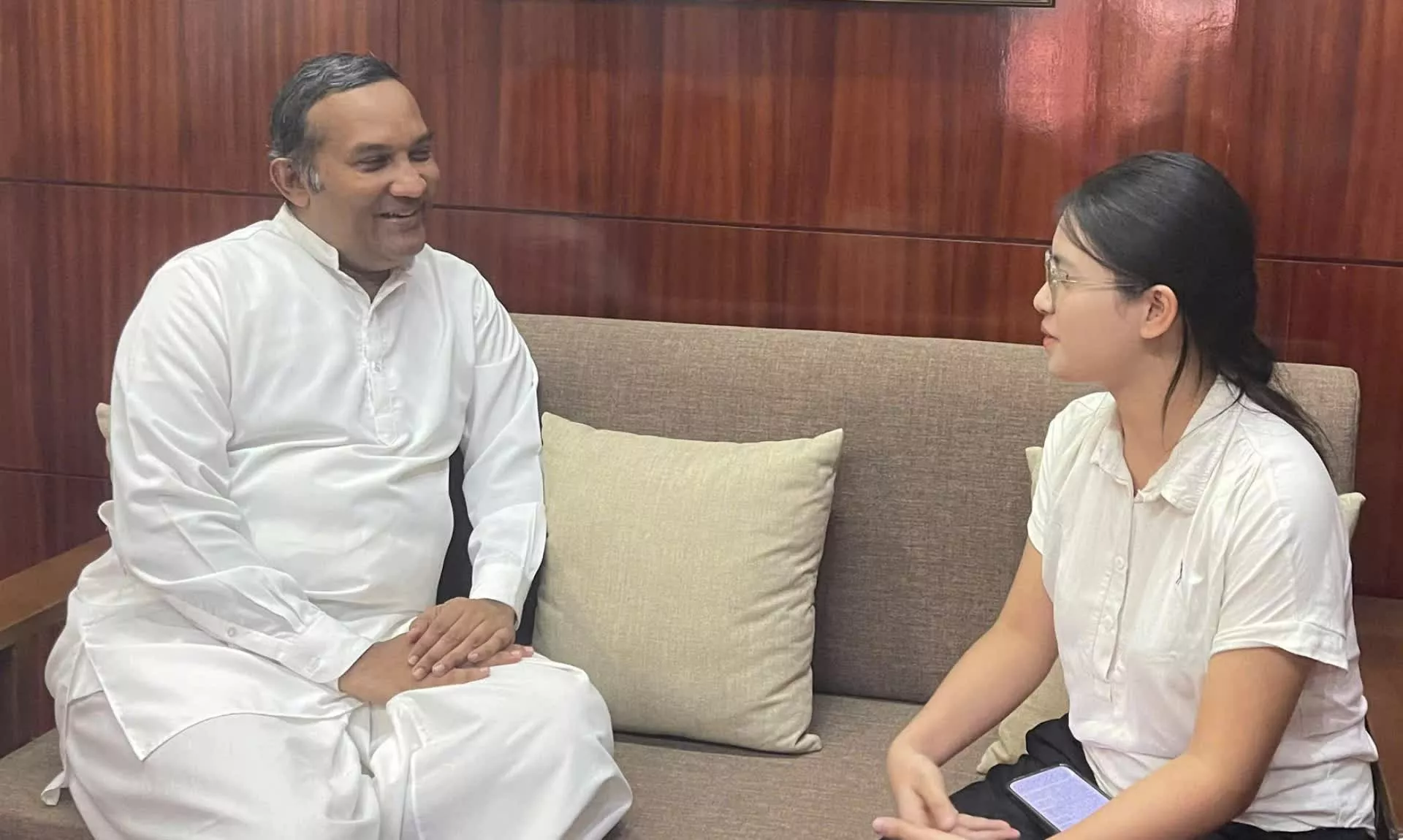 |
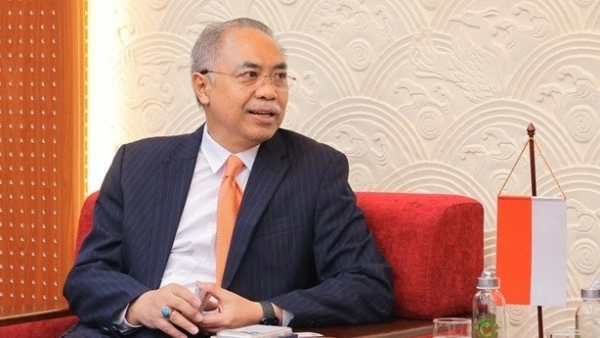
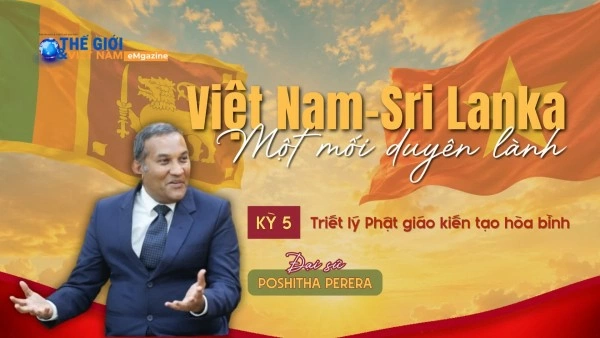
| Sri Lankan Ambassador to Vietnam Poshitha Perera speaks with a reporter from The World & Vietnam Report. (Photo: Khanh Huyen) |
A very interesting initiative was the invitation extended to our President, His Excellency Anura Kumara Dissanayake, by the Vietnam Buddhist Sangha in 2025 to be the chief guest and keynote speaker at the UN Vesak Day event in Ho Chi Minh City, which took place in May 2025.
This was not a state invitation. It shows that the Vietnam Buddhist Sangha and the Buddhist community in Vietnam hold Sri Lanka in the highest regard. That is why he was invited as the chief guest.
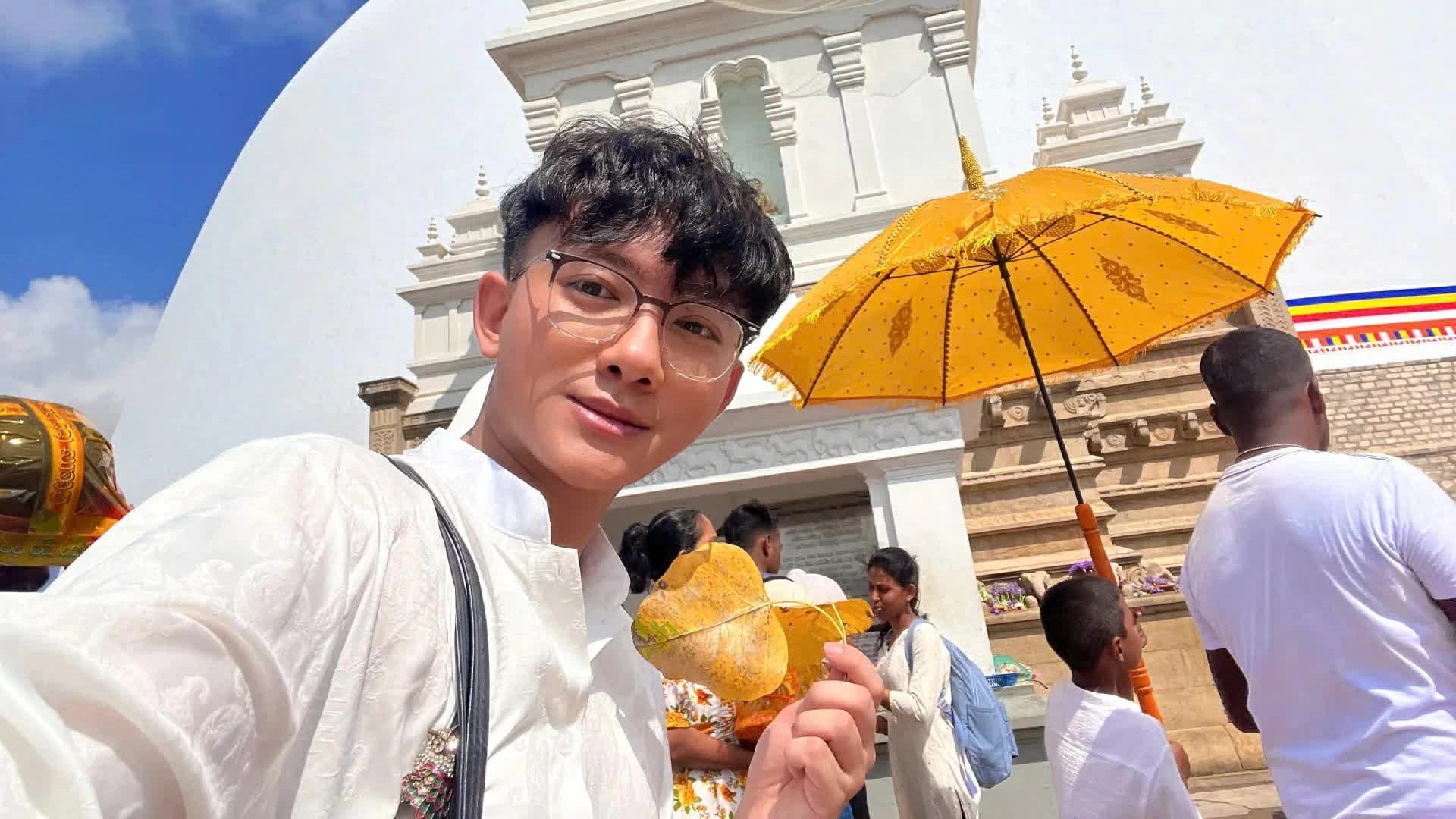
In addition, Vietnamese Buddhist pilgrims are travelling to Sri Lanka, alongside other destinations such as Nepal, Bhutan and India. In particular, they visit some very important places in Sri Lanka, such as the Temple of the Tooth Relic in Kandy, where we believe one of the teeth of Lord Buddha is preserved, in what was our last kingdom, Kandy.
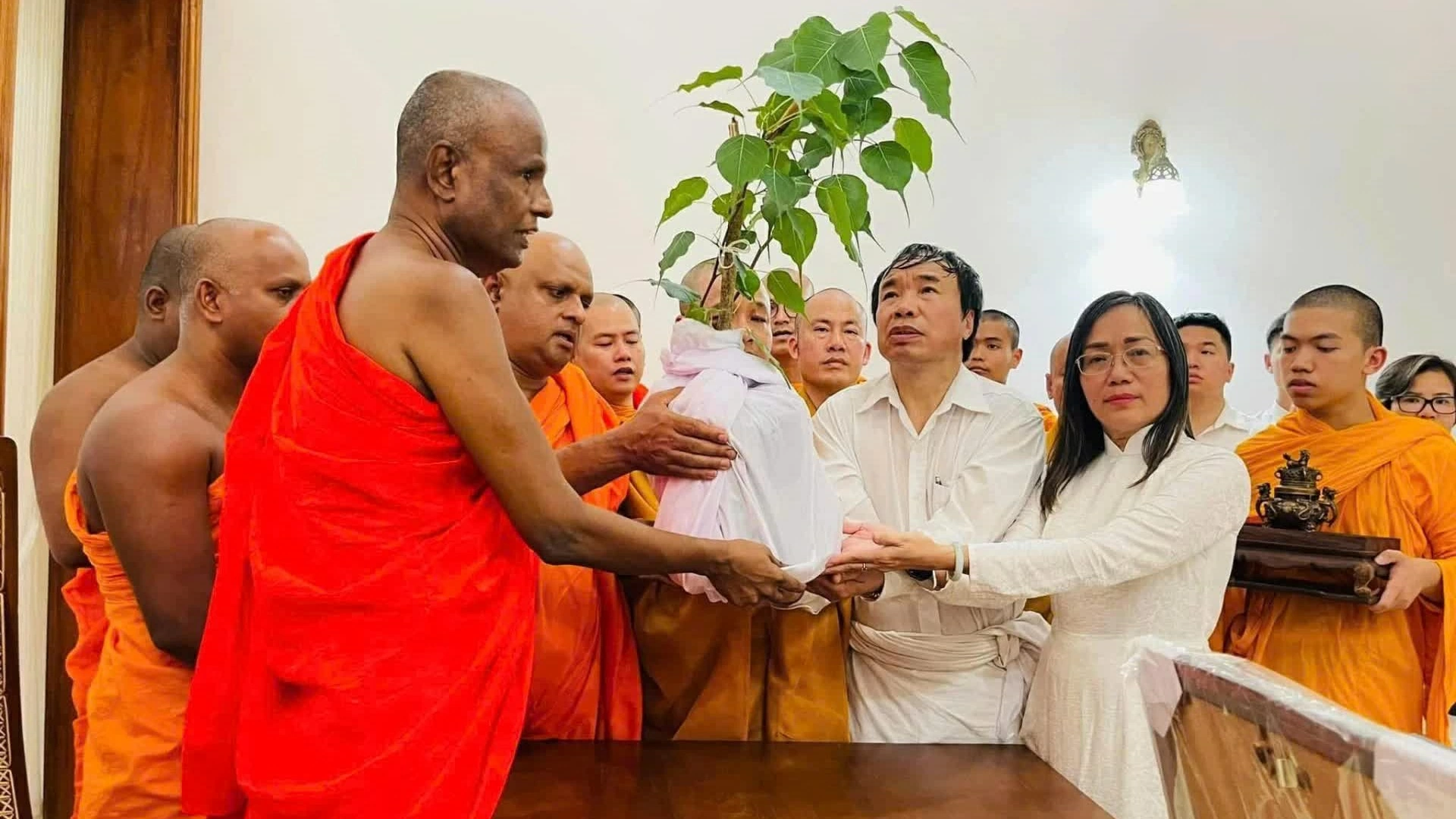
There is also the Bodhi tree, under which Lord Buddha attained enlightenment. We have a tree grown from a sapling of that original tree in our first capital, Anuradhapura, and it has stood there for 2,300 years.
And the new initiative to establish direct flights will definitely contribute to these relations by making it easier for people to travel to Sri Lanka for worship. Similarly, when Sri Lankans come to Vietnam, they know places such as Bai Dinh Pagoda and Tam Chuc Pagoda.
We have gifted two saplings of the Bodhi tree that we have in Sri Lanka to Bai Dinh Pagoda and Tam Chuc Pagoda. We have also helped Bai Dinh Pagoda construct the outer wall surrounding the Bodhi tree.
We provided technical assistance to build it in the traditional Sri Lankan style, using stone. We sent technicians, and your craftsmen carried out the work. It is a nice blend of Vietnam and Sri Lanka.
In addition, there are monastic exchanges. Every month, we issue quite a good number of visas to Vietnamese Buddhist clergy as well as laypeople. They go to Sri Lanka to study and practise Buddhism, meditate and learn about Buddhist disciplines.
These exchanges are taking place very actively. Similarly, Sri Lankans are coming to Vietnam, and they are also learning about Vietnamese traditions. Sri Lanka is predominantly Theravada Buddhist.
In southern Vietnam, Theravada Buddhism is predominant, while in northern Vietnam, Mahayana Buddhism is predominant. We are very open to learning from one another, and exchanges in both directions are taking place very actively.
Buddhist philosophy encompasses the concept of the Four Siddhanthas, which emphasises adapting communication approaches to different audiences to foster understanding. What insights can this philosophy offer for strengthening people-to-people diplomacy between Vietnam and Sri Lanka?
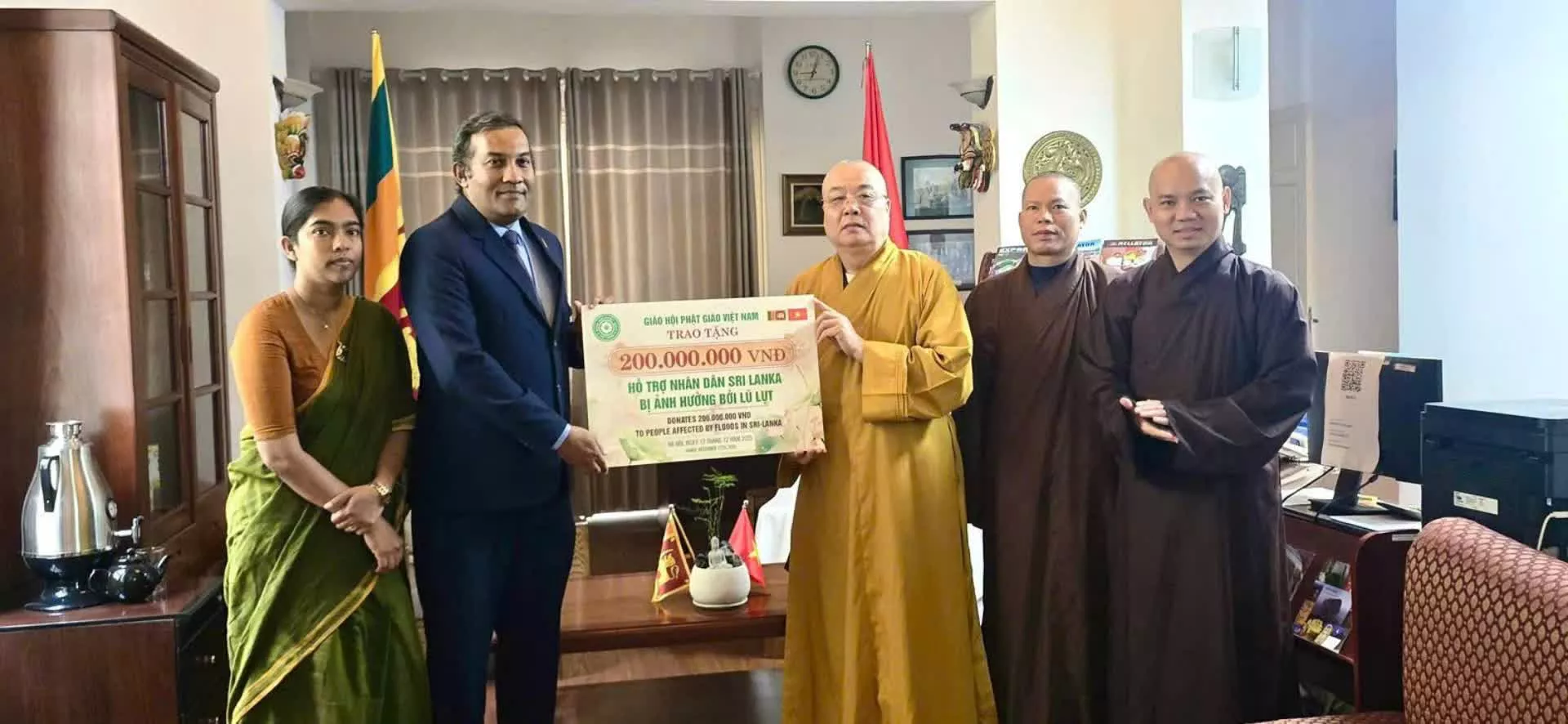 |
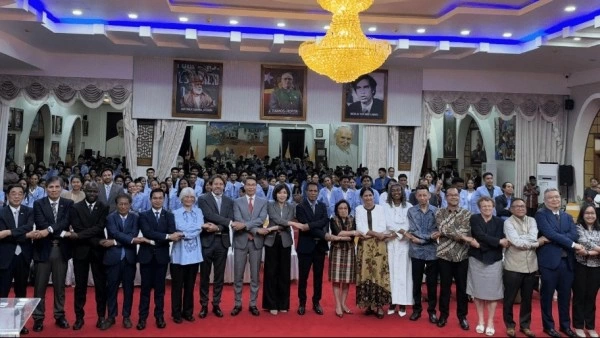
| The Vietnam Buddhist Sangha donated VND 200 million through the Sri Lankan Embassy in Vietnam to support disaster recovery efforts in Sri Lanka, helping strengthen Buddhist exchanges and friendship between the two countries. (Source: Sri Lankan Embassy in Vietnam) |
The Four Siddhanthas represent one of the most distinctive teachings and an important foundation of Buddhist philosophy, with a particular emphasis on the art of communication.
In everyday life, direct or rigid approaches to communication are not always effective. To communicate successfully, we need to adapt our approach to different people, circumstances and perspectives. This is precisely what the Four Siddhanthas seek to convey.
Today, young people around the world face new barriers to communication. With each generation, the ways people think and communicate continue to evolve.
On the one hand, technology has brought the world closer together than ever before. I can communicate with people back in Sri Lanka every day as though I were still there.
On the other hand, people are spending more time interacting with machines than with one another. In the age of artificial intelligence, we even find ourselves talking to machines as if we were speaking to other human beings.
As a result, people are gradually becoming disconnected from themselves. This raises an important question: Have younger generations been adequately equipped with the moral values, traditions and cultural foundations that previous generations have preserved?
Within the Four Siddhanthas, the first two principles relating to social life are Loka Siddhantha and Sammuta Siddhantha.
Loka Siddhantha emphasises fundamental values such as compassion, respect for elders, the willingness to listen and respect for the opinions of others. These are qualities that are particularly important to cultivate among young people today.
Sammuta Siddhantha, meanwhile, places emphasis on empathy. We need to put ourselves in other people's shoes to understand how they think. By doing so, we can more easily find common ground and resolve differences.
This principle also promotes a win-win approach. Everyone has their own interests and concerns, but through dialogue, we can reconcile differences and identify solutions that benefit all parties.
The next level is Nyana Siddhantha, which can be understood as a teaching centred on wisdom or philosophy. At its heart are dialogue and debate. Each person should be able to express their views openly, listen to the arguments of others and engage in meaningful exchanges to better understand different perspectives.
This means that we should not confine ourselves to our own viewpoints or act solely on our personal preferences and subjective perceptions. Instead, we must be willing to listen to others.
The essence of Nyana Siddhantha lies in exchanging ideas about the philosophies that each side follows. For example, we may share how the Theravada Buddhist tradition understands the world, while our Vietnamese friends may present the perspectives of Mahayana Buddhism or Vietnam's Buddhist traditions, which encompass both Mahayana and Theravada influences.
According to the Buddha's teachings, such philosophical dialogue and debate can lead to deeper mutual understanding, enabling people to work together towards better solutions and a better world.
The final level is Paramattha Siddhantha, which can be understood as a teaching that leads towards liberation. Achieving this requires meditation, self-discipline and continuous spiritual practice.
However, this is not a journey that individuals undertake entirely on their own. People need to come together, exchange ideas and share their experiences of spiritual practice. That is the essence of Paramattha Siddhantha.
Each person has different experiences, and one person's experience can offer valuable lessons to another. For instance, when I meditate, what you have experienced may help me refine my own practice. After all, we are all working towards the same ultimate goal: ending the cycle of rebirth and overcoming suffering.
The spirit of Paramattha Siddhantha is equally relevant when applied to our daily work. We are all making efforts, experimenting with new approaches and exploring innovative ideas. There may be solutions that I have yet to discover but that you have already found, just as my experiences may prove useful to you.
By sharing knowledge and learning from one another, we can achieve better outcomes for the benefit of humanity as a whole.
This is why I believe that the Four Siddhanthas, as taught by the Buddha, remain as relevant today as ever in guiding communication and dialogue. These principles can help people work towards the shared goal of building a better world.
I also believe that Vietnam and Sri Lanka are moving in the right direction in this spirit. Across our bilateral cooperation frameworks, from government-level engagement to partnerships involving the private sector and non-state organisations, we consistently strive for mutual benefit.
When one side possesses valuable resources and the other brings experience or expertise, combining and making the most of these strengths can create even greater value for both. I am confident that cooperation between Vietnam and Sri Lanka is progressing along a very positive and promising path.
From Sri Lanka's perspective, which areas of cooperation between Vietnam and Sri Lanka in Buddhism and cultural and religious exchanges offer the greatest potential for further development, Ambassador?
In fact, exchanges between our two countries are already progressing very effectively.
Sri Lanka is home to the Buddhist and Pali University of Sri Lanka, an institution specialising in Buddhist studies, which has signed memoranda of understanding on cooperation with the Vietnam Buddhist Academy in Hue and the Vietnam Buddhist Academy in Ho Chi Minh City.
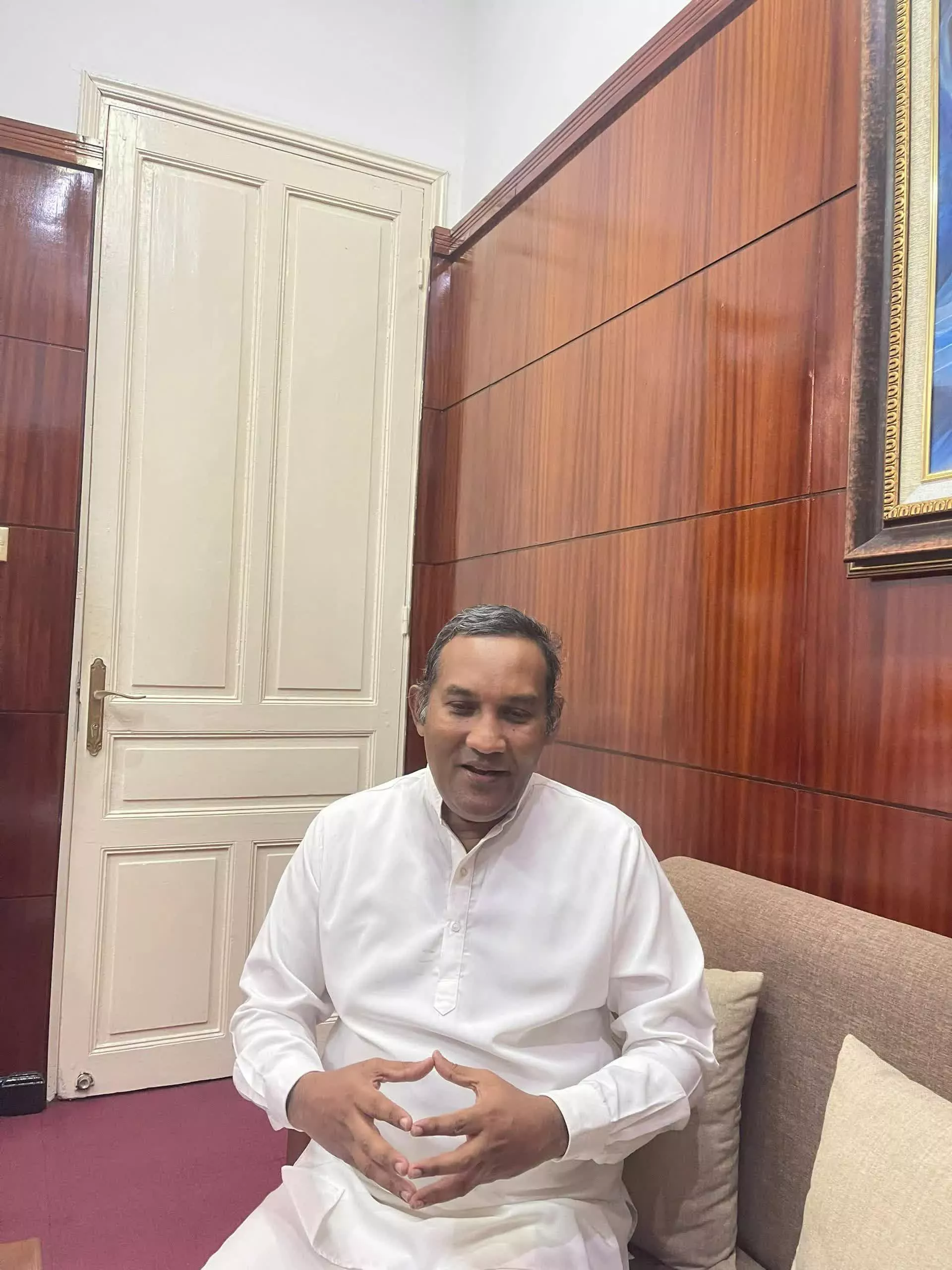 |
| Sri Lankan Ambassador to Vietnam Poshitha Perera speaks to The World & Vietnam Report. (Photo: Khanh Huyen) |
These agreements have facilitated regular academic exchanges. Vietnamese monks, nuns and scholars travel to Sri Lanka for study and research, while Sri Lanka sends lecturers and scholars to Vietnam to teach.
Vietnamese scholars also visit Sri Lanka to deliver lectures to international students from various countries. This represents a highly practical and effective form of academic cooperation.
And monastic level there are certain very like small forests they go and they do meditation. Some monks as well as some laymen go to Sri Lanka.
I have seen some people asking for a one-year visa because they want to have long-term spiritual meditation practices. So likewise these things are very well happening.
Nevertheless, I believe there remains considerable room to expand our cooperation. One of the areas with the greatest potential is Buddhist tourism.
As I mentioned earlier, our two countries are working towards establishing direct flights between Sri Lanka and Vietnam. This will create highly favourable conditions for developing pilgrimage tours and journeys exploring Buddhist heritage.
In July, Sri Lanka developed a specialised Buddhist tourism route featuring sacred sites and Buddhist heritage destinations across the country. We have also designed itineraries for visitors staying five, eight or ten days, allowing them to make the most of their experiences.
Youth exchanges represent another highly promising area of cooperation.
An increasing number of young Sri Lankans are becoming familiar with Vietnam and choosing it as a travel destination. When visiting Vietnam, they actively seek out renowned Buddhist sites such as Ninh Binh and Huong Pagoda, recognising their exceptional cultural heritage value.
We also hope to welcome more young Vietnamese people to Sri Lanka to explore our country, people and Buddhist traditions.
I firmly believe that relations between our two countries will continue to develop dynamically in the years ahead.
Our foremost priority should be to facilitate greater people-to-people exchanges, particularly by creating more opportunities for tourists from both countries to visit each other.
As our peoples gain a deeper understanding of one another and develop closer connections, the friendship between Vietnam and Sri Lanka will undoubtedly grow even stronger.
Against the backdrop of continued global uncertainties, how can Vietnam and Sri Lanka jointly promote Buddhist values such as peace, compassion and solidarity to make meaningful contributions to the international community?
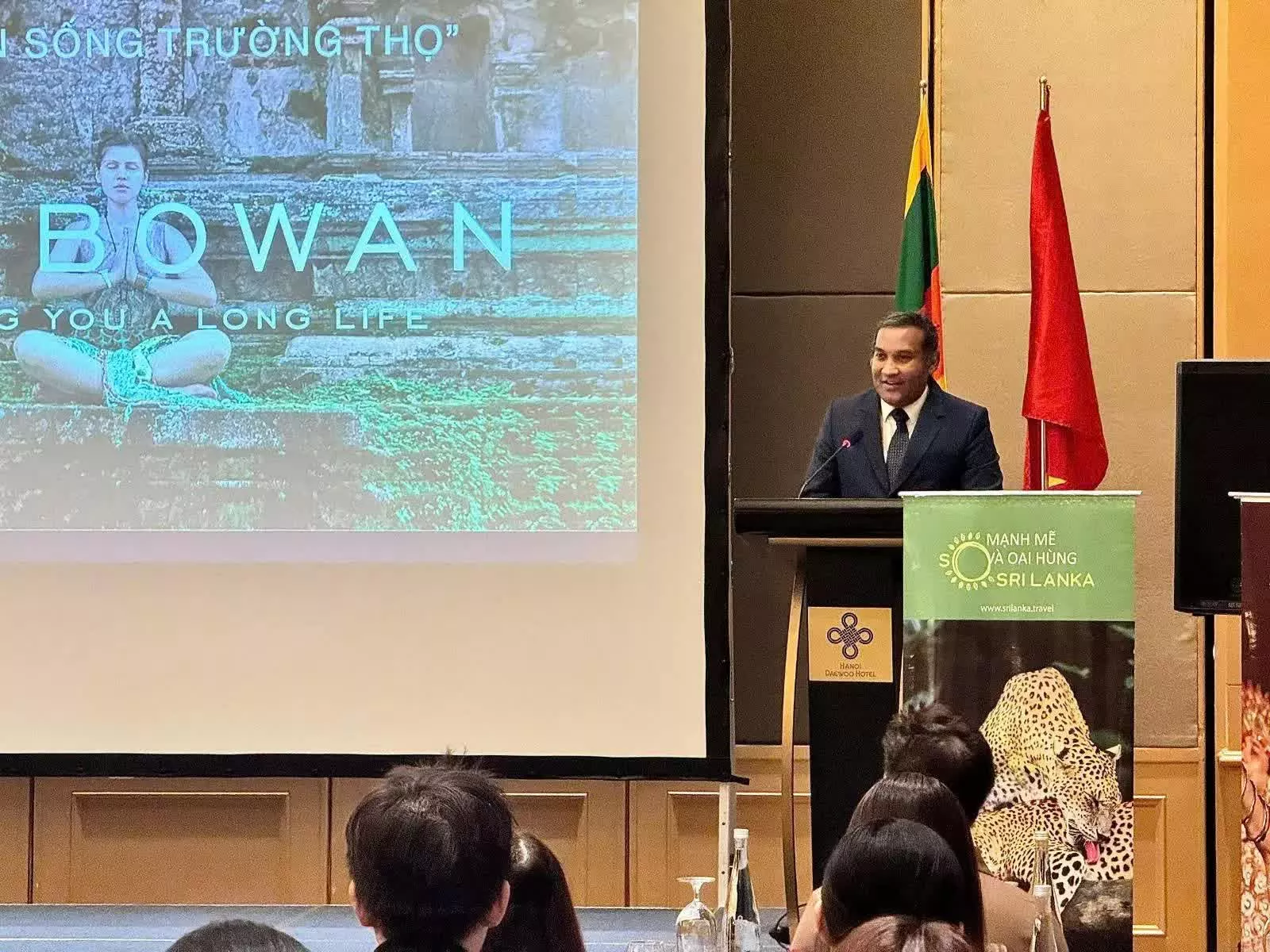 |
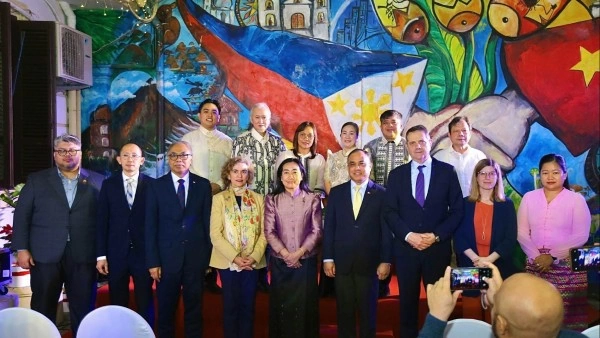
| The Sri Lankan Embassy in Vietnam introduces the Sri Lanka Buddhist Trail and direct flights between Vietnam and Sri Lanka, opening up opportunities to promote people-to-people exchanges and spiritual tourism between the two countries. (Source: Sri Lankan Embassy in Vietnam) |
I believe this is an extremely important question. As two countries whose cultures have been profoundly influenced by Buddhism, Vietnam and Sri Lanka share many common values.
I see this clearly in everyday life. Sri Lankan people are deeply compassionate and always willing to extend a helping hand. Whenever Vietnam faces difficulties, we are eager to offer our support. Likewise, the Vietnamese people have always shown genuine care and affection towards Sri Lanka.
For example, when Sri Lanka was affected by Typhoon Yagi, many Vietnamese organisations and individuals, including the Vietnam Buddhist Sangha, made meaningful contributions and donations.
Similarly, whenever Vietnam faces natural disasters, Sri Lanka is always willing to stand alongside the Vietnamese people and offer our support. Whenever one country encounters difficulties, the other is ready to lend a helping hand.
This spirit is reflected not only in our bilateral relations but also in the way our two countries approach international issues.
Neither Vietnam nor Sri Lanka wishes to aggravate existing challenges. Instead, we always seek to be part of the solution, working together to identify constructive ways of addressing shared problems.
I believe that, from the national level to individual people-to-people relationships, Vietnam and Sri Lanka are cooperating in a spirit of peace, harmony, empathy and mutual respect.
This is also the message our two countries are jointly conveying to the international community: We must come together to find solutions to the challenges facing humanity, create greater value for the future and build a better world for everyone.
I am confident that Vietnam and Sri Lanka are on the right path. With each passing day, the friendship between our countries and the convergence of our perspectives on international issues continue to grow stronger.
This gives me great satisfaction, and I sincerely hope that the friendship between our two peoples will continue to flourish in the years to come.
Thank you very much, Ambassador!
| A message from the authors: As our five-part series, “Vietnam-Sri Lanka: An Auspicious Bond” draws to a close, we hope that the stories of history, culture, Buddhism and friendship between our two peoples have offered further insights into the enduring foundations of Vietnam-Sri Lanka relations, while highlighting the value of people-to-people diplomacy in fostering connections today and in the years ahead. We sincerely thank our readers for following this series in The World & Vietnam Report. |