
16th National Assembly and People's Councils elections: Ensuring citizens' right to vote
WVR - The election of the 16th National Assembly and People's Councils at all levels for the 2026-2031 term took place on March 15, with over 73.4 million Vietnamese voters participating in the election day, marked by a number of noteworthy innovations: Organized under a two-tier local government model, shortened duration compared to previous terms, and for the first time, robust application of information technology and digital transformation in the electoral process.
Latest
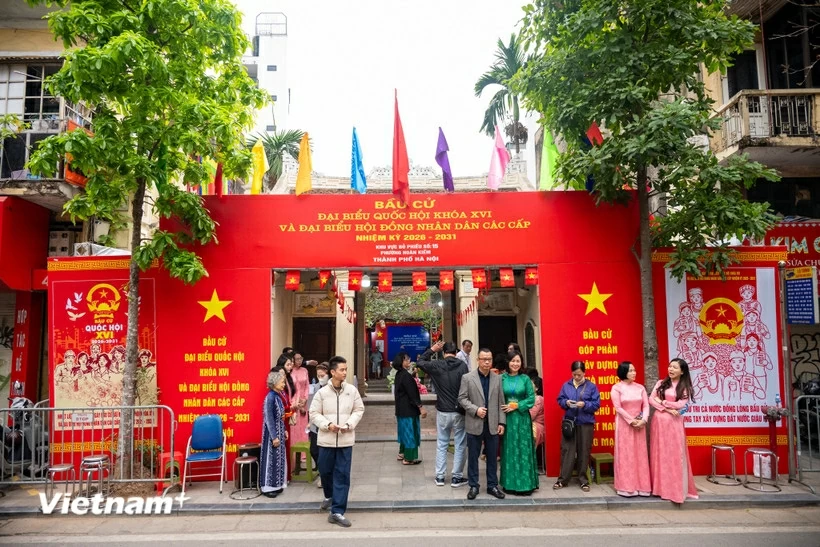 |
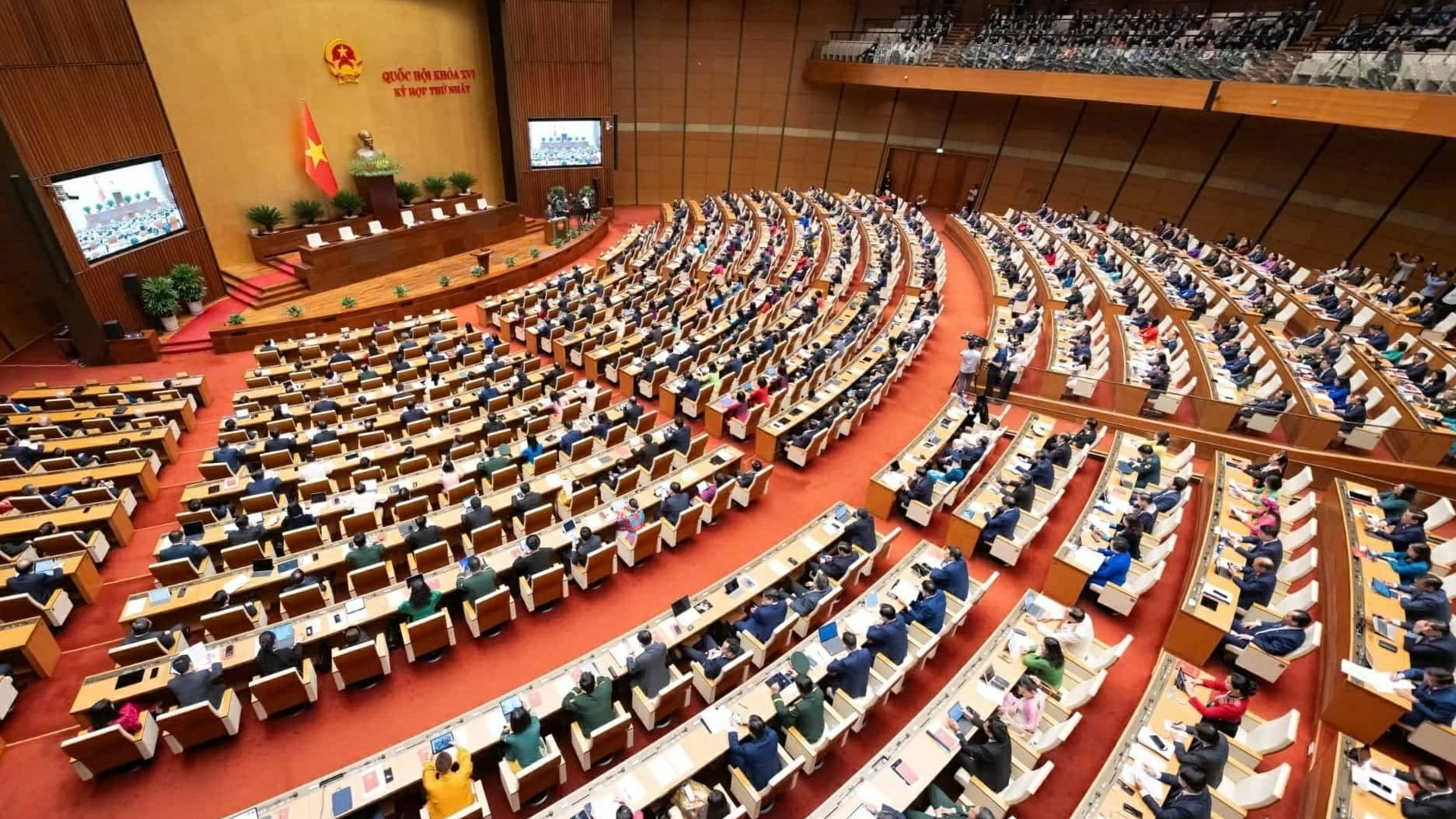
| The election of the 16th National Assembly and People's Councils at all levels for the 2026-2031 term holds special significance in the process of implementing Vietnam's international commitments on human rights. (Photo: Vietnam+) |
This is not merely a periodic political event but also holds special significance in the process of implementing Vietnam's international commitments on human rights, demonstrating the viewpoint that “human rights are linked to the people's sovereignty”.
In the context of Vietnam having participated in 7 out of 9 core international conventions on human rights of the United Nations (UN), systematically recognizing the process of domesticating and organizing the implementation of voting rights becomes imperative.
Foundation for exercising voting rights
Voting rights are among the most fundamental political rights of individuals, as affirmed in Article 25 of the International Covenant on Civil and Political Rights (ICCPR).
| More from WVR |
 National Assembly 2026: Returning from Europe to cast my vote National Assembly 2026: Returning from Europe to cast my vote |
This stipulates that every citizen, without any discrimination, has the right and opportunity to participate in national affairs, directly or through freely chosen representatives; to vote and to be elected in genuine periodic elections conducted by universal and equal suffrage and by secret ballot, ensuring the free expression of the voters' will.
This progressive spirit has been deeply institutionalized in Vietnam's legal system. The 2013 Constitution, with a strategic vision on human rights, affirms in Article 7: “The election of deputies to the National Assembly and People's Councils is conducted based on the principles of universal, equal, direct suffrage and secret ballot.”
Article 27 of the Constitution specifically stipulates: “Citizens aged 18 and above have the right to vote, and those aged 21 and above have the right to run for the National Assembly and People's Councils.”
These provisions not only align with the spirit of Article 25 of the ICCPR but also reflect progress in the perception of citizens' political participation rights. The different age requirements for voting and candidacy are also consistent with the principle of reasonable limitations in General Comment No. 25 of the Human Rights Committee.
Beyond the ICCPR, political participation rights are further reinforced in several other international treaties to which Vietnam is a party.
The International Convention on the Elimination of All Forms of Racial Discrimination (ICERD) emphasizes equal rights in political participation; the Convention on the Elimination of All Forms of Discrimination Against Women (CEDAW) particularly highlights women's political participation rights; the Convention on the Rights of Persons with Disabilities (CRPD) affirms the right to full and effective participation in political life for persons with disabilities.
Vietnam's participation in 7 out of 9 core international conventions on human rights of the UN creates a multidimensional commitment system, providing a solid international legal basis to consider the implementation of voting rights in the current context.
| “This election introduces several first-time innovations such as organizing local government under a two-tier model; shortening the duration of steps in the electoral process; and enhancing the application of information technology and digital transformation” – Vice Chairwoman of the National Assembly Nguyen Thi Thanh. |
The amended Election Law of 2025, effective from July 1, 2025, has timely addressed emerging issues and provided a solid legal foundation for the March 15 election.
A breakthrough innovation is the use of the National Population Database to compile voter lists. On November 27, 2025, the Ministry of Public Security organized a nationwide online conference on exploiting and using software to compile voter lists based on the national population database.
This technological solution ensures accurate information, especially for vulnerable voter groups such as industrial zone workers and free migrants – groups often overlooked in previous elections.
This aligns perfectly with the requirement for “real and effective opportunities” in General Comment No. 25 of the Human Rights Committee, which emphasizes that states must take measures to ensure all citizens can effectively exercise their voting rights.
Regarding candidates, the Law clearly stipulates standards that must meet ethical, competency, and reasonable structural conditions. The consultative process is organized to ensure democracy and legality. Notably, citizens have the right to self-nominate if they meet the prescribed standards – an important point reflecting the openness and progressiveness of election laws, expanding political participation opportunities for all eligible citizens.
The official list and brief biographies of candidates are publicly posted at polling stations and committee offices. Voter contact meetings are organized for candidates to present their action programs, allowing voters to directly inquire and ask questions – an important channel ensuring transparency and accountability.
The process of perfecting laws and organizing elections demonstrates the consistent commitment of the Party and State to ensuring human rights and citizens' rights, reflecting the people's sovereignty through the opportunity to vote and choose worthy representatives to express their will and aspirations.
From institutionalizing Article 25 of the International Covenant on Civil and Political Rights (ICCPR) in the 2013 Constitution and the amended Election Law of 2025, to specific activities at the local level, all aim towards a consistent direction considering humans as the centre, the subject, the resource, and the goal of development.
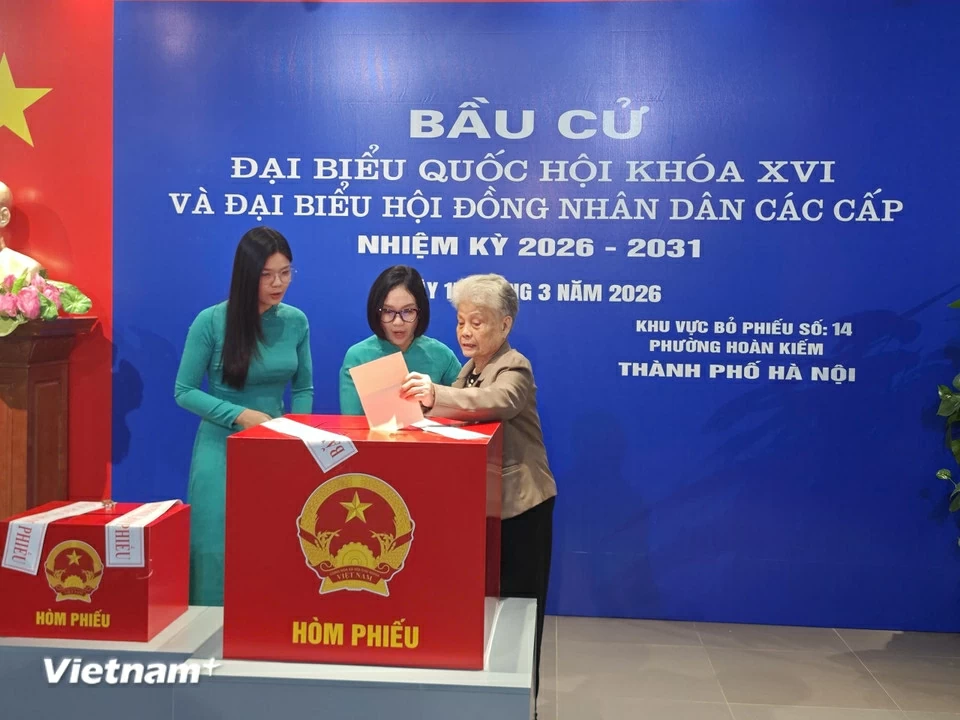 |
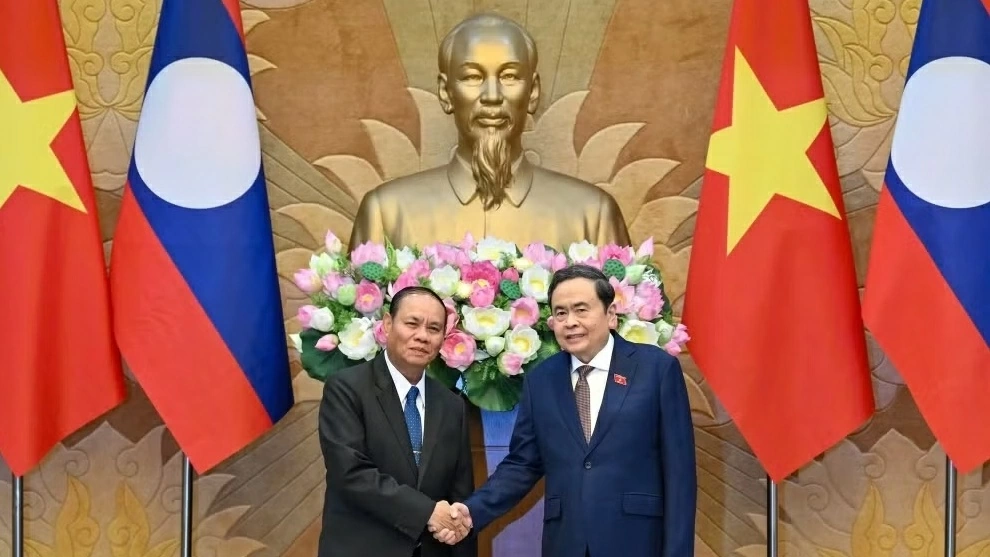
| Voting rights are among the most fundamental political rights of individuals, as affirmed in Article 25 of the International Covenant on Civil and Political Rights (ICCPR). (Photo: Vietnam+) |
Ensuring voting rights for all
On February 26, a nationwide online conference on election work was held at the National Assembly House, connecting to 34 provincial-level and 3,321 commune-level locations. The conference is significant in comprehensively reviewing preparations, promptly directing the resolution of difficulties and obstacles with only 17 days remaining until the election date.
One of the major challenges in organizing elections is ensuring that all citizens have the opportunity to exercise their voting rights. Localities have implemented flexible and creative solutions suitable to specific conditions.
In the Mekong Delta region, the Election Committee of Can Tho City proposed to the National Election Council to allow 107 separate voting teams of the Police force and 04 teams of the Military Command to vote early on March 14. This is appropriate given the nature of their duties as these forces will be mobilized to ensure security and order for the official election day, a reasonable adjustment that does not affect the voting rights of the armed forces.
In Vinh Long Province, a large area with over 373,000 Khmer ethnic people concentrated in remote areas, election work requires particularly meticulous preparation. The province has established 2,908 polling stations and deployed communication in Khmer language in areas with a large ethnic population.
On February 6, the Ministry of Culture, Sports, and Tourism organized a national conference on election communication training. Communication activities are implemented with content and forms suitable for each area and target group, focusing on applying information technology, digital platforms, and multimedia communication. Election teams are guided to support the elderly, people with disabilities, and residents in remote areas during the voting process.
The application of the National Population Database in compiling voter lists is a significant step forward. The software for compiling voter lists and printing voter cards based on the national database and electronic identification applications helps review, update residency changes, and extract accurate data, ensuring consistent, safe, and secure information. This is particularly meaningful for voter groups such as industrial zone workers and free migrants – those frequently changing residences, ensuring voting rights are not overlooked.
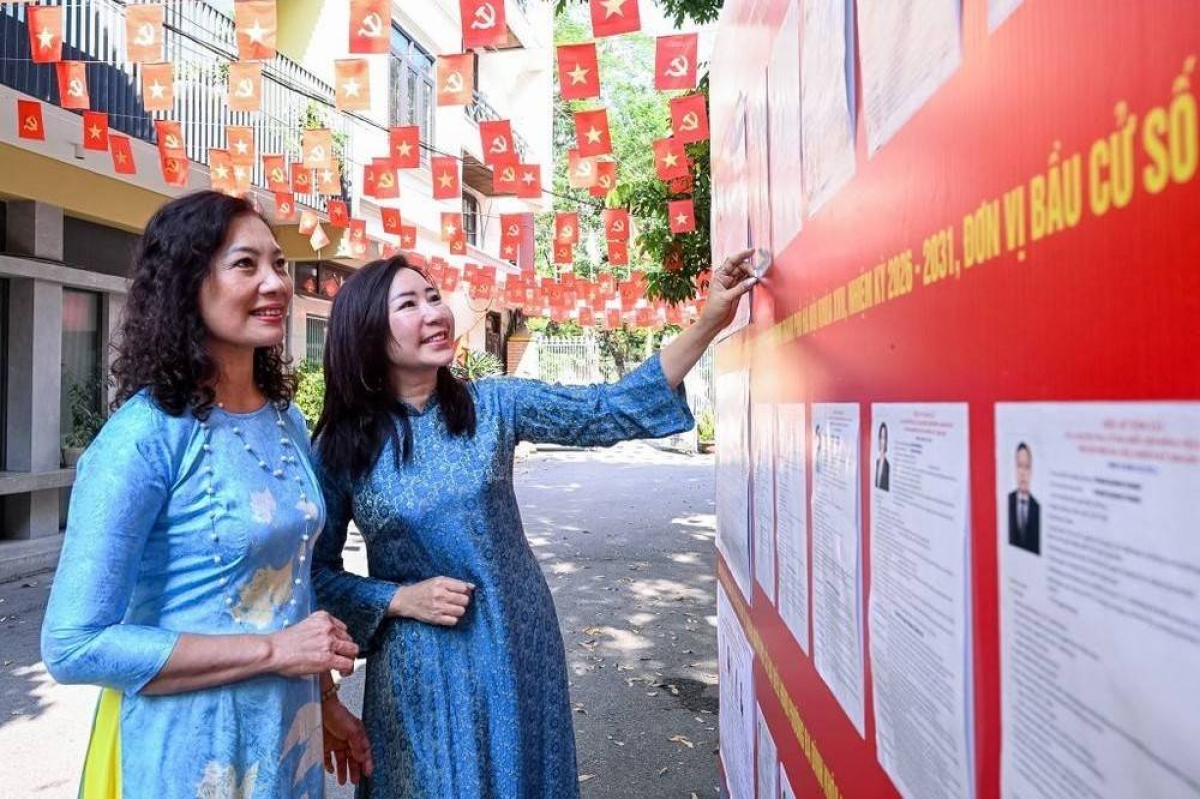 |
| Each ballot not only reflects the individual's will but also represents the sacred responsibility of every citizen towards the nation's destiny. (Photo: Nhan Dan Newspaper) |
Issues and solutions for perfecting the electoral process
Despite many achievements, the electoral process also reveals some challenges that need to be addressed. Through inspections and supervision in Vinh Long, Dong Thap, Can Tho, and many other localities, a major challenge identified includes:
First, the limited experience of some commune-level officials and civil servants participating in election work for the first time. This requires the coordinating and supporting role of central agencies. Recognizing this issue, on February 4, the Ministry of Home Affairs organized a nationwide online conference on election operations training, focusing on key operational content with a “hands-on” approach, ensuring that commune-level leaders and election team members grasp the process and timelines.
Second, in the context of a rapidly developing cyberspace with 79.8 million Internet users in Vietnam (as of 2025), ensuring accurate and timely information for voters is crucial, especially as misinformation and distortions can spread quickly. The Cybersecurity Law of 2018 has contributed to preventing acts of abusing freedom of speech to disseminate false information about the election, causing social instability. However, in the long term, a comprehensive communication strategy is needed to proactively provide official information and enhance the public's ability to recognize fake news.
Third, in terms of institutional aspects, General Secretary To Lam has pointed out “Not allowing certain laws to become bottlenecks hindering the realization of human rights, citizens' rights, and socio-economic development”. This direction is being concretized in the process of reviewing and amending relevant laws. Continuing to perfect the legal system to further facilitate citizens' political participation rights is an objective requirement, consistent with Vietnam's development trends and international commitments.
The harmonious coordination between central and local levels, between legal reform and practical organization, between international commitments and domestic actions has created a solid foundation for the National Election Day to truly be a festival for all people. Each ballot not only reflects the individual's will but also represents the sacred responsibility of every citizen towards the nation's destiny.
| The amended Election Law of 2025, effective from July 1, 2025, has timely addressed emerging issues and provided a solid legal foundation for the March 15, 2026 election. |
| Politburo Member, Minister of Foreign Affairs Le Hoai Trung casts vote for the 16th National Assembly and People's Councils at all levels for the 2026 On the morning of March 15, at polling station No. 11, under electoral unit No. 4, Giang Vo Ward, Hanoi, amidst the democratic and enthusiastic ... |

| National Assembly Election 2026: The power of voter participation WVR - The National Assembly election is an opportunity for voters to exercise their civic rights and responsibilities, contributing to strengthening the social foundation and ... |
| Voters in Truong Sa special zone join nationwide election day Officers, soldiers and fishermen in the Truong Sa special zone of Khanh Hoa province joined voters nationwide on March 15 to cast their ballots in ... |
| National Assembly Election 2026: Voters nationwide actively participate from early morning Voters across the country enthusiastically participated in the election from early morning, demonstrating their civic responsibility in selecting representatives for the National Assembly and People's ... |

| Voter turnout exceeds 80% nationwide by mid-afternoon Many localities have recorded high voter turnout, particularly several northern mountainous provinces such as Lao Cai, Dien Bien, Lai Chau, and Tuyen Quang. Other localities, ... |