





Vietnamese durian: Maintaining quality and market position to ensure standing
WVR - To maintain a foothold in the market, enhancing the quality of durian must be consistently implemented from soil, water, and input materials to harvesting, preliminary processing, packaging, and traceability.
Latest
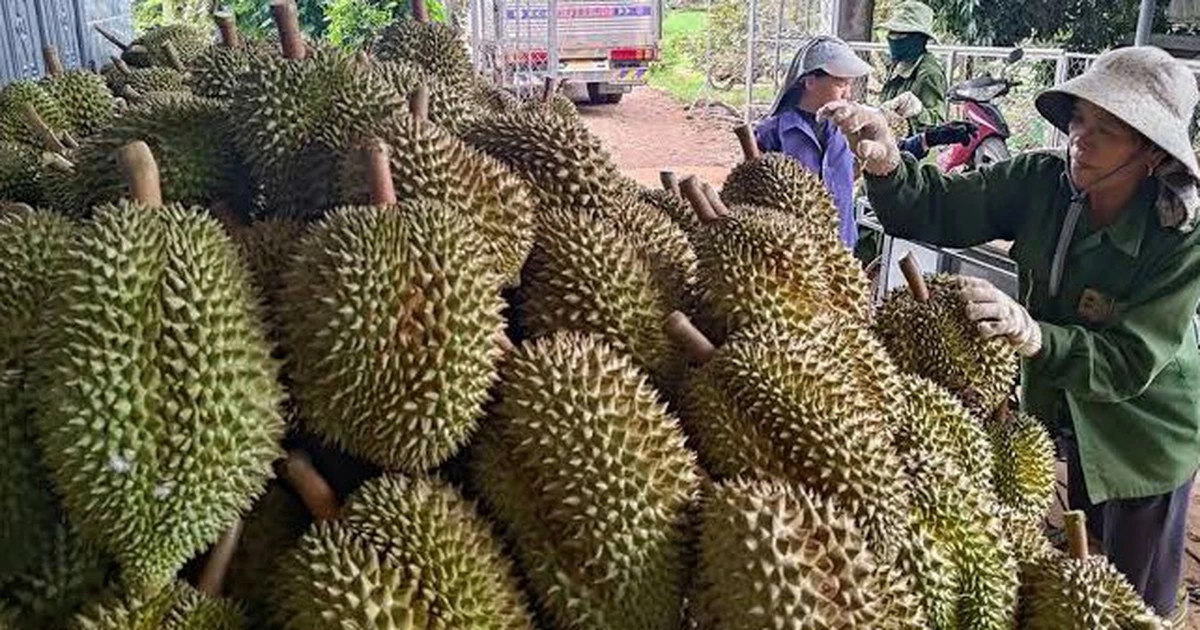 |
| Quality control cannot begin when the durian is ready for export; it must be implemented right from the production process. (Source: VGP) |
Durian is becoming a strategic commodity in Vietnam's agriculture. Amid rising input costs, fluctuating prices, and increasingly stringent export market standards, sustainable production requires a shift from fragmented cultivation to concentrated production, standardizing quality and prioritizing food safety.
Tight Control of Pests and Residues
According to Ms. Phan Thi Thu Hien, Director of the Post-Import Quarantine Center II (Ministry of Agriculture and Environment), for smooth export, producers must comply with phytosanitary requirements from cultivation, harvesting to packaging and storage; while also applying integrated pest management (IPM).
For the Chinese market, growing areas must be managed and monitored for six quarantine subjects, including fruit flies and five types of mealybugs. Cultivation logs must comprehensively record inputs, pesticides, pests, harvesting, consumption, and training. Only approved pesticides and fertilizers in Vietnam should be used, avoiding substances banned by China.
Notably, Cadmium (Cd) and Auramine O (Yellow O) are currently of concern in the production chain. According to Dr. Phan Viet Ha, Deputy Director in charge of the Western Highlands Agriculture and Forestry Science Institute, the rapid development of durian trees opens up opportunities to increase income for producers, businesses, and localities. However, alongside market opportunities are increasingly stringent requirements for quality, food safety, and residue control.
Cadmium and Yellow O have different sources of risk. Cadmium may relate to soil, water, input materials, and products used in cultivation, while Yellow O is primarily an issue in the processing, preservation, and distribution stages post-harvest.
Dr. Nguyen Viet Tru, representative of the project implementation team at the Western Highlands Agriculture and Forestry Science Institute, stated that in some key durian production areas in the Western Highlands, initial identification of sources at risk of introducing Cadmium into the production chain has been made. Among these, mineral fertilizers, secondary and micronutrient fertilizers, soil, and soil conditioners used improperly are factors that need attention.
Importantly, the risk of Cadmium does not only depend on the heavy metal content in the soil but also relates to solubility, soil conditions, and the plant's absorption process. Therefore, further research is needed to fully assess the factors affecting the transfer of Cadmium from soil to the plant and fruit.
Durian quality is not only about the fruit but also demonstrated through the ability to verify origin and production process.
Mr. Le Anh Trung, Chairman of the Dak Lak Durian Association, emphasized that quality control, food safety, residue, and traceability are no longer options but conditions to maintain and expand the export market.
Failure to comply can result in impacts beyond a single batch not meeting requirements, potentially increasing inspection, storage, handling, recall costs, and affecting the reputation of Vietnamese durian.
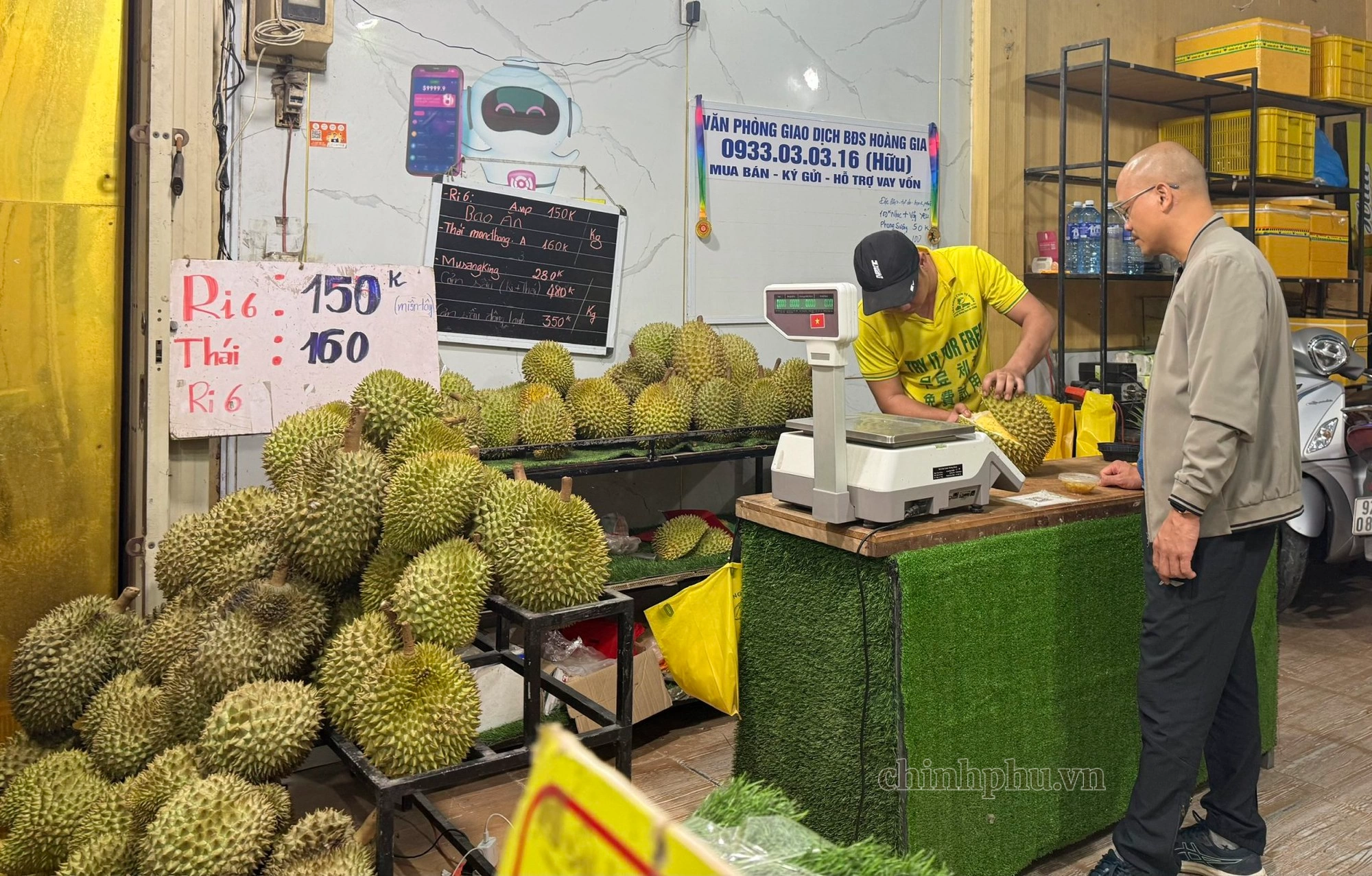 |
| Durian quality is not only about the fruit but also demonstrated through the ability to verify origin and production process. |
Chain Control, Enhancing Industry Quality
One of the foundations for sustainably enhancing durian quality is soil health. Dr. Mai Van Tri, former Deputy Director of the Southern Fruit Research Institute, believes that soil is the most important production resource, so fertilizer use should be based on plant needs and soil conditions, rather than chasing yields.
Both organic and chemical fertilizers need to be used correctly and sufficiently; prioritizing organic fertilizers and microbial products with clear origins and certifications. Growers should also improve their nutritional knowledge, choose suitable materials, avoid following trends, and especially minimize herbicides. Grass can be cut and returned to the soil, contributing to humus formation, moisture retention, and improving the soil ecosystem.
To manage quality through the chain, Mr. Nguyen Hac Hien, Head of the Crop Production and Plant Protection Sub-Department of Dak Lak Province, suggests bringing research results and technical recommendations directly to growing areas; while continuing to evaluate under various cultivation conditions to build a risk management system.
An important direction is to develop a Cadmium risk map based on soil, fertilizer, and water characteristics. This allows each region to apply appropriate management processes, proactively choose safe materials and cultivation methods.
At the production level, fertilizers and soil conditioners need clear origins and quality; limiting uncontrolled materials and risks of introducing heavy metals into the soil. Production logs, good agricultural practices, planting area codes, and traceability must be rigorously implemented.
At packaging facilities, industrial dyes not permitted must be completely eliminated, while applying safe preservation solutions and biological, microbial products approved by authorities.