




Mekong subregion is truly the heart of mainland Southeast Asia: Lao Ambassador to Vietnam
WVR - Ahead of the ASEAN Future Forum (AFF) 2026, H.E. Mrs. Khamphao Ernthavanh, Lao Ambassador to Vietnam, shared her expectations for the Forum and the prospects for Vietnam-Laos cooperation on the journey toward the ASEAN Community Vision 2045.
Latest
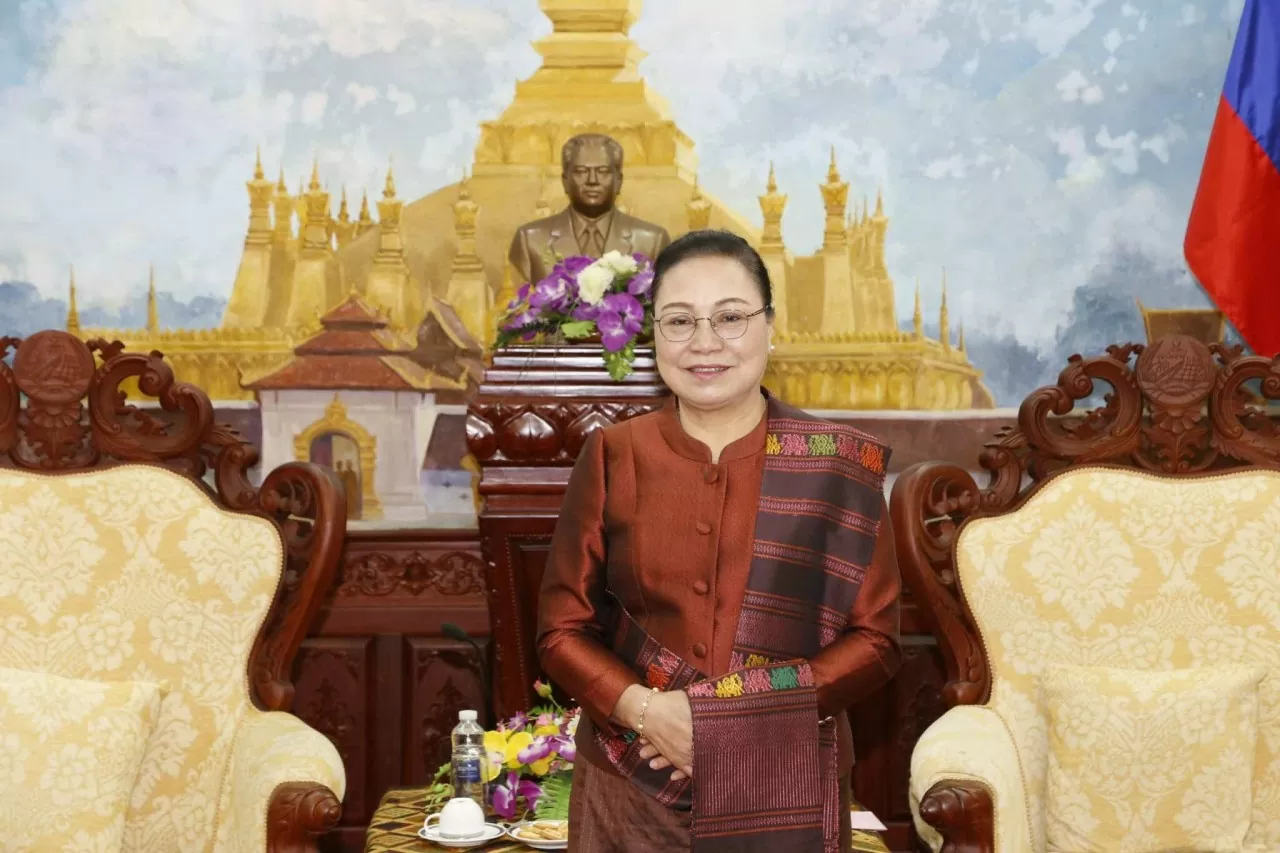 |
| H.E. Mrs. Khamphao Ernthavanh, Lao Ambassador to Vietnam. (Source: Lao Ambassador to Vietnam) |
What are your expectations for the AFF 2026 amid an increasingly complex international landscape that continues to disrupt supply chains and affect the global economy?
The international landscape is becoming increasingly complex and uncertain. Global supply chains continue to face significant disruptions, while international trade is increasingly affected by unilateral tariff measures. At the same time, ongoing conflicts have triggered a profound energy crisis, reflected in sharply rising oil prices and mounting inflationary pressures across the region. These developments pose serious risks not only to regional economic growth, but also to peace, stability, and prosperity more broadly.
Against this backdrop, I have high expectations for the AFF 2026, to be held in Hanoi under the theme “Shaping Our Future Together: Peace, Prosperity, and People-Centered Development”. The Forum serves as an important platform for leaders, scholars, policymakers, and the business community to engage in meaningful dialogue and develop coordinated responses to emerging regional and global challenges.
I particularly welcome the Forum’s three key sub-themes, which focus on strengthening supply chain resilience, advancing the energy transition, and fostering a more inclusive and people-centered ASEAN Community. These priorities are both timely and strategic, as they directly address the region’s most pressing concerns while supporting the long-term aspirations set out in the ASEAN Community Vision 2045.
As ASEAN Chair in 2024, Laos gained firsthand experience of the considerable challenges involved in steering the region through intensifying geopolitical and economic uncertainties. That experience reaffirmed an important principle: no ASEAN member state can effectively address these challenges alone.
In this context, the AFF represents a timely and constructive initiative by Vietnam, promoting open, inclusive, and forward-looking dialogue — an approach that is indispensable for transforming shared concerns into meaningful collective action. In the same spirit, Laos remains committed to working closely with Vietnam and fellow ASEAN member states to preserve ASEAN unity, strengthen ASEAN centrality, and uphold the “ASEAN Way”, which is grounded in mutual respect, consultation, and consensus-building in advancing regional cooperation.
Ultimately, the success of the Forum will depend not only on the quality of the ideas and discussions generated but also on the collective determination of member states to translate those ideas into practical policies and tangible people-centered initiatives. I am confident that the third AFF will continue to evolve into an important mechanism for strengthening strategic trust, deepening regional cooperation, and contributing meaningfully to sustainable peace, stability, and shared prosperity across the region.
One of the key topics discussed at this year’s AFF is promoting ASEAN cooperation in the Mekong subregion with a long-term vision toward 2045. How do you assess this aspect of ASEAN cooperation, and in what practical ways can Mekong subregional cooperation benefit member states while strengthening ASEAN unity and cohesion?
The Mekong subregion is truly the heart of mainland Southeast Asia. Elevating cooperation within the subregion as a key agenda item at the AFF 2026 is both timely and essential for advancing the ASEAN Community Vision 2045.
In my view, Mekong subregional cooperation mechanisms - including the Mekong River Commission, the Ayeyawady-Chao Phraya-Mekong Economic Cooperation Strategy (ACMECS), and the Cambodia-Laos-Vietnam Development Triangle Area - have already delivered tangible and meaningful outcomes in areas such as sustainable water resource management, food security, regional energy connectivity, and climate resilience.
Nevertheless, these cooperation efforts have at times remained insufficiently integrated with the broader ASEAN integration process. Strengthening linkages between Mekong subregional initiatives and the ASEAN Community Vision 2045 would help transform the Mekong subregion from a purely geographic area into a dynamic driver of ASEAN cohesion and regional connectivity.
Such an approach would also help ensure that no member state is left behind, particularly landlocked countries such as Laos, which possess significant potential to become strategically important “land-linked” hubs within the region.
Integrated connectivity and infrastructure: By aligning national infrastructure development strategies with ASEAN master plans, member states can facilitate more efficient cross-border trade, reduce logistics costs, and enhance the integration of small and medium-sized enterprises (SMEs) into regional and global supply chains. This form of “hard connectivity”, when complemented by “soft connectivity” measures such as harmonized customs procedures and regulatory coordination, is essential to strengthening regional competitiveness and economic integration.
Sustainable resource management: Shared natural resources, particularly the Mekong River, are fundamental to regional food security and energy sustainability. Enhanced cooperation allows member states to move beyond fragmented national approaches toward a more coordinated and sustainable management framework. This is especially important for climate adaptation efforts and for ensuring that regional development remains environmentally sustainable, resilient, and inclusive over the long term.
People-centered development and livelihoods: A people-centered approach to regional cooperation is essential to improving livelihoods and strengthening social resilience across ASEAN. Enhanced cross-border coordination in public health, greater exchanges in agricultural technology and innovation, and the development of integrated tourism initiatives - such as the Mekong Tourism Coordinating Office and related Mekong tourism corridors - can deliver direct and meaningful benefits to local communities. When citizens experience tangible improvements in their daily lives as a result of regional cooperation, it helps foster a stronger sense of shared identity, mutual trust, and belonging within the ASEAN Community.
In this regard, strengthening the Mekong subregion also reinforces ASEAN’s overall unity and cohesion. It demonstrates that ASEAN is a community that leaves no one behind and is capable of addressing complex transboundary challenges through dialogue and collective action.
Laos remains committed to working closely with ASEAN partners to ensure that Mekong subregional cooperation contributes meaningfully to our shared journey toward 2045, strengthening both the subregion and ASEAN as a whole.
Amid the intertwined opportunities and challenges facing the region, how do you think Vietnam and Laos can work together to advance ASEAN’s shared vision in the years ahead?
Vietnam and Laos share a special, historic, and deeply rooted relationship that goes beyond traditional diplomacy; it is a partnership founded on shared development and common security interests.
As we look toward the ASEAN Community Vision 2045 and the ASEAN Economic Community Strategic Plan 2026–2030, our two countries are uniquely positioned to serve as a model for regional cooperation. In recent years, bilateral relations have entered a new stage of development through intensified high-level exchanges and the adoption of cohesive strategic frameworks for the 2026–2030 period.
Built on mutual trust, solidarity, and a shared commitment to ASEAN unity and centrality, this partnership reflects the determination of both countries to translate political commitments into practical outcomes that strengthen regional resilience and improve the well-being of our peoples.
Economic integration and connectivity remain central priorities. Major infrastructure projects, including the Hanoi-Vientiane Expressway and the Vung Ang-Mu Gia-Tha Khek-Vientiane railway, are expected to strengthen regional logistics, facilitate cross-border trade, and improve maritime access for landlocked Laos through Vung Ang Port.
At the same time, both countries are coordinating closely to support ASEAN economic integration through trade facilitation, digital transformation, and regulatory harmonization in line with regional frameworks such as the upgraded ASEAN Trade in Goods Agreement (ATIGA) and the forthcoming ASEAN Digital Economy Framework Agreement (DEFA).
Bilateral trade and investment cooperation also continues to expand, particularly in strategic sectors such as renewable energy, agriculture, and manufacturing.
Sustainable development and people-centered cooperation remain equally important pillars of bilateral engagement. Joint initiatives in renewable energy, environmental conservation, sustainable agriculture, education, tourism, and cultural exchange contribute not only to national development but also to ASEAN’s broader green transition and social resilience.
Amid growing regional and global uncertainties, Vietnam and Laos remain firmly committed to upholding ASEAN unity, centrality, multilateralism, and rules-based cooperation, while working together to promote lasting peace, inclusive prosperity, and sustainable development across the region.
People-to-people ties continue to be a strategic advantage. Vietnam and Laos share longstanding historical and political bonds, and strengthening tourism, educational exchanges, youth programs, and cultural cooperation can further reinforce ASEAN’s vision of a more connected and people-centered regional community.
Ultimately, the most meaningful contribution Vietnam and Laos can make to ASEAN is to combine economic pragmatism with regional solidarity - promoting growth and connectivity while helping preserve ASEAN unity, resilience, and strategic autonomy in an increasingly uncertain global environment.