





AMM 59: Vietnam's growth closely linked to ASEAN's overall development
WVR - On the occasion of the 59th ASEAN Foreign Ministers' Meeting (AMM 59) in the Philippines, Ambassador Tran Duc Binh, Director General of the ASEAN Department, shared with The World &Vietnam Report the significance of the meeting and Vietnam's participation.
Latest
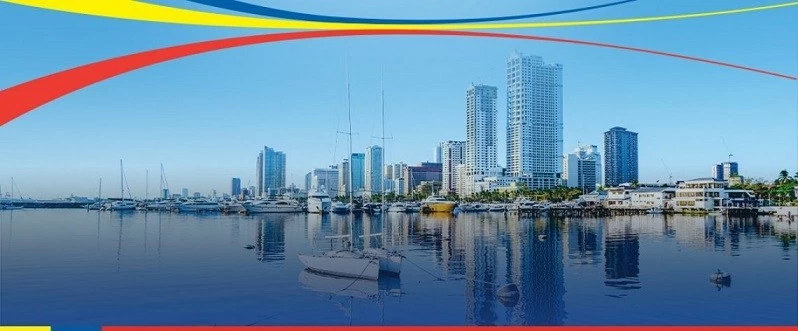 |
| The 59th ASEAN Foreign Ministers' Meeting (AMM) and related meetings will take place from July 20-23 in Manila, Philippines. (Source: asean.org) |
Ambassador, could you share the key priorities of the 59th ASEAN Foreign Ministers' Meeting, taking place just over two months after the success of the 48th ASEAN Summit?
The 59th ASEAN Foreign Ministers' Meeting (AMM) and related meetings take place from July 20-23 in Manila, Philippines. The meeting can be summarized with several major priorities. Firstly, it aims to promote the implementation of the ASEAN Community Vision 2045, shifting from orientation to action, from policy-making to execution. This is a crucial task to maintain the momentum of Community building, strengthen solidarity, unity, and enhance ASEAN's adaptability to emerging challenges.
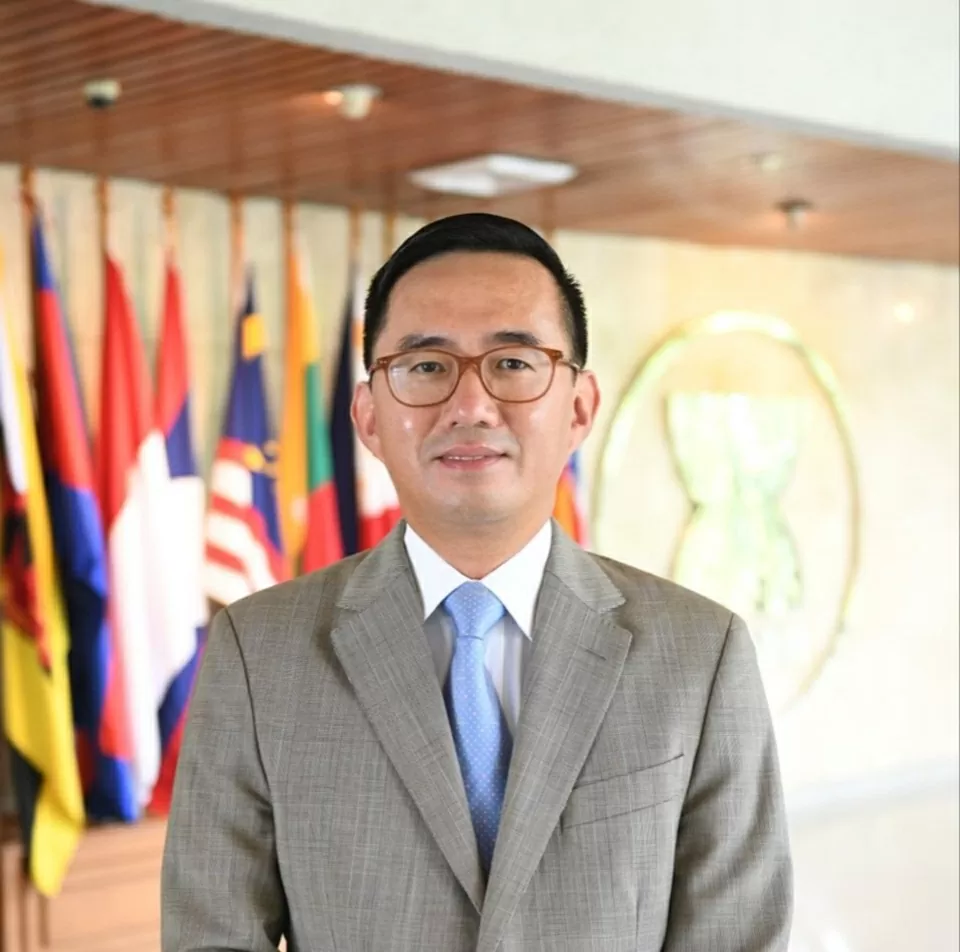 |
| Director General of the ASEAN Department, Ambassador Tran Duc Binh. (Photo: Bao Chi) |
The second focus is to continue concretizing the priorities and initiatives of the ASEAN Chairmanship Year 2026. Based on the results of the 48th ASEAN Summit, Ministers are expected to review and promote the implementation of high-level commitments, including the Joint Declaration on responding to the Middle East crisis, to enhance inter-sectoral coordination, early warning, ensure energy security, food security, supply chain stability, and support citizens in emergencies.
The third focus is to deepen relations between ASEAN and its partners through ASEAN 1, ASEAN 3, EAS, and ARF frameworks, thereby reaffirming ASEAN's central role, "converging" capacity, and coordination in the evolving regional architecture.
The meetings will provide an opportunity for ASEAN and its partners to enhance dialogue, build trust, and promote substantive cooperation in priority areas; while also engaging in frank exchanges on international and regional issues of mutual concern based on international law and ASEAN's fundamental principles.
This occasion will also feature activities commemorating the 50th anniversary of the Treaty of Amity and Cooperation in Southeast Asia (TAC), a document with foundational principles governing relations among countries in the region and between ASEAN and its partners. Affirming the value and adherence to TAC principles is highly relevant in the current context, contributing to strengthening a culture of dialogue, strategic trust, respect for international law, and peaceful resolution of differences.
Additionally, the Mekong-US, Mekong-Japan, and Mekong-Republic of Korea Foreign Ministers' Meetings are expected to be held, contributing to promoting sub-regional cooperation, effectively linking Mekong cooperation with the ASEAN Community building process, towards inclusive, sustainable development and narrowing development gaps.
Overall, AMM 59 is not only an opportunity to review ASEAN cooperation progress in 2026 but also a crucial step in transforming strategic directions into concrete actions, strengthening intra-regional solidarity and resilience, while promoting the central role in fostering peace, stability, cooperation, and development in the region.
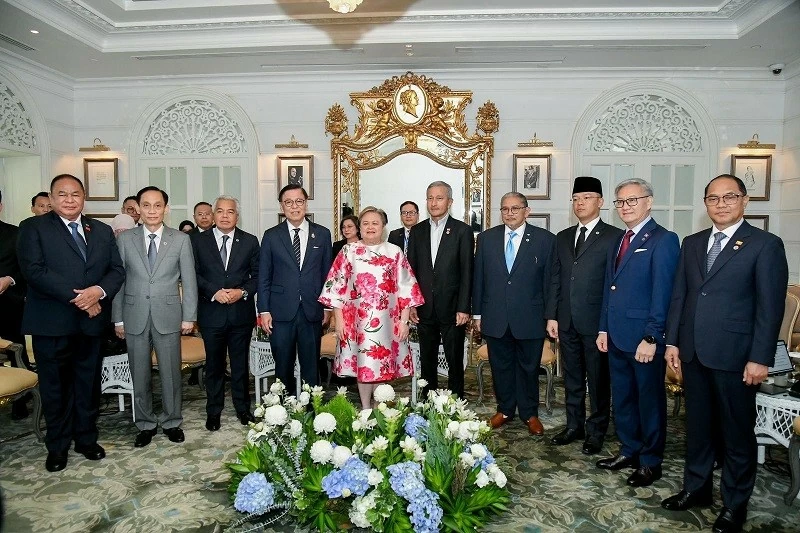 |
| Informal meeting between ASEAN Foreign Ministers and Myanmar's Foreign Minister in Thailand on July 12. (Photo: Bao Chi) |
The ASEAN Future Forum 2026, hosted by Vietnam, was considered a highlight of ASEAN 2026. With that momentum, what important messages does Vietnam wish to convey at this meeting, Ambassador?
The ASEAN Future Forum 2026 was successfully held with many practical outcomes. The initiatives and ideas presented at this Forum are highly suggestive and can serve as a reference for countries to discuss more in-depth. Accordingly, we wish to share the following:
Firstly, efforts to maintain and promote regional peace, stability, and adherence to international law. A peaceful and stable regional environment is ASEAN's most valuable strategic asset over the past six decades. To protect this achievement, ASEAN needs to steadfastly uphold international law and build a rules-based regional order, promote a culture of dialogue, build trust, and "cool down" potential conflicts early.
Secondly, repositioning ASEAN's role in the new context and continuously strengthening ASEAN's central role. Amid complex global and regional developments and geoeconomic pressures, ASEAN needs to shift from a passive crisis response to proactive leadership and shaping the landscape. This is also ASEAN's approach in building the ASEAN Community Vision 2045. Along with that, ASEAN needs to continue strengthening its central role and strategic autonomy by enhancing regional resilience, effectively managing crises, and maintaining ASEAN-led mechanisms as spaces for dialogue, trust-building, and substantive cooperation.
Thirdly, prioritizing regional resilience enhancement through continued regional integration and connectivity, while diversifying partnerships, strengthening supply chain connectivity, ensuring energy security, food security, promoting digital transformation, establishing common standards for AI governance, cybersecurity cooperation, and accelerating green energy transition; enhancing ASEAN's forecasting, adaptation, and recovery capabilities against shocks.
Fourthly, emphasizing the complementary relationship between sub-regional cooperation and ASEAN's overall development process. With the orientation of the ASEAN Community Vision 2045 to build an innovative, dynamic, resilient, and people-centered ASEAN, sub-regional development cooperation plays an indispensable role, enhancing competitiveness and leveraging the potential and advantages of sub-regions, bringing practical benefits and equal development opportunities to the people, contributing to building a people-centered ASEAN Community.
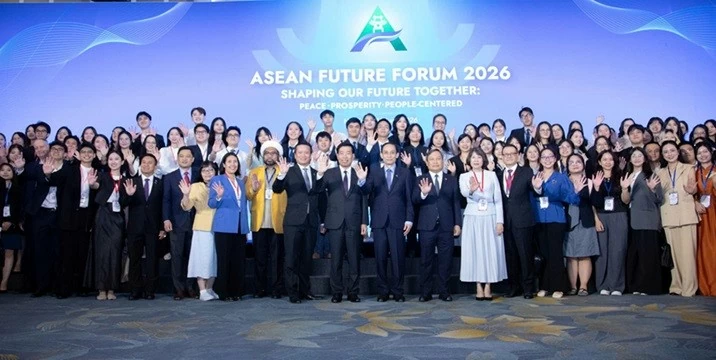 |
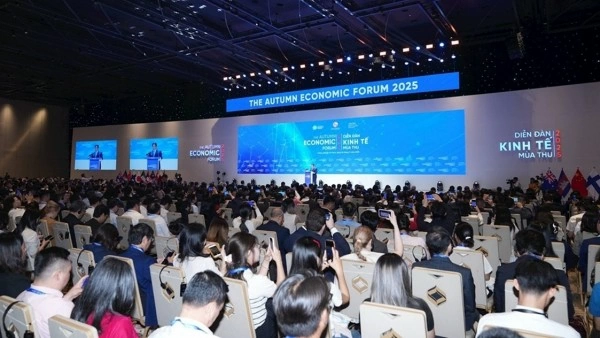
| The ASEAN Future Forum 2026 left a positive impression with many practical initiatives. (Photo: Nguyen Binh) |
Speaking at the Conference on implementing the Politburo's Resolution on the foreign policy of the Party's 14th Congress, General Secretary and President To Lam sthat Vietnam's diplomacy should "shift from individual growth to growing alongside ASEAN." How do you perceive this important direction, Ambassador?
The direction of "shifting from individual growth to growing alongside ASEAN" is a strategic perspective for Vietnam and member countries, affirming that the interests of nations are closely tied to the common interests of ASEAN and the region. The strength, position, and strategic autonomy of Vietnam and ASEAN countries will be multiplied when ASEAN is united, resilient, dynamically developing, and maintains its central role in the regional architecture.
Since 1995, ASEAN has always been a strategically significant space for Vietnam in terms of security, development, and foreign affairs. Vietnam has always been an active member, making substantive, effective contributions to ASEAN's important development steps. Therefore, "growing alongside ASEAN" is not only an objective requirement of regional integration but also a strategic choice aligned with Vietnam's long-term interests.
Firstly, a united, resilient ASEAN with a central role is an important "anchor" for Vietnam and member countries to address regional security challenges, both traditional and non-traditional, while maintaining a peaceful, stable regional environment and promoting development. Therefore, strengthening ASEAN's unity and central role remains a high priority in Vietnam's foreign policy.
Secondly, "growing alongside ASEAN" means linking Vietnam's development with the regional integration and connectivity process. When ASEAN becomes a more dynamic, resilient, and inclusive growth pole, Vietnam will also have more favourable conditions to achieve rapid, sustainable development goals.
Thirdly, Vietnam also needs to shift from a "proactive participation" mindset to "proactive, creative, and leading contributions in areas of capability," by actively proposing initiatives, promoting consensus, participating in shaping regional agendas, and making practical contributions to ASEAN's action capacity, credibility, and collective voice.
From another perspective, in the fast-moving, unpredictable world and regional context, no country can sustainably grow if isolated from its surrounding environment. Partner countries in various regions worldwide are increasingly interested and wish to establish, expand substantive relations and cooperation with ASEAN, jointly addressing common challenges through ASEAN-led frameworks for peace, stability, and development. This is also an opportunity for Vietnam, ASEAN, and partner countries to continue strengthening and expanding development space, diversifying markets and supply chains, unlocking investment capital through FTA networks, serving national development goals.
Therefore, it can be affirmed that a strong ASEAN not only aligns with the interests of Vietnam and ASEAN member countries but also meets the common aspirations of many partners for a peaceful, stable, cooperative, and developing region. With that spirit, Vietnam will continue to accompany, contribute proactively, responsibly, and effectively to the ASEAN Community building process, ensuring Vietnam's growth is closely linked to ASEAN's overall development.
Thank you, Ambassador!


