




‘Vietnam Intersection’ exhibition: Vietnam, where memories converge
WVR - From the old streets of Saigon, the subsidy days in Hanoi to a Vietnam vigorously reviving after Doi Moi, more than two decades of the nation's history are captured through the lenses of three French photographers: Daniel Roussel, Gilbert Bertrand, and Lily Franey.
Latest
The exhibition “Vietnam Intersection” offers valuable visual materials, akin to narrating a special story of affection, understanding, and enduring bonds between French friends and Vietnam. Through these seemingly silent photos, viewers encounter not only the memories of a nation but also the extraordinary power of photography in connecting people across all borders.
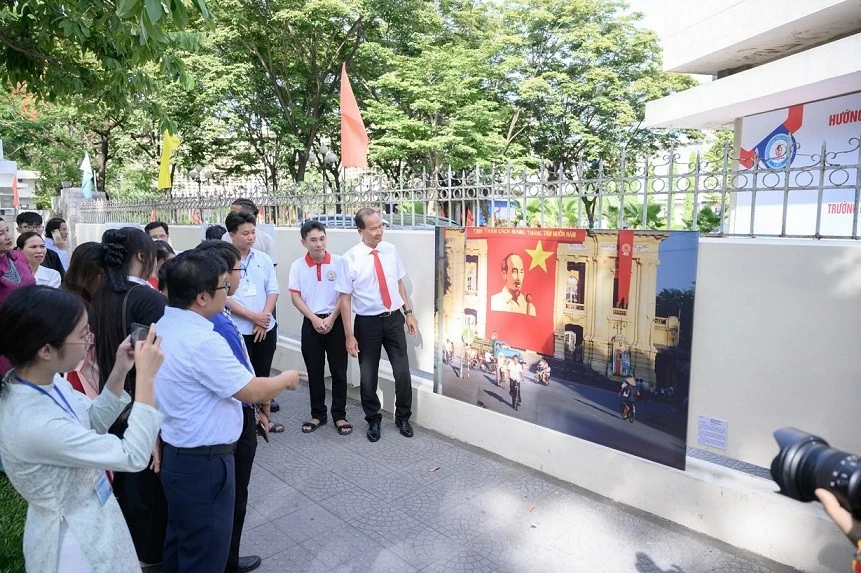 |
| The exhibition, organized by the French Institute in Vietnam, is being showcased in Hue as part of the Hue Festival 2026 after its debut at the International Photography Biennale Photo Hanoi '25 and the Da Nang Museum. (Photo: French Institute in Vietnam) |
Slices of time
Amidst the ancient space of Hue, where layers of cultural and historical sediment are ever-present in every fortress wall, the “Vietnam Intersection” exhibition presents a unique dialogue with the past.
The exhibition's name carries multiple layers of meaning. It is the intersection of historical eras, from the final years of the war, the period of national reunification to the era of reconstruction and renewal. Each photograph is like a window to the past, where anonymous faces, market scenes, streets, houses, and everyday moments unexpectedly become witnesses to history.
The intriguing aspect is that these slices were not captured by Vietnamese photographers but by three French photographers. They came to Vietnam at different times, with different jobs, and brought their own experiences. Yet ultimately, they all converged at a common point of special attachment to this country.
As shared by Franck Bolgiani, Cultural Attaché of the French Embassy in Vietnam and Deputy Director of the French Institute in Vietnam, the exhibition is not merely a visual display but a dialogue between perspectives, eras, and memories.
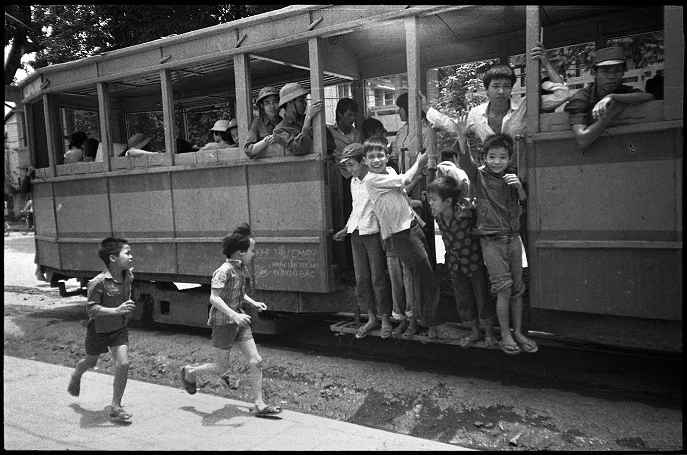 |
| A photo evoking memories of old Hanoi by Daniel Roussel. (Photo: French Institute in Vietnam) |
According to Franck Bolgiani, from the 1970s to the early 1990s, the three photographers captured the lands, faces, and transformations of a Vietnam always moving in its unique way. When placed together, the works create a shared memory between France and Vietnam, a memory of respect, understanding, and empathy.
The beauty of difficult years
Among the three authors, Daniel Roussel is perhaps the most deeply connected with Vietnam. Born in 1946, he arrived in Hanoi in 1980 as a resident correspondent for the daily L'Humanité and lived in Vietnam until 1986. It was a special period in the country's history, when the war had receded but post-war difficulties were still present in every corner of life.
At that time, Vietnam was under an embargo, the economy was still lacking, and people's lives faced countless challenges. Yet instead of only seeing those shortages, Daniel Roussel discovered what bound him to Vietnam for a lifetime: the beauty of the people.
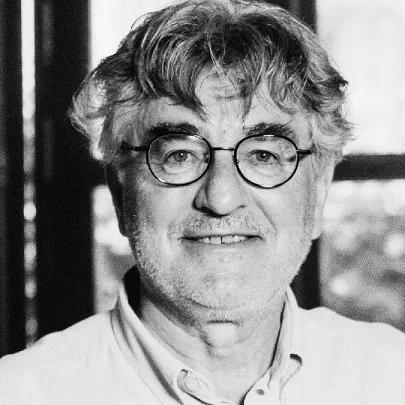 |
| Photographer Daniel Roussel. |
His lens did not focus on grand images or political symbols. He found the material of history in the simplest things like a woman cycling on the streets of Hanoi, children playing on the sidewalk, workers on construction sites, or old apartment complexes. In these frames, there is no lament, nor any intention to embellish reality. What emerges is the resilient vitality of people rebuilding their lives day by day after the war.
Daniel Roussel's bond with Vietnam did not end after he left Hanoi. Returning to France, he continued to write books, make documentaries, and dedicate much effort to topics related to Vietnam.
His three famous films about the Vietnam War contributed to providing Western audiences with different perspectives on history. Notably, his friendship with General Vo Nguyen Giap, lasting decades, became a special mark in his journalism career.
Daniel Roussel once called the General “a revered uncle in the family”, a term that shows rare closeness and respect. Perhaps it is from this understanding that his photos today still convey warmth like diary pages written with light.
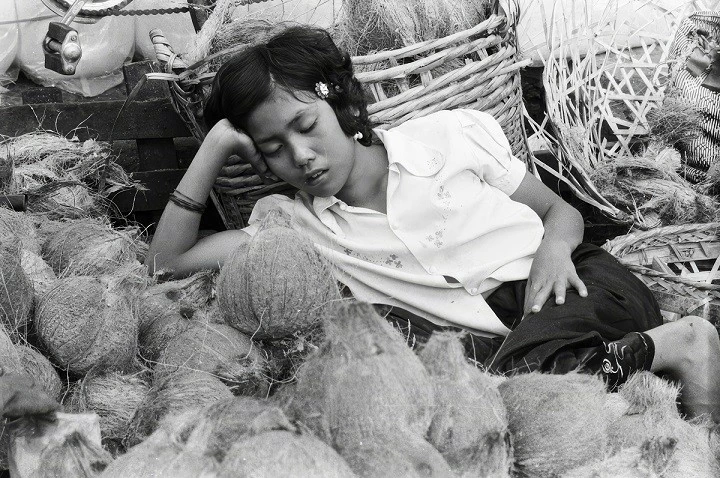 |
| A photo of the simple life of Vietnamese people by Gilbert Bertrand. |
Preserving Unpublished Memories
If Daniel Roussel tells the story of post-war Vietnam, Gilbert Bertrand takes viewers back to the earlier period, the years 1970-1975. As an officer of the French Cultural Center in Da Lat and Saigon, he was not a professional photographer.
However, his passion for photography drove him to capture what was happening around him. The freedom of someone not bound by profession sometimes allowed Gilbert Bertrand to see things that war correspondents often overlooked.
In his photos, there are no battles or major historical events; instead, there are bustling markets, Saigon streets, street vendors, pedicabs, working families, or children curiously standing before the lens.
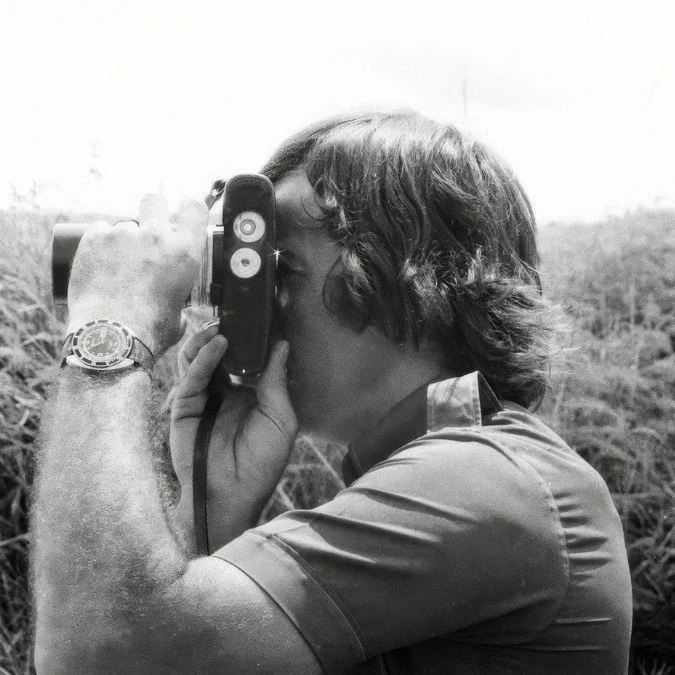 |
| Photographer Gilbert Bertrand. |
It is an everyday, vibrant, and very close Vietnam. This simplicity makes Gilbert Bertrand's works precious because history is not only made by leaders' decisions or grand events but also by the lives of millions of ordinary people.
Remarkably, for many decades, these photos were almost never published. Only after being reintroduced did the public have the opportunity to access a valuable archive of a historical period that receded half a century ago. Each photo is like a lost piece of memory, helping today's viewers better understand the rhythm and appearance of Vietnam during a tumultuous time.
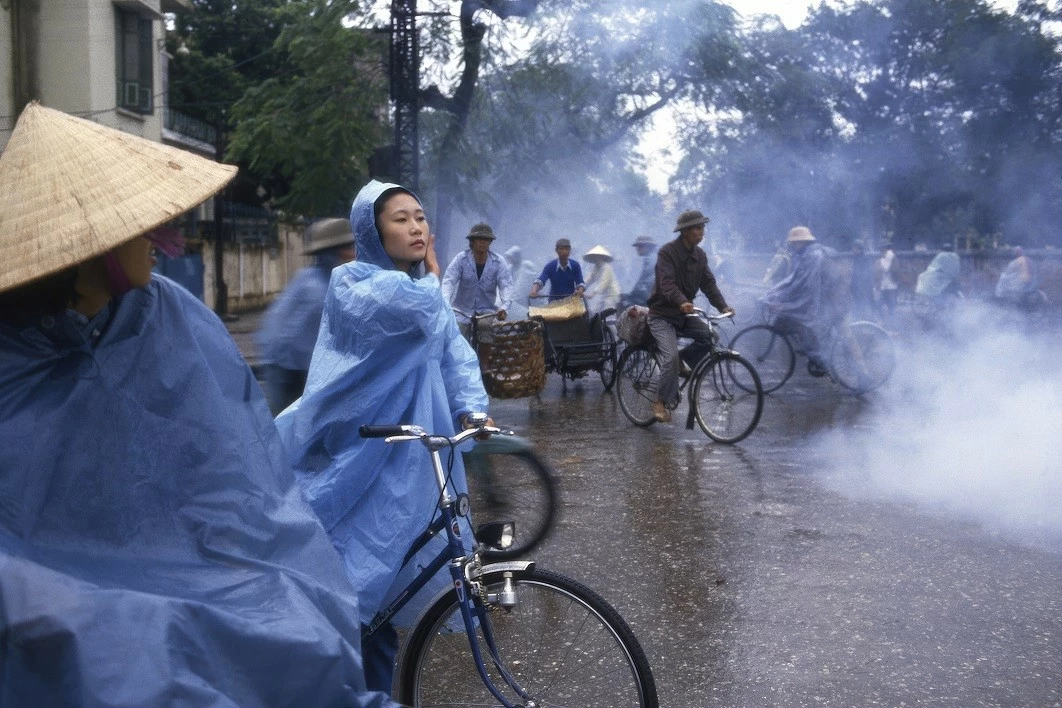 |
| Vietnam through the lens of photographer Lily Franey. |
Faces of hope and revival
Unlike the somber tone in Daniel Roussel's photos or the strong documentary nature in Gilbert Bertrand's, Lily Franey's works are always filled with human warmth. The central characters in her photos are often women, children, and ordinary families.
Born in 1947 in Paris, she is one of France's prominent female photographers with numerous projects on people, children, women, and humanitarian issues worldwide. From 1987, during her missions with the French Popular Relief, Lily Franey visited Vietnam multiple times and witnessed a country entering a phase of reconstruction and renewal.
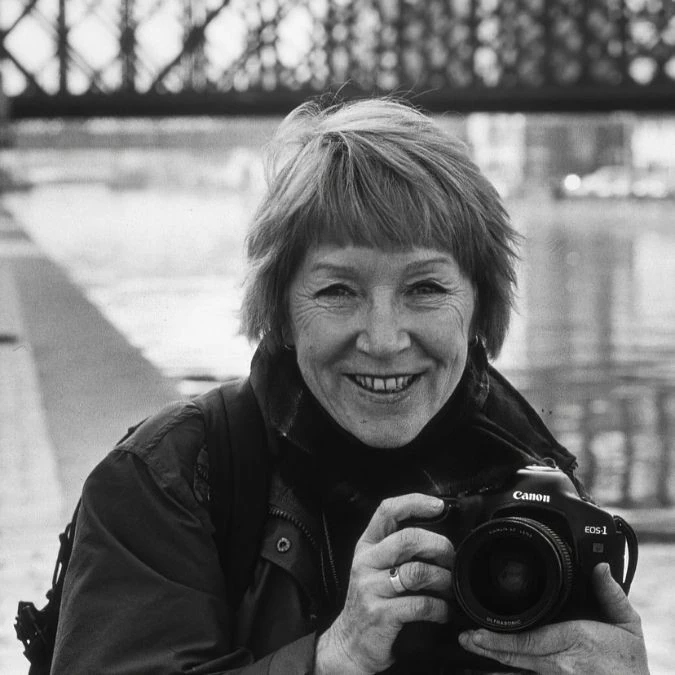 |
| Photographer Lily Franey. |
Through her lens, Vietnam emerges as a country reviving with all its optimism, kindness, and faith in the future. The smiles in Lily Franey's photos are not those of abundance but of people who have endured loss yet choose to look forward.
When placed together, the works of Daniel Roussel, Gilbert Bertrand, and Lily Franey form a continuous flow of memories spanning over two decades of Vietnamese history. But what remains ultimately is not the events or timelines, but the image of the resilient Vietnamese people amidst war, enduring in hardship, and optimistic as they step into the future.
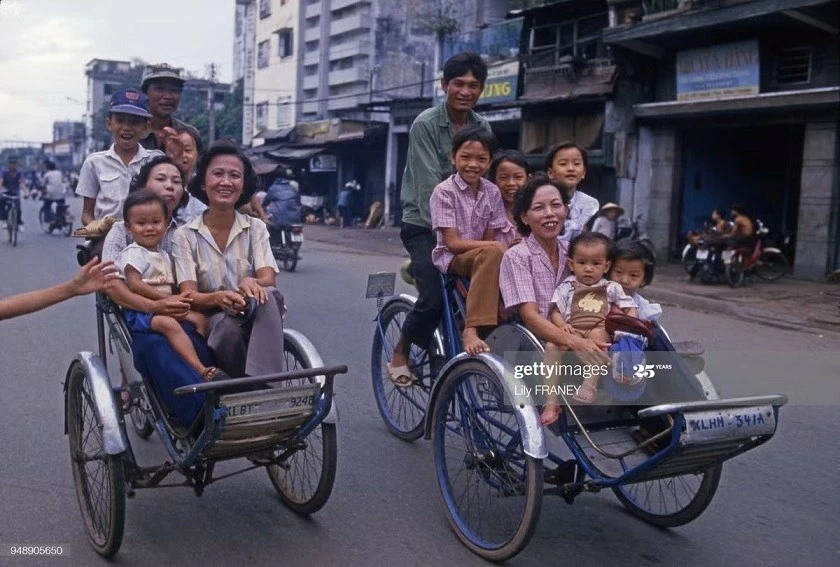 |
| A photo on the streets of Ho Chi Minh City in 1987 by Lily Franey. |
This is also why “Vietnam Intersection” transcends the boundaries of a typical photography exhibition to become a story of heart-to-heart encounters. Thanks to these three French friends, memories of a Vietnam that has faced many challenges continue to be preserved in the language of light.