





Sri Lanka – Where nature, memories, and hospitality tell a story
WVR - Sri Lanka, a small yet diverse island nation, offers travelers unique experiences ranging from wild nature to rich cultural heritage, according to Dr. Trinh Le Anh.
Latest
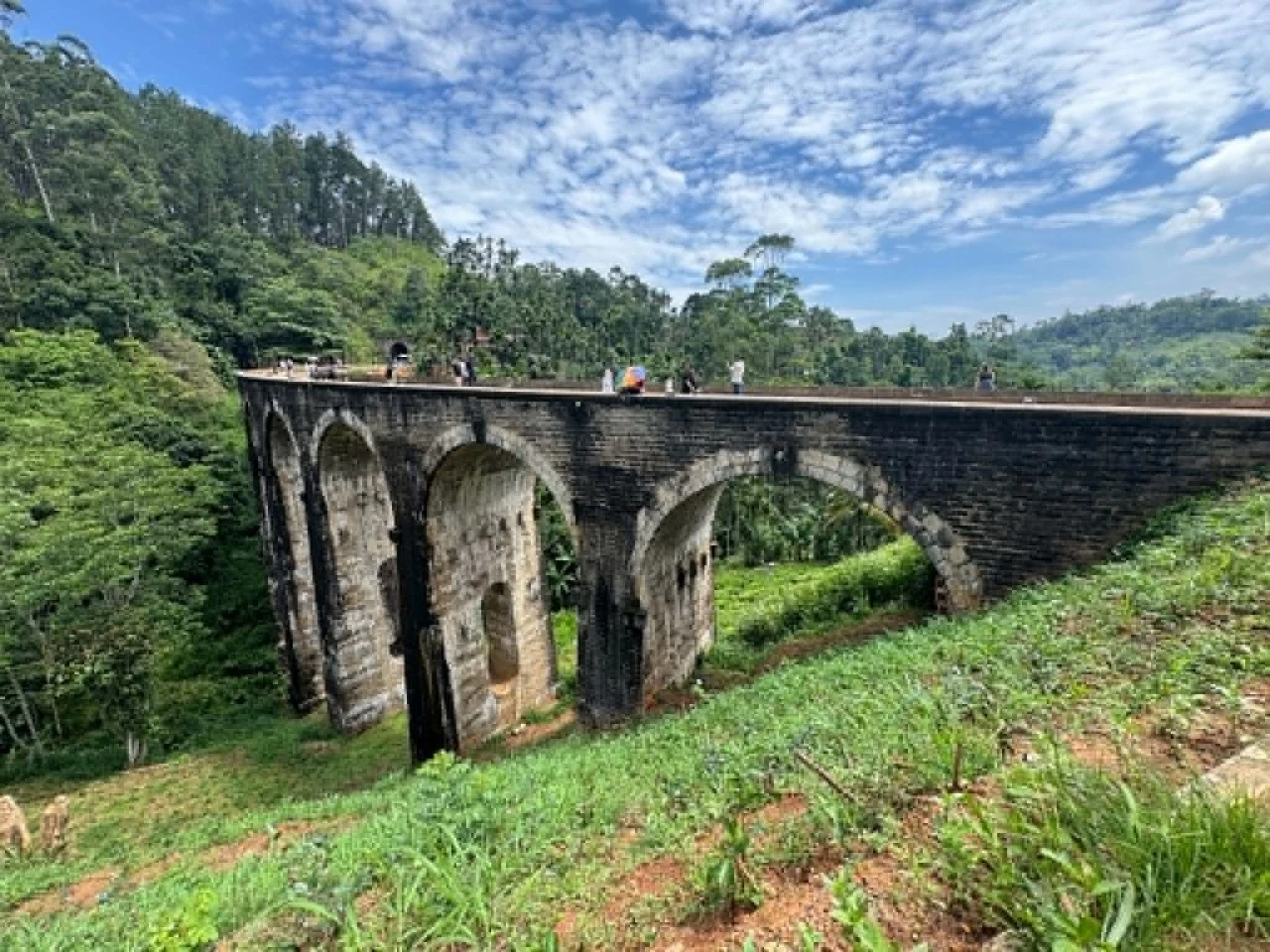 |
| Nine Arch Bridge, Ella – a beautiful green slice of Sri Lanka. (Photo: Courtesy by author) |
From the safari trails in Yala, the spice scents in Matale, the Araliya flower welcome rituals to the colonial memories in Galle, Sri Lanka emerges not only as a destination rich in tourism resources but also as an island nation that preserves harmony in its lifestyle and interactions. Behind seemingly small experiences are profound lessons about the distance from nature, the value of hospitality, and the challenges of sustainable tourism development.
Safari and lessons on proximity to nature
After Nuwara Eliya, Sri Lanka changes its scenery once more. From the cool tea highlands, the journey southward takes us through drier, sunnier, less populated areas, gradually leading to Yala. The regional transition is clear: The lush green of tea recedes, giving way to sparse forests, shrubs, darker roads, and a somewhat wilder natural environment.
Sri Lanka is greener than I imagined. World Bank data shows that Sri Lanka's forest area accounts for about one-third of the country's land area in recent years. What I remember more is the frequent presence of animals in tourism spaces and daily life: Monkeys at tourist sites, squirrels running around resorts, peacocks appearing unexpectedly by the roadside, and sometimes even elephants appearing in the most unexpected settings.
Our group encountered an elephant right by the roadside at dusk. That moment was both joyful and slightly concerning. Joyful because such an encounter provides a very real sense of Sri Lanka: Nature has not been pushed too far from human life. Concerning because the road was dark, with almost no lights, and if a vehicle were to speed or a driver were inattentive, such proximity could become dangerous. A memorable experience sometimes also comes with a very practical question about infrastructure and safety.
I often asked the guide: Are the animals we see completely wild or in some semi-wild form? This question did not stem from doubt but from the curiosity of someone involved in tourism. When animals appear too close to visitors, the boundary between nature, conservation, and tourism performance can easily make outsiders wonder. For Sri Lanka, this very boundary is part of the destination's allure: Visitors feel close to nature but still need clear explanations to understand and behave appropriately.
Yala is where this story becomes more concentrated. Materials introducing Yala often mention the diversity of its wildlife, from elephants, Sri Lankan leopards, sloth bears, water buffaloes, crocodiles to many bird species. However, if viewed cautiously, a safari should not be merely understood as a "photo hunt" for famous animals. It is also a rule-based approach to nature: Following routes, maintaining distance, accepting the possibility of not encountering the desired species, and understanding that animals are not obliged to appear to please visitors.
From a destination management perspective, this is a very valuable yet sensitive layer of resources. Wild nature has great appeal because it creates a sense of surprise, unpredictability, and emotional richness. But this unpredictability demands better management: Vehicle speed regulations, road lighting, guidelines for interacting with animals, access limits, guide competency, and communication methods to prevent unrealistic visitor expectations. If done well, Sri Lanka can maintain the feeling of "nature being very close" without turning this proximity into a risk for both humans and animals.
Leaving Yala and the fulfilling safari journey, I often think about the image of the elephant by the roadside at night. It was not a staged scene, nor was it a true safari experience. It was just a moment on the road. But that very moment highlights a quintessentially Sri Lankan trait: In this island nation, nature enters the traveler's journey in the most unexpected ways. Sometimes it's a squirrel in a hotel yard, a troop of monkeys by a sacred site, a peacock at the roadside, or an elephant appearing in the darkness. Yala and the southern roads made me slow down because of the need to observe more closely: Trees, animals, darkness, vehicle speed, safe distances, and how humans share living space with nature.
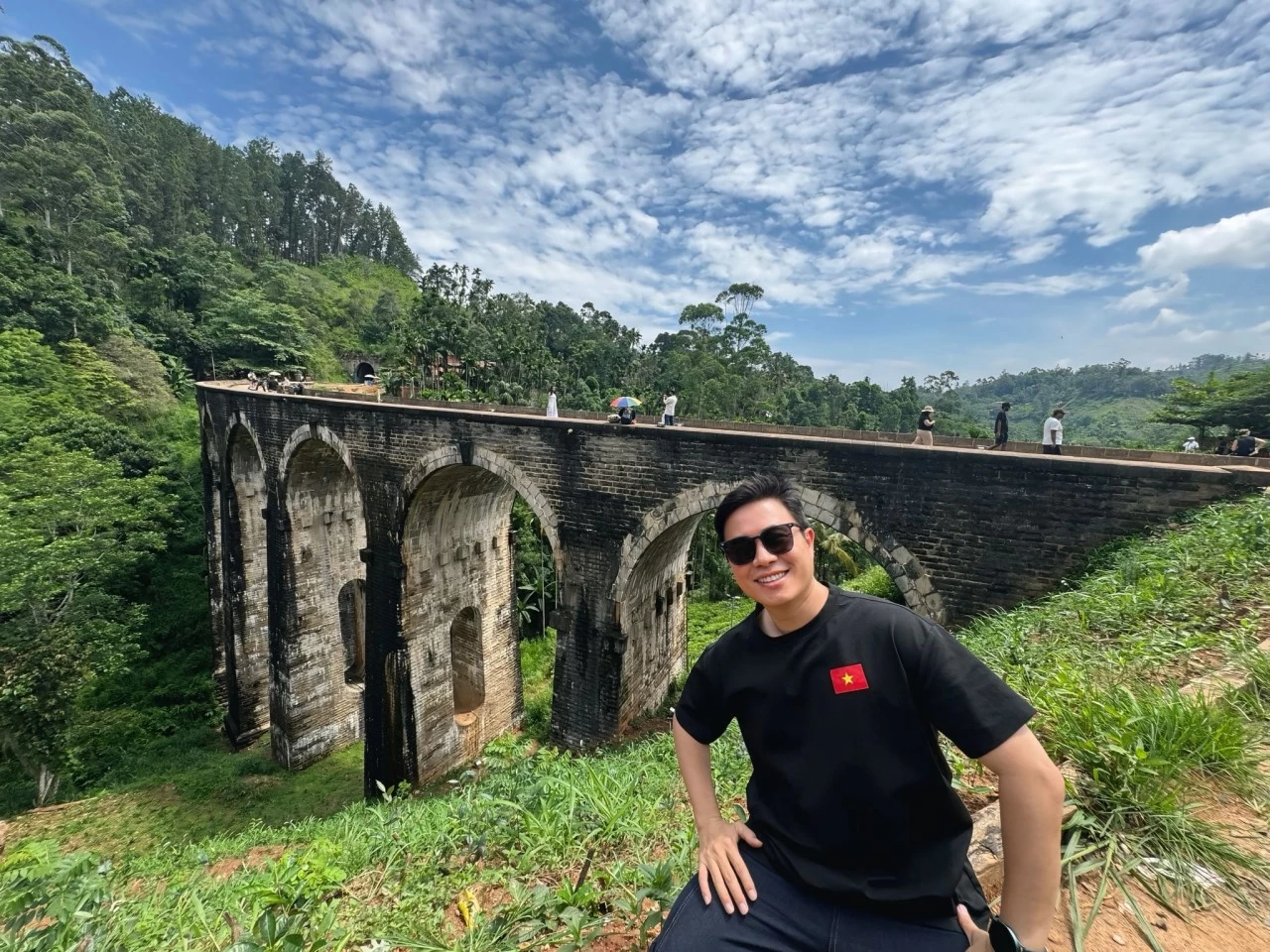 |
| The author had interesting experiences in Sri Lanka. (Photo: Courtesy by author) |
Culinary flavours and hospitality
Sri Lanka left a special impression on me: Scent, taste. It's the smell of tea in the highlands, the aroma of curry at meals, the scent of cloves and cardamom in the spice garden, the richness of coconut, the strong spicy and salty flavours of the dishes, and the refreshing taste of welcome drinks after a long journey. In the Matale Spice Garden, Sri Lanka is encapsulated in a world of flavours. Cardamom is introduced as the "queen of spices", cloves are aromatic, turmeric, sandalwood, medicinal plants, and spices make the space feel like a small South Asian taste class. Spices here are linked to food, climate, folk medicine, and how people perceive richness in daily life.
Sri Lankan cuisine, through the meals on the journey, has a distinct personality. It doesn't try to please every palate with blandness. Some dishes are spicier, saltier, more aromatic, with more coconut, more spices. There are also very simple dishes like coconut pittu – rice flour mixed with grated coconut, steamed, and eaten with coconut milk. Not elaborate, but very much in the spirit of the island nation: Close, tropical, and warm enough for a long day's journey.
This spirit, these flavours, are also reflected in how Sri Lankans welcome guests. In many resorts, the reception is prepared as a small ritual. Guests are greeted with flowers, offered drinks, some places light candles, some place green leaves and white Araliya flowers in a bowl of water, some create coconut shapes into cute animals for welcome drinks. These details are not large but make the check-in process less dry and become a moment rich in emotion.
The ritual of inviting guests to light a candle when checking into a hotel particularly caught my attention. In Sri Lankan culture, deeply influenced by Theravada Buddhism, lighting oil lamps or candles during festivals, openings, or the start of an event often signifies the beginning of good things, dispelling the darkness of ignorance, and wishing for smoothness.
When guests are invited to light the first flame themselves, it is not merely a service performance. On a deeper cultural level, this ritual is like a blessing for a new journey to be illuminated and peaceful, simultaneously transforming the guest from an "outsider" to a part of the welcoming space.
Of course, in the modern hotel environment, the religious significance has been considerably moderated, but the symbolic traces of light, luck, and hospitality are still intentionally present. Clearly, a destination may lack infrastructure resources, but it can still create a sense of being valued through thoughtful communication. A flower given at the right time, a cool drink after a long journey, a gentle smile at the hotel door sometimes eases much of the fatigue in the journey. Sri Lanka seems to understand the power of these gestures.
Behind these experiences is a relatively young, dedicated, and polite tourism workforce. From receptionists, resort staff to guides, they are not noisy, not too ostentatious but gentle and patient. A guide shared with us that public education in Sri Lanka is well-attended, students have many rights, and schools emphasize moral education. I haven't had the opportunity to fully verify this perception, but from the service experience, one can sense a foundation of "soft persuasion": Speaking softly, knowing how to wait, knowing how to smile, knowing how to keep a comfortable distance for guests.
Even the matter of tipping creates a pleasant feeling. In Sri Lanka, a 500 Rupee note to thank hotel staff, bellboys, or room support is not a large amount when converted to Vietnamese currency, but enough to create a beautiful gesture. Spending money here, in my perception, is quite "valuable": not because everything is cheap, but because small amounts can still create a very human connection between guests and service staff.
From a tourism studies perspective, this is the part easily overlooked if one only views the destination through a list of resources. Heritage, safari, tea, sea, or colonial architecture are important resource layers. But travel experiences are often determined by very close contact moments: Who opens the car door, who gives flowers, who pours tea, who smiles when guests are tired, who explains a bit more slowly when guests don't understand. These small touchpoints create emotions, and emotions are what make travelers want to recount their experiences.
In this layer of experience, Sri Lanka does not impress with luxury. It endears with ritualistic hospitality: An Araliya flower, a coconut drink, an Ayubowan greeting, a small smile, and the way service staff quietly make guests feel welcomed. In an island nation where the economy still faces many challenges, this gentleness becomes all the more memorable.
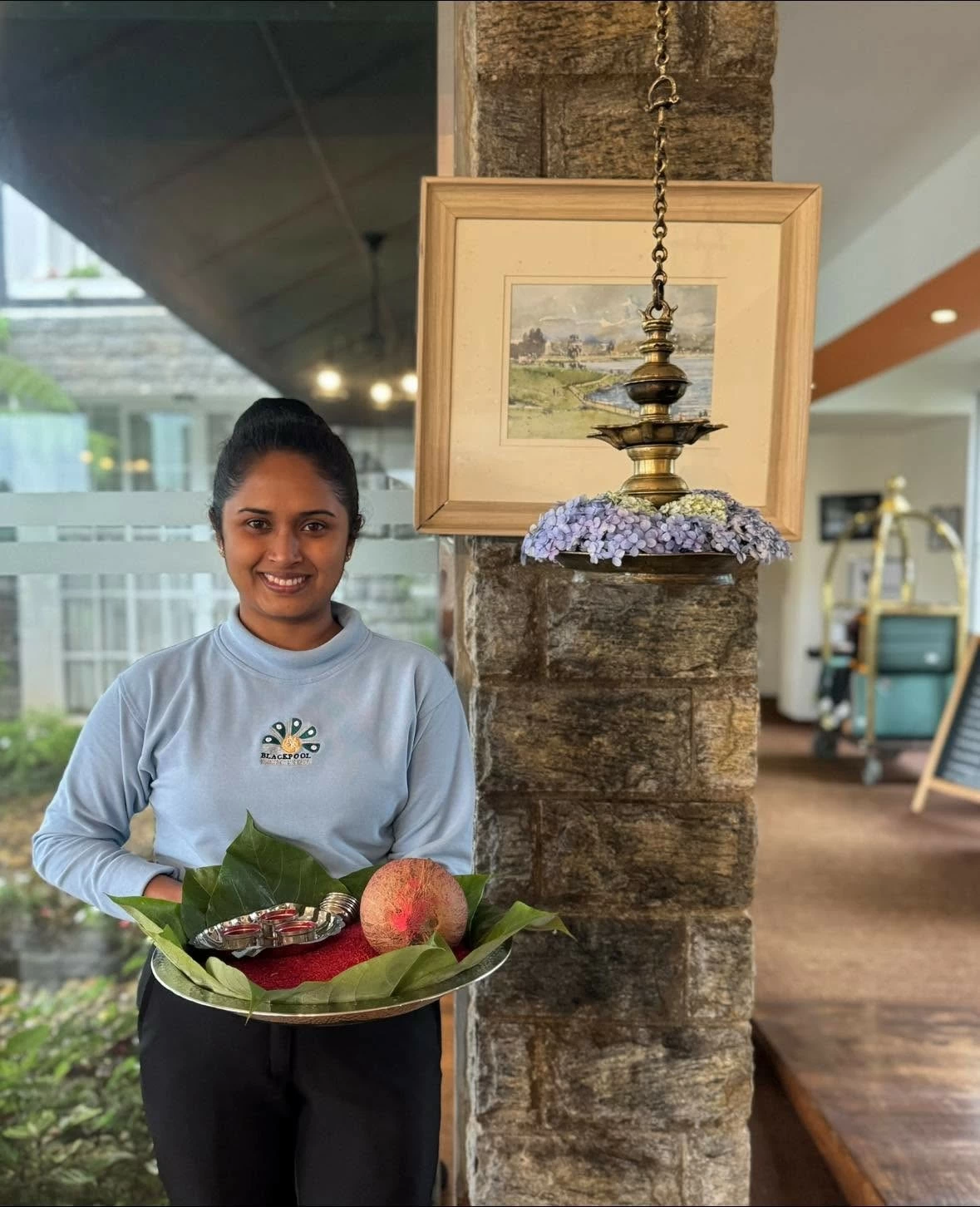 |
| A gentle smile and the way service staff quietly make guests feel welcomed… (Photo: Courtesy by author) |
Galle and layers of overlapping memories
From Yala and the southwestern coast, our journey took us to Galle. After days passing through Buddhist capitals, tea highlands, and safaris, Galle unveils another layer of Sri Lanka's identity: The story of maritime trade, oceanfront fortresses, colonial architectural imprints, and cultural exchanges that have shaped the urban landscape here.
Galle Fort, situated by the Indian Ocean, is not vast enough to overwhelm, but special enough to make pedestrians want to slow down. The small streets, white walls, tiled roofs, wooden doors, cafes, churches, boutique hotels, and sections of the fortress facing the sea create a very different atmosphere compared to Anuradhapura or Kandy.
If Buddhist relics drew me into the deep spirituality of Sri Lanka, Galle reminds me that this island nation once lay on important maritime trade routes of the Indian Ocean, where maritime powers, merchants, religions, and diverse communities once converged.
UNESCO describes Galle as a fortified city established by the Portuguese in the 16th century, reaching its peak development under the Dutch in the 18th century, before the British arrived. It is considered a prime example of a fortified city built by Europeans in South Asia, reflecting the interaction between European planning principles and South Asian architectural traditions.
The place that held my attention the longest in Galle was the Dutch Reformed Church, also known as Groote Kerk. This church is not flamboyant; it is simple, restrained, light-colored, with the beauty of neatness and tranquility. Inside are wooden pews, stained glass windows, a blue vaulted ceiling, and tombstones laid under the floor. The skulls, crossbones, angels, and judgment trumpets on the tombstones transport viewers to a very European funeral language of the 18th century.
Amid an island nation where Buddhist impressions left a deep mark on me, the space of that Dutch church brings forth another layer of memory, quiet yet clear. Galle, therefore, should not be viewed as a "piece of Europe" placed in Sri Lanka. Such a perspective is both simplistic and risks impoverishing the complexity of the place.
Galle is the result of many layers of contact: Portuguese, Dutch, British, maritime trade, Christianity, local residents, contemporary life, and tourism. These layers do not completely dissolve into each other. They coexist, sometimes contrasting, sometimes complementing, creating a space with its own cultural depth.
In heritage destination studies, places like Galle often raise questions about "living urban heritage": What to preserve, for whom, and for what purpose? A fortress can be a historical relic. But when it still houses residents, shops, hotels, restaurants, churches, museums, and daily activities, that heritage is no longer a static object. It needs to be managed as a living urban space, with economic pressures, preservation needs, and risks of over-commercialization.
I like Galle because it doesn't demand immediate emotion. It invites you to walk, closely observe the layers of walls, read an epitaph, step into a church, sit by a window, and then realize that Sri Lanka has many faces. There is the Sri Lanka of the Bodhi tree and white stupas, of tea and mist, of elephants, monkeys, peacocks, and safaris. And there is also Sri Lanka with oceanfront fortresses, Dutch tombstones, colonial tiled roofs, and small streets being awakened by contemporary tourism.
It is in Galle that my narrative about Sri Lanka becomes more complete. This island nation is not only shaped by harmony in interactions but also by its ability to contain many layers of memory: Sacred, colonial, natural, common, challenging, and resilient. All coexist, quietly, in an island space that is both small and deep.
Leaving Sri Lanka, I remember the images: The Bodhi tree in Anuradhapura, bare feet on hot stone, the Temple of the Tooth in Kandy, the tea hills of Nuwara Eliya in the mist, the elephant by the road at night, the red tuk-tuk in the rain, the coconut flavor in coconut pittu, the Araliya flower given at the hotel door, the blue ceiling of the Dutch church in Galle. These images do not form a perfectly smooth story. They resemble pieces of a still-challenged but evocative island nation.
Sri Lanka did not appear to me as a perfect destination. Infrastructure still has gaps, roads in many places lack lighting, and transportation can be challenging. Some regions remain poor, and services are sometimes inconsistent. But amidst these limitations, this country still retains a very unique softness: People speak softly, are not noisy, behave courteously, welcome guests with small rituals, and allow nature to be quite close in daily life.
From a destination management perspective, this is an important asset. Ritchie and Crouch argue that a destination's competitiveness lies not only in its available resources but in how the destination organizes, manages, sustainably develops, and creates long-term benefits for the local community (Ritchie & Crouch, 2003).
For Sri Lanka, this asset includes UNESCO heritage, Buddhist life, Ceylon tea, safari, coastline, spices, colonial architecture, and hospitality culture. But alongside tangible resources, there is something harder to measure: The gentle demeanor of people and the rhythm of life.
The thought-provoking aspect is that this gentleness also needs to be preserved through good management. If communication over-polishes the image while infrastructure lags, visitors will feel disappointed. If safaris are promoted as photo hunts at any cost, wildlife can be disadvantaged. If religious symbols are turned into check-in backdrops, the solemnity will be harmed. If hospitality rituals become repetitive performances, genuine emotions can thin out.
Therefore, Sri Lanka does not need to become an overly polished destination. The value of this place lies in its authenticity: Still challenging but not harsh; green and wild yet close to humans; sacred but not distant; simple yet ritualistic; not truly rich in amenities but rich in the ability to make others feel welcomed.
I think, for Sri Lanka, sustainable tourism development should not start with the question of how to make this country resemble already perfected destinations. A more fitting question might be: How can Sri Lanka become better while still being Sri Lanka? Better in infrastructure, safety, service quality, heritage management, nature conservation, and community livelihoods. But still retaining the soft Ayubowan greeting, the Araliya flower in a bowl of water, barefoot steps at sacred sites, the slowness of Kandy, the scent of tea in Nuwara Eliya, and the feeling of nature being very close.
Perhaps that is what I remember most after the trip. Sri Lanka does not try to speak about itself. This island nation lets trees, temples, tuk-tuks, spices, tea, elephants, the sea, ancient churches, and gentle smiles tell the story. And in that story, gentleness is not a decorative layer for tourism. It is part of the identity…