

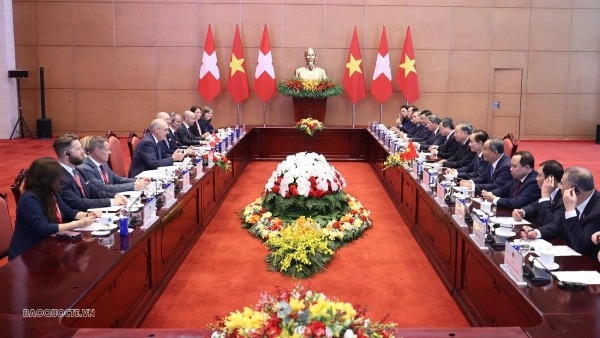


Vietnam fortunate to possess the world's most remarkable natural 'highway system', a major opportunity for inland waterway transport development
WVR - Bruno Jaspaert, Chairman of the European Chamber of Commerce in Vietnam (EuroCham), believes that Vietnam is fortunate to possess one of the world's most remarkable natural "highway systems" with numerous rivers crossing its territory. These are extremely favorable factors for Vietnam to develop inland waterway transport, reducing reliance on road transport.
Latest
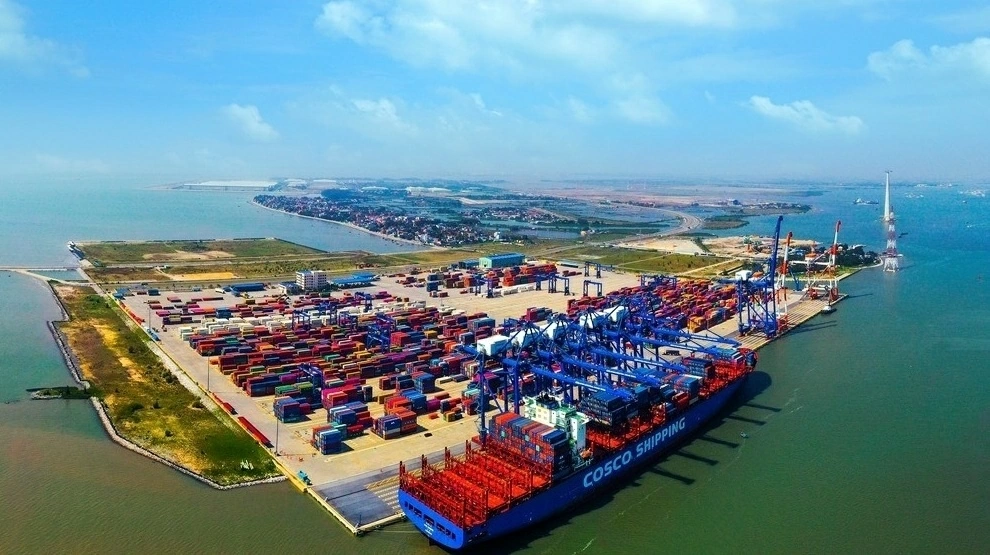 |
| According to EuroCham Chairman Bruno Jaspaert, Vietnam needs to build more large-scale inland ports, directly connected to the new port under construction at Lach Huyen. (Source: Hai Phong Newspaper) |
On the sidelines of the 7th Regional Logistics Forum 2026 themed “Creating New Development Space for Red River Delta Logistics” held in Hai Phong City, EuroCham Chairman Bruno Jaspaert shared with TG&VN about the potential for developing inland waterway transport within Vietnam's logistics sector.
In recent years, the Red River Delta has witnessed the strong development of production, trade, and logistics centers. However, with most cargo connections from ports still reliant on road transport, the need to facilitate maritime and inland waterway transport has become urgent, opening up new “exits” for goods and driving sustainable logistics development in the Red River Delta. What is your assessment of this reality?
In the North, specifically the Red River Delta, only 16% of total containers are transported by waterway. In other countries, this figure should be 70% to 80%. What do these numbers convey? It indicates that your country needs to change its infrastructure: Build more large-scale inland ports, directly connected to the new port under construction at Lach Huyen.
If this is achieved in combination with multimodal transport solutions – connecting railways to China and further to Europe, we will have an extremely strong advantage that not many Southeast Asian countries possess: Fixed rail/road connections to China or a fixed rail route through Turkey to Europe.
I think this is a very significant advantage, especially when combined with inland waterway transport that minimizes carbon emissions. If properly recognized, this is truly a game-changing factor.
From international and European lessons, what should Vietnam do to create new development space for the logistics industry?
Vietnam is among the countries with the highest logistics costs in Southeast Asia. This is reflected in the percentage of GDP. For example, the average speed of trucks. The average speed of trucks in Vietnam is among the lowest in Southeast Asia. This means there is immense potential to develop infrastructure to optimize logistics processes. Everything can become cheaper and faster if we not only focus on hard infrastructure like roads, bridges, and seaports but also on how to connect them.
And a key factor in the entire development process is to move beyond provincial-level thinking. If there is too much competition among provinces, how can your country build an effective overall logistics plan?
Therefore, a connecting corridor – it could be the Red River Delta corridor or an inland connection route – considering the development experiences of all other countries, is perhaps the most crucial factor for development.
Look at China, all their major development projects start from the coastal areas and then gradually move inland. Vietnam also needs to catch up with this trend because we are currently starting in the opposite direction, leading to suboptimal results.
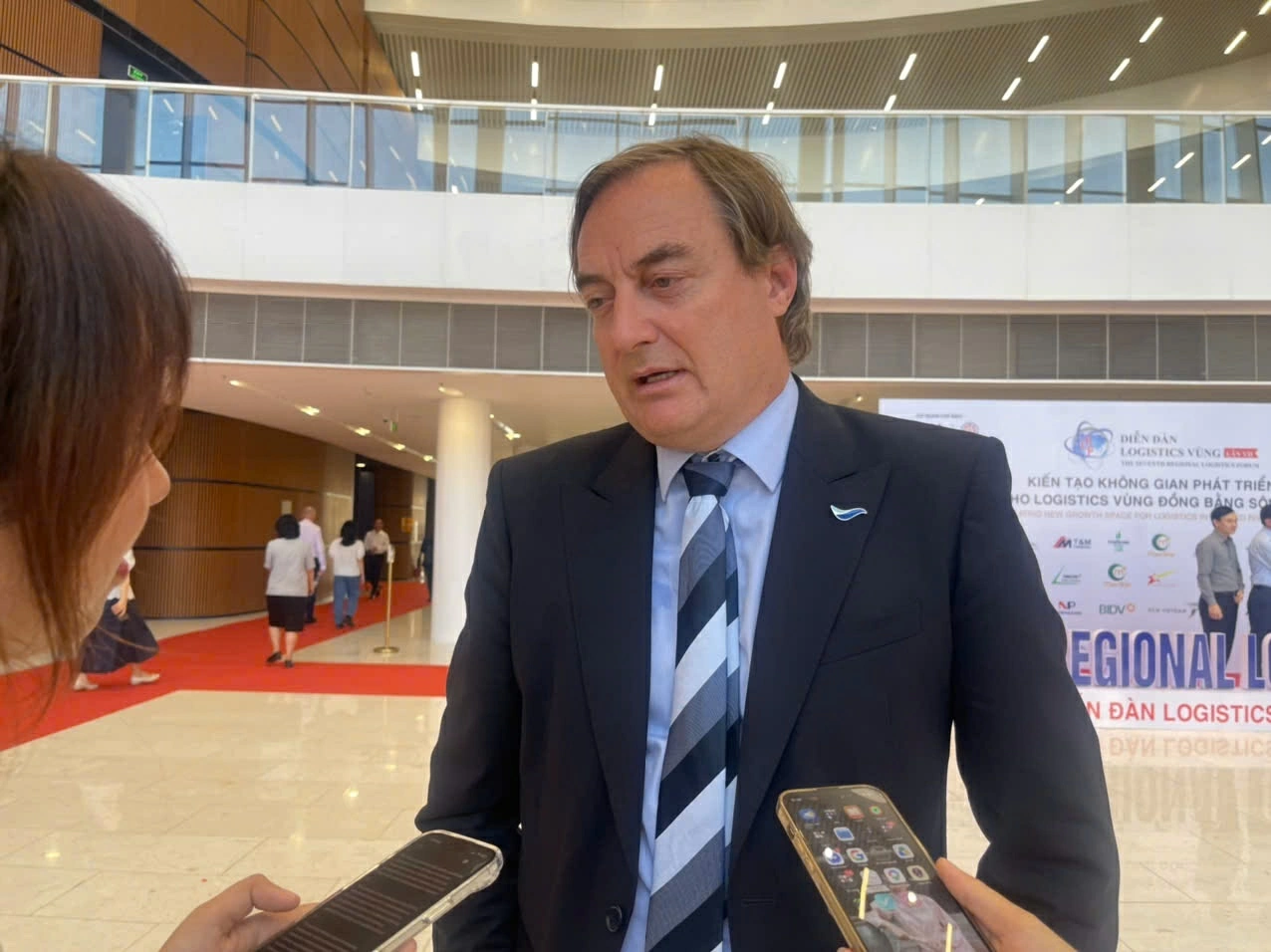 |
| EuroCham Chairman Bruno Jaspaert shares with the press on the sidelines of the 7th Regional Logistics Forum 2026, on September 21 in Hai Phong. |
Currently, goods brought into the domestic market primarily pass through industrial and logistics clusters, from where they are distributed to various places. This is how the foundation for development and economic growth is built.
However, I believe the most crucial point is that the logistics approach needs to change. We not only need to invest in infrastructure but also in solutions that create a difference for the supply chain and logistics.
I come from Belgium, a very small country. We only have a strip of coastline and a few seaports, yet Belgium's ports are among the largest in the world.
Why is that? Because we leverage the river system to connect to Germany, France, and the Netherlands. And this should be the direction Vietnam should pursue.
I believe that Vietnam is very fortunate to possess one of the world's most remarkable natural “highway systems”: Numerous rivers crossing its territory. With appropriate investments in dredging, a significant load of trucks on the roads can be reduced. This should have been implemented by Vietnam many years ago, so I hope that in the near future, inland waterway transport will become the most effective and prioritized choice for investors in Vietnam.
As an important partner of the Vietnam Chamber of Commerce and Industry (VCCI), what do you expect from the Federation's role in supporting the Vietnamese business community and enhancing Vietnam's economic integration and international partnerships in the coming journey?
According to Resolution No. 10-NQ/TW (dated June 8, 2026) of the Politburo on economic development with foreign investment, businesses are placed at the center of Vietnam's new development. And with Resolution 10, it is important that the voices of businesses need to be heard.
Personally, as well as the entire EuroCham, we hope that VCCI can assume the role of synthesizing all the different opinions of the business community and ensure that this voice is not just a mere proposal but a voice that has an impact and can be transformed into new laws, new regulations, better incentive policies for the market and investors coming to Vietnam.
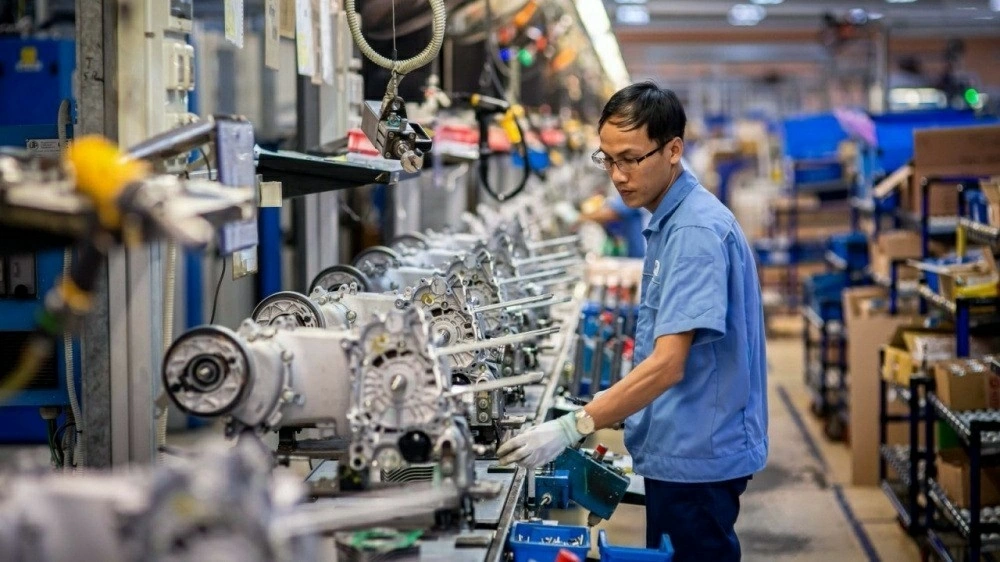 |
| According to Resolution No. 10-NQ/TW (dated June 8, 2026) of the Politburo on economic development with foreign investment, businesses are placed at the center of Vietnam's new development. (Source: VnEconomy) |
Through VCCI, we can raise the collective voice of the business community and ensure that the contributions of both sides will be considered when drafting new laws and frameworks to help businesses grow faster and meet the expectations of the Government.
VCCI is the official partner/representative of the Government, and so are other business associations. EuroCham is also striving to make a difference by ensuring that insights and experiences from Europe can also be applied in Vietnam. And for that goal, cooperation with VCCI is extremely beneficial.
What do you see as the key opportunities and potential areas for cooperation between the Vietnamese and European business communities? What can VCCI and EuroCham do together to further promote these opportunities?
As an investor from Europe, we come here to do business and make a profit. However, from a personal perspective, I believe that is not enough. As responsible investors, we want to contribute more to Vietnam's development.
This could be knowledge, perspectives on how to expand new markets, or through joint ventures, technology transfers... in areas that the Vietnamese Government is focusing on promoting and encouraging investment.
I believe that organizations like EuroCham or VCCI can play an important role in connecting the interests of Vietnamese and European corporations, gathering recommendations and proposals, helping to create a difference for Vietnam's economic growth.
Thank you!