




The right to development: Humans as both the goal and the driving force of national building
WVR - The right to development has become a crucial element in Vietnam's national development strategy, with people at the center of all policies and actions.
Latest
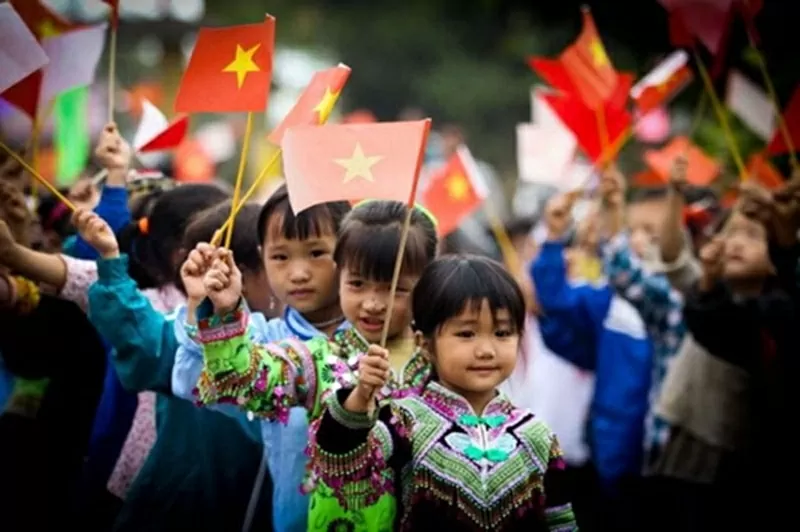 |
| The right to human development is not just about living better but also having the opportunity to rise. |
A significant step forward in the right to development
Reflecting on Vietnam's journey over the past decades, it is evident that the right to development has made significant and steady progress. This is not only reflected in political documents, laws, or international commitments that Vietnam is a part of but also in the practical lives of individuals who increasingly perceive changes in opportunities, capabilities, and dignity.
Decades ago, when Vietnam embarked on its renovation period, the concept of the "right to development" was still novel to many. However, the Party and the State quickly placed people at the heart of the development strategy: Humans are both the goal and the driving force of national building.
This is not merely a slogan but a philosophical choice: National development must begin with human development; developing people is the most sustainable foundation for national prosperity.
In this process, the Party's mindset has continually been updated with universal human values, including respecting human rights, protecting dignity, promoting fairness, and creating equal opportunities for all citizens—regardless of ethnicity, religion, gender, or economic status.
From this understanding, Vietnam has gradually perfected its legal system, expanding the space for civil and political rights such as freedom of religious belief, freedom of speech, press, and the right to run for the National Assembly and People's Councils. Simultaneously, policies for social, cultural, and educational development have been issued in line with the times.
Looking back over nearly 40 years of renovation, the achievements enjoyed by the Vietnamese people are immense, most evident in three areas: economy, society, and culture. Firstly, strong economic growth has opened up new opportunities such as employment, income, creativity, entrepreneurship, and international integration. The socialist-oriented market economy allows people to choose their development paths—something previously unimaginable.
Beyond GDP figures, more importantly, the self-reliance and economic capability of citizens have markedly improved. As incomes rise, people have better access to education, healthcare, and greater participation in cultural and social life. This is the practical foundation of the right to development.
Meanwhile, healthcare, insurance, and universal health care are standout achievements. The average life expectancy has increased, the healthcare infrastructure is complete, and health services are continuously improved. The right to live healthily, be protected from disease risks or natural disasters, and access advanced medical services are all factors that directly enhance the quality of life.
Notably, improvements in education are a crucial highlight of the right to development. Vietnam has increasingly equitable access to education, from urban to remote areas. The education system innovates in curriculum, teaching methods, promoting skills, critical thinking, and integration capabilities.
Additionally, cultural and spiritual life is becoming more vibrant. Culture is prioritized, national identity is preserved, and the creative life of the people is becoming more diverse. These are pillars that help individuals develop comprehensively in intellect, spirit, and character.
On a deeper level, the right to development is also reflected in citizens' participation in state and societal building and operation. The right to participate in social organizations and access information creates a more open, multidimensional, and interactive social space.
When people have the opportunity to voice their opinions, supervise, critique, and contribute to policy-making, the right to development is no longer an abstract concept but a real force driving society forward.
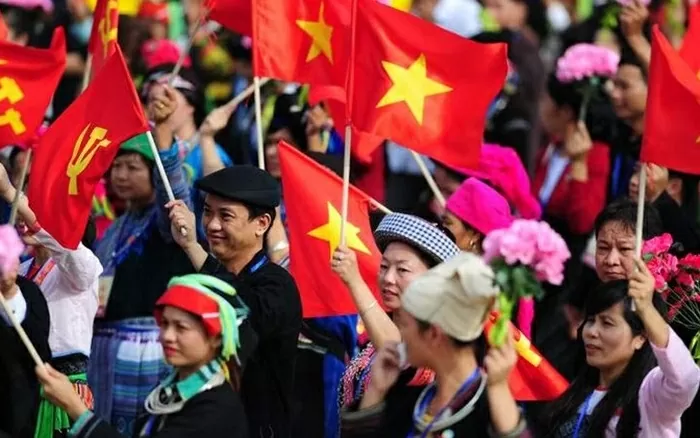 |
| Vietnam's practical actions in implementing human rights also serve as an opportunity to enhance the country's position and reputation. (Source: VTV) |
Human development as the core of national development
In reality, the right to development is not just about enjoyment. More profoundly, it is the State's responsibility to create a developmental environment and each individual's responsibility to strive for advancement. In a rapidly changing global context with digital transformation, artificial intelligence, climate change, and strategic competition, the right to development requires individuals to equip themselves with new knowledge, skills, and attitudes to adapt.
The State can open opportunities, but each citizen ultimately decides their path on the development journey. This is the fusion of rights and obligations, freedom and responsibility.
A close example is the Population Law passed by the National Assembly on the morning of December 10. The law clearly states financial support for childbirth for ethnic minority women with very few people; financial support for childbirth for women in provinces and cities with birth rates below replacement levels; and financial support for childbirth for women who have two children before the age of 35. Notably, according to the law, those with two or more biological children will be prioritized in purchasing, renting, or leasing social housing according to housing law...
From today's achievements, Vietnam aims for deeper advancements such as green growth models, comprehensive digital transformation, knowledge economy development, innovation promotion, long-term social welfare assurance, regional gap reduction, and support for vulnerable groups. All these goals converge on one point: human development is central and the highest criterion for evaluating growth quality.
Therefore, the right to development is not just a past achievement but a driving force for the future. It is Vietnam's commitment to its people, the international community, and the humanitarian values that humanity pursues.
It can be said that the right to development is not just the right to live better but also the right to become oneself, a capable and dignified citizen, provided with equal opportunities to rise. In our country today, this right is increasingly evident in every breath of life and in each individual's aspirations. It is also the most beautiful measure of national development.