





The Party's external affairs in Vietnam's revolutionary process
WVR - The practical activities of Nguyen Ai Quoc in the Communist International and the Ideology of President Ho Chi Minh on national liberation and international solidarity, under the spirit of “helping friends is helping oneself”, have laid the foundation and served as the guiding principle for building and perfecting the foreign policy of our Party and State over the past nine decades.
Latest
Our Party is a communist party, based on the ideology of Marxism-Leninism and Ho Chi Minh Thought. Marxism-Leninism is a scientific and revolutionary theoretical system, serving as the ideological foundation and guiding principle for the awareness and actions of communist and worker parties, encompassing the revolutionary theory of class liberation, national liberation, human liberation, the abolition of capitalist oppression and exploitation, and the construction of socialist and communist societies.
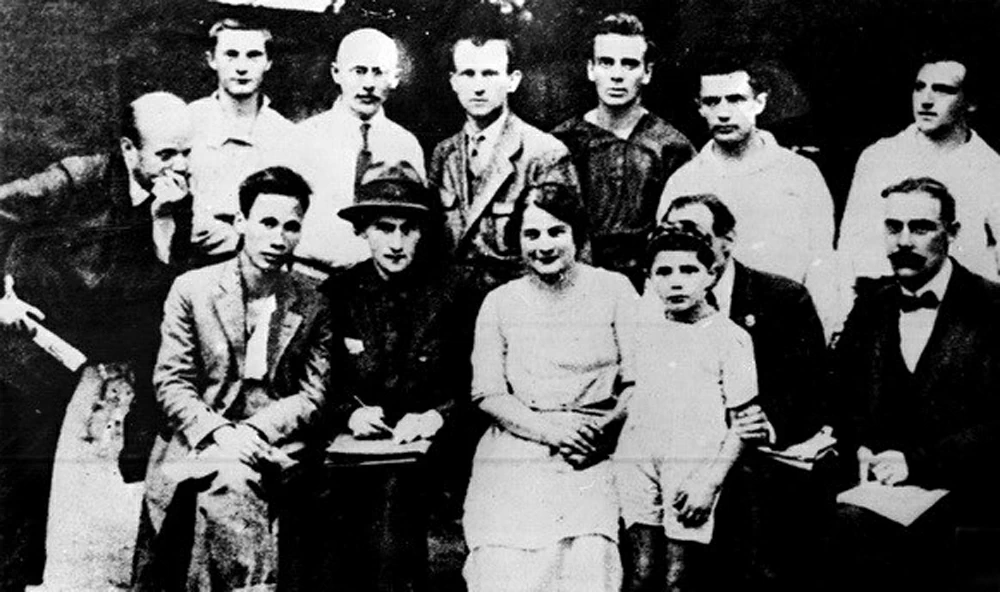 |
| Nguyen Ai Quoc with some delegates at the 5th Congress of the Communist International in Russia, 1924. (Source: VNA) |
Ho Chi Minh Thought is a comprehensive and profound system of viewpoints on the development path of the Vietnamese Nation and People, distilled by leader Nguyen Ai Quoc from his revolutionary activities in the Communist International in the early decades of the 20th century and from his creative application of Marxism-Leninism to the specific circumstances of Vietnam in the 1930s and subsequent decades. The core understanding was that the inevitable path to liberate the nation and country from French colonial rule was through a national liberation revolution, linking Vietnam's national liberation revolution with class liberation struggles, for peace, democracy, justice, and social progress worldwide. It emphasized the inevitable process of the Vietnamese revolution under the leadership of the communist party, from the victory of the national liberation revolution to building the country towards socialism, viewing the Vietnamese revolution as part of the global revolution, and simultaneously valuing the task of leading the Vietnamese revolution to victory with the duty of actively realizing international solidarity.
International solidarity, an aspect of the Party's external affairs
The practical activities of Nguyen Ai Quoc in the Communist International and his Ideology – President Ho Chi Minh – on national liberation linked with class liberation, national independence linked with socialism; international solidarity under the spirit of “helping friends is helping oneself” have laid the foundation and served as the guiding principle for building and perfecting the foreign policy of our Party and State over the past nine decades.
Immediately after its establishment, our Party, directly led by leader Nguyen Ai Quoc, maintained regular relations with the Communist International, the communist parties of the Soviet Union, China, France, and many other communist parties. Thanks to this, in the first 15 years since the Party's establishment, the Vietnamese revolution was not isolated, and when the opportunity arose, the Party led our nation to the successful August Revolution, establishing the Democratic Republic of Vietnam (DRV); affirming the victory of the ideology of independence, self-reliance, and creativity of a young revolutionary party.
In 1949, amid the significant victories of the resistance war against French colonialists in Vietnam, Laos, and Cambodia, our Party prepared to go public, and the communist organizations in Laos and Cambodia prepared to be established. Given the need for solidarity, promoting, and unifying the revolutionary activities in the three countries under the condition that the Indochinese Communist Party had dissolved, and each country had its own communist party, our Party's Central Committee raised the issue of organizing a specialized apparatus to assist the Central Committee in researching, synthesizing the situation, advising, and organizing the implementation of the Party's foreign affairs, especially the cooperation and assistance between Vietnam, Laos, and Cambodia.
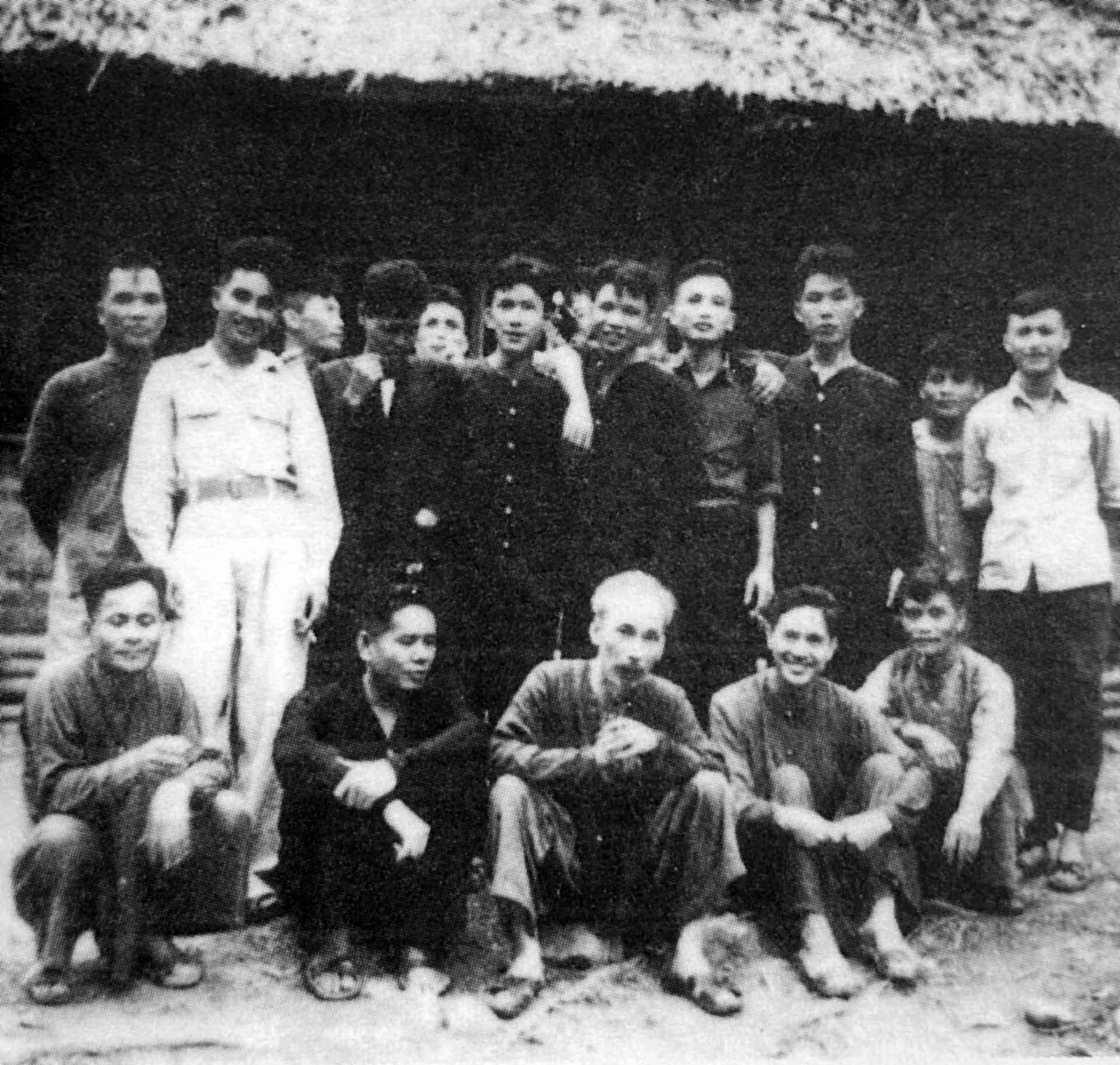 |
| The Cambodian Issarak delegation attending the Vietnam-Laos-Cambodia Alliance Conference in 1953, photographed with President Ho Chi Minh in Viet Bac. (Archival photo) |
On November 1, 1949, the Party Central Committee issued a resolution to establish the Vietnam-Laos-Cambodia Affairs Commission under the Party Central Committee, the precursor to the Party Central Committee's Commission for External Relations. Besides the function and task of cooperation and assistance between us and Laos and Cambodia, the Commission was also assigned the task of general exterbak affairs of the Party. In 1953, General Nguyen Chi Thanh, the first head of the Vietnam-Laos-Cambodia Affairs Commission, on behalf of the Party Central Committee and our Army, established the Vietnam-Laos Solidarity and Combat Alliance, coordinating with our friends to open the Upper Laos front, helping our friends expand the liberated areas, build revolutionary bases, and draw a significant portion of French troops stationed in Dien Bien Phu to the Upper Laos front, significantly reducing pressure and casualties for our army when attacking Dien Bien Phu.
After 1954, with peace restored in the North, our Party and people simultaneously carried out two strategic tasks: building and defending the North and liberating the South, unifying the country. The Party's external relations expanded. The Party directly formulated the foreign policy of our Party and State, directly leading and directing external affairs with three components: Party diplomacy, State diplomacy, and People-to-people diplomacy. The Vietnam-Laos-Cambodia Affairs Commission was consolidated, its functions and tasks supplemented, renamed the Party Central Committee's Foreign Liaison Commission in May 1958, then in March 1960, became the Commission for External Relations Work, and later the Central Committee's Commission for External Relations. Organizationally, since 1978, when the People's International Committee was dissolved, transferring its functions, tasks, and personnel to the Party Central Committee's Commission for External Relations, people-to-people diplomacy became the direct function and task of the Commission for External Relations; a part later split to specialize in people-to-people friendship work under the name of the Vietnam Union of Friendship Organizations (VUFO), under the direct guidance and professional direction of the Party Central Committee's Commission for External Relations.
Over 76 years of existence and development, under conditions with specific characteristics and tasks, the Party's specialized external affairs agency has gradually matured. Generations of the Commission's staff have always imbued and steadfastly adhered to the Party's foreign policy; despite a thin force, they concentrated their efforts and intelligence to participate and make effective contributions to advising, organizing foreign activities, and confidential international solidarity work of the Party, directly participating in directing and guiding people's foreign affairs; compiling, drafting, or participating in editing, drafting important foreign policy documents, serving the Party Central Committee and the Politburo in formulating foreign policy, especially during the Renewel period. In the overall achievements of foreign affairs during the struggle for national independence, unification, as well as in the construction and defense of the Fatherland towards the goal of a wealthy people, strong country, just, democratic, and civilized society, enhancing Vietnam's prestige and position internationally, there is the persistent, effective contribution of the three foreign affairs forces, including the Party's specialized foreign affairs agency, the Central Committee's Commission for External Relations.
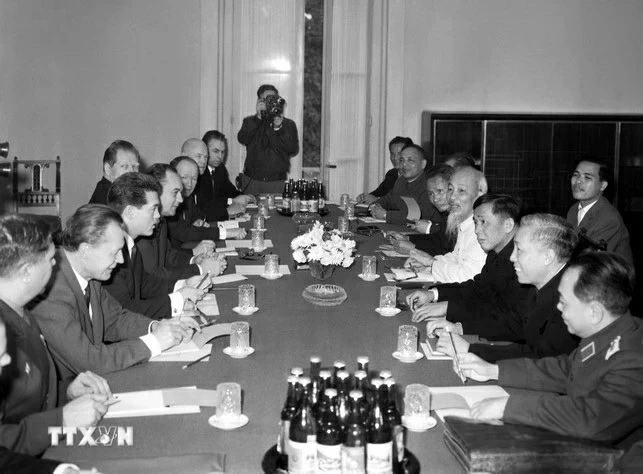 |
| President Ho Chi Minh leading the Vietnamese Workers' Party delegation in talks with the Soviet Communist Party delegation, headed by Alexander Nikolayevich Shelepin, visiting Vietnam on January 8, 1966, in Hanoi. |
The main contributions of the Commission can be highlighted as follows: (i) During the Vietnam-Laos-Cambodia Affairs Commission phase, it played a crucial role in forming and continuously nurturing, strengthening the combat solidarity relationship among the three countries and three peoples on the Indochina Peninsula, together defeating the French colonial invasion, laying a solid foundation for protecting and continuously strengthening the Vietnam-Laos-Cambodia combat alliance during the war against American invasion. (ii) After 1954, implementing our Party's international policy, the Party Central Committee's Commission for External Relations and the Ministry of Foreign Affairs coordinated, leveraging the combined strength and advantages of each agency to effectively implement the general foreign policy; garnering broad support and assistance from socialist countries and international friends for the implementation of the two strategic objectives of the Vietnamese revolution during that period. (iii) During the 50s-60s-70s of the previous century, the Vietnamese revolution faced severe challenges: sharp ideological and policy conflicts between the two largest socialist countries, the Soviet Union and China, severely weakened the solidarity and unity of the international communist movement; internal divisions and factions within the socialist bloc; the global revolutionary movement lost direction and declined; adversely impacting the Vietnamese revolutionary process when we had just defeated the French colonial invasion, liberated half of the country, and immediately entered a new war with a very unfavourable balance of forces against the world's number one superpower, the United States.
In the face of these compounded difficulties and challenges, our Party focused on protecting Marxism-Leninism, safeguarding solidarity within the socialist bloc, garnering international solidarity and support from peace-loving and progressive forces worldwide, enabling us to still actively garner support and assistance from both the Soviet Union, China, socialist countries, communist and worker parties, leftist and progressive forces worldwide, creating an unprecedentedly broad global people's front characterized by a movement that formed and developed strongly within the United States and countries that, along with the US, sent troops to invade Vietnam, supporting and assisting Vietnam, contributing to bringing our people's resistance war against the US to complete victory, liberating the South, unifying the country.
This was a period when many Central Committee's Commission for External Relations officials had the opportunity to directly work on all three channels of the foreign front, exemplified by Head of the Commission, Minister Xuan Thuy, Head of the DRV Government Delegation, and several Commission staff assisting at the nearly five-year-long four-party negotiations leading to the signing of the Paris Agreement on ending the war and restoring peace in Vietnam in January 1973; Commission staff, when still working at the People's International Committee's Commission, directly lived within the American people's movement, donning Liberation News Agency reporter uniforms for many years alongside peace movements in Western, Northern, and Southern Europe in solidarity, supporting the Vietnamese people against American invasion; and from after 1975 to the early 21st century, Commission staff were leaders of organizations, with names at the time, such as the Vietnam World Peace Protection Committee, the Vietnam Asia-Africa People's Solidarity Committee, the Vietnam Peace and Development Foundation with the longest-serving President, former Vice President, Labour Hero, former Deputy Head of the Central Foreign Affairs Committee Nguyen Thi Binh.
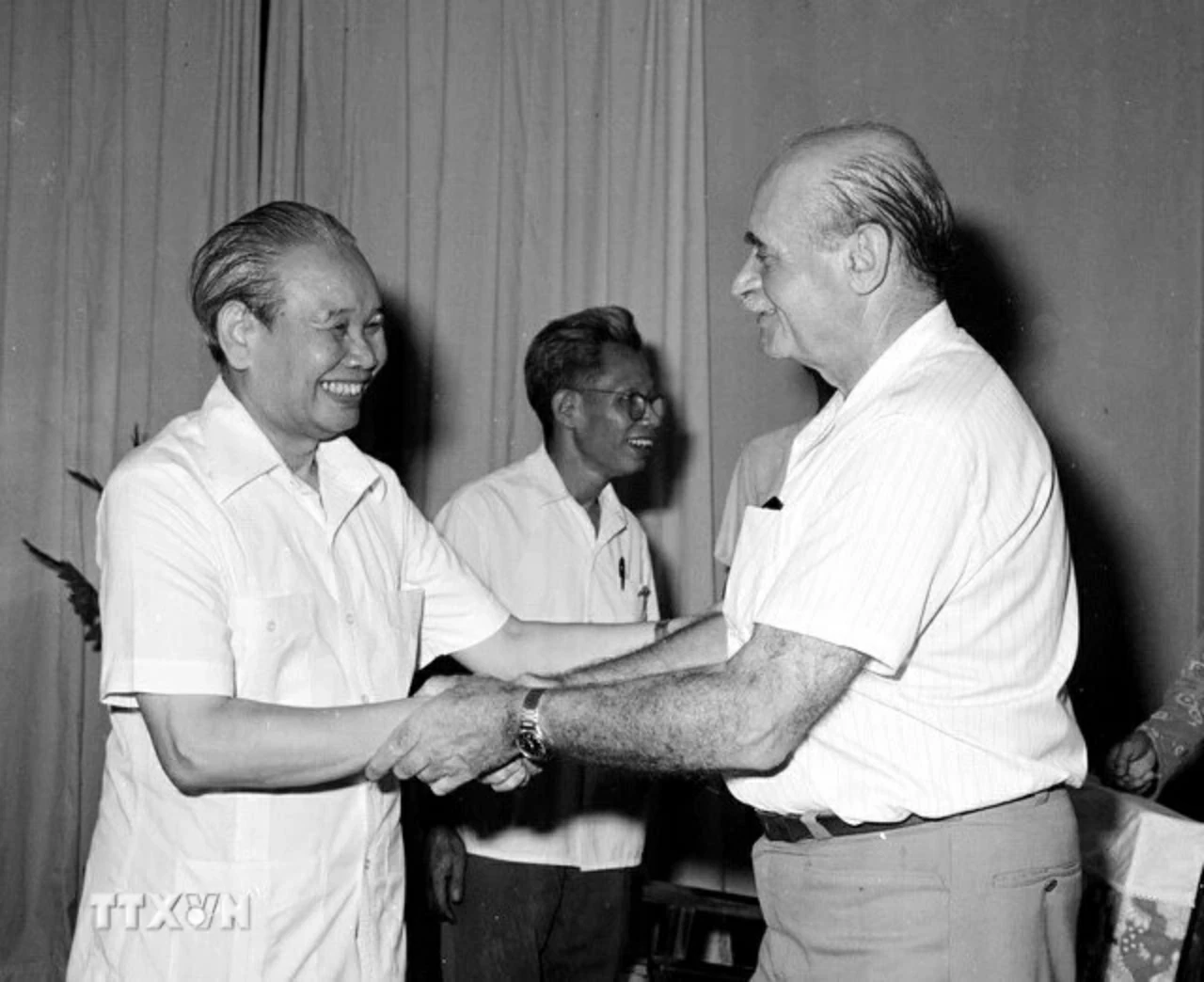 |
| Party Central Committee Secretary, Head of the Party Central Committee's Commission for External Relations Xuan Thuy and William Kashtan, General Secretary of the Communist Party of Canada, on a friendly visit to Vietnam on August 3, 1978. |
For the international communist and worker movement, the decades of the 50s-60s-70s of the previous century were also a period when proletarian internationalism gradually transformed in both form and content: the essence of proletarian internationalism shifted from being an alliance between workers of different countries to primarily being relations between socialist states under the name of socialist internationalism; the proletarian international spirit of Lenin's time evolved into political cooperation and peaceful coexistence between different political-social regimes; international solidarity of the working class in the first half of the 20th century transformed into alliances between democratic, progressive forces; it was a period when our Party, along with many communist and worker parties, defined the task of international solidarity of the Communist Party now bearing a new essence of solidarity, alliance with revolutionary, democratic, progressive, peace-loving forces. In the context of the disintegration of the unified front of the international communist and worker movement, under the impact of the war against American invasion by the Vietnamese people, the global revolutionary movement gradually expanded beyond the scope of workers, linking with movements against war, protecting peace, protecting the environment, fighting racial discrimination, women's liberation, etc.
In this context, Vietnam's external relations activities during this period were a convincingly persuasive image of the victory of the Party's guiding ideology of combining national strength with the strength of the times to create a comprehensive strength that changes the balance of forces in our favor, motivating our military and people to achieve step-by-step victories, leading to complete victory, unifying the country, and advancing the entire nation towards socialism.
Implementing strategic tasks after 1975
After 1975, the Vietnamese revolution transitioned to a phase with two strategic tasks: building the country towards socialism and firmly defending the socialist Vietnamese Fatherland.
Under conditions where the country was simultaneously combating the blockade and embargo imposed by the US and overcoming socio-economic crises, our Party and State's foreign affairs underwent a strong shift, focusing on fighting against, breaking the blockade and embargo, creating a favorable regional and international environment for the cause of defending and building the country. The Commission for External Relations chaired, along with the Ministry of Foreign Affairs, foreign affairs advisory bodies of Security, Defense, and related ministries and sectors, proposed, advised, and formulated Vietnam's foreign policy during the Doi Moi (Renewal) period, highly appreciated by the Party Ventral Committee, becoming an independent, self-reliant foreign policy, an open foreign policy, multilateralizing, diversifying international relations, shifting from Vietnam "wanting" previously to Vietnam "ready" to be a friend, a reliable partner of countries in the international community, striving for peace, independence, and development. All activities of the three diplomacy channels focused on effectively implementing the task of maintaining a peaceful, stable environment, creating favorable international conditions to promote economic-social development, industrialization, modernization of the country, building and defending the Fatherland, ensuring national independence and sovereignty, proactively integrating into the international economy, expanding cultural exchanges with the world, actively contributing to the common struggle of the world's people for peace, national independence, democracy, and social progress.
This was a period when the Commission for External Relations gradually effectively performed its function and task as "an advisory and assisting body of the Party Central Committee, directly and regularly for the Politburo, the Secretariat on major foreign policy guidelines and policies; at the same time, it is the body implementing the Party's external relations"; organizing research, analysis, forecasting international situations to timely propose our foreign policies, concretizing the Party's foreign policy guidelines, organizing the implementation of our Party's relations with political parties worldwide with which our Party has relations, performing tasks related to our Party's international solidarity work assigned by the Politburo, directly by the Standing Secretariat; making important contributions to continuing to consolidate and strengthen our Party's relations with ruling parties of socialist countries, democratic people's countries, communist and worker parties, leftist and progressive movements worldwide; "coordinating, directing, and guiding the external activities of people's organizations, participating in directing external information and communication work" according to the supplemented functions and tasks.
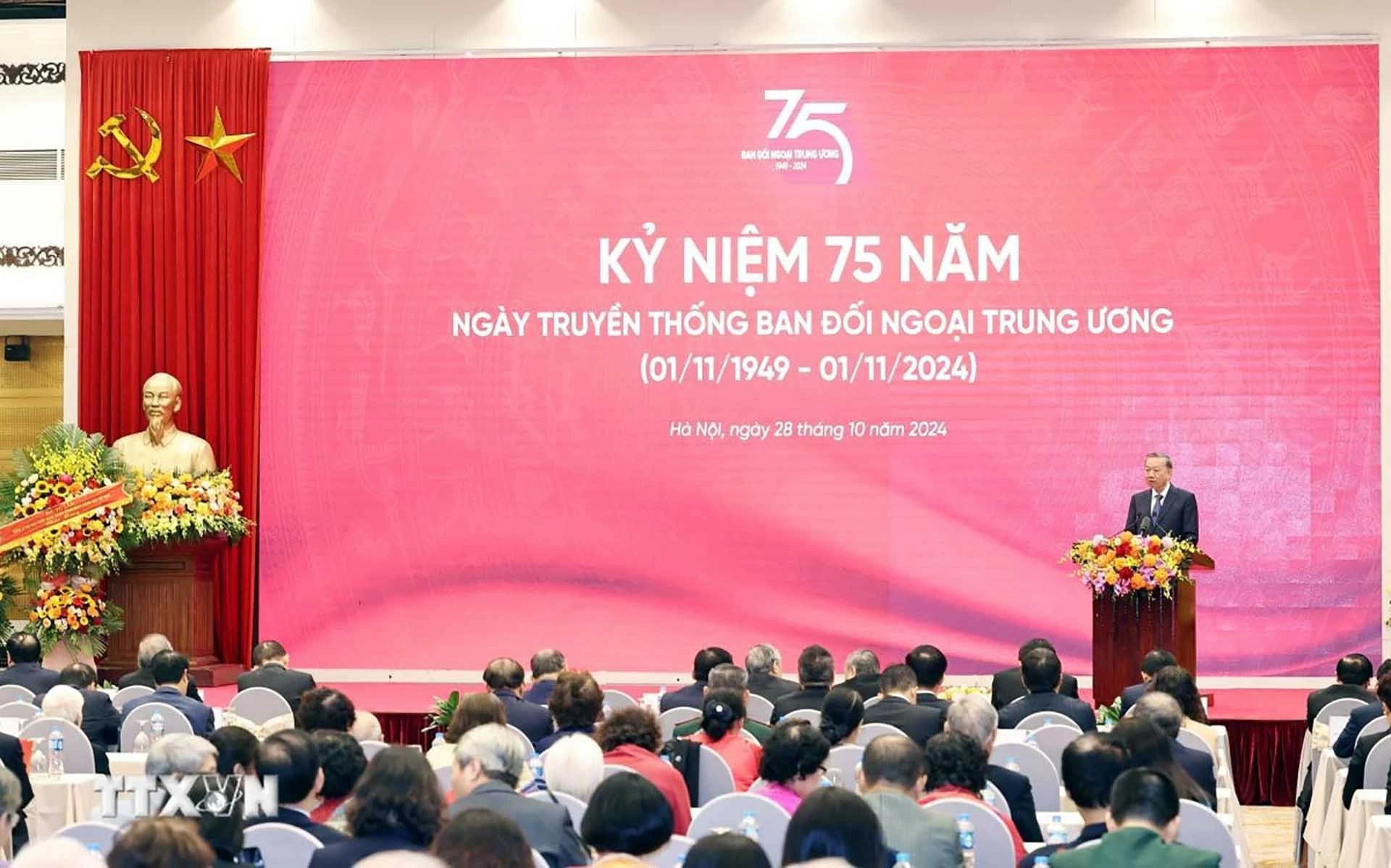 |
| General Secretary To Lam speaking at the 75th Anniversary Celebration of the Traditional Day of the Party Central Committee's Commission for External Relations. (Source: VNA) |
Implementing foreign policy during the Doi Moi (Renewal) period
Entering the Renovation period, our Party has firmly led the country through perilous situations and severe challenges after the collapse of the Soviet Union and Eastern European socialist countries. Foreign affairs, in general, have achieved new significant accomplishments. Implementing foreign policy during the Renovation period, Party foreign affairs contributed to breaking the US blockade and embargo, helping the country overcome socio-economic crises, continuing to strengthen relations with the remaining socialist countries, maintaining and developing relations with communist and worker parties, leftist forces, national independence, and progressive movements.
At this time, the Commission for External Relations proposed a new breakthrough, agreed upon by the Party Central Committee, for our Party to proactively establish selective relations with some political parties and ruling parties, starting from Northeast Asia, Southeast Asia, based on principles of independence, self-reliance, non-interference in each other's internal affairs, equality, friendship to enhance understanding, trust, contributing to promoting friendly, cooperative relations between our State and people with the State and people of other countries, for peace, independence, and development. During this period, Party diplomacy also particularly emphasized developing friendly, cooperative relations with three neighbouring countries sharing borders, countries in the Southeast Asian region; contributing to promoting state relations with most countries worldwide, with international political, economic, financial organizations, creating a new development step in our Party and State's diplomacy, gradually dismantling the US policy of isolation, blockade, and embargo against Vietnam.
Another prominent task of the Commission at the end of the 80s, continued in subsequent decades, was coordinating with relevant agencies to organize many extermal activities to exchange experiences, train cadres, support, and assist each other between our Party and parties, movements at the request of friends; through which, coordinated to welcome hundreds of delegations with thousands of visits, mainly from Latin America, the Horn of Africa, to Vietnam to study the situation, learn, exchange experiences in Vietnam's national liberation revolution. This was also a period when the Commission made significant contributions to training, preparing a cadre framework at the Central level for the new government apparatus in Cambodia after we helped the Cambodian people escape the genocidal regime; supporting our friends' foreign activities at international forums under the condition that the Democratic Kampuchea Government no longer existed but still represented Cambodia at the United Nations; chaired with related agencies to successfully organize the International Court to try the genocide crimes of the Khmer Rouge regime and the personal responsibility of three leaders Pol Pot, Ieng Sary, Khieu Samphan.
This was also a period when the Commission played a role in advising, closely coordinating with our sectors and levels to consolidate and strengthen friendly, cooperative relations with three neighboring countries sharing borders, with countries in the region, major countries with outstanding results in advising the Party Central Committee on the content and directly shaping the content of "traditional friendship, special solidarity, comprehensive cooperation" relations with Laos, "long-term stable, comprehensive" relations with Cambodia, "neighbourly friendship, comprehensive cooperation, long-term stability, towards the future" relations with China. Strengthening mutual trust with China contributed to preparing many of our Party's diplomacy decisions, especially building the 3rd Central Resolution of the 7th Term in June 1992 on foreign affairs - a resolution marking an important and fundamental shift in our Party's foreign policy thinking during the Renewal period, a guiding thread throughout our Party and State's foreign policy thinking from the 90s of the previous century to this moment.
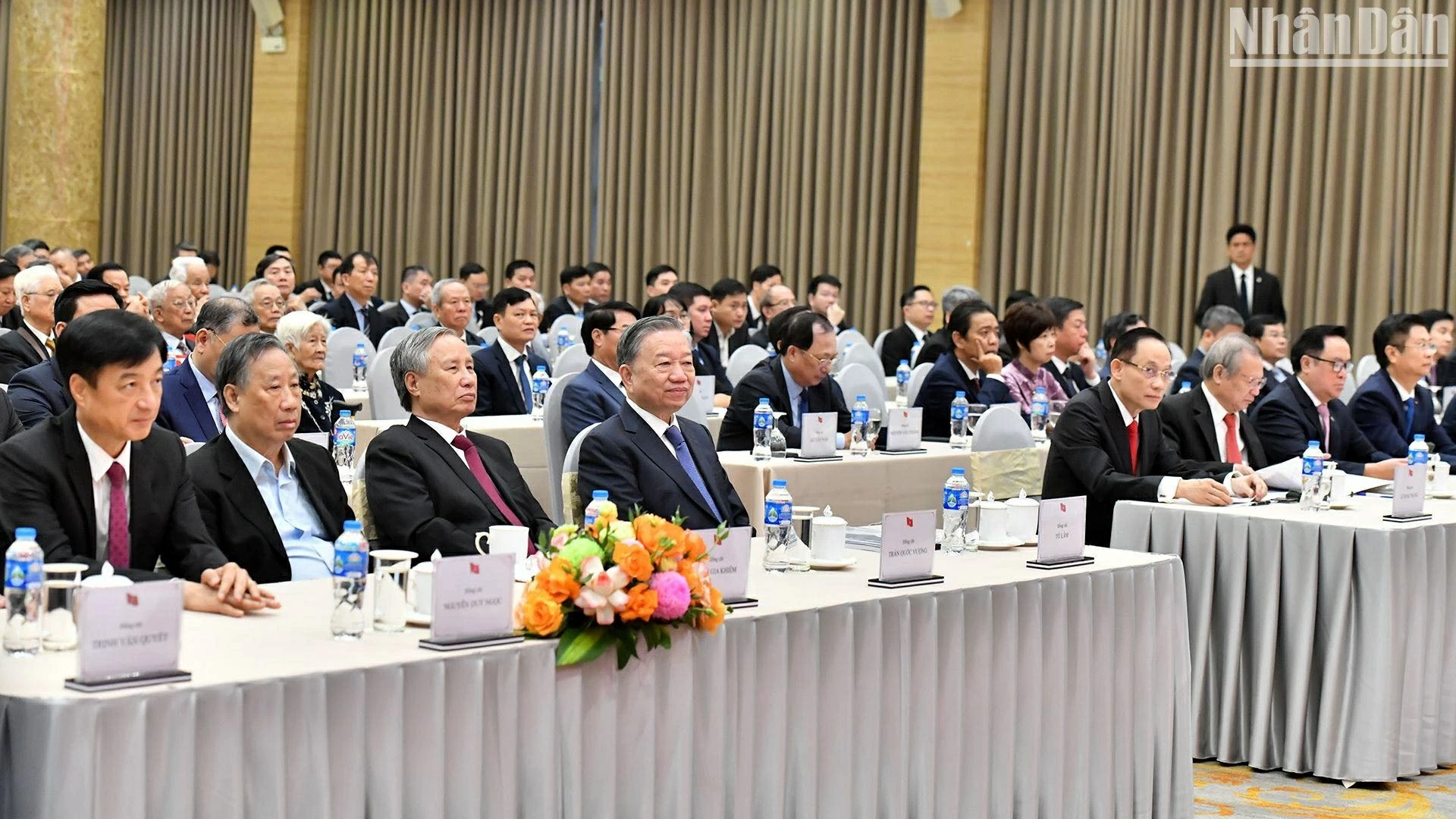 |
| General Secretary To Lam with delegates attending the 75th Anniversary Celebration of the Traditional Day of the Party Central Committee's Commission for External Relations (1/11/1949-1/11/2024), October 28, 2024. |
Regarding importance, the Resolution identified new groundbreaking thinking in the field of Foreign Affairs with defined contents of guiding foreign policy ideology and the overarching task of foreign affairs during the Doi Moi period; identifying the content and interaction between relationship pairs such as: between independence, self-reliance, self-strengthening and promoting diversification, multilateralization of foreign relations; between cooperation and struggle in international relations; between coinciding interests and different interests; identifying the highest, sacred interest of our nation is to successfully build socialism and firmly safeguard the socialist Vietnamese Fatherland, affirming: successfully building socialism in Vietnam will surely be a significant contribution of our Party, our People to progressive humanity.
Within two decades, the consistent and principled implementation of foreign policy during the Doi Moi period by our Party and State has brought results of special importance, creating a historic breakthrough in the task of creating a stable, friendly regional and international environment to concentrate efforts on building, integrating, and developing the country. Comprehensive political-foreign solutions such as withdrawing Vietnamese troops from Cambodia (1989); not extending the lease of Cam Ranh base again after the agreement signed in 1979 between us and the Soviet Union on using Cam Ranh port expired - a message to the world about Vietnam's independent, self-reliant foreign defense policy during the Doi Moi period; political-diplomatic efforts to overcome the unfriendly past in Vietnam-SEATO relations during the war, valuing ASEAN's position and role, ... are important steps leading to the normalization of Vietnam-China relations (1991), establishing Vietnam-US Diplomatic Relations (1995), normalizing our relations with regional and international financial, monetary institutions ADB, WB, IMF, marking the beginning of Vietnam's increasingly deep regional and international integration: joining ASEAN (1995), ASEAN Free Trade Area AFTA (1996), participating in founding the Asia-Europe Meeting ASEM (1996), joining the Asia-Pacific Economic Cooperation APEC (1998), World Trade Organization WTO (2007)..., marking a new important development in Vietnam's international role and position in regional and international life.
A highly effective task of the Commission for External Relations during this period was using the Party communication channel to handle and successfully resolve many sensitive issues, complex situations where negotiations and resolutions through the Diplomatic channel were deadlocked in our relations with three neighbouring countries sharing borders, mainly with China, on issues related to borders, territories, sovereignty rights, and territorial integrity, complex disputes in the East Sea. The Commission also successfully organized many official foreign visits of General Secretaries, Politburo members, and many Party delegations on foreign missions; welcomed many high-level delegations of fraternal parties visiting, attending our Party's Congresses; effectively performed the task of assisting the Party Central Committee in directing, guiding the external activities of people's organizations, political-social organizations, peace, friendship organizations, non-governmental organizations; coordinated with relevant agencies to perform the Party Central Committee's supplementary function of effectively building the Party and building, training the foreign affairs cadre team in the Party Central Committee's Extenrla Relations Agencies Block.
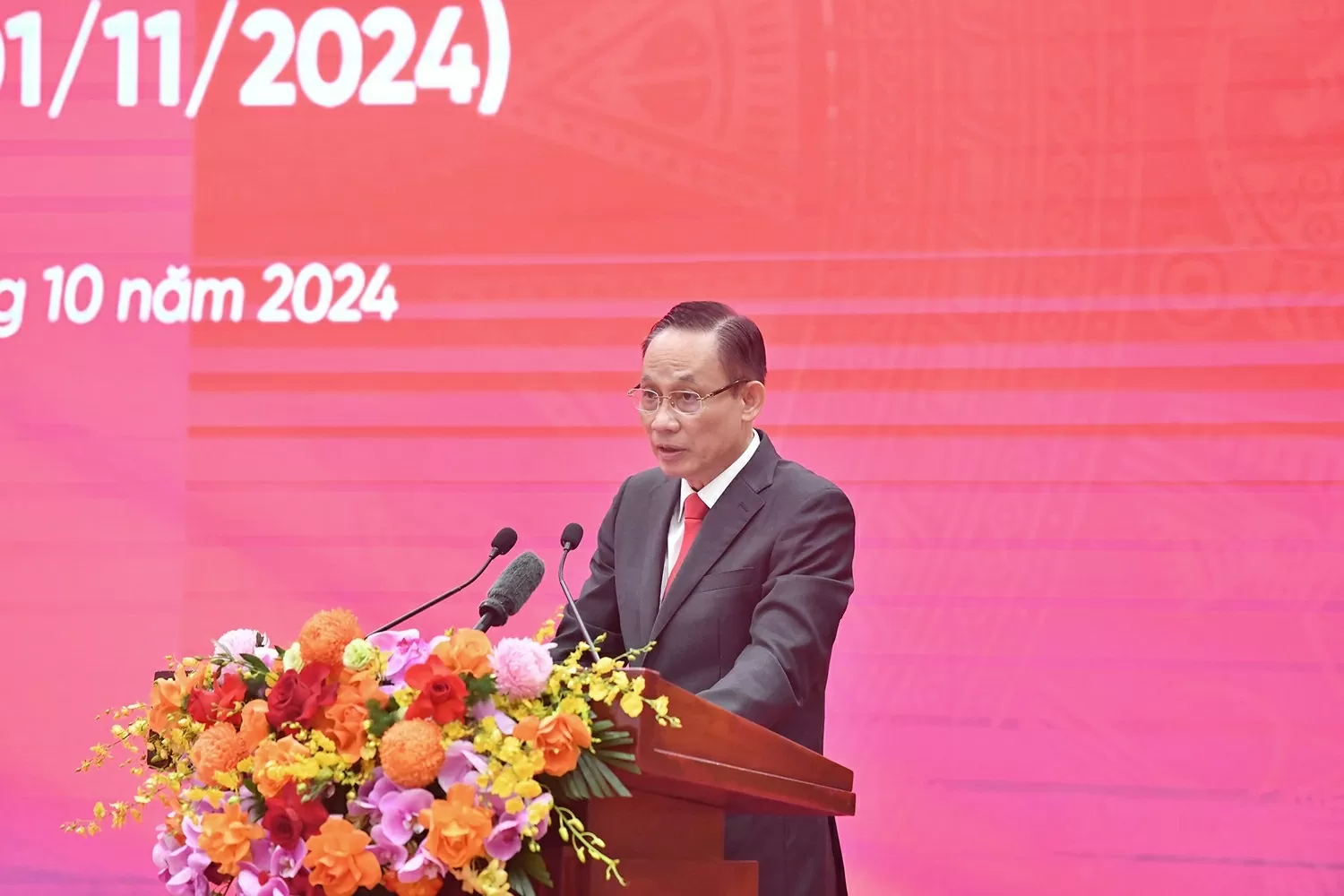 |
| Central Committee Secretary, Head of the Central Foreign Affairs Committee Le Hoai Trung speaking at the 75th Anniversary Celebration of the Central Foreign Affairs Committee's Traditional Day, October 28, 2024. |
Many Deputy Heads of the Commission were concurrent leaders of the Vietnam Union of Friendship Organizations (VUFO); many former Commission leaders, former Department Heads, Deputy Department Heads continued to contribute experience, enthusiasm, and efforts to People-to-people diplomacy in positions as Presidents, Vice Presidents of many major friendship associations members of the Union such as Vietnam-France, Vietnam-US, Vietnam-China, Vietnam-Laos, Vietnam-Soviet (at the time), Vietnam-Cambodia, Vietnam-Thailand Associations...; were leaders of some strategic research and political-foreign affairs forecasting centers of the Ministry of Foreign Affairs, political-foreign affairs agencies of the Security, Defense block.
Generations of staff and employees of the Commission, with dedicated and responsible efforts, caution, and thoroughness in the spirit of "in foreign affairs, nothing is small", have built a fine tradition, affirmed by General Secretary Nong Duc Manh at the Ceremony awarding the Gold Star Order - Vietnam's highest honour - to the Party Central Committee's Commission for External Relations on July 1, 2003, on the occasion of the 54th anniversary of the Commission's establishment as: "Absolutely loyal, united, dedicated, creative, excellently completing assigned tasks, contributing effectively to the noble revolutionary cause of the Party and the Nation".
Strategic adjustments in foreign affairs thinking and practice
The first two decades of the 21st century witnessed profound shifts in the world order. The unipolar order dominated by the US after the Cold War gradually gave way to a trend of multipolarity, multi-centers, with the rapid rise of new powers, especially China, India, along with the revival of Russia's role. Strategic competition among major powers increased, both cooperating and confronting, encompassing economic, technological, military, and non-traditional security fields.
Globalization continued to develop but revealed many contradictions, leading to protectionism, geo-economic competition, and supply chain fragmentation. Non-traditional security challenges such as terrorism, climate change, natural disasters, epidemics, and cyber security became increasingly evident. In the Asia-Pacific, particularly the East Sea, sovereignty disputes and major power strategic competition increased, directly impacting our country's security and development environment.
In response to this context, Vietnam has made strategic adjustments in foreign affairs thinking and practice. The foreign policy during the Renovation period was steadfastly and deeply concretized; shifting strongly from a "responsive" stance to proactively positioning itself as a "reliable partner, responsible member in the international community", from "opening up, integrating" to proactively and actively integrating comprehensively into the international arena, deeply participating in regional and global institutions, signing and implementing many new-generation free trade agreements, linking national interests with common interests, creating interwoven interests with partners; implementing a "4 no's" defense foreign policy, participating in the United Nations Peacekeeping Forces and international rescue and relief activities; contributing responsibly and constructively to peace, cooperation, continuously enhancing Vietnam's position and role in the region and on the international stage.
Foreign affairs were elevated, achieving outstanding results, from a country under blockade and embargo, Vietnam now has diplomatic relations with 194 countries and territories; has strategic partnership, comprehensive partnership with 38 countries, including strategic partnership, comprehensive strategic partnership with all 5 permanent members of the United Nations Security Council, 7 leading industrialized countries (G7), and 17/20 of the world's largest economies (G20); has economic, trade, and investment relations with 224 markets on all continents, participating in over 500 bilateral and multilateral agreements in various fields; assuming many international responsibilities, promoting an active role in many organizations, multilateral forums, trusted by international friends to take on additional responsibilities in multilateral mechanisms, especially in ASEAN and at the United Nations. Our Party has relations with 253 political parties in 115 countries worldwide, including 92 communist parties, 63 ruling parties, 38 parties participating in ruling coalitions, participating in government. The National Assembly has relations with the parliaments of over 140 countries. People's organizations and associations have practical foreign relations with 1200 foreign people's organizations and partners. The three specialized foreign affairs channels, along with Defense and Security foreign affairs, have made important contributions to strengthening early, remote national defense; contributing to ensuring macroeconomic stability, major balances, promoting economic growth, bringing the country into the group of the world's 32 largest economies and 20 leading economies in trade and foreign investment attraction.
In these important overall achievements, Party diplomacy with a 76-year history and very distinct tasks and characteristics in each period have effectively and practically contributed to the great overall achievements of the External Affairs front; contributing a small part to the great revolutionary cause of our Party, our People, as well as to the process of establishing, building for our country, our nation to have the stature, international position, and bright future today.
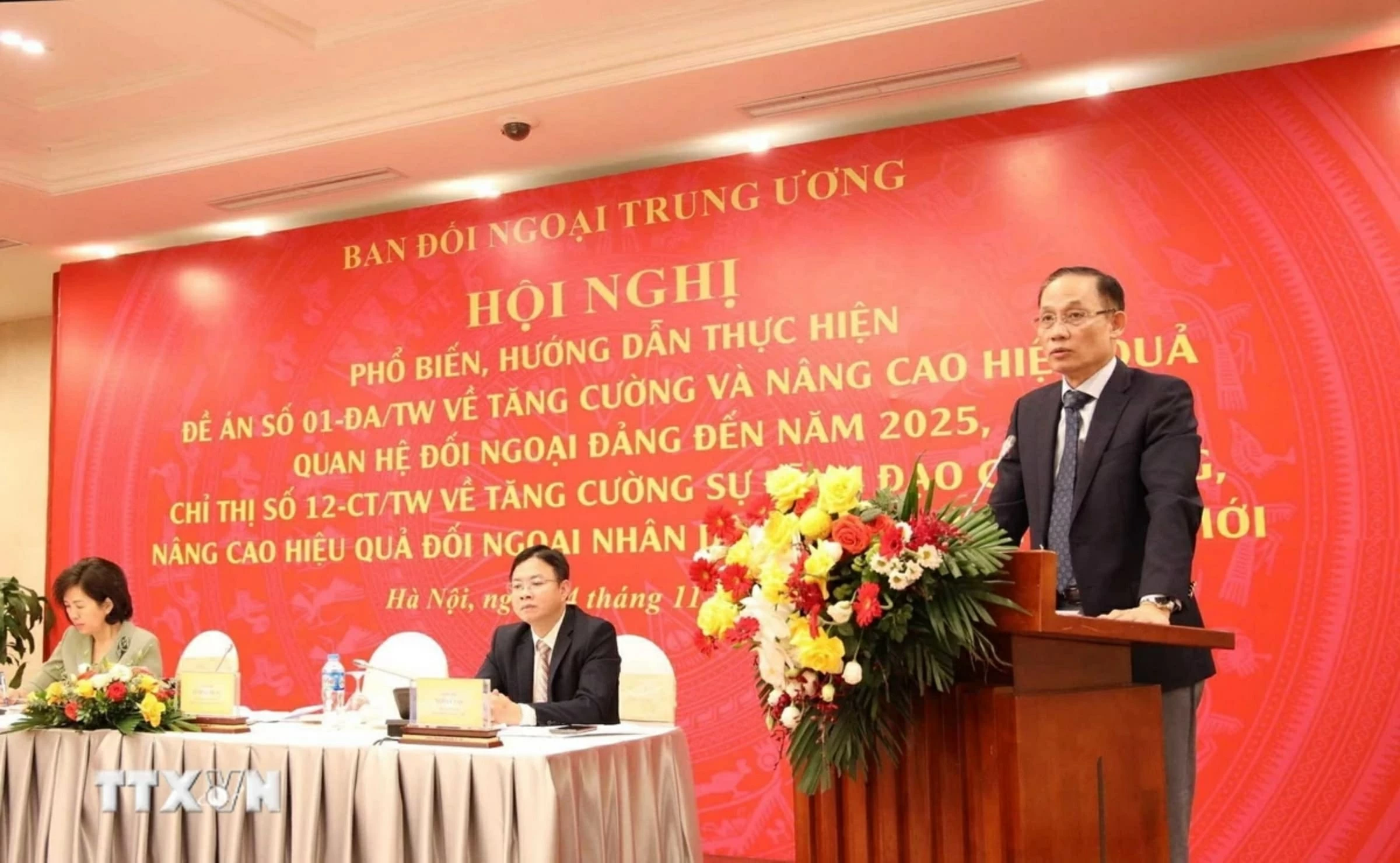 |
| The Party Central Committee's Commission for External Relations organized a conference to disseminate and guide the implementation of the Party's Foreign Relations Scheme and Directive 12 on people-to-people diplomacy in Hanoi on December 24, 2023. |
With the decision of the 13th Politburo on January 24, 2025, the Party Central Committee's Commission for External Relations concluded its activities, transferring functions, tasks, and personnel to the Ministry of Foreign Affairs, marking the end of the Party Central Committee's specialized Party foreign affairs agency's activities. From now on, the Party's international solidarity cause, with its essence, form, and method of operation having undergone profound shifts to adapt to the significant changes in international, regional conditions and the rising international position of the country from the second half of the 20th century to now, falls under the increasingly heavy, important, comprehensive function and task of the Ministry of Foreign Affairs when from a three-legged stand, foreign affairs now focus on a single focal point. The 76-year tradition of the Party Central Committee's Commission for External Relations now merges into the 80-year tradition of Vietnamese Diplomacy. The previous generations of the Commisson have strong faith that the Commission's staff, after the merger, will quickly integrate into the existing Diplomatic team of the Foreign Ministry, continuing the tradition, foreign affairs-diplomacy resilience of Vietnam, writing the next glorious chapter of the Sector, continuing to make worthy contributions, in the era of national rise, to the successful construction of a peaceful, independent, democratic, wealthy, and strong Vietnam, actively and effectively contributing to the common struggle of progressive humanity for peace, independence, and development.


