


Ten key highlights of Vietnam's foreign affairs in 2025: The World and Vietnam Report's selection
WVR - The year 2025 has come to a close, yet concerns about an unpredictable and volatile world remain. As the “2025 calendar” draws to an end, a major source of pride and confidence lies in the affirmation that our external affairs work has achieved highly significant results. These efforts have contributed to Vietnam’s continued standing as a reliable destination for international partners and friends amid myriad regional and global upheavals.
Latest
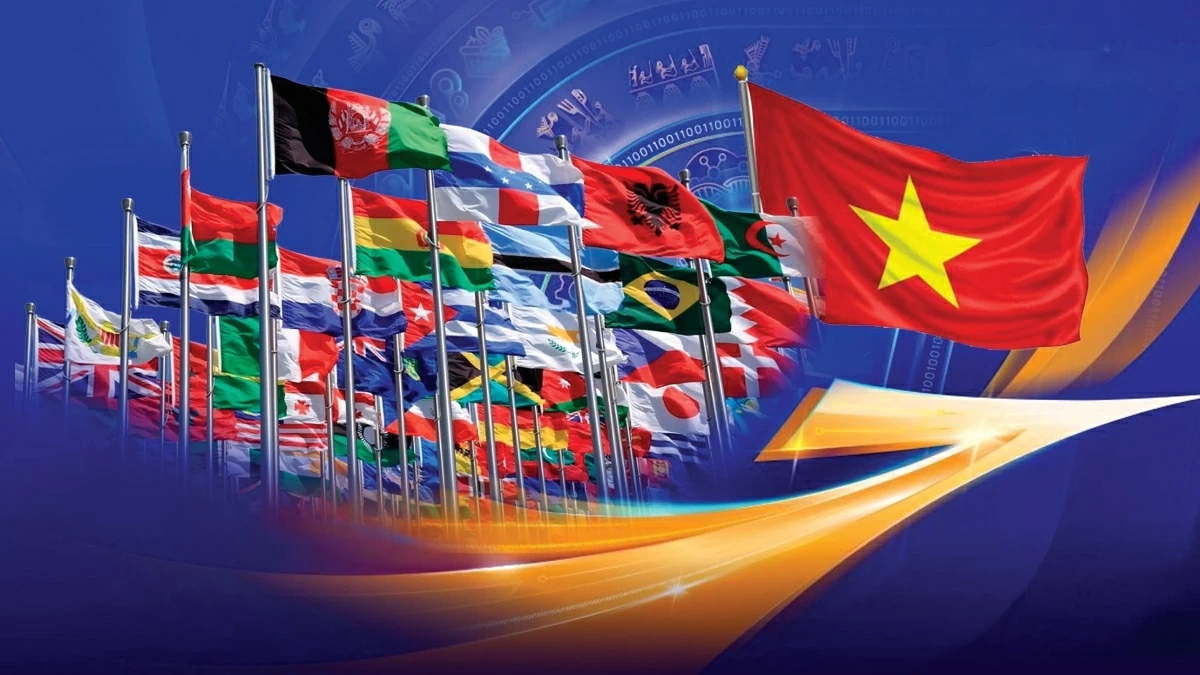 |
| Ten key highlights of Vietnam's foreign affairs in 2025: The World and Vietnam Report's selection. (Photo: Nhan Dan Newspaper) |
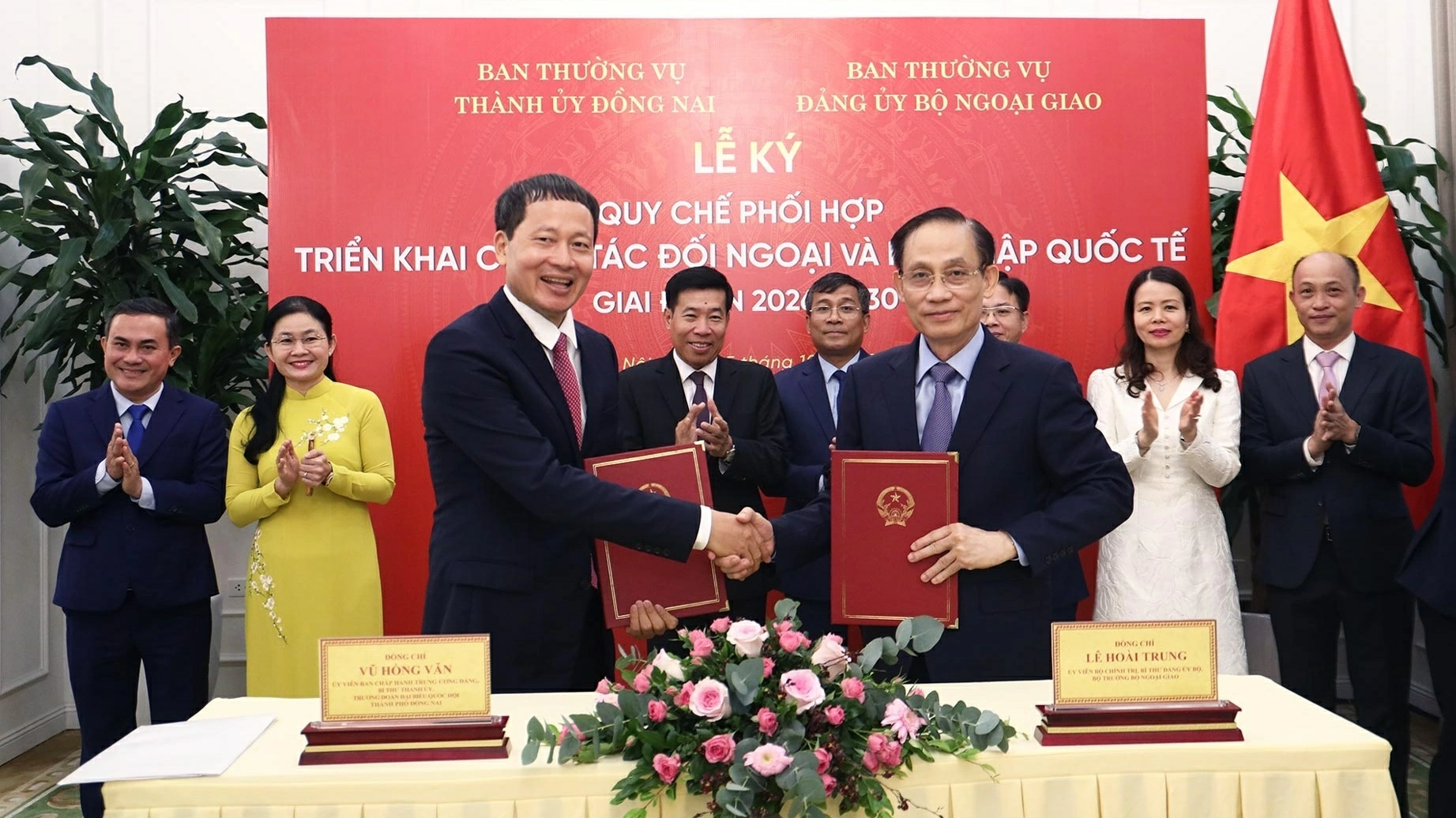
| 1. High-level foreign affairs activities were vibrant, achieving substantial results. The year 2025 marked a new peak for Vietnam's high-level foreign affairs activities in terms of frequency, scale, and stature. Key leaders from the Party, State, National Assembly, and Government conducted around 75 foreign affairs activities; signed nearly 350 agreements and commitments with partners during these activities; and welcomed nearly 40 high-level foreign delegations. These activities took place amid complex international and regional situations, contributing to political trust, expanding cooperation space, and affirming Vietnam's increasingly clear role, voice, and position. |
| 2. Development and issuance of important directives and content on foreign affairs, notably the draft Document for the 14th National Party Congress; Resolution 59-NQ/TW by the Politburo on international integration in the new situation; and Resolution 250/2025/QH15 on specific mechanisms and policies to enhance the effectiveness of international integration, identifying foreign affairs and international integration as crucial, regular tasks. |
| 3. Restructuring the foreign affairs apparatus according to Resolution 18-NQ/TW. This includes merging the Party Central Committee's Commission for External Relations and transferring some functions and duties of the National Assembly's Foreign Affairs Committee to the Ministry of Foreign Affairs. The streamlined, efficient foreign affairs apparatus ensures smooth coordination among foreign affairs forces. Digital transformation in foreign affairs has been accelerated. The Ministry of Foreign Affairs' electronic portal, document management and administration system, and the Ministry-level Data Integration and Sharing Platform (LGSP) are crucial "digital links" to realize the comprehensive digital transformation strategy in the Diplomacy sector. |
| 4. Continuing to elevate and deepen the framework of relations with key partners. The year 2025 marked significant progress in Vietnam's foreign relations network, both in breadth and depth. Vietnam upgraded relations with 17 countries, raising the total number of partners from Comprehensive Partnership level and above to 42 countries (including establishing Strategic Partnerships with three Middle Eastern-African countries for the first time); established diplomatic relations with Tuvalu, increasing the total number of diplomatic partners to 194 countries. Notably, completing the Comprehensive Strategic Partnership framework with all five permanent members of the United Nations Security Council is a strategic milestone, reflecting Vietnam's growing prestige and position, providing a solid foundation for long-term cooperation as the international order continues to adjust. |
| 5. Economic diplomacy remains a pillar for development with many groundbreaking, shaping initiatives. Amid increasing global economic protectionism and competition, economic diplomacy continues to be identified as a crucial pillar for national development, with many groundbreaking, shaping initiatives achieving substantial results. Vietnam maintains its position as a bright spot in trade and investment, with total export turnover exceeding 920 billion USD, sustaining a trade surplus for a decade; many leading global economic groups continue to expand investment and business in Vietnam. External economic activities and economic diplomacy linked with science and technology diplomacy are implemented synchronously, contributing to flexible and effective responses to external fluctuations, supporting rapid and sustainable development goals. Efforts to monitor and promptly address partner policy adjustments, especially regarding tariffs, have been intensified, alongside promoting the upgrade and expansion of cooperation frameworks and new-generation FTAs like CPTPP and RCEP. These efforts contribute to diversifying markets, enhancing competitiveness, resilience, and self-reliance of the economy amid increasingly fierce global competition. |
| 6. Contributing to the successful organization of major national celebrations. This includes the 50th Anniversary of the Liberation of the South – National Reunification, and the 80th National Day on September 2nd, attended by high-level leaders from various countries and international political parties. Notably, the 80th National Day celebration for the first time included a parade representing the nearly 6.5 million overseas Vietnamese community. Inviting military forces from some traditional friendly countries to participate in parades during major celebrations carries profound symbolic significance, reflecting both friendship and a clear message of Vietnam's independent, self-reliant, and peaceful foreign policy. Through this, Vietnam continues to affirm itself as a reliable partner and responsible member in maintaining peace and stability in the region and the world. |
| 7. Successfully organizing high-level multilateral conferences and re-election to the United Nations Human Rights Council. Multilateral diplomacy continues to be a standout highlight in the 2025 foreign affairs landscape. Vietnam successfully organized major international events such as the second ASEAN Future Forum, the P4G Summit, and the signing ceremony of the United Nations Convention against Cybercrime. Notably, a global convention named the "Hanoi Convention" reflects the international community's recognition of Vietnam's role, contributions, and capacity in creating common rules. Additionally, Vietnam was re-elected to the United Nations Human Rights Council for the 2026–2028 term with high votes, leading the Asia-Pacific Group, demonstrating international trust in Vietnam's balanced, humane approach suitable for its development conditions. |
| 8. Announcing the Baseline for Calculating Vietnam's Territorial Sea Width in the Gulf of Tonkin. On February 21, 2025, based on Resolution No. 68/NQ-UBTVQH15 dated February 14, 2025, by the National Assembly Standing Committee, the Government of the Socialist Republic of Vietnam issued a Declaration on the baseline for calculating Vietnam's territorial sea width in the Gulf of Tonkin. This provides additional legal grounds to protect and enforce Vietnam's sovereignty, sovereign rights, and jurisdiction, contributing to economic development, sea management, and promoting international cooperation; actively promoting substantive and effective negotiations on the Code of Conduct in the East Sea (COC). |
| 9. Cultural diplomacy spreads strongly, enhancing national soft power. Successfully lobbying UNESCO to inscribe seven additional titles/heritages, raising the total number of UNESCO titles to 77, including the World Heritage Committee inscribing the Yen Tu-Vinh Nghiem-Con Son, Kiep Bac Relics and Scenic Landscape Complex as Vietnam's ninth World Heritage and the first new heritage inscribed after 11 years. External information work is increasingly proactive, contributing to promoting the national image while protecting the Party's ideological foundation and national interests. With over 21 million international visitors, 2025 opens a new era of tourism for Vietnam, achieving the highest visitor record ever. |
| 10. Successfully protecting thousands of citizens in hotspots, such as Israel, Iran, or the complex situations in Myanmar, Thailand, Cambodia, safely bringing thousands of citizens home. Safe citizen protection contributes to strengthening public trust in the Party and State's sound, empathetic policies and decisions. Work related to overseas Vietnamese continues to be consistently and effectively implemented in line with Resolution 36-NQ/TW, contributing to strengthening the great national unity bloc. |