



Diplomatic Academy: Discussion on developing a training and capacity building for people-to-people diplomacy workforce
WVR - On the morning of March 3, at the Diplomatic Academy, the Training and Capacity Building Department for External Relations, Diplomatic Academy organized a discussion on "Developing a training and capacity building proposal for the people-to-people diplomacy workforce for the 2026–2030 Period".
Latest
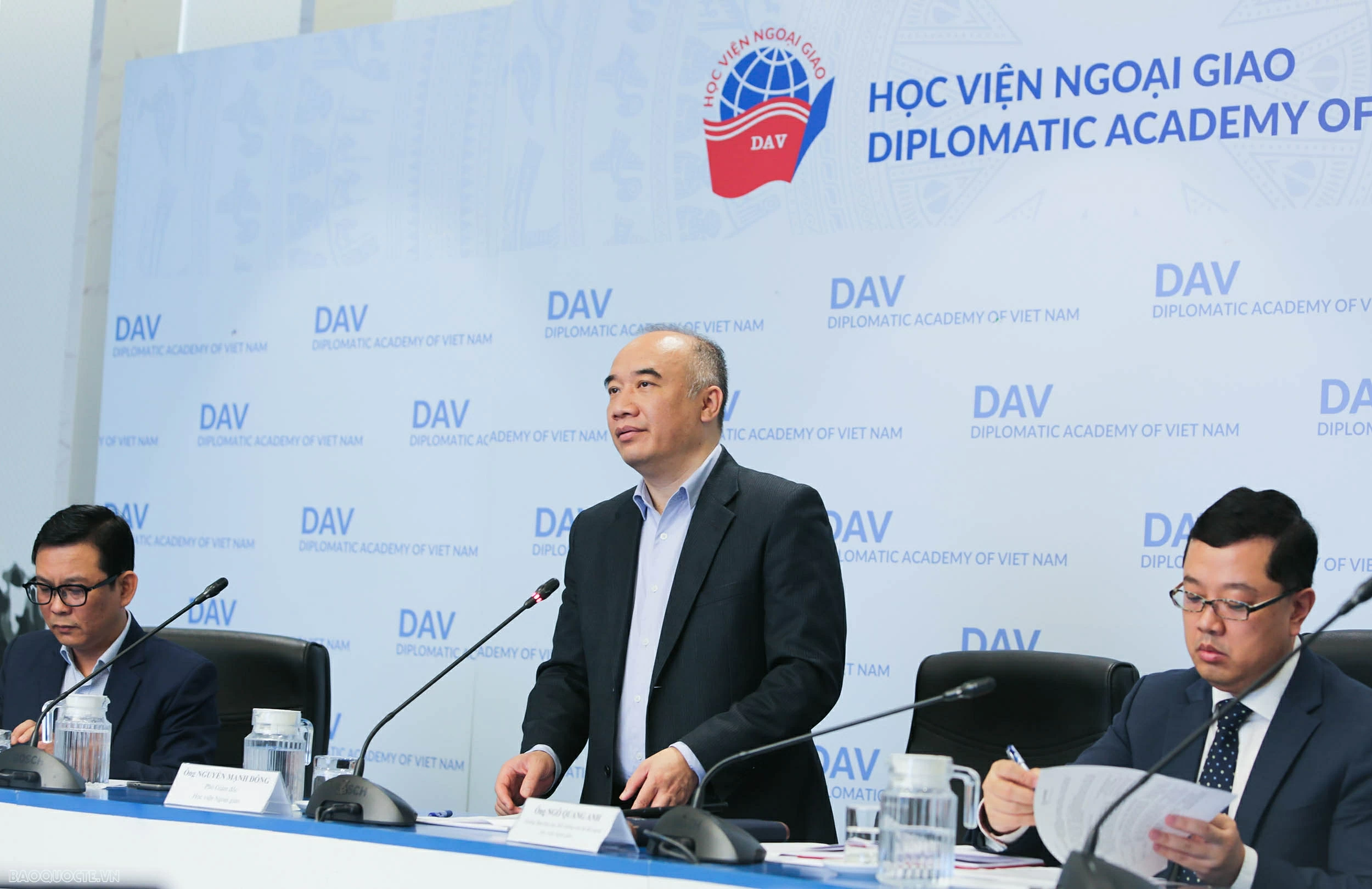 |
| Mr. Nguyen Manh Dong, Vice President of the Diplomatic Academy, delivered the opening speech at the discussion. (Photo: Quang Hoa) |
The discussion was attended by nearly 100 delegates representing the Ministry of Foreign Affairs, the Central Committee of the Vietnam Fatherland Front, the Vietnam Union of Friendship Organizations, localities, associations, as well as numerous experts and scientists.
In his opening remarks, Mr. Nguyen Manh Dong, Vice President of the Diplomatic Academy, highlighted the strategic significance of training and capacity building for the people-to-people diplomacy workforce, which is both urgent and long-term in the new context where foreign affairs have been identified as a key and regular task.People-to-people diplomacy is one of the three pillars of foreign affairs, amidst increasingly complex and unpredictable international and regional developments.
Mr. Nguyen Manh Dong also suggested that the discussion focus on clarifying the operational environment, implementing entities, and focal points of people-to-people diplomacy in the new context to accurately determine the content, knowledge, and skills that need to be enhanced for its workforce, ensuring the proposal's effectiveness in implementation.
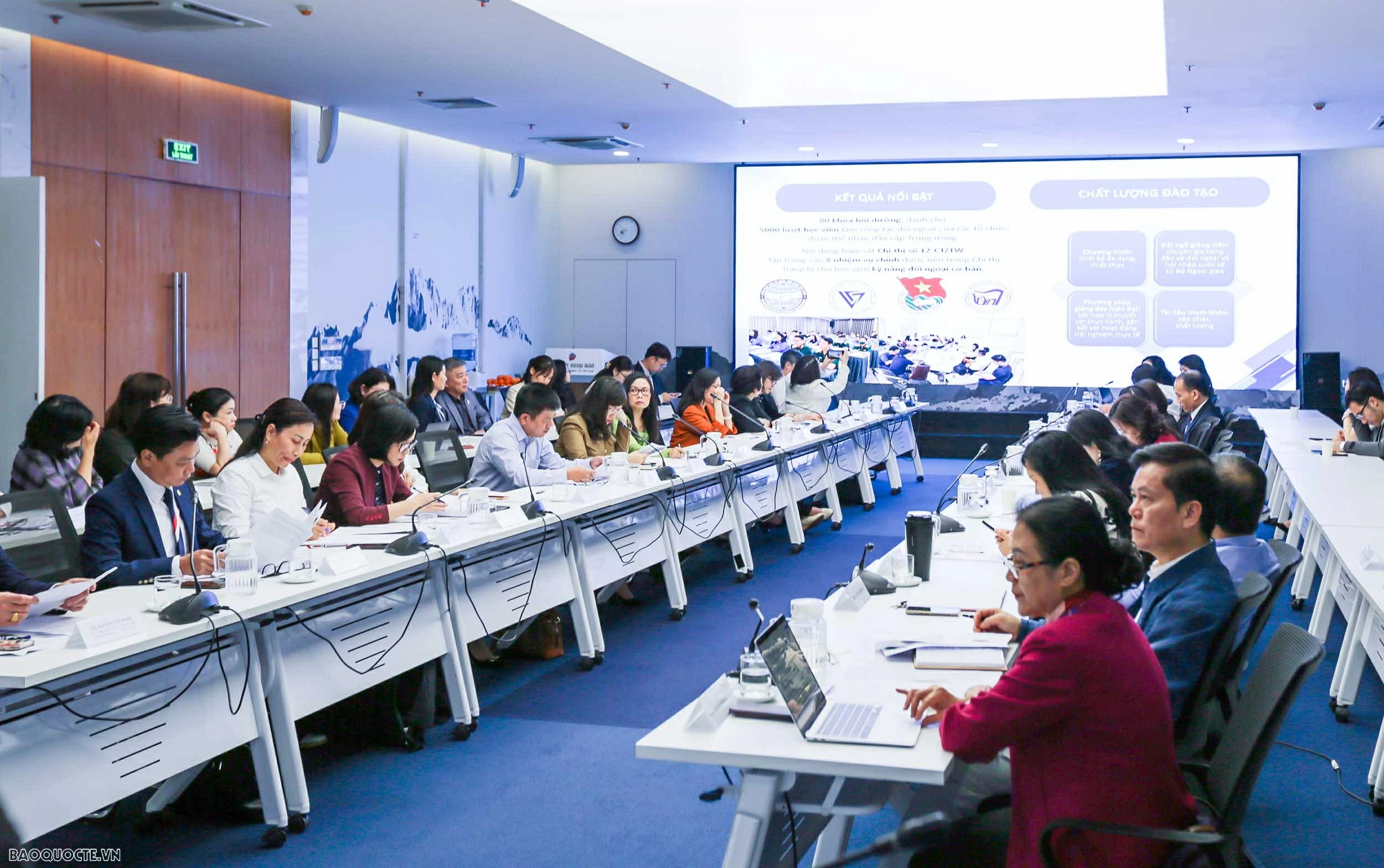 |
| Experts, scientists, and representatives from ministries, sectors, and localities exchanged and discussed the orientation of developing a training program. (Photo: Quang Hoa) |
The introductory report by the Training and Capacity Building Department for External Relations indicated that during the 2020–2025 period, training and capacity building for the people-to-people diplomacy workforce achieved many positive results, contributing to the overall success of foreign affairs. However, facing new demands of deep integration, digital transformation, and fierce strategic competition, its workforce still has limitations in professionalism, foreign language proficiency, strategic advisory skills, and inter-sectoral coordination capabilities.
The seminar heard 12 presentations and speeches, affirming the important role and position of people-to-people diplomacy in creating a people's foundation for maintaining and promoting relations between Vietnam and other countries; mobilizing resources for national development and protecting national interests. It also clarified many new characteristics of people-to-people diplomacy activities, from the operational environment, participating entities, to implementation methods...
All speeches emphasized the necessity of enhancing training and capacity building for this workforce, asserting that in the new situation, strong political will, understanding of the Party and state's foreign policy, professional expertise, deep knowledge of Vietnam's culture and history, and foreign language proficiency are indispensable qualities that need constant updating.
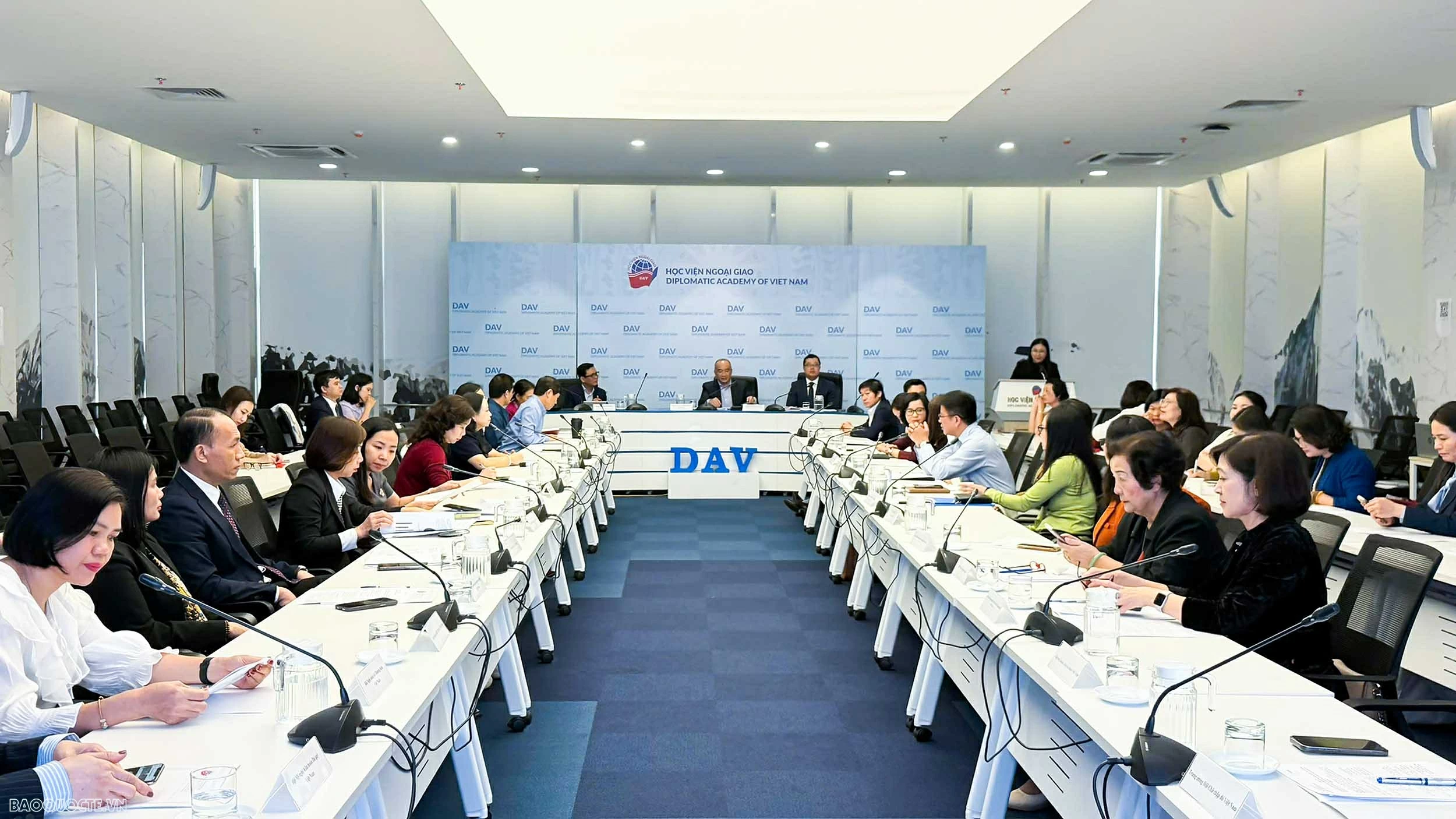 |
| The delegates unanimously agreed on the need to create a breakthrough in training and professionalizing the people-to-peple diplomacy workforce. (Photo: Quang Hoa) |
The speeches also suggested that training and capacity building should include both general and specialized knowledge, tailored to the diverse nature of entities involved in people-to-people diplomacy work. This includes developing a training program oriented towards "output competency design", enhancing simulations, situational handling skills, and focusing on new issues such as people-to-people diplomacy in science and technology, specialized cooperation; developing and implementing aid projects for localities...
Additionally, some opinions proposed that the proposal should have a longer-term vision, at least 10 years or even further, to build a truly capable workforce. Enhancing awareness within the political system about this work, especially among leadership at all levels, plays a crucial role.
Concluding the discussion, delegates shared the consensus that without a breakthrough in training and professionalizing the workforce, people-to-people diplomacy will struggle to fully realize its pillar role in comprehensive and modern diplomacy.
The proposal for the 2026–2030 period is therefore not just a simple training plan, but a strategic investment in the country's "soft power" – where each people-to-people diplomacy officer truly becomes a reliable bridge between Vietnam and international friends, contributing to creating a peaceful, stable, and sustainable development environment in the new era.