




The DISA Doctrine – The foundation of Intelligence and Compassion in the era of AI
The DISA Doctrine – an acronym for Divine Intelligence, Sensitivity, Awakening – is an emerging interdisciplinary conceptual model grounded in Compassion as the evolutionary driving force of humanity in the era of artificial intelligence (AI).
Latest
This paper analyses DISA through the lens of modern science and philosophy, positioning it not only as a humanistic theory but also as a cognitive framework for sustainable human-technology development. Drawing from findings in neuroscience, energy physics, and AI ethics, the paper argues that Compassion – understood as a synchronised and structured form of energy - can serve as the foundational operating principle of awakened intelligence, enabling humans to restore balance between cognition, emotion, and creative action.
 |
| Mr. Hà Huy Thanh, author of the book entitled “DISSA – The Doctrine of Compassion” (Photographer: Lukas Vrtilek, Photo Credit: Disa). |
Introduction
In the 21st century, humanity is witnessing an unprecedented acceleration of technological innovation, particularly in Artificial Intelligence. Alongside these remarkable achievements emerges a fundamental philosophical question: Can intelligence exist without compassion? The DISA Doctrine was conceived in this context as both an intellectual response and a scientific proposition – asserting that intelligence is only complete when illuminated by Compassion.
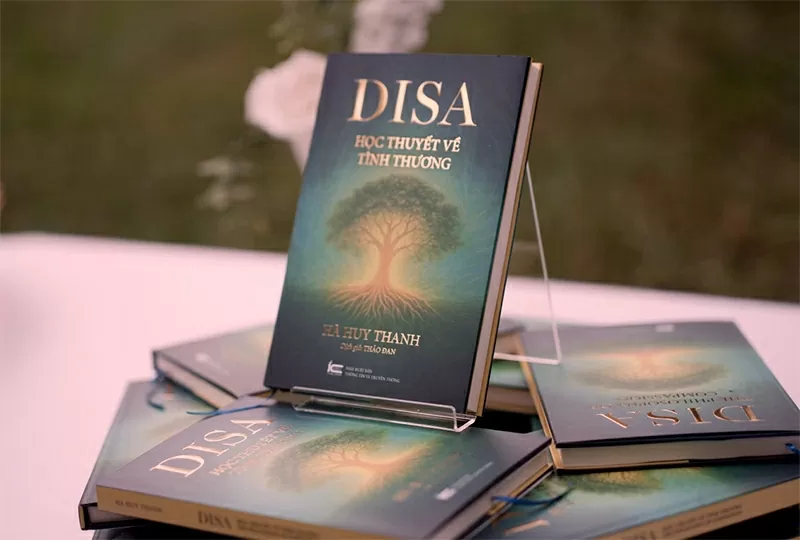 |
| The book “DISA – The Doctrine of Compassion” by Hà Huy Thanh (Photographer: Lukas Vrtilek và Photo Credit: DISA). |
DISA does not view Compassion as a moral sentiment or simple kindness, but as a foundational life energy – the highest frequency harmonising all material and spiritual phenomena. At the level of human existence, Compassion enables individuals to reconnect with their deepest essence; at the societal level, it provides the resonant mechanism through which knowledge and technology serve the common good; and at the cosmic level, it is the original energy code of evolution.
Theoretical Foundations
The DISA Doctrine emerges from the convergence of four intellectual pillars: humanistic philosophy, neuroscience and energy science, and AI ethics.
Humanistic Philosophy
Eastern philosophy has long emphasised the interconnectedness between human beings and the universe through the energy of compassion (mercy, benevolence). Meanwhile, modern Western philosophy – from Husserl and Heidegger to Varela – has shifted from objectivist knowledge toward an existential approach, centring on consciousness and lived experience. DISA integrates both traditions to propose that cognition is not merely a rational process but an energetic interaction across multiple layers of life.
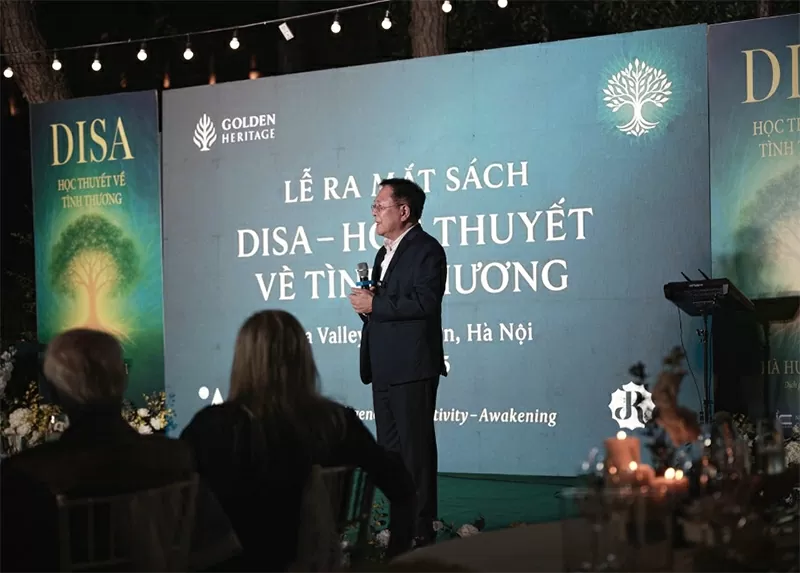 |
| Mr. Vuong Duy Bien – Former Deputy Minister of Culture, Sports and Tourism – delivers remarks at the launching event of the book “DISA – The Doctrine of Compassion” by Ha Huy Thanh (Photographer: Lukas Vrtilek and Photo Credit: DISA). |
Neuroscience and Energy Science
Studies from the HeartMath Institute (USA) show that the human heart generates an electromagnetic field 60 times stronger than the brain’s, and that states of empathy, gratitude, or love stabilise this field, resulting in biological coherence. This provides scientific grounding for the DISA assertion that Compassion is a measurable and trainable energy.
AI Ethics
In AI research, the central issue is no longer computational capability but ethical alignment. Scholars such as Stuart Russell and Yoshua Bengio emphasise the need for human-centred AI design. DISA expands this principle into a philosophical proposal: AI should be programmed with a Compassion Code – the core values of Compassion – to ensure artificial intelligence evolves in partnership, not in conflict, with humanity.
 |
| Author Hà Huy Thanh signs books for readers during the 11/11 Book Launch Ceremony at the Valley of Compassion – Disa Valley (Photographer: Lukas Vrtilek and Photo Credit: Disa). |
Structural Framework of the DISA Doctrine
DISA is symbolised by the “Tree of Compassion,” a three-tier model illustrating how Compassion energy operates in individuals and society:
Roots – Understanding: A process of deep awareness of oneself, others, and circumstances. At the neural level, this corresponds to the transformation of information into understanding, associated with the frontal lobe and limbic system – centres for emotion and empathy.
Trunk – Sharing: The stage where emotional energy is transformed into communicative action, forming sustainable social bonds.
Canopy – Creating Solutions: The highest expression of Compassion – where its energy generates new value in technology, education, art, medicine, and social governance.
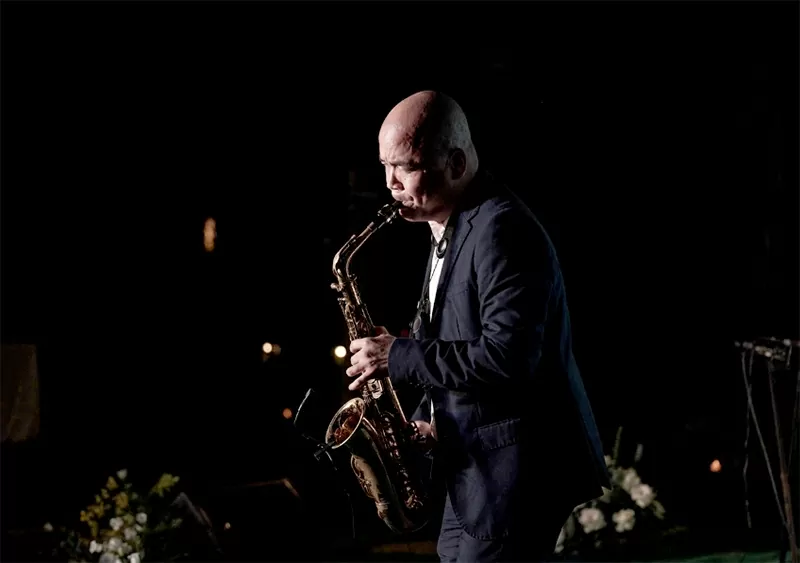 |
| Mr Ha Huy Thanh performs a saxophone piece as a gift to the guests attending the book launch ceremony (Photographer: Lukas Vrtilek, Photo Credit: Disa). |
Applications and Prospects in the AI Era
The DISA Doctrine opens new pathways for multiple scientific and social fields:
Education: DISA proposes a “Compassion-based open education” model where students cultivate understanding and empathy alongside logical reasoning.
Technology and AI: DISA guides the development of Affective AI that not only recognises emotions but also responds according to the principles of Compassion.
Medicine and Psychology: Compassion-based therapies can reduce stress and anxiety while enhancing immunity; DISA provides scientific reinforcement for such approaches.
Social Governance: DISA introduces the concept of Compassionate Leadership – leadership rooted in understanding, listening, and shared humanity.
 |
| Journalist Xuan Ba visits the art gallery at Disa Valley, accompanied by Ha Huy Thanh and his child (Photographer: Lukas Vrtilek, Photo Credit: Disa). |
Conclusion
The DISA Doctrine is an integrative effort spanning philosophy, science, and humanistic values, aiming to establish a new cognitive framework for human evolution in the technological age. By placing Compassion at the centre of intelligence and action, DISA envisions a civilisation where technology and humanity coexist in harmony – where people are guided not by fear or competition but by understanding and the creative energy of love.
 |
| A moment of relaxation at the Valley of Compassion for Ha Huy Thanh (Photographer: Lukas Vrtilek, Photo Credit: Disa). |
Compassion, within the DISA Doctrine, is the universal language of existence – the science of harmony and awakening.
| Grand music festival embodies Vietnamese identity, showcasing intelligence and pride WVR - On the evening of 20 September, Prime Minister Pham Minh Chinh attended and delivered a speech at the third grand music festival organised ... |
| Active contributions to UNHRC is the foundation for Vietnam's re-election success The successful 2023-2025 term provides a strong foundation for vietnam to bolster its reputation and secure re-election to the UNHRC in 2026-2028. |