



Thang Long Citadel: New vitality from a millennium-old heritage
WVR - Not standing outside the rhythm of the city, Hoang Thanh Thang Long has become a part of cultural, educational, tourism, and creative life.
Latest
The official approval by the World Heritage Committee of the Vision for the renovation and embellishment of the central axis of Hoang Thanh Thang Long marks a new phase in Vietnam's journey to preserve world cultural heritage. It also affirms the increasingly methodical, scientific, and sustainable approach of Hanoi and Vietnam in preserving historical values.
From an archaeological site, Hoang Thanh Thang Long is gradually becoming a living cultural space, where the past and present meet, where heritage contributes to telling the story of national identity and the vitality of the thousand-year-old capital.
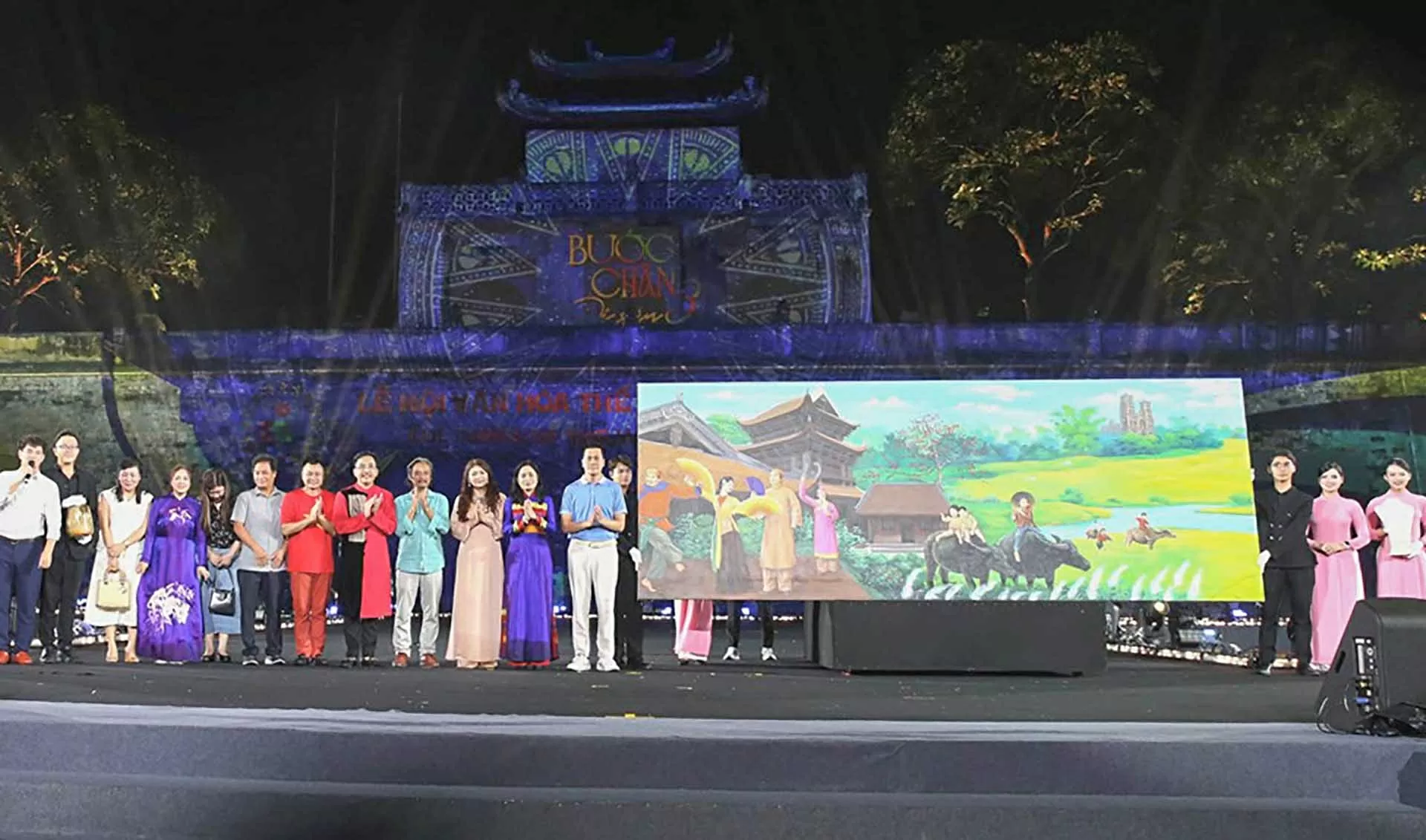 |
| The World Cultural Festival was held for the first time at Hoang Thanh Thang Long in 2025. (Photo: Ha Anh) |
A new milestone in heritage preservation
On July 23, in Busan (Republic of Korea), the Chairman of the World Heritage Committee struck the gavel to approve Decision No. 48 COM 7B.25 on the "Vision for the renovation and embellishment of the central axis of Hoang Thanh Thang Long".
This is international recognition of over a decade of Vietnam's persistent efforts in fulfilling commitments to UNESCO since Hoang Thanh Thang Long was inscribed as a World Cultural Heritage in 2010.
Notably, in this decision, the World Heritage Committee not only highly appreciated Vietnam's full implementation of post-inscription recommendations but also acknowledged the approach of viewing Hoang Thanh Thang Long as a living cultural-social space, where people can access, experience, and feel history in various ways. This is also the modern conservation mindset that UNESCO has long encouraged: conservation is not about "freezing" heritage, but making it continue to live in contemporary life.
Especially, the approval of the Vision for the renovation and embellishment of the central axis has created an important foundation for Vietnam to continue researching and gradually restoring the space of Dien Kinh Thien – the heart of the citadel through many dynasties. This work requires special caution as each decision must be based on archaeological, historical, architectural foundations and close consultation with UNESCO as well as the International Council on Monuments and Sites (ICOMOS).
Behind the success of the dossier is the persistent coordination among many agencies, from the Ministry of Foreign Affairs, the Vietnam National Commission for UNESCO, the Ministry of Culture, Sports and Tourism to the People's Committee of Hanoi City along with a team of scientists both domestic and international. This is a vivid testament to the effectiveness of cultural diplomacy in the new phase, where heritage preservation is not only a professional task but also a diplomatic activity, contributing to enhancing the image and prestige of Vietnam on the international stage.
Within the framework of the 48th session of the World Heritage Committee, the Vietnamese delegation led by Deputy Minister of Foreign Affairs, Chairman of the Vietnam National Commission for UNESCO Ngo Le Van had numerous meetings with UNESCO leaders, ICOMOS, and the International Union for Conservation of Nature (IUCN). Not only discussing the Hoang Thanh Thang Long dossier, these meetings also expanded cooperation in the field of heritage conservation, sharing international experiences, and preparing for other important dossiers of Vietnam.
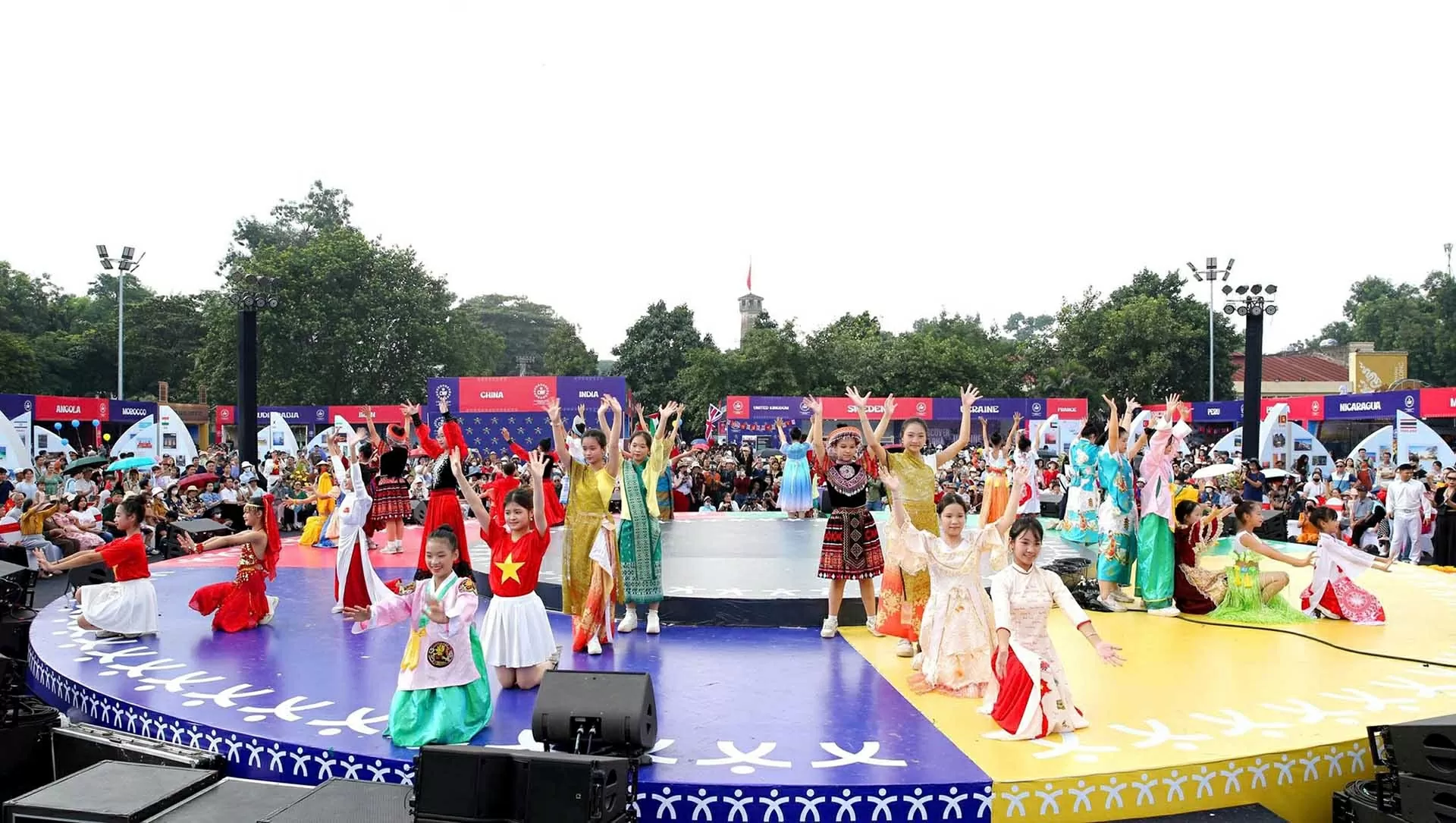 |
| The methodical, scientific approach and placing heritage at the center of cultural life have contributed to making Hoang Thanh Thang Long a living heritage space, meeting UNESCO's criteria and recommendations. (Photo: Tran Huan) |
Behind UNESCO's recognition are the persistent efforts of Hanoi City over more than a decade. The city has implemented comprehensive conservation solutions, archaeological research, completed planning, strengthened cooperation with experts both domestic and international, and invested in improving exhibition quality, applying digital technology, and developing heritage experience products.
A living cultural space
For the capital, Hoang Thanh Thang Long is not just an ancient architectural work or an archaeological site, but also the "historical heart" of Thang Long – Hanoi, where national cultural identity converges and is also a space for history to continue to be present in today's life.
Immediately after being inscribed by UNESCO in 2010, Hanoi implemented many research programs, archaeological excavations, comprehensive conservation planning, and management plans according to UNESCO's recommendations. Millions of artifacts discovered through excavations have helped clarify the structure of the Thang Long Imperial Citadel through the ages, providing more scientific basis for conservation work.
All conservation decisions are based on scientific foundations, with the participation of archaeologists, historians, architects, and experts both domestic and international, thereby helping ensure the authenticity of the heritage. Notably, the research to restore Dien Kinh Thien is identified as a key task, requiring a complete system of documentation and regular coordination and exchange with UNESCO, ICOMOS to comply with international conservation principles.
Along with conservation, Hanoi is innovating ways to promote heritage values. Hoang Thanh Thang Long is becoming a dynamic cultural institution, combining exhibitions, art, heritage education, and digital technology, helping history be more vividly accessible to the public.
In recent years, the Thang Long - Hanoi Heritage Conservation Center has continuously organized thematic exhibitions introducing new archaeological discoveries, rare artifact collections, and stories about life in the ancient imperial palace. Many artifacts are being unveiled for the first time, providing the public with a more vivid perspective on a capital that was once the political, cultural, and artistic centre of the country.
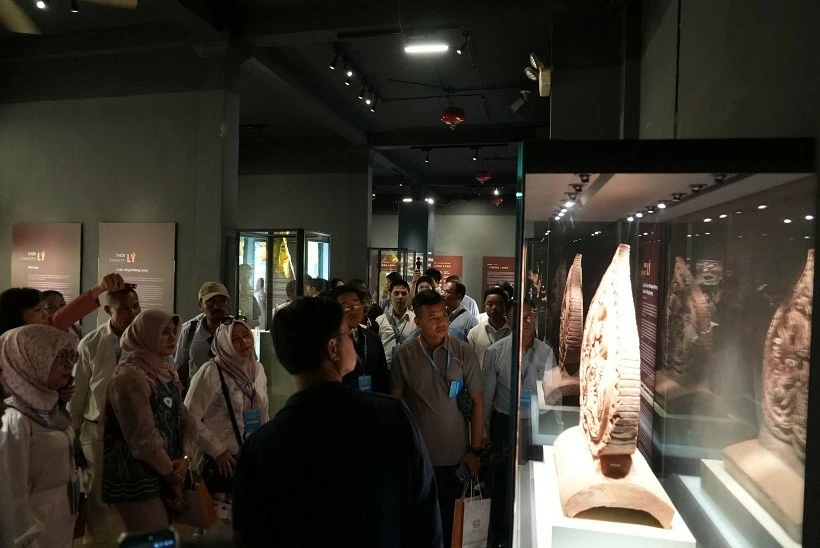 |
| Thematic exhibition at the Thang Long - Hanoi Heritage Conservation Center. (Source: BTC) |
Especially, the Hoang Thanh Thang Long Treasure system with many typical artifacts such as Ly dynasty dragon heads, palace decorative bricks, royal ceramics, or unique architectural artifacts has helped viewers better visualize the scale and development level of the citadel through the dynasties. Another highlight is the harmonious combination of archaeology and technology. Digitizing artifact data, building 3D space restoration models, applying display technology and multimedia narration have gradually enhanced the public's experience, especially the younger generation.
Heritage connecting past with future
Hanoi is aiming to preserve Hoang Thanh Thang Long not only to keep the past but also to create new values in contemporary life. Visitors can explore Doan Mon, the Dragon Steps of Dien Kinh Thien, the 18 Hoang Dieu archaeological site, or the House and Bunker D67 through various rich experiences.
The heritage is increasingly being renewed with educational programs, exhibitions, cultural performances, and the night tour "Decoding Hoang Thanh Thang Long" using light technology, projections, and storytelling.
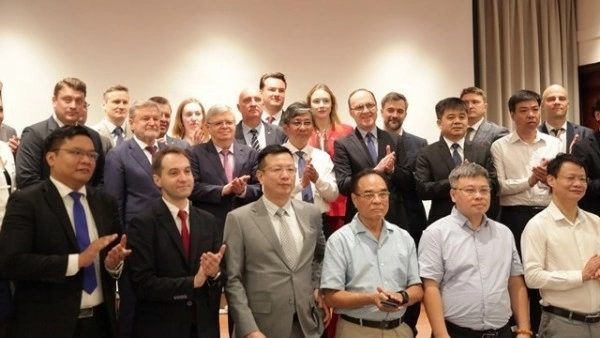
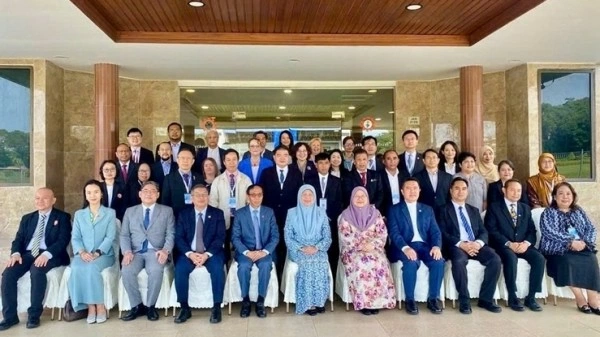
The citadel has also become a destination for diplomatic activities and international exchanges, recently chosen as the first survey point for high-level delegates at the ASEAN Cities Leaders Conference.
Regional leaders and experts visited the Thang Long – Hanoi Exhibition Hall, the Hoang Thanh Thang Long Treasure display area, the Dragon Steps of Dien Kinh Thien, the House and Bunker D67, and enjoyed traditional water puppetry. This journey was not merely a tour but a way for Hanoi to introduce to international friends the cultural, historical depth, and identity of the capital through a world-class heritage.
This event also shows that Hoang Thanh Thang Long is increasingly playing its role as a cultural diplomacy space. Here, history is not only preserved in archaeological layers but also becomes a common language connecting cultures, contributing to promoting the image of a Vietnam rich in tradition, open, and integrated.
Vietnam being evaluated by UNESCO, ICOMOS, and international organizations as a model in implementing the World Heritage Convention, along with Hanoi hosting the Asia-Pacific Dialogue Conference on Heritage and Authenticity in September 2026, continues to affirm Vietnam's increasingly proactive role in international cooperation mechanisms on heritage conservation.
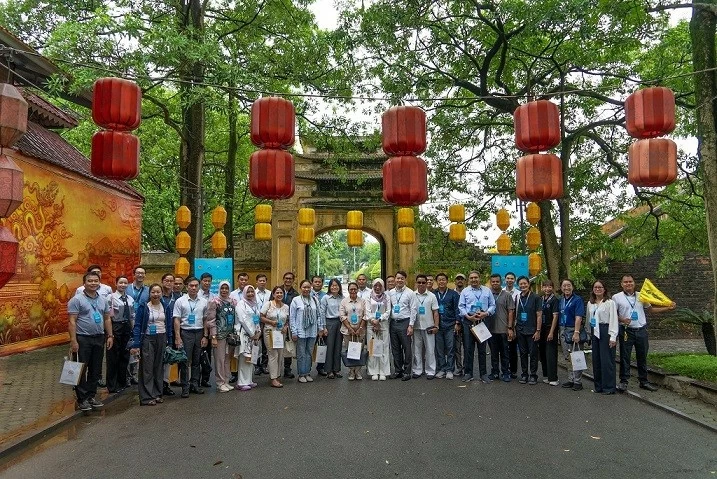 |
| Recently, Hoang Thanh Thang Long was chosen as the first survey point for high-level delegates at the ASEAN Cities Leaders Conference in Hanoi. (Source: BTC) |
This is not only an opportunity to share experiences with international friends but also opens up new approaches in balancing conservation and development, between preserving original values and meeting the needs of modern society.
Over a millennium has passed, Hoang Thanh Thang Long still stands as a symbol of the will to build and defend the nation, of the resilience and cultural vitality of Vietnam. Every step forward in today's conservation work not only preserves the traces of the past but also contributes to nurturing national identity, fostering pride in the roots, and inspiring future generations.