




From a millennium-old heritage to the new vitality of Hanoi
WVR - Hanoi is seeking to tell its story through new languages, from art, festivals, and design to sports and creative spaces...
Latest
In this flow, heritage does not “stand still” to be preserved but is connected with contemporary life, opening up new values and contributing to shaping the image of a cultural, creative, and rich-in-identity Capital.
Revamping the narrative of Hanoi
From cultural spaces in the heart of the old quarter, creative festivals to heritage corridors stretching along rivers, Hanoi is gradually bringing culture out of closed spaces, connecting heritage with contemporary life, and transforming cultural resources into a driving force for the Capital's development.
It seems Hanoi is not short of stories to tell. Over a thousand years of history have left layers of sediment in every street, temple roof, pagoda, craft village, and river. But for a city undergoing a strong transformation, the issue is not just preserving those values but also how to keep the heritage alive and create value.
In recent years, the answer has gradually emerged through how Hanoi organizes cultural, artistic, and festival activities. From weekend performances around Hoan Kiem Lake to the Hanoi Creative Design Festival, from public spaces awakened by art to festivals aimed at international exchange, culture is becoming increasingly close to the community. Each activity is also a way to tell about Hanoi as both ancient and dynamic; rich in tradition yet constantly seeking new expressions.
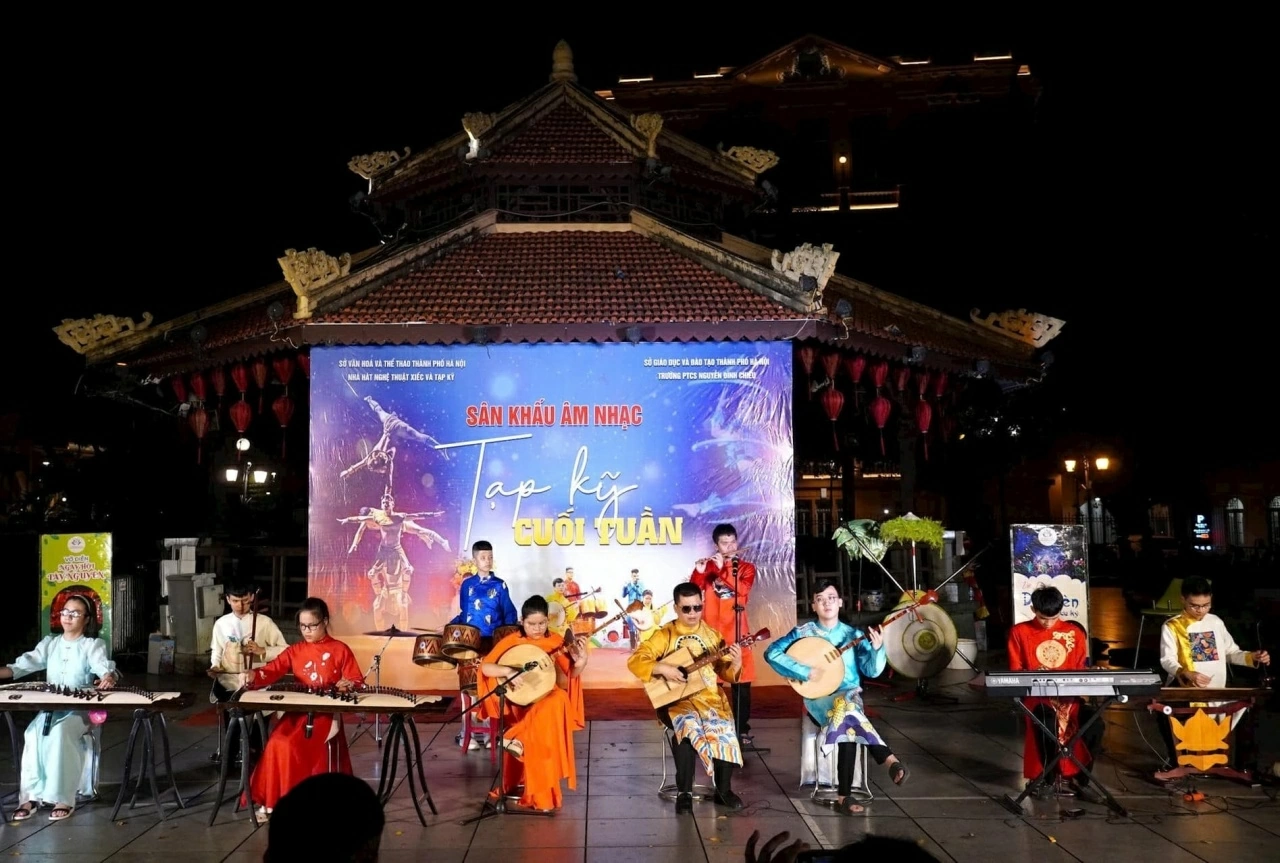 |
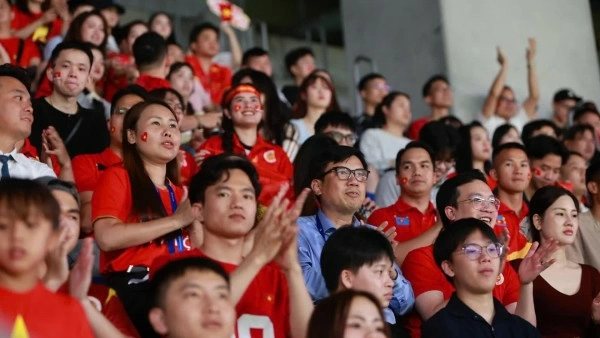
| Many cultural spaces in Hanoi attract a large number of locals, tourists, and international friends. (Photo: VH) |
The weekend art programs around Hoan Kiem Lake clearly show the change in organizing cultural life. Folk music, street art, and contemporary performances coexist in the pedestrian space, creating an open and friendly atmosphere. For international tourists, this is not just an entertainment activity. They can immerse themselves in community life, observe how locals enjoy art, and feel the cultural rhythm of Hanoi. Therefore, the City is explored not only through relics but also through vibrant experiences.
Meanwhile, the Hanoi Creative Design Festival opens up a different approach by connecting heritage with contemporary creativity. Old factories, long-standing architectural works, or forgotten industrial spaces are “awakened” by art, technology, and new design ideas.
This shows that heritage should not be seen as entities that need to be “frozen” for preservation. When approached with creative thinking, old spaces can become material for new cultural products. This is also a suitable direction with the goal of building Hanoi into a “Creative City”. The identity of a creative city lies not only in new constructions but also in the ability to create new values from what the city already possesses.
Therefore, the value of cultural activities does not lie in the scale of the event or the number of participants. More importantly, it is the ability to create unique products that tell the story of a Hanoi where tradition and the breath of life coexist.
Notably, while the second Thang Long - Hanoi Festival honours the historical and cultural depth of the thousand-year-old land, the Hanoi International Martial Arts Festival 2026 opens a new approach through sports and martial spirit.
In the context of increasing interest in experiential and cultural tourism, martial arts can become a rich promotional product. Traditional martial arts are not only combat skills but also embody martial spirit, human values, and national identity.
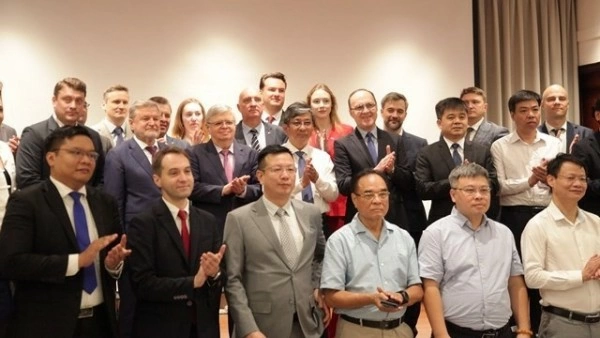
At the seminar “The History of Traditional Martial Arts Development in Hanoi and Solutions for Resource Investment in Developing Traditional and Modern Martial Arts in Hanoi”, an opening activity of the Hanoi International Martial Arts Festival 2026, many opinions emphasised linking martial arts development with cultural tourism, cultural industries, and promoting the Capital's identity.
According to Deputy Director of Hanoi Department of Culture and Sports Pham Xuan Tai, this orientation aligns with the city's sports development strategy while opening up international experiences for Hanoi in promoting, developing, and advertising traditional martial arts; strengthening the connection between martial arts and cultural tourism, cultural industries, sports economy, and promoting the image of the Capital.
The continuous organization of activities shows that Hanoi is seeking new “touchpoints” between culture and tourism. Heritage is not just for sightseeing, art is not just for performance, festivals do not just take place over a few days. When organized into deep experiences, culture can create a sustainable attraction for destinations.
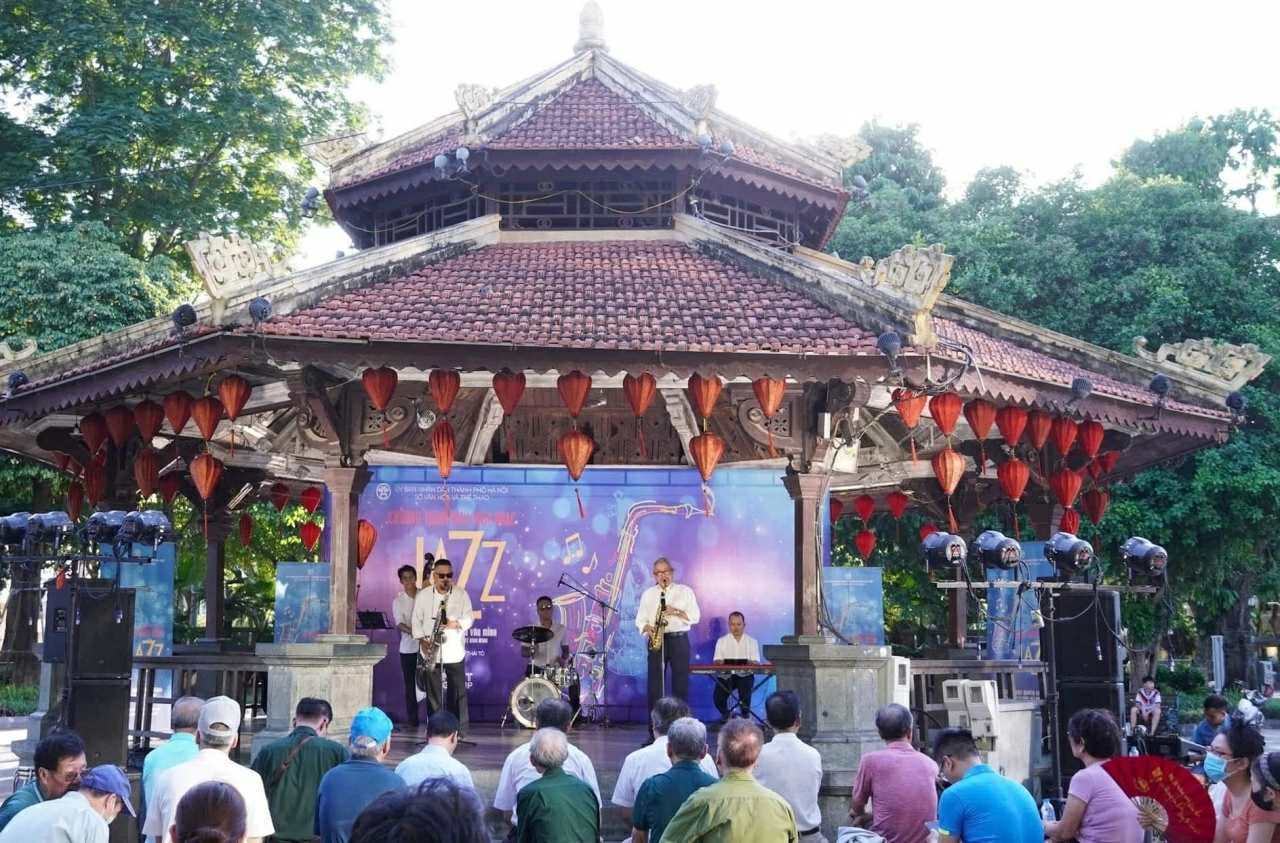 |
| Unique community music space of Hanoi. (Photo: VH) |
Viewing heritage as a development resource
If cultural activities are refreshing Hanoi's image in contemporary life, then the Master Plan for Hanoi Capital with a 100-year vision lays the foundation for a longer-term approach. A notable new point is that culture is identified as a core value throughout, an intrinsic resource, soft power, and a driving force for sustainable development. Hanoi aims to build a city of “Culture - Civilization - Modernity - Happiness”, with people as the centre, subject, goal, and motivation for development.
The vision beyond 2085 aims for a Capital of “Prosperity - Harmony - Culture - Identity”, becoming a globally connected city based on the values of a thousand-year-old culture, a hub for commerce, knowledge, and innovation.
The important point does not lie in how many cultural constructions are built, but in changing the perspective of moving culture from a field that needs preservation to a development driver, while reorganizing cultural spaces in relation to urban areas, landscapes, and contemporary life.
Hanoi currently has nearly 6,000 historical and cultural relics, along with thousands of intangible cultural heritages and many UNESCO-recognized heritages. Recently, in sharing with the press, Director of Hanoi Department of Culture and Sports Pham Tuan Long stated that these are not just statistical figures but vivid imprints of the formation process of Thang Long, Dong Do, and Hanoi over many centuries.
According to Pham Tuan Long, instead of viewing heritage as entities that need to be “frozen” for preservation, the Master Plan for Hanoi Capital with a 100-year vision sees heritage as a development resource. In the structure of nine growth poles, the rich heritage fund will become the historical, cultural, and cultural foundation, contributing to shaping the identity of each urban space. This mindset is reflected in the orientation to form large-scale cultural corridors and heritage space networks. Four key heritage, cultural, and landscape corridors along the Da River, Red River, and Duong River have a total length of about 150 km.
Among them, both sides of the Red River are oriented to become the backbone of the Capital's landscape, culture, history, and environment, connecting parks, public works, cultural spaces, tourism services, and iconic constructions.
According to Pham Tuan Long, the Red River is identified as the “mother river”, the main landscape and cultural axis of the Capital. The history of Thang Long - Hanoi is closely linked with the system of ancient villages, craft villages, and relics along both banks of the river. Therefore, continuing to research and expand the preservation space of ancient villages, craft villages, and riverside relics will contribute to forming a “heritage axis” connecting the past with the future.
Along with that, the “Green - Spiritual Arc” in the West and South connects a chain of scenic spots and relics from Soc Son, Ba Vi, Vien Nam, Luong Son, Quan Son to Huong Tich, expanding connections with Tam Chuc and Trang An - Bai Dinh. This space has both ecological significance and opens up a regional-scale “Heritage and Spiritual Road” experiential tourism route.
In the overall structure, the Thang Long Imperial Citadel, Co Loa, the old quarter, Ho Guom, craft villages, ancient villages, communal houses, pagodas, temples, and cultural spaces along the river are connected into a network. The goal is for residents and tourists to experience heritage as a continuous spatial chain rather than discrete destinations. Peripheral heritage “nuclei” such as the ancient citadel of Son Tay, Duong Lam ancient village, Huong Son, Co Loa, Thay Pagoda, Tay Phuong, Tram Gian, Tram Pagoda... are also oriented to become cultural centers promoting sustainable development in satellite areas.
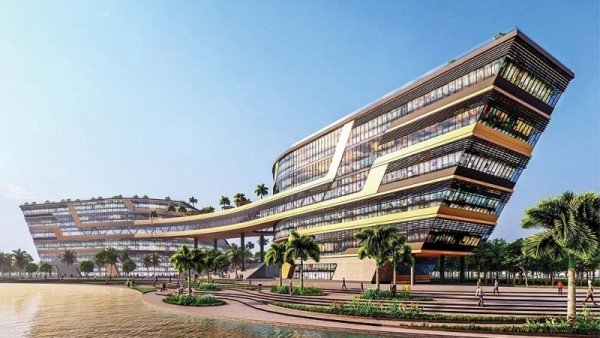
Along with the heritage network is the cultural, creative, and cultural industry ecosystem. Hanoi aims to develop modern cultural institutions, art performance centers, public libraries, exhibition spaces along the Red River, creative complexes, clusters, and international-scale creative industrial zones.
The city also aims to digitize relics, treasures, and documentary heritage; build a cultural database, apply GIS in managing, preserving, and promoting heritage values. At the same time, researching and identifying some heritage and cultural spaces to propose UNESCO recognition as World Heritage such as Bat Trang craft village, Co Loa relic complex, Huong Son scenic complex, Ho Chi Minh Mausoleum Complex, K9-Da Chong, Long Bien Bridge to preserve, exploit, and promote heritage values, building the image of a global city.
At the Conference on the announcement of the Master Plan for Hanoi Capital with a 100-year vision and investment promotion in 2026 organized by the Hanoi People's Committee recently, among the 50 memorandums of understanding (MOU) signed, 9 documents directly relate to the cultural and social field.
According to Pham Tuan Long, the Hanoi Department of Culture and Sports is implementing the action programs of the City Party Committee and the People's Committee, while promoting cooperation with universities, businesses, and investors to develop cultural industries, bringing public art closer to urban life.
It can be said that placing culture at the center of the development strategy not only reflects the long-term vision of the Master Plan for Hanoi Capital with a 100-year vision but also opens up a new approach in urban development.
From a stage in the pedestrian street, an old factory awakened by art to the heritage corridor along the Red River, from martial arts festivals to craft villages, ancient villages... are gradually being connected in a larger picture. In this picture, culture no longer stands on the sidelines of development but becomes the core part that creates identity, competitiveness, and motivation for Hanoi to move towards a future that is both modern and rich in cultural depth.