




Sri Lanka – When gentleness becomes identity
WVR - From sacred Buddhist relics to the tea highlands of Nuwara Eliya, Sri Lanka emerges as an island nation marked by gentleness, tranquility, and rich identity, noted Dr. Trinh Le Anh.
Latest
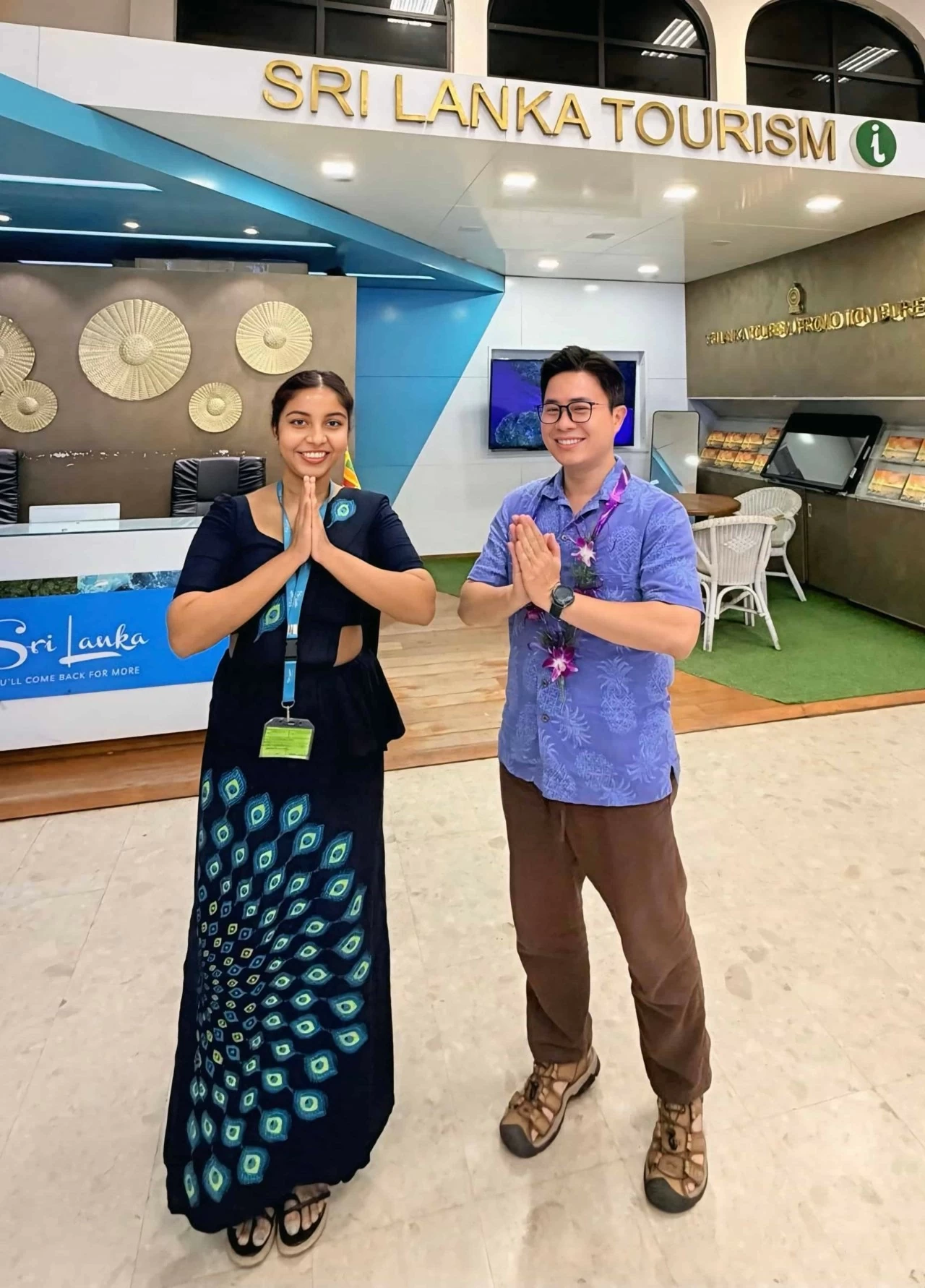 |
| Dr. Trinh Le Anh meets with representatives of the Sri Lankan tourism sector. |
Sri Lanka does not present itself with glitz or overwhelming constructions, but with the enduring values of culture, nature, and people. From a tourism perspective, Dr. Trinh Le Anh guides readers through Buddhist relics, tea highlands, safari areas, heritage cities, and daily life to explore an island nation still facing challenges but rich in identity...
Beauty in simplicity
Some destinations linger in our memory due to their splendor. Some are remembered for their grand structures, bright avenues, meticulous services, and nearly seamless operations. Sri Lanka, during my travels, appeared differently: More subtle, slower, and somewhat rustic.
From Negombo, Anuradhapura, Sigiriya, Kandy, Nuwara Eliya, Yala, and then down to the southwest coast, I felt as if I was traversing an island that never tried to appear perfect.
The "interface" of regions and cities in many places remains rustic: Dim roads, modest houses, small shops, tuk-tuks navigating through rainy streets, railway crossings, and residential areas that seem poorer than the tourism brochures suggest. Yet, on this unpolished backdrop, Sri Lanka reveals a very distinct quality: Gentleness.
This gentleness is not a slogan. It lies in the way people speak softly, smile gently, greet with "Ayubowan", offer white Araliya flowers, serve a welcoming drink, or quietly light a candle in a guest reception ritual. Sri Lanka may not overwhelm with amenities, but it makes travelers feel welcomed with genuine warmth and hospitality.
Sri Lanka is recovering from a challenging period. According to the World Bank, in 2022, the country faced a severe economic crisis, with depleted foreign reserves, high inflation, fuel shortages, and foreign debt default. Subsequent reforms have stabilized the economy, but the social impacts of the crisis cannot disappear overnight.
Therefore, when seeing dimly lit streets, early-closing shops in Kandy, and diligent tuk-tuks weaving through narrow streets, I refrain from labeling it as poverty in a judgmental way. Rather, it is a slice of developmental reality: A nation still lacking resources, seeking recovery, yet maintaining its unique lifestyle.
Tuk-tuks are a quintessential image of Sri Lanka. They appear in cities, countryside, in front of hotels, near railway crossings, in rain, and sunshine. They are the "lifeblood of the common people" on the island: Small, agile, durable, and efficient. I tried opening ride-hailing apps like Uber or PickMe in Sri Lanka and found tuk-tuks as a natural choice alongside regular cars. This small detail speaks volumes about life here: Tuk-tuks are not just "street" vehicles to flag down but have entered the digital transportation ecosystem. A very common vehicle yet not outside modern life.
If Buddhist relics speak of historical depth, tuk-tuks narrate today's life: Familiar, practical, and colorful, like cheerful strokes in Sri Lanka's visual identity.
In theory, a destination brand is not just a logo or slogan but a system of recognition comprising multiple layers of meaning, symbols, and associations (Aaker, 1996; Cai, 2002; Pike, 2008). For Sri Lanka, these layers of recognition are not only in "Ceylon tea", the Bodhi tree, and Buddhist relics, beaches, or safaris, but also in everyday details like white Araliya flowers in guest rituals, the gentle greeting "Ayubowan", the imperfect infrastructure, and the colorful tuk-tuks weaving through daily life. These details give the destination its shape, rhythm, and unique memory.
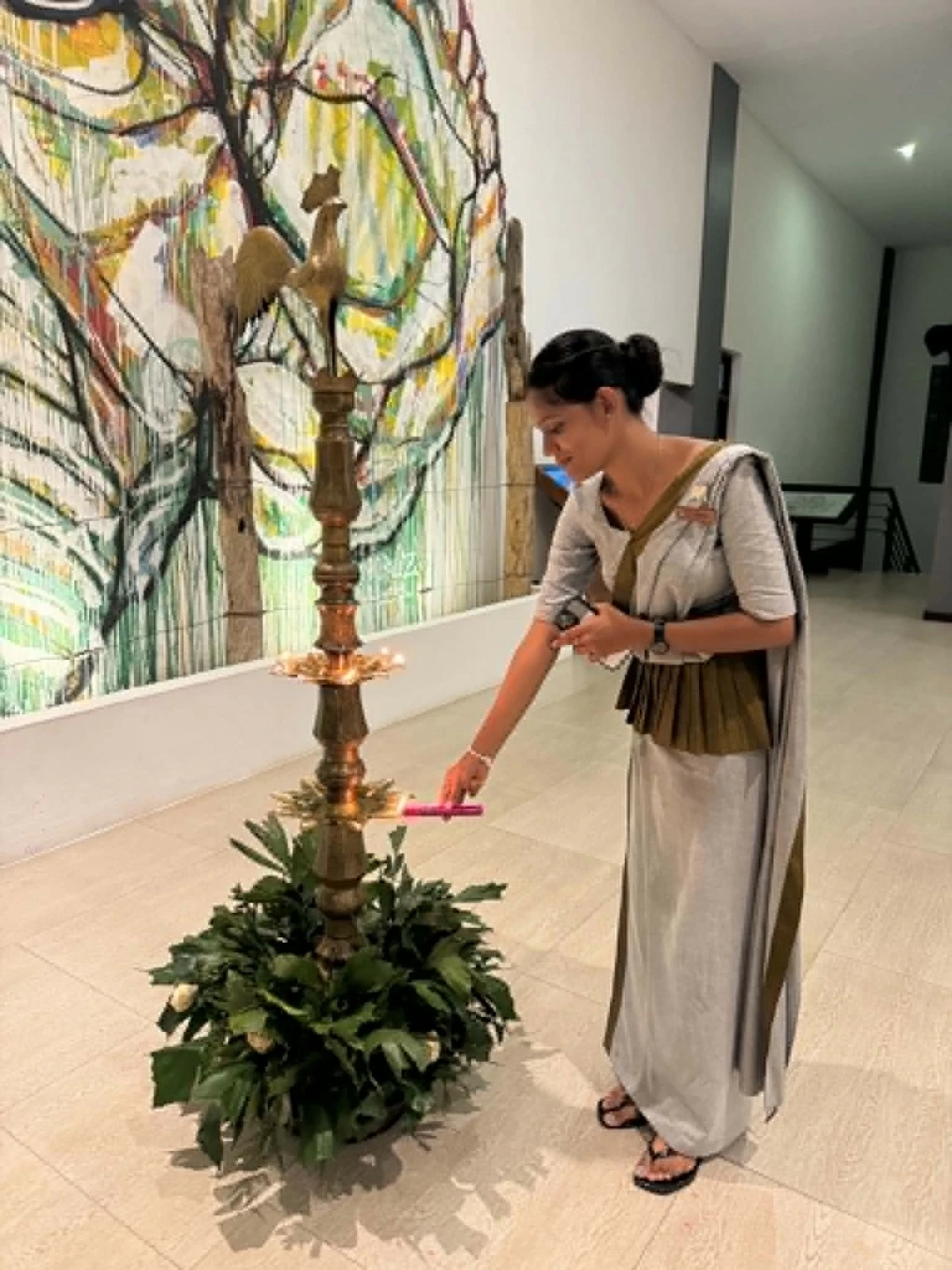 |
| Sri Lanka welcomes guests with very small gestures: A smile, a candle, a warm feeling. (Photo: Courtesy by author) |
Sacred trees, bare feet, and buddhist life in Sri Lanka
The deepest touchpoint of Sri Lanka is Buddhism. Not in the sense that everything is explained by religion, but because, on this journey, Buddhist relics open up another layer of perception: Quieter, deeper, and somewhat spiritually uplifting for the post-crisis social space.
Buddhism is vividly present in the landscape, rituals, the rhythm of pilgrims, and how people interact with sacred spaces. In Anuradhapura, I felt this very concretely. The ancient city does not impress with displays but with quietness. The white stupas, the Bodhi tree, the pathways in the sacred area, people dressed in white offering flowers, barefoot on hot stone floors... all naturally slow down the visitor. Not because anyone demands emotion, but because the space makes one feel they should tread lightly, speak softly, and observe with more humility.
UNESCO describes Anuradhapura as a sacred city formed around a branch from the "tree of enlightenment" – the Bodhi tree associated with the Buddha, brought by Sanghamitta in the 3rd century BC; this place was once a thriving political and religious capital for a very long time: 1,300 years. But standing before Sri Maha Bodhi, those historical numbers are not the only things that linger in memory. What remains is the sight of people quietly circling the sacred tree, offering flowers, clasping hands, sitting still, or chanting under the leaves.
Sri Maha Bodhi is indeed a typical expression of the concept of "living heritage". The ancient tree is merely a long-lived plant entity, but for Sri Lankans, it is a center of sacred memory. There, the past does not reside in explanatory plaques but continues to live in rituals.
Having to go barefoot into Buddhist spaces may initially inconvenience foreign visitors. Hot stone floors, dust, gravel, shoes must be removed, sometimes carried. But on reflection, this inconvenience is a reminder: We are entering a sacred space, not a tourism backdrop.
Similarly, the rule against taking selfies with Buddha statues is not to inconvenience tourists but to maintain the boundary between reverence and image consumption. Not all sacred symbols are meant to stand behind our posed smiles – when we are tourists.
Arriving in Kandy, this sense continues in a different way. The Temple of the Tooth, or Sri Dalada Maligawa, is part of the UNESCO World Heritage "Sacred City of Kandy". UNESCO describes Kandy as a Buddhist sanctuary, the last capital of the Sinhala kings, and home to the Temple of the Tooth Relic, a famous pilgrimage site. If Anuradhapura evokes ancient Buddhist memories, Kandy shows that this religion still plays a crucial role in the rhythm of activities, rituals, and cultural identity of Sri Lanka today.
I remember Kandy not just for the temple, but for the life around it. This hill city seems to close its day earlier. Around 7:30 PM, many shops are closed. The streets quiet down, the pace slows, and the atmosphere is more subdued than familiar tourist cities. This might just be a fleeting impression from a short journey, but it aligns with my overall impression of Sri Lanka: An island nation that speaks softly, moves slowly, and maintains a precious quietness in its sacred spaces.
From a tourism perspective, this is a very important lesson in managing religious heritage. The more sacred a destination, the more it needs to balance tourism access with respect for the practicing community. Tourists may come to admire, learn, photograph, and write. But these activities should begin with the understanding that where they stand is not just a tourism resource. It is also a spiritual space for others.
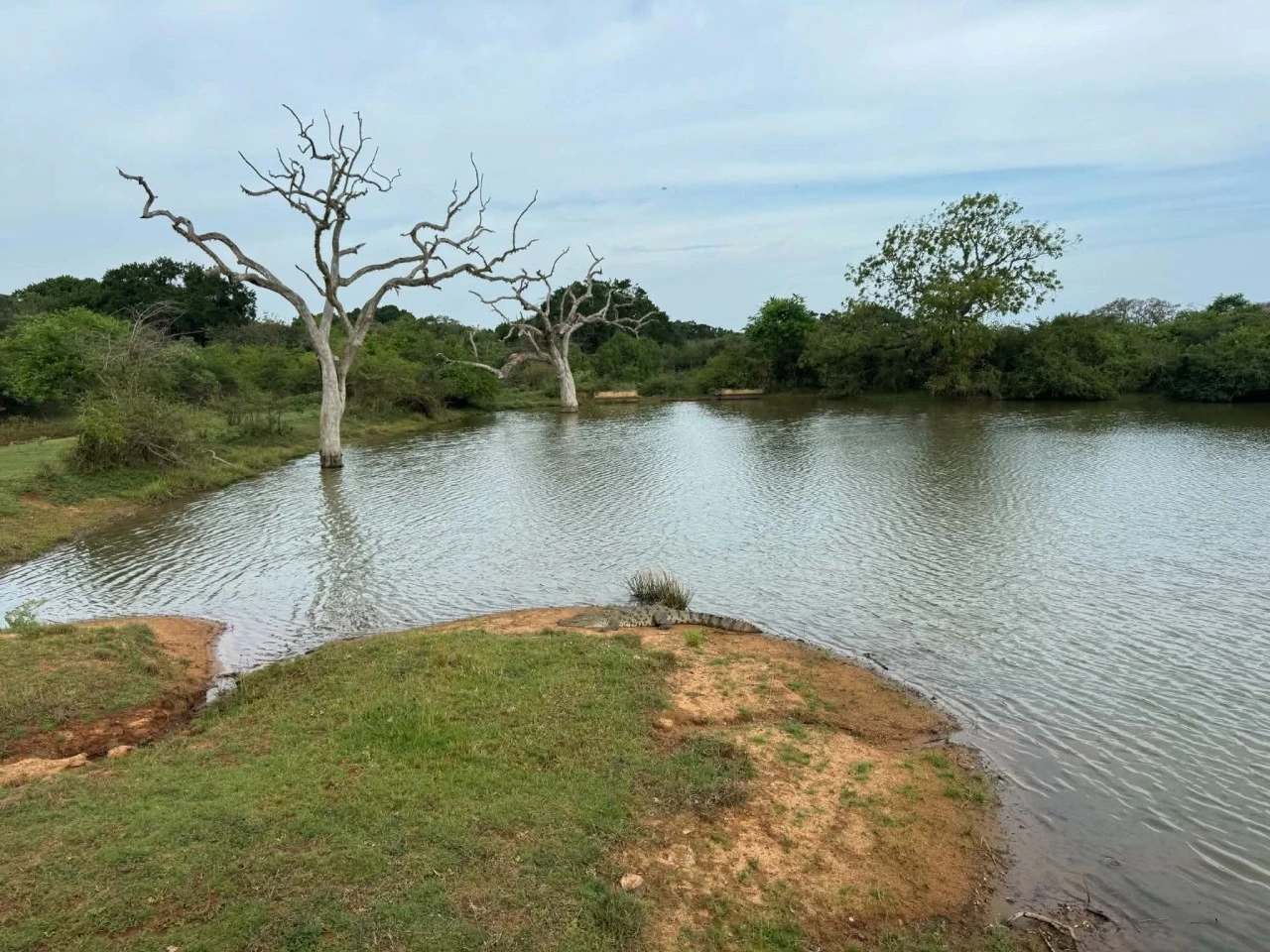 |
| A scene from the country. (Photo: Courtesy by author) |
Tea highlands and the "Little England" mark
After Kandy, the journey in Sri Lanka changes quite noticeably in terms of landscape and feeling. From a hill city associated with the Temple of the Tooth and a tranquil pace of life, we continue to Nuwara Eliya – Sri Lanka's famous tea highland.
If Kandy is situated at an altitude of over 500 meters above sea level, Nuwara Eliya is nearly 1,900 meters. This change in altitude alone makes for a different experience: Cool air, more mist, the green of tea covering the mountain slopes, and the pace of travel slows with the highland curves.
Nuwara Eliya is often called "Little England". This term reflects the colonial British influence still evident in the landscape, architecture, gardens, and organization of leisure spaces. But for travelers, the first impression might be simpler: Cooler, greener, and more fragrant with tea. After days of traversing hot regions, white stupas, dusty roads, safaris, and sparse residential areas, stepping into a cool highland feels like Sri Lanka is a country with many climates within a not-so-large area.
In Nuwara Eliya, tea is not just a crop but a landscape, labor, an important part of economic history, and a familiar symbol of this nation. The neatly aligned green tea hills on the mountain slopes offer a very beautiful and peaceful feeling. Visiting the tea factory, observing the processing, and hearing the story of Ceylon tea, I understand that this beauty has a deeper layer: The history of plantation economy, colonial influence, and agricultural labor spanning generations. Therefore, standing amidst the tea region of Nuwara Eliya, I do not think of tea as a solitary beverage. I think of how an agricultural product, over time, has become an identifying mark of an entire island nation.
According to the Sri Lanka Tea Board, Nuwara Eliya is one of the most famous tea regions in Sri Lanka; its altitude and cool climate contribute to a tea with a delicate aroma, light color, and mild taste. This helps explain why the tea experience here is not just about drinking tea. It is in the journey through the highlands, in the cool air, in the scent of tea leaves, in the sound of factory machinery, and in the cups of tea poured amidst the thin mist.
From a tourism perspective, this is a clear example of the "experience economy". Pine and Gilmore (1998) argue that value in the experience economy lies not only in the product or service but also in the experiences and emotions created for participants. A cup of tea, if merely placed on a table, remains a beverage. But a cup of tea in Nuwara Eliya is associated with altitude, climate, plantation stories, factories, workers, mountain roads, and the sensation of cool air touching the skin. Tourism, when done well, is an opportunity to add emotional depth and context to familiar things.
Interestingly, Nuwara Eliya also shows that Sri Lanka is not a monochromatic tropical island. This island nation has beaches, dry regions, ancient capitals, forests, safaris, and then cold highlands with tea farms reminiscent of another historical layer. For me, the route from Kandy to Nuwara Eliya is like a natural transition: From Buddhist life and relics to the story of tea, climate, colonial history, and how a land turns natural conditions into a tourism experience.
And if gentleness is the deepest sediment of Sri Lanka, behind it are still other stories about nature, heritage, and the vitality of this island waiting to be explored...
Tags: