





Significance of choosing November 24 as 'Vietnam Culture Day'
WVR - The decision by the Politburo to designate November 24 each year as "Vietnam Culture Day", while also establishing it as a paid holiday, is not only a social decision but also affirms the stature and role of culture in national life and in the country's long-term development strategy.
Latest
November 24 is associated with a special milestone in the nation's cultural life. It marks the opening of the first National Cultural Conference, held at the Hanoi Opera House on November 24, 1946, just over a year after the birth of the Democratic Republic of Vietnam.
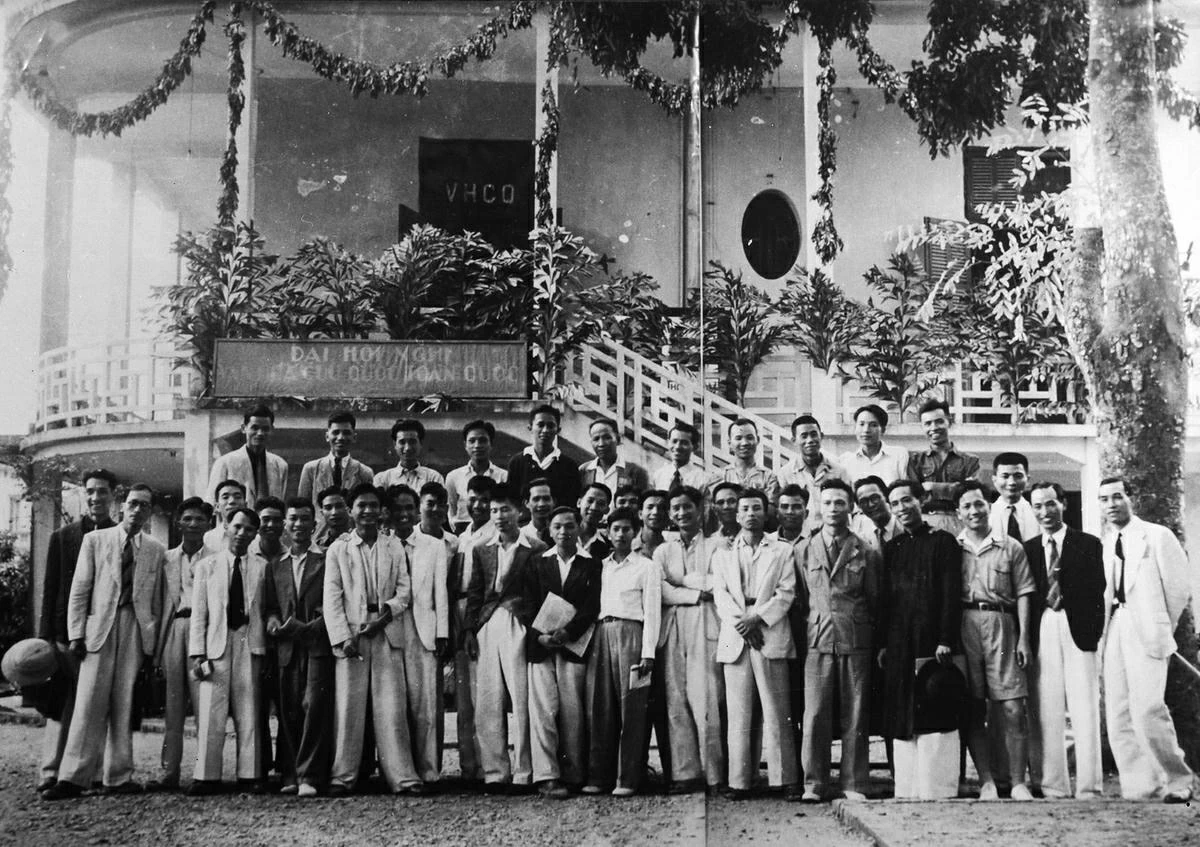 |
| Delegates attending the first National Cultural Conference, November 1946. (Archival photo) |
In the context of a nation facing numerous challenges, the Conference brought together over 200 intellectuals, artists, and prominent cultural figures from across the country to discuss the path to building a new culture for an independent nation.
President Ho Chi Minh's direct participation and speech at the Conference underscored the special importance of culture in the strategic thinking of the Party and the State from the very early days of the nation.
In his foundational speech, he asserted that culture cannot stand apart from politics and is inseparable from the cause of national independence and nation-building.
Culture must aim for the happiness of the people and the nation; it must absorb the cultural essence of humanity to build a culture with Vietnamese identity, imbued with a democratic spirit.
Notably, the idea that "Culture must light the path for the nation" emphasized by President Ho Chi Minh has become a guiding principle for the cultural policies of the Party and the State over many decades.
Culture is not merely a spiritual domain but a guiding force that directs social behavior, nurtures human character, and plays a decisive role in the nation's destiny.
Therefore, choosing November 24 – the day that marked the inception of revolutionary cultural thinking – as "Vietnam Culture Day" carries profound symbolic meaning, affirming the central role of culture in the nation's building and safeguarding endeavors.
Since the 1946 National Cultural Conference, the Party's cultural policies have been continuously inherited and developed through various historical phases. During the resistance, culture was closely linked with the mission of "all people, comprehensive, long-term".
Entering the era of renovation and integration, culture is placed in an organic relationship with human, economic, and social development.
Particularly, at the 2021 National Cultural Conference, the perspective of placing culture on par with economy, politics, and society was reaffirmed, emphasizing that developing a comprehensively developed Vietnamese person is the central goal of sustainable development.
In the draft Document for the 14th National Party Congress, culture continues to be established not only as the spiritual foundation of society but also as an intrinsic resource, a driving force for development, and a regulatory system for social relationships.
The construction of national values, cultural values, family values, and Vietnamese human standards shows increasingly complete theoretical thinking, meeting the requirements of national development in the new phase.
From a social perspective, "Vietnam Culture Day" is not only an occasion to honor those working in culture, arts, intellectuals, and artists but more importantly, to raise the general awareness of the entire society about the role of culture in national life.
Culture is present in heritage, festivals, and arts, but it also deeply permeates public service ethics, social lifestyles, behavior, and the development aspirations of the Vietnamese people.
In the context of globalization and digital transformation, when traditional values face many challenges, establishing a "Vietnam Culture Day" serves as a reminder of the responsibility to preserve identity, enrich national values, and promote the soft power of Vietnamese culture.
Thus, November 24 is not just a historical milestone but also a symbol of development thinking that places humans at the centre, with culture as the foundation and driving force, true to the spirit of "culture lighting the path for the nation".