

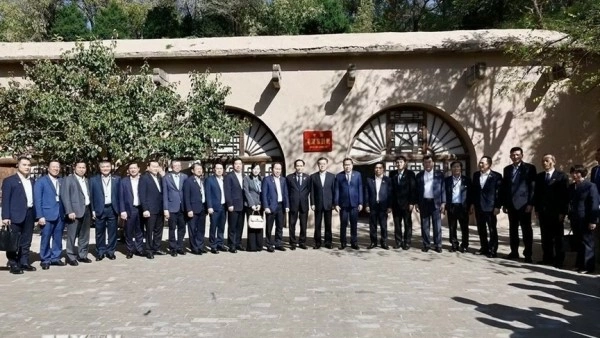


Revolutionary footprints of President Ho Chi Minh from Guangxi to Guangzhou
WVR - In his journey to seek a path for national salvation, the period of revolutionary activities of President Ho Chi Minh in China holds special significance for the formation of his thoughts and revolutionary path.
Latest
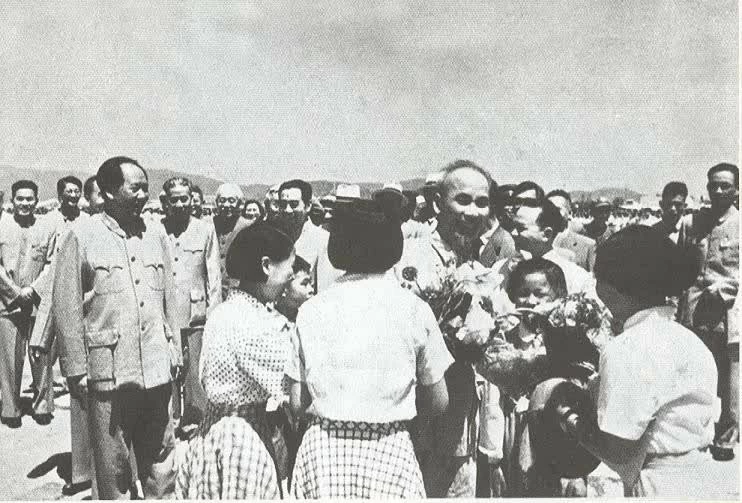 |
| President Ho Chi Minh visits China in July 1955. (Source: VNA) |
Cultural and historical expert Xie Chaode shared that President Ho Chi Minh had an extended period of activities in various localities in China such as Guangxi, Guangzhou, and Yunnan.
During this period, he was directly involved in revolutionary activities while building foundations and training forces for the Vietnamese national liberation movement.
According to Xie Chaode, in the context of the nascent Vietnamese revolutionary movement, Nguyen Ai Quoc had to live and operate under difficult conditions, frequently moving to avoid capture, while secretly propagating, mobilizing, and gathering patriotic forces.
Guangxi was considered a crucial area due to its concentration of Vietnamese expatriates and many Chinese revolutionary forces. Here, President Ho Chi Minh connected with patriotic organizations, studied revolutionary theories, and learned from the experiences of the Chinese revolutionary movement to apply them to Vietnam's reality.
During his time in China, he participated in writing articles, compiling communication materials, disseminating national liberation ideas, and training cadres for the Vietnamese revolutionary movement.
President Ho Chi Minh also placed special emphasis on building solidarity within the Vietnamese expatriate community, guiding safe revolutionary activities, and upholding the principles that “revolution must rely on the people” and “all for national independence”.
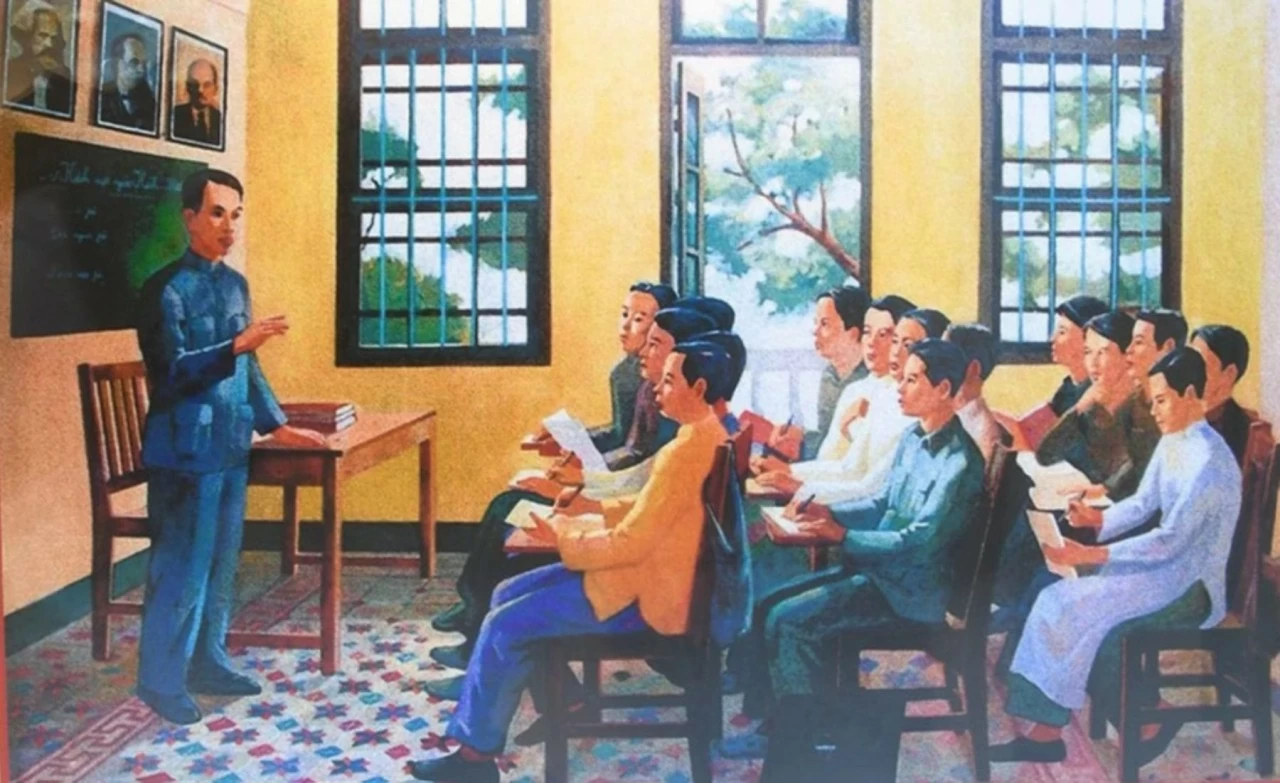 |
| Illustration of 'Nguyen Ai Quoc teaching at a training class for Vietnamese revolutionary cadres in Guangzhou, China'. |
Sharing about the time President Ho Chi Minh stayed in Liuzhou (Guangxi), a guide from the Nam Duong Memorial House at the Li Jie Hotel noted that during his secret activities there, he composed many literary works and poems reflecting resilience and determination to overcome hardships.
Later, President Ho Chi Minh moved to Guangzhou, where he engaged in significant activities such as opening political and military training classes and training key cadres for the Vietnamese revolution.
Xie Chaode remarked that President Ho Chi Minh's activities in China not only played a crucial role in the Vietnamese revolutionary cause but also symbolized the traditional friendship between the peoples of the two countries.
His revolutionary footprints in China vividly demonstrate his resilience, spirit of overcoming difficulties, and strategic vision in the journey to seek national salvation, while also contributing to fostering the Vietnam-China friendship.