





Restructuring the nation, reaching out to the open sea: Article 5 - Businesses onboard 'the train to prosperity'
WVR - The restructuring of provincial-level administrative units presents a golden opportunity for the business community, especially small and medium-sized enterprises (SMEs) to shift their mindset and reshape their operations.
Latest
For the first time in nearly half a century, Vietnam is undertaking a large-scale restructuring of its provincial-level administrative map, reducing the number of the centrally governed provinces and cities from 63 to 34. This event marks a historic turning point for the nation and signals the beginning of a new era of development.
 |
| Dr. Mac Quoc Anh, Member of the Central Committee of the Vietnam Fatherland Front and Vice Chairman and General Secretary of the Hanoi Association of Small and Medium Enterprises (HAMESA). |
Dr. Mac Quoc Anh, Member of the Central Committee of the Vietnam Fatherland Front and Vice Chairman and General Secretary of the Hanoi Association of Small and Medium Enterprises (HAMESA), spoke with The World & Vietnam Report about the implications of this move.
Vietnam’s “train to prosperity” has begun its journey in the new era with its initial phase. From the perspective of the business association, how do you evaluate the decision to reorganize provincial-level administrative units?
I believe this is truly a historic milestone with long-term strategic significance. After nearly half a century of operating under the current administrative model, the challenges have become increasingly apparent—overlapping management, a cumbersome administrative apparatus, high operating costs, and widening development gaps between localities.
In the context of deep international integration, heightened global competition, and the urgent need to accelerate digital transformation and build a digital government and society, the administrative apparatus must become leaner, more effective, and efficient. I see this decision as a revolutionary step in national governance, placing the goal of sustainable development above parochial local interests.
From the perspective of businesses, particularly small and medium-sized enterprises, this restructuring will lead to a significant simplification of bureaucratic layers and licensing procedures. It will reduce compliance costs and foster greater consistency in regional planning, infrastructure, and logistics. With larger administrative boundaries, the integration of resources and coordination in planning and implementing socio-economic programs can be carried out more effectively, opening up new development spaces and facilitating the flow of capital, and technology while minimizing local barriers.
I would like to emphasize that Vietnam is not alone in this. Many advanced countries such as Japan, France, Republic of Korea, and Germany have also implemented administrative mergers to expand their governance scale, enhance competitiveness, and better serve their citizens and businesses. With a population exceeding 100 million and the ambition to become a high-income developed nation by 2045, administrative restructuring is essential for Viet Nam. If not, we risk falling behind in the race for innovation and modernization.
Therefore, this decision marks a historic turning point. It reflects a strong political will, a firm commitment to reform, and a national aspiration to rise. Indeed, the “train to prosperity” has departed, and we must be well-prepared to seize the opportunities ahead.
How do you assess the opportunities for businesses, particularly small and medium-sized enterprises, following this government decision?
The opportunities are immense - arguably unprecedented in decades. For businesses, especially SMEs which account for over 97% of all enterprises in Viet Nam, create about 60% of jobs, and contribute more than 45% of GDP, the reduction of administrative layers and the merging of economic regions will make it easier for them to access support policies, infrastructure, capital, and markets.
| The “train to prosperity” has departed, and we must be well-prepared to seize the opportunities ahead. |
Previously, SMEs often faced high transaction costs because each province or district had its own set of procedures. With broader administrative units, the coordination and implementation of policies will become more centralized and consistent. This means businesses can expand their operations more easily, better connect to supply chains, access a more skilled labor force, benefit from clearer land-use planning, and leverage more modern infrastructure.
Obviously, after the mergers, larger provinces will have greater capacity to plan and develop industrial zones, high-tech parks, and model urban areas, enhancing their ability to attract investment. Therefore, local businesses will have more opportunities to participate in global value chains, rather than being confined to narrow, local “ponds.”
Small and medium-sized enterprises are particularly sensitive to policy changes. When the government prioritizes administrative reform and streamlines bureaucratic processes, businesses will significantly cut compliance costs, more easily access online public services, utilize digital platforms, and tap into development support funds in a more integrated way.
Moreover, after the merger, the newly merged localities will be in a stronger position to allocate resources for workforce training, entrepreneurship support, and innovation promotion. This is crucial because SMEs don’t just need capital, they also need management skills, technology, and high-quality human resources. Essentially, the restructuring of administrative units provides a new launchpad for businesses to reach greater heights.
As a representative of Hanoi’s SME community, I hope this will be a powerful catalyst to reignite the entrepreneurial spirit, the desire for legitimate wealth creation, and a stronger sense of social responsibility.
What should businesses do to seize and leverage these opportunities for growth in the coming journey?
To fully capitalize on the historic opportunity presented by this decision, businesses, especially small and medium-sized enterprises, must implement a range of coordinated strategies.
First, they have to improve management capacity and strategic vision. Enterprises must quickly shift their mindset from small-scale operations to regional and supply chain thinking.
Second, digital transformation is no longer optional, it is a necessity. SMEs need to adopt technological platforms in management, production, sales, marketing, and finance to reduce costs and enhance efficiency.
Third, they should prioritize collaboration and partnerships by proactively forming alliances, industry clusters, and regional linkages to enhance competitiveness and take advantage of infrastructure, market, and policy benefits.
Fourth, it is essential for SMEs to focus on innovation and product development. A larger market demands products and services that meet higher standards in quality, environmental friendliness, and uniqueness. Innovation is the key for enterprises to become market leaders in this new landscape.
Fifth, enterprises must strengthen legal capacity and compliance. When administrative systems become more unified, regulatory enforcement will tighten. Enterprises must be equipped with legal knowledge in investment, land, environment, labor to mitigate risks and take full advantage of incentive policies.
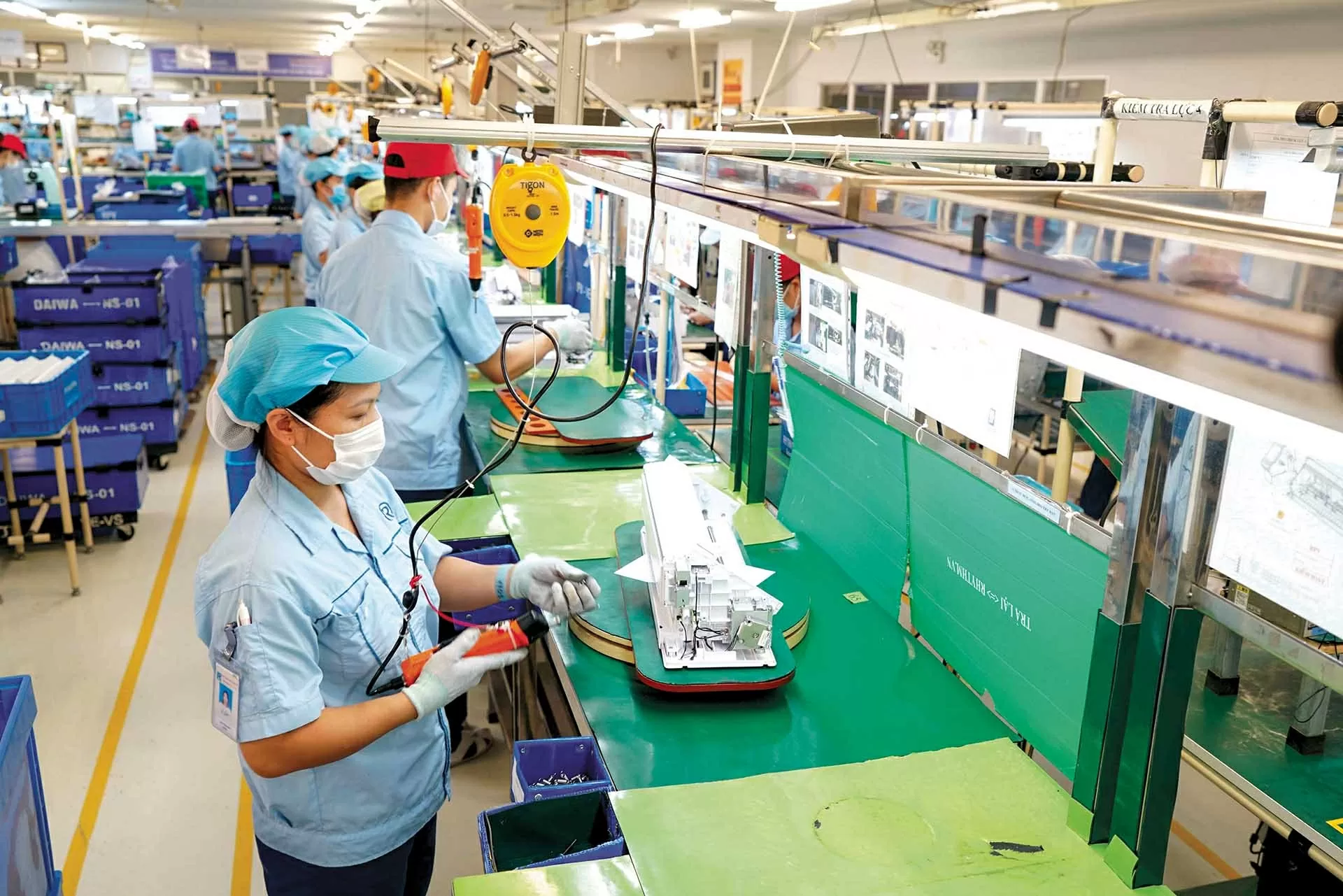 |
| This is truly a golden window for the business community, especially SMEs, to renew their mindset, restructure their operations. (Photo: Phạm Hùng) |
What are your expectations regarding changes in business support policies following the administrative merger?
As a representative of the small and medium-sized business community, I have high expectations regarding four key areas of policy reform.
The first area concerns investment incentives and the development of dynamic economic zones. After the merger, the government should promptly issue synchronized, transparent policies to attract large-scale investment in new economic zones - including tax incentives, infrastructure, land access, and credit - creating opportunities for both large enterprises and SMEs.
The second area is the financial and credit policies. Preferential credit packages, credit guarantee funds, and startup funding policies must be tailored to the realities of each new economic region. In particular, specialized financial mechanisms should be developed to support SMEs participating in regional value chains and inter-regional linkages.
The third relates to digital transformation and green growth support policies. National programs on digitalization, green economy, and circular economy must be concretized for each region and business segment. The government should build unified digital infrastructure and help enterprises access technology, knowledge, and green finance.
The final one is administrative reform policies. Under the new administrative model, procedures must continue to be simplified, digitized, and standardized to create a more business-friendly environment.
This is truly a golden window for the business community, especially SMEs, to renew their mindset, restructure their operations and get on board with the nation’s “train to prosperity.” I firmly believe that with the government’s companionship, Vietnamese businesses will seize these opportunities and turn them into reality, contributing to the building of a strong, prosperous, and happy Viet Nam.
Thank you very much!

| Party General Secretary To Lam writes article honouring fallen heroes, revolution contributors Party General Secretary To Lam has written an article honouring those who sacrificed for the country, heroic martyrs, wounded and sick soldiers. |

| Article 1 - Dr. Nguyen Si Dung: Merging administrative units for a prosperous nation WVR - The merging of provinces and cities is far more than a simple administrative adjustment - it represents a renewal of leadership thinking, a ... |

| Article 2 - A strategic move reflecting Vietnam’s reform vision and aspiration for national advancement WVR - The merging of provincial-level administrative units reflects the nation’s strong aspiration for progress and reform vision for a new era of national advancement. ... |

| Article 3 - National Assembly deputy Bui Hoai Son - Administrative restructuring is a historic step for the nation WVR - On June 30, Vietnam officially announced the Resolution on the merger of provincial- and commune-level administrative units and the appointment of key personnel. ... |

| Restructuring the nation, reaching out to the open sea: Article 4 - A streamlined national apparatus, a soaring Vietnam WVR - With the strategic decision to “restructure the national aparatus,” both localities and businesses are poised to benefit. Merged or renamed localities now have ... |