





Restructuring the nation, reaching out to the open sea
Article 2 - A strategic move reflecting Vietnam’s reform vision and aspiration for national advancement
WVR - The merging of provincial-level administrative units reflects the nation’s strong aspiration for progress and reform vision for a new era of national advancement. The formation of "super provinces" with sufficient large scale will lay the foundation for attracting strategic investment and developing urban, educational and research centers - key pillars for Vietnam’s future development. This article features the perspectives of two experts on this important issue.
Latest

| Article 1 - Dr. Nguyen Si Dung: Merging administrative units for a prosperous nation |
National Assembly Deputy Nguyen Thi Viet Nga, Deputy Head of the Hai Phong City Delegation of the National Assembly: A new provincial spirit
The policy of merging provincial administrative units - as emphasized by General Secretary To Lam - is a bold decision that clearly reflects the Party’s commitment to reform, strategic vision, and the determination to think big and act decisively in this pivotal stage. This is not just an administrative adjustment, but a major institutional step to reorganize development spaces, optimize the use of existing resources, and drive breakthroughs in regional governance and inter-provincial connectivity.
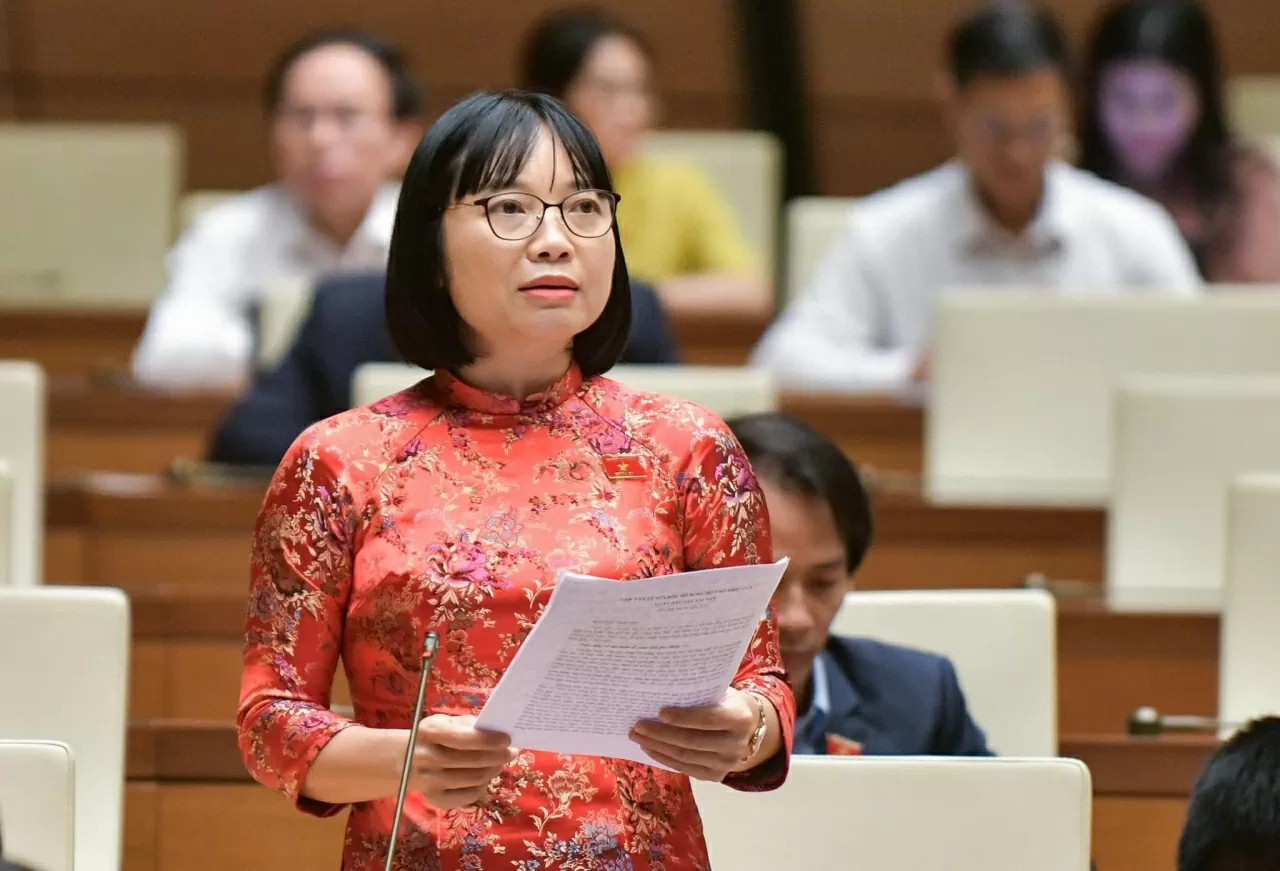 |
| National Assembly Deputy Nguyen Thi Viet Nga, Deputy Head of the Hai Phong City Delegation of the National Assembly. |
Vietnam is entering a new stage of development that requires integrated planning and operation of resources - from land and human to infrastructure and technology - on an interregional scale. Maintaining too many small, unevenly sized provinces in terms of area and population not only causes waste but also hinders long-term investment and sustainable development. Therefore, merging provincial-level units is an inevitable direction, in line with the trend of the times and the internal requirements of the country.
Moreover, this policy is a clear demonstration that the Party is pursuing substantive reform. The objective is not only to improve the efficiency of the administrative apparatus, but also to create new momentum for development, promote connections between localities, and enable each province’s potential to be realized at a broader scale - regional and national.
| Vietnam is entering a new stage of development that requires integrated planning and operation of resources - from land and human to infrastructure and technology - on an interregional scale. Maintaining too many small, unevenly sized provinces in terms of area and population not only causes waste but also hinders long-term investment and sustainable development. |
From a broader perspective, there are several core factors that show the necessity and soundness of the current policy on merging provincial-level administrative units.
First, it is a practical need to reorganize the economic development space and territorial system. For too long, provinces have developed in isolation, "standing side by side yet advancing alone," leading to wasted potential and overlapping, inconsistent planning. The merger aims to establish administrative units of sufficient scale and capacity to enable integrated planning, efficient use of infrastructure and resources, and high-quality human capital.
Second, it is an urgent requirement of building a modern administrative system. In the context of rapid digital transformation and the widespread impacts of the Fourth Industrial Revolution, the government apparatus must become leaner, more flexible, and smarter. Reducing administrative layers and overlapping functions will help enhance management efficiency, cut down operating costs, and create favorable conditions for the application of digital technologies in state governance. We cannot enter the future with outdated institutional designs.
Third, the merger policy reflects the nation’s strong aspiration to rise. A country aiming to become a developed nation by the mid-21st century cannot remain a fragmented, localized development mindset. The formation of "super provinces" with sufficiently large scale will lay the foundation for attracting strategic investment and developing urban, educational and research centers - key pillars for Vietnam’s future development.
However, for the merger process to take place effectively, the key factor lies in solidarity. Solidarity must first be built on shared understanding and ideological alignment across local Party committees, governments, and political systems. Provincial leaders must prioritize long-term national interests over local interests, aiming for the collective good instead of individual agendas. Citizens should be fully informed and meaningfully involved in important decisions, so they feel like agents of reform rather than passive observers sidelined by the process.
Additionally, policies must be fair and transparent to avoid creating a sense of division between “old provinces” and “new provinces.” All residents within the new administrative units must feel equal. These elements form a solid foundation for building trust and social consensus.
Promoting the strength of national unity requires coordination across three pillars: the political system, local government, and the people. In particular, the proactive, exemplary role of leadership is especially important. If the leaders embody a spirit of solidarity, tolerance, and commitment to the common good, trust and cooperation will spread throughout society.
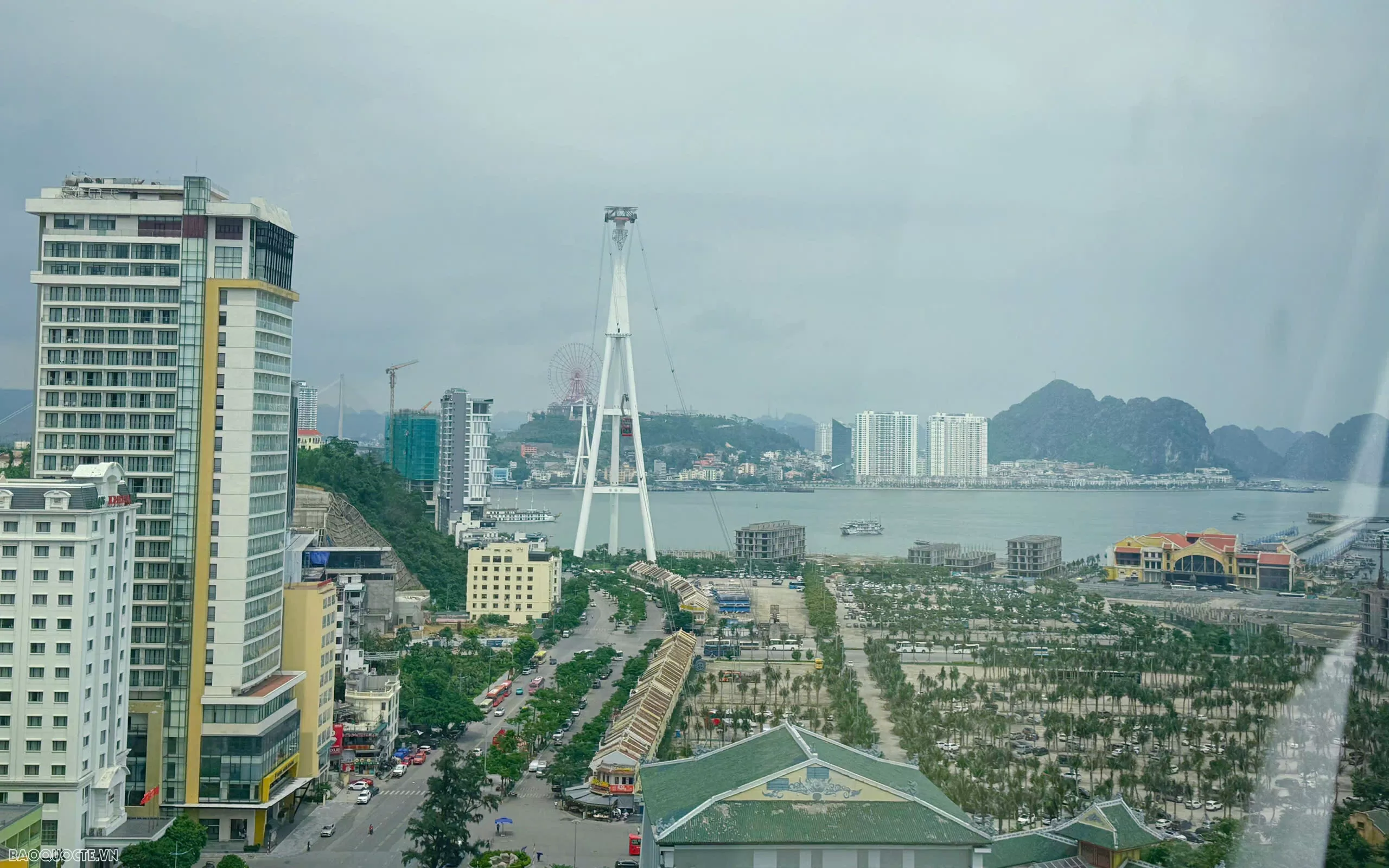 |
| Vietnam is entering a new stage of development that requires integrated planning and operation of resources - from land and human to infrastructure and technology - on an interregional scale. (Photo: Gia Thanh) |
In parallel, it is essential to handle the reorganization of administrative, cultural, and educational institutions with sensitivity - ensuring that streamlining efforts remain effective while also preserving traditional values. We can retain the familiar names of public works and cultural symbols as a way to soften the sense of change, so citizens do not feel as though they have lost their memories or local identity.
As one writer once noted: “People are bound to names, to familiar places, to the small things that have become part of their flesh and blood". These seemingly small details can serve as vital anchors for the social psyche during times of transition.
From the perspective of a National Assembly Deputy, I would like to propose some solutions to help maintain and strengthen the spirit of solidarity throughout the implementation of the provincial merger policy.
First of all, public investment resources must be allocated transparently, equitably, and rationally across regions. It is necessary to provide due attention to former administrative centers to prevent feelings of neglect, while also prioritizing support for disadvantaged areas to ensure harmonious development.
Furthermore, the selection of officials should be based on competence and integrity, rather than being mechanically divided according to regional quotas. Officials must be able to connect and unify diverse areas, while fostering trust within the community. During the transitional phase, they serve as “bridges” between the old and the new, between tradition and innovation.
Third, it is necessary to issue special transitional policies for newly merged provinces, aiming to both ease immediate challenges and serve as development catalysts. Such policies must be flexible, highly adaptive, and grounded in practical effectiveness.
Finally - and perhaps most importantly - it is essential to foster a “new provincial spirit".
This refers to a shared identity, collective purpose, and common aspiration embraced by all residents after the merger. From diverse cultural and historical roots, we must cultivate a point of convergence where everyone can take pride and work together to shape the future. When aspirations are aligned, the spirit of great national solidarity will become the most solid foundation for sustainable development.
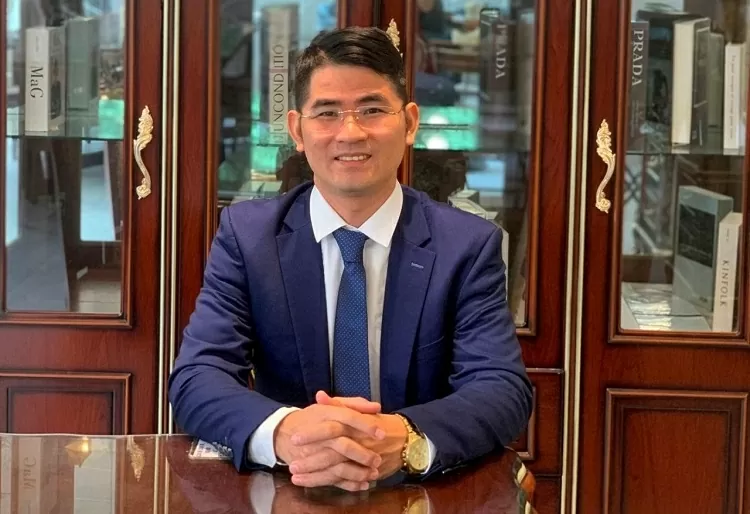 |
| Dr. Cu Van Trung, Director of the Institute for Policy and Social Issues. |
Dr. Cu Van Trung, Director of the Institute for Policy and Social Issues: Leading the nation with inner strength
The merger of administrative units marks the beginning of a new journey, a new chapter. This transformation requires each person to renew and upgrade their professional competencies in public service execution.
As of July 1, 2025, 34 provinces and cities across Viet Nam officially operate under a two-tier local government system, consisting of provincial and communal levels, following a trial implementation phase. This is a historic milestone in the process of administrative reform.
The significance of this reform for Vietnam’s long-term development lies not only in streamlining the administrative apparatus but in setting the stage for stronger progress. A nation that can mobilize the strength of its people to meet the demands of a new era is one that is brave and heroic. In this context, we can be completely proud of the Communist leadership of today’s Vietnam. Our Party is carrying out a revolutionary reform of the political system’s structure.
| The issue of personnel within the newly established two-tier local government model has attracted public attention. There are many raised questions about the quality and efficiency of the workforce following the merger and restructuring process. In my view, all personnel must simultaneously learn, work, and conduct training - much like "running and queuing at the same time". |
What has been demonstrated in recent time gives us grounds to be proud of the Party and Vietnam’s current leadership because of their progressive and reform-minded in their thinking. In this new era, each nation must redefine its position and reassert its values. That means Vietnam is undergoing a national renaissance, and our Party is guiding this process by harnessing the nation’s internal strengths and the capacities of the Viet Namese people.
Changes in administrative boundaries and personnel structures will undoubtedly bring both opportunities and challenges. In fact, the newly merged administrative units have several opportunities to pursue transformative development. The most significant opportunity lies in autonomy and accountability under the decentralization and delegation mechanisms advocated by the Party.
With human resources, social forces, local assets, and capital from the people, each locality is a reservoir of potential and the central government entrusts local administrations with the initiative to unlock and develop these resources for development. This is an opportunity whichever province can make the most of it will showcase its dynamism and decisiveness. There is no longer a situation of overlapping responsibilities or unclear accountability. The new administrative apparatus is more streamlined, the workforce more capable, and the local resources and budgets more accessible. These are the “new horizons” for officials to make breakthrough, for each province and city to reach new heights of development.
To ensure that this merger marks the beginning of a “new era of development,” the State needs to have special mechanisms and policies to help localities adapt and capitalize on their advantage after the merger. The role of restructuring, training, and upskilling of the civil service to meet the demands of this new phase is also an important factor.
Our legal framework is also being gradually revised, with careful consideration given to specific localities and designated “special zones”. The increasing reference to the term “special zone” reflects the Party’s new mindset and reform vision. Wherever greater openness or more flexible mechanisms are needed - and where localities meet the criteria - tailored policies, development models, and scenarios must be proposed and submitted to higher authorities, including the Central Committee and the National Assembly, for approval.
The Party continues to emphasize the role of localities with the guiding principle: “Localities decide, localities implement, localities take responsibility” - within the framework of the Party’s guidelines, State policies, and the rule of law.
The issue of personnel within the newly established two-tier local government model has attracted public attention. There are many raised questions about the quality and efficiency of the workforce following the merger and restructuring process. In my view, all personnel must simultaneously learn, work, and conduct training - much like "running and queuing at the same time".
 |
| When the people and society join the flow of the nation's progress and the Party’s direction - with a shared focus on serving the interests of the people - society opens up “countless new paths” for citizens to enjoy the benefits of the mechanisms and policies initiated by the Party and State of Viet Nam. (Photo: Gia Thành) |
We are embarking on new paths and new journeys. Therefore, drawing on our existing experience, every official and citizen must continuously renew and upgrade their skills throughout the implementation of public duties. The process of training and developing civil servants must be a two-way street. The Ministry of Home Affairs and political schools build their curricula and learning materials based on practices and input from the grassroots level. Civil servants must contribute to and help innovate professional training efforts.
In this revolutionary political reform, we can recognize that our national leaders have proven exceptionally skilled - having to “craft the tools while already engaged in the game”. If we rely solely on training programs from central agencies like the Ministry of Home Affairs or political schools, individual officials may not truly “transform” themselves. Thus, while waiting for official training sessions, each officer and civil servant should also actively provide feedback and suggestions to improve the structure and functioning of the two-tier government model.
The merger of administrative units aims to build a prosperous, happy, and sustainable Vietnam. Naturally, there will be impacts on people’s daily lives in newly merged localities - particularly in economy, culture and society. The key question is how to ensure that citizens truly benefit from this process and join hands in building a better future.
We are beginning to see the advantages of the two-tier local government model becoming evident. Whether land title issuance, construction permits, notarizations, or other administrative procedures - everything is being handled more quickly, transparently, and efficiently. It seems that there is a growing sense of goodwill from citizens toward the government and public servants. People and households are aligning themselves with the new spirit and mindset of the nation. As a result, public trust in the Party and the State continues to rise.
When the people and society join the flow of the nation's progress and the Party’s direction - with a shared focus on serving the interests of the people - society opens up “countless new paths” for citizens to enjoy the benefits of the mechanisms and policies initiated by the Party and State of Vietnam.
Stay tuned for Article 3: National Assembly Deputy Bui Hoai Son - Administrative restructuring is a historic step for the nation
| Prime Minister urges revolutionary press to ignite aspiration for stronger, more prosperous Vietnam The revolutionary press holds a particularly important role in the nation’s new era - inspiring development, creating noble values, and transforming collective aspirations into actions ... |
| National landscape reorganisation and power of solidarity: Party vision aligned with people's will WVR/VNA - From July 1, Vietnam officially commences the operation of a restructured administrative framework, consolidating its provincial-level units from 63 to 34. This monumental ... |
| Closing of 59th session of UNHRC with practical contributions of Vietnam to advancement of human rights in the world WVR - On July 8, at the United Nations (UN) headquarters in Geneva, Switzerland, the UN Human Rights Council (UNHRC) concluded its 59th regular session, ... |
| Ho Chi Minh City marks French National Day, strengthens Strategic Partnership with France WVR - Speaking at the Ceremony to celebrate the 236th anniversary of the French Republic's National Day (July 14, 1789 - July 14, 2025), Ms. ... |
| Party General Secretary To Lam writes article honouring fallen heroes, revolution contributors Party General Secretary To Lam has written an article honouring those who sacrificed for the country, heroic martyrs, wounded and sick soldiers. |


