





Resolution No. 26: Creating new momentum for Vietnam's tourism breakthrough
The issuance of Resolution No. 26-NQ/TW by the Politburo on developing Vietnam's tourism into a spearhead economic sector in the new era sets higher goals while opening a comprehensive approach to enhance the quality, competitiveness, and added value of the tourism industry.
Latest
On August 22, 2026, on behalf of the Politburo, General Secretary and President To Lam signed Resolution No. 26-NQ/TW on developing Vietnam's tourism into a spearhead economic sector in the new era. The resolution is identified as an important milestone, laying the foundation for the tourism industry to transition to a new development phase.
After nearly 10 years of implementing Resolution No. 08-NQ/TW dated January 16, 2017, by the Politburo, awareness of the position and role of tourism has seen many positive changes. The system of mechanisms and policies has been gradually completed; the market has expanded; infrastructure, technical facilities, products, human resources, promotion, marketing, and digital transformation have achieved many results.
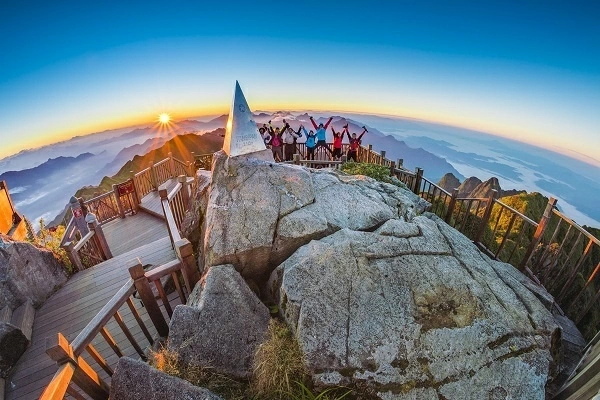 |
| Resolution 26-NQ/TW opens a new development path, placing tourism within the overall growth model of the country. (Source: Tourism Information Center) |
However, the resolution also candidly points out the limitations. Tourism development has not been truly sustainable, not commensurate with its potential; products lack depth and creativity; destination management capacity, application of science and technology, digital transformation, green transformation, and service quality are still limited. Regional linkages and coordination between sectors are not synchronized, while institutional, infrastructure, resource, and implementation bottlenecks have not been timely addressed.
Shifting from quantity growth to value enhancement
One of the highlights of Resolution 26-NQ/TW is the strong demand for innovation in development thinking. Tourism is not only seen as a service sector but as a comprehensive economic ecosystem capable of driving trade, transportation, cultural industries, creative industries, agriculture, digital economy, and night economy.
The resolution identifies culture as the core foundation, with identity and quality of experience being competitive advantages; it also promotes science and technology, innovation, and digital transformation. The development model is oriented to shift strongly from quantity to quality, intelligence, green, and creativity; focusing on enhancing experience efficiency, product competitiveness, human resource quality, and added value.
According to the set goals, by 2030, Vietnam's tourism aims to contribute directly 10-12% of GDP, welcoming 45-50 million international visitors and serving 160 million domestic tourists. Total revenue from tourists is expected to reach 80-90 billion USD, focusing on high-spending, long-stay visitors.
The resolution also identifies the strong development of three tourism growth poles: Hanoi, Ho Chi Minh City, and Da Nang; forming 10 key tourism centers, 20 national tourist areas, and 15 tourism corporations and companies with strong brands and international competitiveness.
The entire industry strives to have about 1.5 million accommodation rooms, creating approximately 2.3 million direct jobs and 3.5 million indirect jobs. By 2045, tourism aims to contribute directly 14-15% of GDP, ranking among the top 30 countries with the highest tourism competitiveness globally, and welcoming about 70 million international visitors.
Unlocking resources, creating a smart tourism ecosystem
To realize the goals, the resolution outlines 8 key task groups and solutions, from renewing thinking, completing institutions, developing infrastructure to enhancing product quality, brand promotion, human resource development, and boosting science and technology.
Among them, completing institutions and policies is placed alongside the requirement to develop new models such as the sharing economy, digital platform business, night economy, riverside and coastal economy, and tourism-entertainment-culture-sports complexes. Entry and visa policies are also being studied to be more favorable for tourists while ensuring national defense, security, and national interests.
Tourism infrastructure is oriented for comprehensive development, enhancing connectivity from international gateways to dynamic regions, tourism centers, and national tourist areas; upgrading highways, coastal roads, inter-regional tourism corridors, and maritime infrastructure for large cruise ships.
The resolution also emphasizes the development of high-quality products targeting high-spending, long-stay visitors; developing medical tourism, health care, wellness, recovery, while elevating Vietnamese cuisine and building a system of nationally and internationally standardized restaurants.
Along with that is the requirement to innovate promotion and marketing activities, building a unified and professional image of Vietnam's tourism; developing a network of digital tourism ambassadors and a multi-language national tourism content data system. Human resources and tourism businesses are also identified as important links, focusing on forming corporations with strong brands, modern management capacity, and international competitiveness.
Especially, the resolution sets the goal of forming a smart tourism ecosystem, building a national tourism database and national tourism digital platform; enhancing the application of artificial intelligence, the Internet of Things, and data analytics technology in management, operation, and enhancing visitor experience. At the same time, tourism management methods are renewed towards modern, green, smart, safe, and sustainable directions.
In 2025, Vietnam welcomed 21.2 million international visitors, an increase of 20.4% compared to 2024 and significantly surpassing the 18 million mark of 2019. In 2026, the tourism industry aims to welcome 25 million international visitors, 150 million domestic visitors, and total revenue of 1,125 trillion VND.
Building on these results, Resolution 26-NQ/TW opens a new development path, placing tourism within the overall growth model of the country. Developing the industry becomes the task of the entire political system, with businesses as the pioneering force and people as participants and beneficiaries. This is expected to create additional momentum for Vietnam's tourism to enhance quality, competitiveness, and gradually affirm its role as a growth driver in the new era.


