



Vietnam tourism: From new momentum to regional aspirations
WVR - On the occasion of Vietnam Tourism Day (July 9), reflecting on the past journey reveals a picture with many bright spots, while also raising expectations for tourism to truly become a spearhead economic sector, contributing to promoting the country's image and enhancing Vietnam's position on the world tourism map.
Latest
After a period of strong recovery, Vietnam's tourism is entering a new development cycle with promising growth signals. Not only marked by impressive figures in visitor numbers and revenue, the tourism industry is also transforming towards being greener, smarter, and experience-centered.
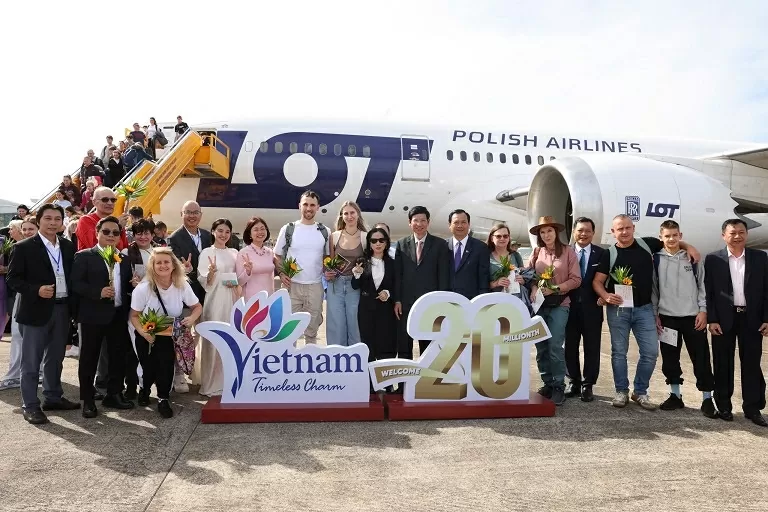 |
| The tourism industry welcomes international visitors to Vietnam. (Photo: Tran Cong Dat) |
The telling numbers
If 2024 is considered the year of recovery, then 2025 marks the acceleration, and the first half of 2026 shows that Vietnam's tourism is entering a new growth phase.
According to the General Statistics Office and the Vietnam National Administration of Tourism, in the first six months of the year, the country welcomed approximately 12.3 million international visitors, an increase of nearly 15% compared to the same period last year, achieving nearly 50% of the target of welcoming 25 million international visitors in 2026. This is also the highest level ever for the first half of the year.
In the context of the global tourism industry still being affected by slow economic growth, rising travel costs, and changing consumption trends, these results demonstrate the increasing appeal of Vietnam as a destination.
The domestic market continues to play the role of a "support base", maintaining accommodation capacity and boosting service consumption. Many localities such as Hanoi, Ho Chi Minh City, Quang Ninh, Da Nang, Khanh Hoa, Kien Giang, and Ninh Binh have recorded positive growth in visitor numbers and revenue.
According to Nguyen Trung Khanh, Director General of the Vietnam National Administration of Tourism, the tourism industry is no longer in the post-pandemic recovery phase but has shifted to a new development trajectory. The current goal is not only to increase the number of visitors but also to enhance growth quality, extend stay duration, increase spending, and build Vietnam's image as an attractive, safe, and sustainable destination.
This perspective aligns with the Vietnam Tourism Development Strategy to 2030, which prioritizes quality, efficiency, and sustainability as the foundation rather than pursuing quantity.
Assessing the industry's results, Deputy Minister of Culture, Sports and Tourism Ho An Phong stated that tourism continues to affirm its role as one of the fastest-recovering sectors of the economy. However, to maintain growth momentum, the industry needs to innovate its development model, diversify markets, enhance product quality, and promote the application of science and technology.
From a long-term development perspective, Associate Professor Dr. Tran Dinh Thien, former Director of the Vietnam Institute of Economics, has repeatedly emphasized that Vietnam's tourism competitive advantage cannot solely rely on natural resources or low costs. What creates the attraction of a destination must be service quality, cultural identity, product creativity, and unique experiences. If effectively exploiting Vietnam's heritage, culture, and people, tourism will not only be an economic sector but also become a soft power contributing to enhancing the national position.
New momentum from digital transformation, green tourism, and cultural strength
If in the past, Vietnam's tourism advantage mainly came from natural landscapes, now the growth momentum is gradually shifting to quality experiences, digital transformation, and sustainable development.
According to Deputy Minister Ho An Phong, digital transformation is no longer an option but a mandatory requirement to enhance the industry's competitiveness. From promotion, destination management to service provision, everything needs to be digitized and data-connected to provide more convenient and personalized experiences for tourists.
Many localities and businesses have effectively applied digital platforms in destination promotion, product sales, electronic payments, using artificial intelligence (AI) to support itinerary building, deploying digital maps, e-tickets, automatic narration, and smart tourism applications.
Alongside digital transformation is the trend of developing green tourism. Localities are increasingly focusing on resource conservation, emission reduction, plastic waste limitation, ecosystem protection, and promoting community roles.
Many models of ecological tourism, community tourism, and agricultural tourism in Quang Ninh, Ninh Binh, Quang Binh, the Central Highlands, or the Mekong Delta are becoming new highlights, creating livelihoods for locals while preserving local identity.
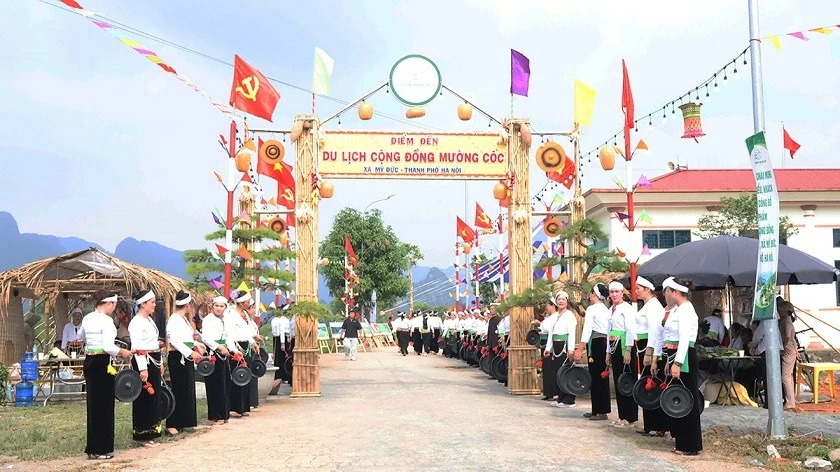 |
| Muong Coc community tourism site, My Duc commune, Hanoi. (Source: Tourism Information Center) |
Director General Nguyen Trung Khanh also affirmed that developing green tourism not only meets international commitments but is also the key to enhancing the long-term competitiveness of Vietnam as a destination. As tourists increasingly pay attention to environmental factors and social responsibility, products associated with nature conservation, culture, and community will have more advantages.
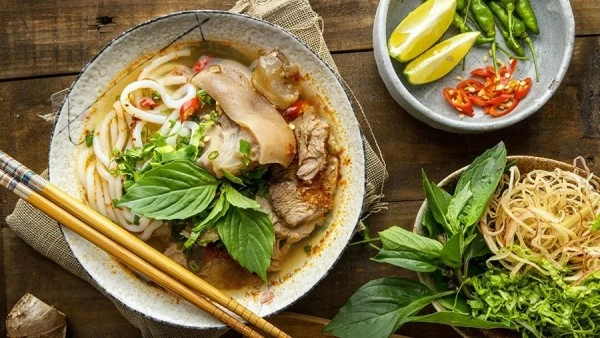
Moreover, culture is being seen as a "soft resource" that creates the unique identity of Vietnam's tourism. Instead of just sightseeing, tourists increasingly seek experiences related to heritage, cuisine, festivals, traditional arts, and local life.
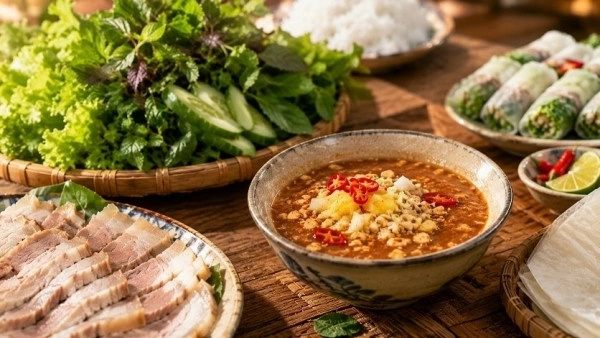
Many localities have invested in developing night tourism products, real-life art programs, cultural streets, four-season festivals, and creative spaces. Programs like "Tinh hoa Bac Bo", "Ky uc Hoi An", "Tinh hoa Viet Nam" in Phu Quoc, along with products associated with UNESCO heritage, have contributed to extending stay duration, increasing spending, and creating unique impressions for each destination.
Affirming position with quality and national brand
Despite positive results, experts believe that Vietnam's tourism still has much room to break through. The average spending of international visitors is still low compared to some countries in the region; stay duration is not long; there is a lack of high-end entertainment products, night economy, and high value-added services. The quality of human resources, destination management capacity, and inter-locality linkages also need to be further enhanced.
This is also the direction identified by the Ministry of Culture, Sports and Tourism in the coming time, focusing on institutional improvement, enhancing human resource quality, developing distinctive products, expanding international markets, promoting promotion, and strengthening regional linkages to form highly competitive product chains.
Especially, leveraging the value of cultural heritage, UNESCO titles associated with the development of cultural industries and creative economy is seen as an important direction to build Vietnam's tourism brand. This is not only a solution to attract tourists but also contributes to promoting the image of the country, people of Vietnam, spreading national cultural values, and enhancing national soft power.
Today, every international visitor to Vietnam is a "media ambassador", bringing experiences about the country to spread to the international community. Therefore, service quality, a safe tourism environment, the friendliness of the people, and cultural identity will be the decisive factors for long-term competitiveness.
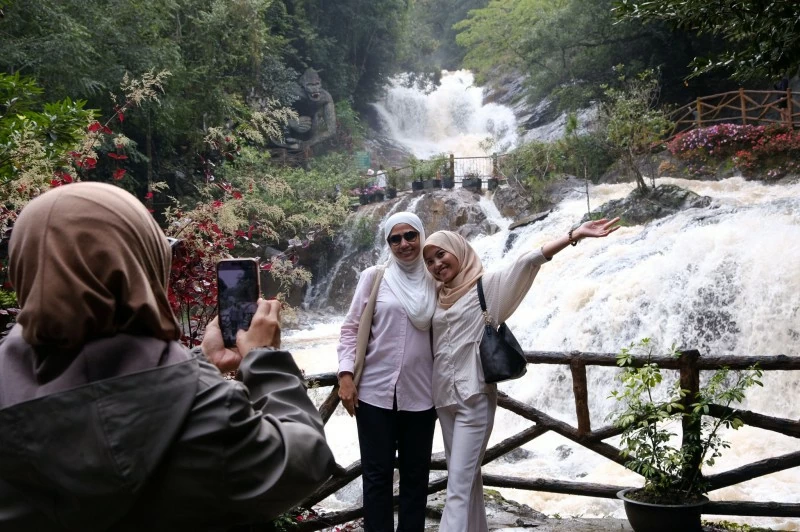 |
| Vietnam is one of the favorite destinations for Halal market tourists. (Source: Tourism Information Center) |
On the occasion of Vietnam Tourism Day, the achievements made in recent times are a testament to the efforts of the entire political system, business community, and people. From being one of the sectors most heavily impacted by the Covid-19 pandemic, Vietnam's tourism has recovered strongly and is gradually transitioning to a development phase based on quality, innovation, and sustainability.
The road ahead still presents many challenges, but with the foundations already laid, along with the determination of the Government, the Ministry of Culture, Sports and Tourism, localities, and businesses, Vietnam's tourism has the basis to realize the goal of becoming a spearhead economic sector, a bridge for cultural exchange, promoting people-to-people diplomacy, and contributing increasingly to the rapid and sustainable development of the country.
Tags: