







Hue honoured by Agoda for its royal culinary heritage
WVR - The online travel platform Agoda has recently announced a list of unique traditional culinary destinations in Asia, with Hue being selected for its distinctive royal culinary heritage, which encapsulates the historical depth and cultural identity of the ancient capital region.
Latest
According to Agoda, cuisine is increasingly becoming one of the crucial factors driving tourists to choose their destinations. By introducing these “hidden gems” of Asian cuisine, the platform aims to bring travelers closer to culturally rich lands, where each dish not only satisfies the palate but also tells a story of history, tradition, and local community creativity.
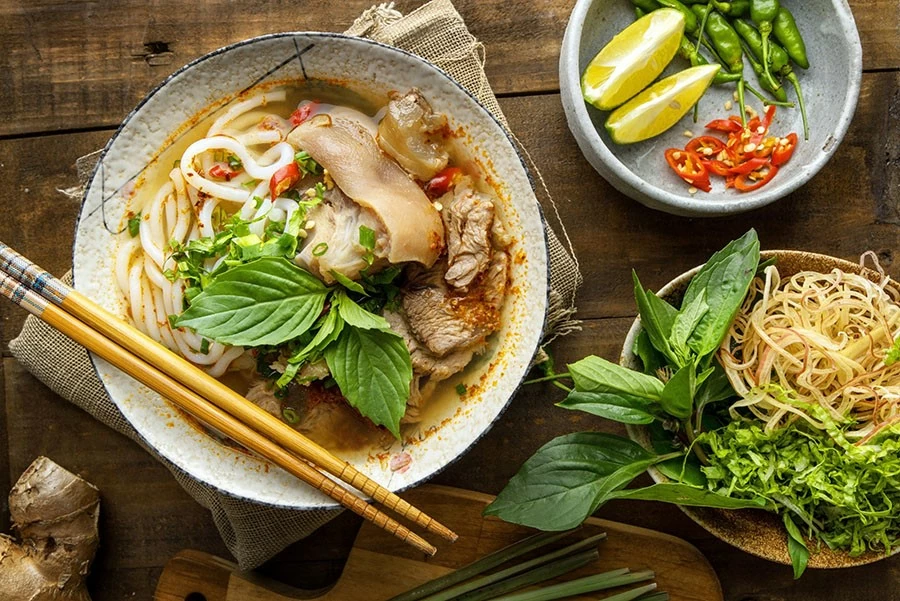 |
| Bun bo Hue is the culinary essence of the ancient capital. (Source: Tourism Information Centre) |
In the list introduced by Agoda, Hue stands out with its royal cuisine, deeply imprinted by the region that once served as the capital under the Nguyen dynasty. Hue's cuisine is highly regarded for its sophistication in flavor, meticulous preparation, and harmonious presentation art.
Familiar dishes such as bun bo Hue, banh beo, banh khoai, and banh bot loc are not only local specialties but also contribute to preserving the unique cultural values of the ancient capital. Through each dish, visitors can feel the meticulousness, elegance, and uniqueness in the traditional Vietnamese culinary style.
Mr. Andrew Smith, Senior Vice President in charge of Agoda's partner network, believes that exploring destinations through cuisine is a way for tourists to vividly experience history and culture.
According to him, each land has its own stories embedded in its dishes, from the rich flavors of Isan cuisine (Thailand) to the sophistication of Hue's royal cuisine.
Hue's inclusion in the list of exemplary traditional culinary destinations in Asia further affirms the appeal of Vietnamese cuisine to international tourists. Not only renowned for its landscapes and heritage values, Vietnam is increasingly recognized as a culturally rich destination through the distinctive features of its local culinary life.
Alongside Hue, Agoda's list also features other traditional culinary destinations in Asia such as Udon Thani in the Isan region (Thailand), Iloilo (Philippines), Dandong (China), Melaka (Malaysia), and Luang Prabang (Laos).
The introduction of these culturally rich destinations in this list highlights the growing trend of experiential travel, as tourists not only seek beautiful landscapes but also wish to explore culture, history, and local life through the distinctive flavors of each region.