






Protecting national and religious identity: International standards and implementation experiences
WVR - Viewing national and religious identity as a soft power resource of the nation, the protection of the right to preserve national and religious identity not only contributes to strengthening the great unity bloc but also demonstrates Vietnam's contribution to the universal values of humanity.
Latest
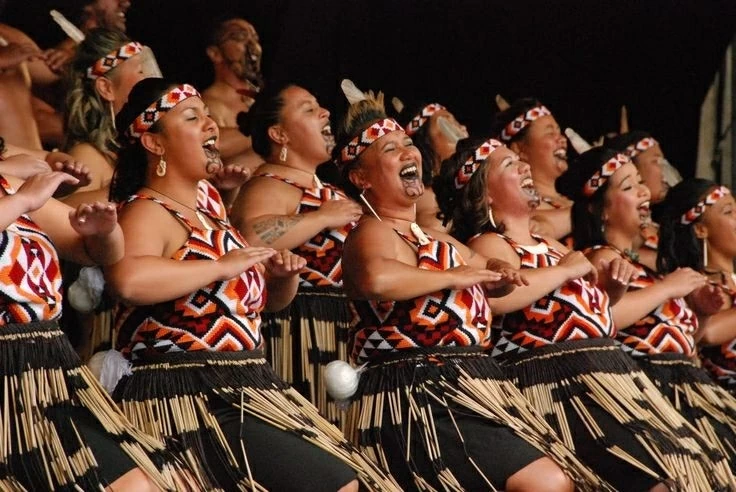 |
| New Zealand has implemented diverse and innovative policies to harmonize national unity with the diversity of national and religious identities. Illustration: Maori people performing the famous Haka dance. (Source: Pinterest) |
National and religious identity is a core component of human dignity and cultural diversity, shaping how people self-identify, connect with communities, and participate in social life. It is a fundamental aspect of the international human rights system, linked to dignity, equality, and cultural diversity. In the context of globalization, migration, digital transformation, and the rise of identity politics, ensuring the rights to national and religious identity has become increasingly urgent.
International human rights standards
Protecting national and religious identity is a crucial issue within the international human rights law system. The Universal Declaration of Human Rights (UDHR, 1948) lays the foundation with provisions on freedom of thought, conscience, and religion (Article 18), freedom of expression (Article 19), and the principles of equality and non-discrimination (Articles 2, 7). These are further detailed in the International Covenant on Civil and Political Rights (ICCPR, 1966) and the International Covenant on Economic, Social and Cultural Rights (ICESCR, 1966).
In the ICCPR, rights related to identity are concentrated in Article 18 on freedom of thought, conscience, and religion; Article 19 ensuring freedom of expression; Article 20 prohibiting incitement to hatred; Article 26 affirming equality before the law; and Article 27 protecting the rights of minorities to maintain their own culture, religion, and language. The UN Human Rights Committee (HRC) has interpreted these rights in General Comments No. 22 (1993) on freedom of religion, No. 23 (1994) on minority rights, No. 34 (2011) on freedom of expression, and No. 37 (2020) on the right to peaceful assembly, clarifying their scope, legal limits, and state obligations.
In the ICESCR, Article 15 affirms the right to participate in cultural life, including the right to preserve and promote national, religious, and linguistic identity. General Comment No. 21 of the CESCR (2009) emphasizes that cultural life is comprehensive only when minority groups and religious communities can "participate, access, and contribute" without exclusion.
This system of standards is reinforced by cross-sectoral conventions, including the Convention on the Elimination of All Forms of Racial Discrimination (ICERD, 1965); the Convention on the Elimination of All Forms of Discrimination Against Women (CEDAW, 1979); and the Convention on the Rights of the Child (CRC, 1989).
In addition to these conventions, the UN has adopted several "soft law" declarations to protect national and religious identity. The 1981 Declaration on the Elimination of All Forms of Intolerance and Discrimination Based on Religion affirms the national obligation to protect freedom of belief. The 1992 Declaration on the Rights of Persons Belonging to National or Ethnic, Religious and Linguistic Minorities requires states to facilitate the maintenance of distinct identities by these groups.
According to the UN Office of the High Commissioner for Human Rights (OHCHR, 2022), states have a dual obligation: to refrain from arbitrary interference with the expression of national and religious identity; and to actively build legal frameworks, policies, and dialogue environments ensuring "meaningful participation" of affected groups. This aims to promote inclusive governance, enhance transparency, and strengthen social cohesion in multi-religious and multi-ethnic societies.
At the regional level, human rights mechanisms have also developed rich legal systems and case law related to religious freedom and cultural identity, such as: Article 9 of the European Convention on Human Rights (ECHR, 1950) ensuring freedom of thought, conscience, and religion. The European Court of Human Rights (EctHR) cases Kokkinakis v. Greece (1993), Lautsi v. Italy (2011), and Bayatyan v. Armenia (2011) affirm the principles of state neutrality, tolerance, and balance between religious freedom and public interest. The American Convention on Human Rights (ACHR, 1969) and cases from the IACtHR like Awas Tingni v. Nicaragua (2001) and Moiwana v. Suriname (2005) recognize the right to maintain cultural and religious identity of indigenous communities. Articles 8 and 17 of the African Charter on Human and Peoples' Rights (ACHPR, 1981) affirm the right to religious freedom, participation in cultural life, and state obligations to preserve positive traditional values.
Challenges and implementation experiences
Despite a relatively comprehensive international legal framework, the implementation of rights to national and religious identity faces many challenges amid globalization, political upheaval, and identity conflicts.
Firstly, identity politics has emerged strongly in many countries amid globalization and international migration. Social groups increasingly use national or religious identity to demand power and social recognition. However, when exploited, identity politics can lead to populism, xenophobia, and religious extremism, increasing social division (Müller, 2016).
Secondly, hatred and violence based on religion and ethnicity pose serious threats to human security. The UN Human Rights Office (OHCHR, 2022) reports that online hate speech based on religion and ethnicity is rapidly increasing, especially during political crises or international migration, making minority groups vulnerable to discrimination and violence.
Thirdly, the risk of assimilation and cultural identity erosion remains present in many small and vulnerable communities. Some countries maintain policies of linguistic, religious, or lifestyle assimilation under the guise of "national unity", leading to the disappearance of many indigenous languages and cultural heritage. According to UNESCO (2010), on average, a language disappears every two weeks globally, resulting in irreparable loss of community identity.
Fourthly, the lack of data and consultation mechanisms weakens evidence-based policy-making. In many countries, statistical information on minority, religious, or linguistic groups is limited, incomplete, or considered sensitive, making it difficult to assess the extent of their rights protection (OHCHR, 2012).
To address these challenges, many countries have implemented diverse and innovative policies to harmonize national unity with the diversity of national and religious identities.
Some exemplary models include: Norway - notable for protecting the rights of indigenous peoples. The Norwegian Constitution (amended 1988) mandates the state to preserve the language, culture, and social life of the Sámi people. The Sámi Parliament (Sámediggi) was established in 1989 as the official representative body of the indigenous community, with the right to be consulted on all policies affecting them. The Norwegian government also enacted the Sami Language Act (1990) to ensure the right to use the Sámi language in administrative bodies and courts (United Nations, 2007).
In New Zealand, the Treaty of Waitangi (1840) is considered the founding document of relations between the Māori and the government. The treaty affirms the rights of the Māori to their ancestral lands, resources, and culture. The government established the Waitangi Tribunal to address historical grievances and restore the rights of the indigenous community. The Te Reo Māori language revitalization program is implemented in the education system, media, and public services, contributing to the revival of Māori culture and strengthening national unity (Durie, 2005).
The Indian Constitution (1950) includes numerous provisions to protect the rights of religious and linguistic minority groups, such as the right to establish and administer educational institutions (Article 30) and the right to freedom of belief and religious practice (Articles 25-28). The Supreme Court of India, through various rulings, has developed a set of "essential religious practices" regulations, allowing a balance between religious freedom and public interest, maintaining stability in a multi-religious society (Supreme Court of India, 2018).
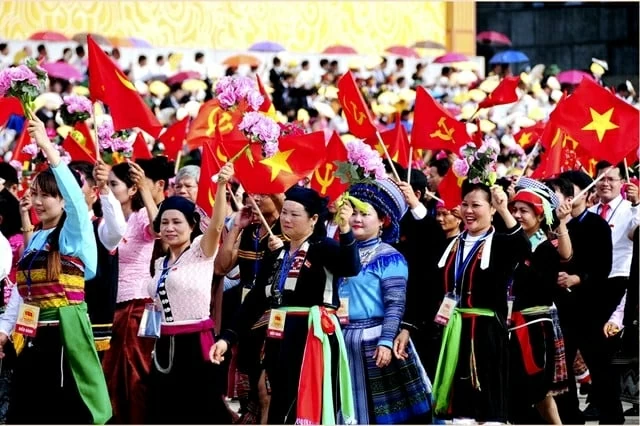 |
| Ethnic and religious policies always play a special role in Vietnam. (Source: VGP) |
Policy proposals for Vietnam
Ethnic and religious policies always play a special role in Vietnam, with 54 ethnic groups, over 95% of the population following beliefs and religions, 43 recognized organizations of 16 religions, and nearly 28 million followers. The 2013 Constitution affirms equality among ethnic groups and the right to religious freedom (Articles 5, 24), reflecting Vietnam's constitutionalization of international standards on this issue according to ICCPR, ICESCR, and ICERD. However, like many other countries, Vietnam faces challenges in ensuring the rights to national and religious identity, including implementation limitations and the risk of extremism. Therefore, Vietnam needs to continue to strengthen a comprehensive approach based on human rights and international cooperation to harmonize national unity with the diversity of national and religious identities, specifically:
Continue to review and amend regulations on religion, ethnicity, equality, and non-discrimination, ensuring full compatibility with ICCPR, ICESCR, and ICERD. Restrictions on religious freedom and identity expression should be clearly defined, based on the principles of legality, necessity, and proportionality, while establishing independent monitoring mechanisms to ensure these rights are implemented fairly and consistently.
Establish regular dialogue forums between the state and representatives of religious organizations, ethnic groups, and minority groups in society. In this regard, the Sámediggi model (Norway) or the Waitangi Tribunal (New Zealand) can be learned from to institutionalize the right of affected communities to participate in policy-making and monitoring processes, thereby increasing transparency, consensus, and social cohesion.
Integrate human rights education, tolerance, and respect for cultural and religious diversity into school curricula and training programs for officials and civil servants. In this regard, the Toledo Guiding Principles of the OSCE (Toledo Guiding Principles, OSCE/ODIHR, 2007) can be referenced, which provide specific guidance on organizing an intercultural education system that will help young generations understand, accept, and protect differences, while preventing violence and identity extremism.
Prioritize the protection of festivals, customs, and sacred spaces (temples, pagodas, communal houses, shrines...) and languages of minority ethnic groups, linked to sustainable cultural tourism development. This policy aligns with the UNESCO 2005 Convention on Cultural Diversity and the 2003 Convention on Intangible Heritage, contributing to strengthening identity and national pride.
Viewing national and religious identity as a soft power resource of the nation, the protection of the right to preserve national and religious identity not only contributes to strengthening the great unity bloc but also demonstrates Vietnam's contribution to the universal values of humanity. In the era of deep integration, Vietnam has favorable conditions to develop a "unity in diversity" model - preserving traditions while respecting differences. A human rights-based approach, centered on people and communities, is the foundation to ensure harmony between political stability, economic development, and cultural-religious diversity.
| The system of international human rights documents, from the Universal Declaration of Human Rights (UDHR), the International Covenant on Civil and Political Rights (ICCPR), the International Covenant on Economic, Social and Cultural Rights (ICESCR), to the 1992 Declaration on the Rights of Minorities, has established a comprehensive legal framework for protecting and promoting national and religious identity. International practice shows that protecting identity is not only an individual or group right but also a policy for development and social cohesion. |