


 |
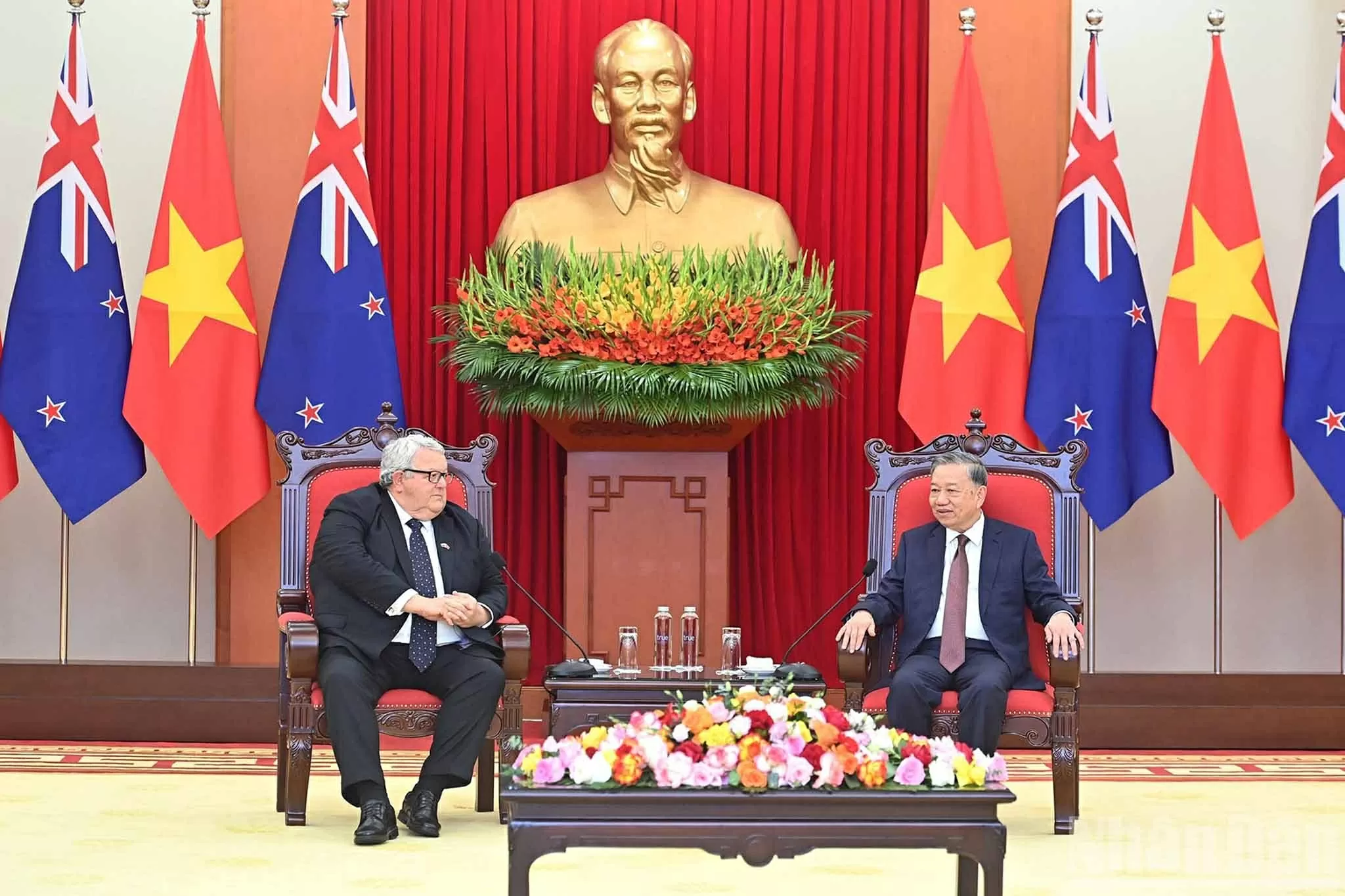
| General Secretary To Lam meets with New Zealand Parliament Speaker Gerry Brownlee during his visit to Vietnam on August 28. (Source: Nhan dan) |
In 2025, Vietnam and New Zealand celebrate 50 years of diplomatic relations, and the two countries have recently upgraded their relationship to a Comprehensive Strategic Partnership (February 2025). What is the significance of this milestone, and what benefits will it bring to bilateral cooperation in the future, Mr. Speaker?
New Zealand regards Vietnam as an extremely important partner, especially given Vietnam's leadership role in ASEAN and various multilateral agreements.
We value the cherished friendship with Vietnam, which has been built and nurtured over the past 50 years and can advance even further. The Comprehensive Strategic Partnership is built on a foundation of extensive cooperation.
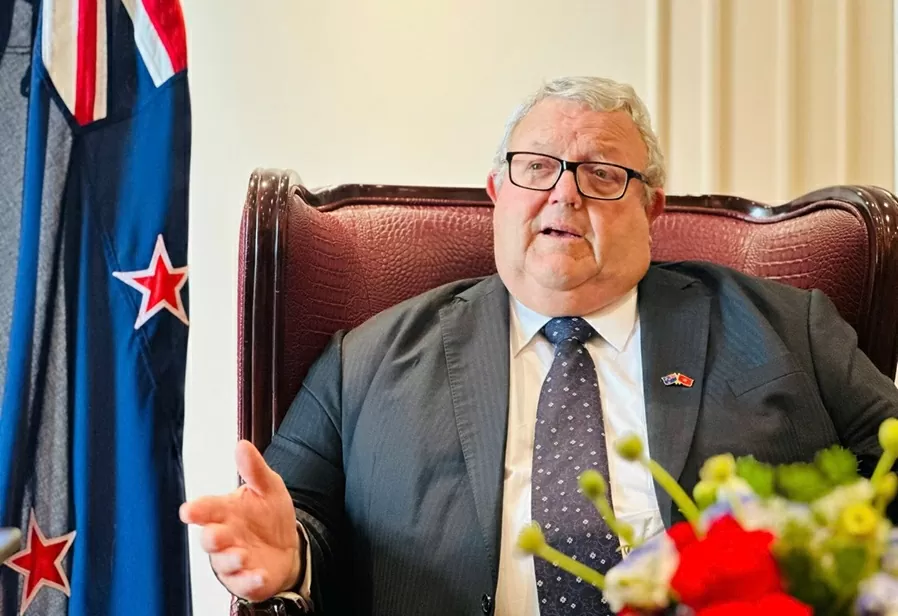 |
| New Zealand Parliament Speaker Gerry Brownlee speaks to the press on August 28. (Photo: Anh Đức) |
Both countries are active in international trade and aim to increase bilateral trade turnover to about 3 billion USD by 2030. For a country with just 5 million people like New Zealand, we will strive to achieve this goal. Personally, I believe we can do even better.
Equally important is that the connection between the peoples of the two countries will continue to be strengthened and enhanced. We hope more Vietnamese will come to New Zealand to study, research, and do business; conversely, Vietnam will also welcome New Zealanders, thereby connecting the people of both nations.
Regarding parliamentary cooperation, the processes between the two countries may differ, but we will find every way to promote cooperation between the two Parliaments and relevant agencies to the highest possible level. Parliaments in any country are crucial as they are the voice of the people. New Zealand's Parliament is very open, with participation from various political parties, reflecting diverse viewpoints.
Vietnam and New Zealand closely coordinate within regional and international frameworks such as ASEAN, APEC, ASEM, and are both members of important trade agreements like CPTPP and RCEP. According to the Speaker, how have these frameworks contributed to promoting economic-trade relations and ensuring common strategic interests?
New Zealand considers Vietnam a reliable partner in the region, especially in implementing multilateral agreements of which both countries are members.
Currently, the international situation is volatile, with challenges like tariffs affecting all nations. For New Zealand, building strong relationships with countries in the region is extremely important.
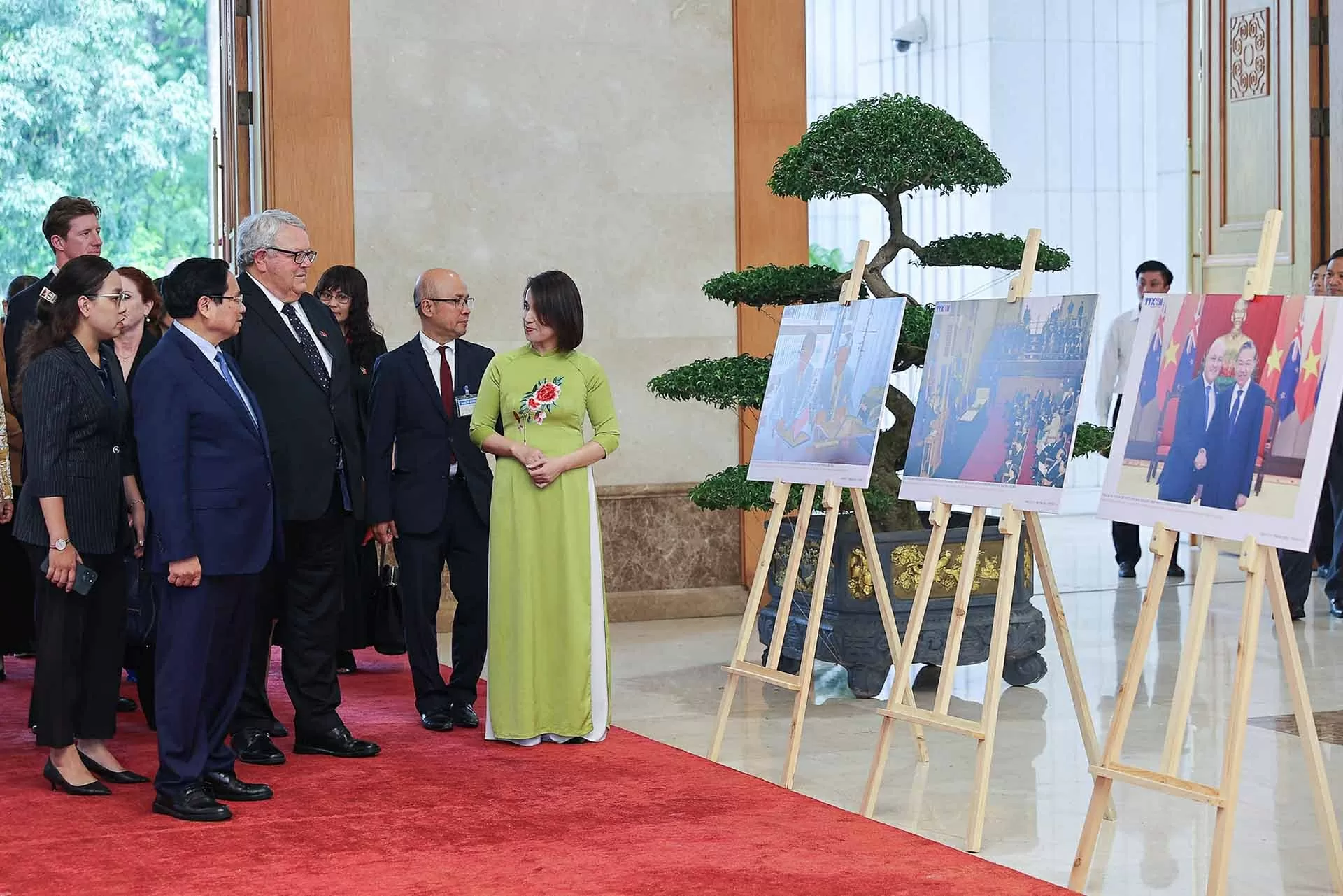 |
| Prime Minister Pham Minh Chinh and Speaker Gerry Brownlee visit an exhibition on Vietnam-New Zealand cooperation on August 28. (Source: VGP) |
We see Vietnam as a country with a strategic leadership role in the region, with great economic development aspirations. Economic growth is the path to improving people's lives in any country. Therefore, we want to learn much from how Vietnam achieves impressive growth rates in the current challenging global context.
The Speaker's visit coincides with Vietnam preparing to celebrate the 80th anniversary of National Day on September 2. Looking back over the past 80 years, which development achievements of Vietnam impress you the most?
Being a guest in Vietnam just days before the National Day celebration on September 2 is a special experience.
Right in the capital Hanoi, and I believe throughout Vietnam, one can feel the excitement of the people in the atmosphere of Independence Day celebrations; affirming Vietnam as an independent nation dedicated to world peace. This atmosphere spreads through the streets, with flags, flowers, attire, and the bustling spirit of the people. Witnessing this moment firsthand is a great honor for us.
In our youth, we followed the difficult journeys Vietnam had to endure after establishing the country in 1945. Vietnam gradually emerged from that period to become a peaceful, developing nation. In my opinion, this is a remarkable achievement.
After peace was restored, Vietnam underwent extraordinary changes. The country is now on the brink of a leap in per capita GDP growth, thereby improving the people's lives. The aspirations and perseverance over the years are what impress us the most.
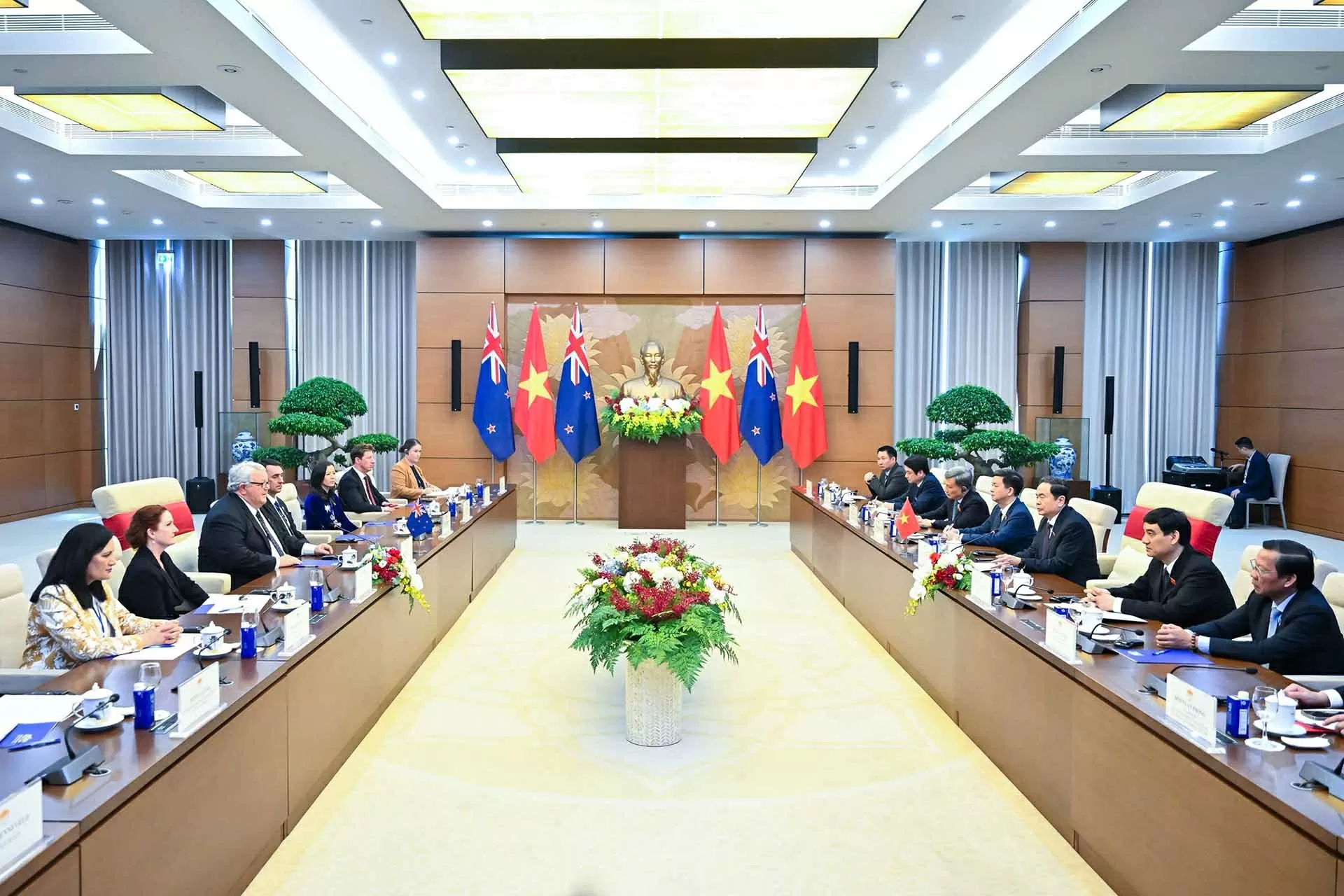 |
| Chairman of the National Assembly Tran Thanh Man holds talks with New Zealand Parliament Speaker Gerry Brownlee on August 28. (Source: quochoi.vn) |
New Zealand recently increased the number of scholarships for Vietnamese students by 56%. In the future, what steps will New Zealand take to continue attracting Vietnamese students and deepen educational cooperation between the two countries, Mr. Speaker?
First of all, New Zealand is a peaceful country. Although geographically distant from Vietnam, the Vietnamese community in New Zealand, though small, is close-knit and represents your country well.
New Zealand's universities are among the top 2% globally, with very high educational quality. New Zealand offers scholarships to provide opportunities for those who will become Vietnam's future leaders to study in New Zealand, not only to create beautiful memories but also to apply the knowledge gained to contribute to both Vietnam and New Zealand.
In this delegation, there is MP Lan Pham, a Vietnamese-origin member of the New Zealand Parliament. This shows that the Vietnamese community is well-represented in New Zealand society.
Scholarships are an important way to promote education and help students share their experiences. I hope that as the Comprehensive Strategic Partnership continues to grow, the number of scholarships will not only be maintained but could even be expanded further.
Regarding regional and global issues such as peacekeeping, climate change response, and sustainable development, how can the two countries cooperate more closely to promote peace, stability, and prosperity in the region and the world, Mr. Speaker?
Vietnam has affirmed an independent foreign policy, not choosing sides, which aligns well with global peacekeeping goals.
New Zealand currently has peacekeeping forces in about 32 conflict zones worldwide. Some operations have lasted many years; we have been present in the Sinai Desert since 1972. We also have peacekeeping forces in the Golan Heights, the Syria-Jordan border area, as well as in Sudan and many other places.
The demand for peacekeeping forces will grow in the future. I believe the international community will look to countries deeply committed to peace, like Vietnam. Vietnam and New Zealand have many opportunities to cooperate more closely in this field.
Thank you very much, Mr. Speaker!