

Border and territorial affairs: 80 years of perseverance, quiet devotion and proud contributions of Vietnamese diplomacy
WVR - On the occasion of the 80th anniversary of the establishment of the diplomatic sector (August 28/1945-August 28/2025), Alternate member of the Party Central Committee, Standing Deputy Minister of Foreign Affairs Nguyen Minh Vu shares his thoughts on border and territorial affairs.
Latest
 |
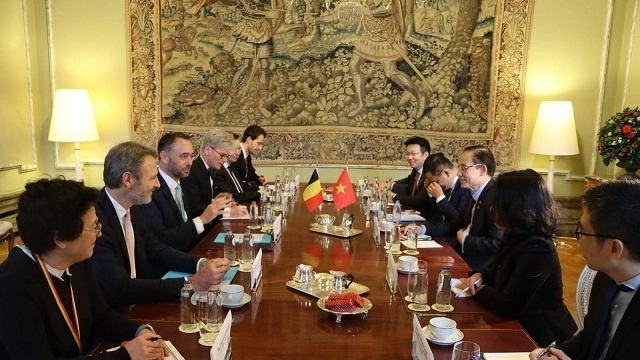
| Border and territorial affairs: Minister of Foreign Affairs Bui Thanh Son surveys the pilot operation of the Ban Gioc (Vietnam) - Detian (China) Waterfall Scenic Area. Also participating in the survey was Vice Chairman of the People's Government of Guangxi Liao Pinhu (second from left) on April 3, 2024. (Photo: Nguyen Hong) |
Deputy Minister, on the occasion of the 80th anniversary of the establishment of Vietnam's diplomatic sector (28/8/1945-28/8/2025), could you share the role of Vietnam's diplomacy in safeguarding the sovereignty and territorial integrity of the nation over the past eight decades?
Protecting sovereignty and territorial integrity is a sacred mission and a continuous task of our entire Party, people, and military. Exactly 80 years ago, on August 28, 1945, the Provisional Government of the Democratic Republic of Vietnam issued a Declaration of Establishment along with a list of the Unified National Cabinet, with President Ho Chi Minh concurrently holding the position of Minister of Foreign Affairs, officially opening the first chapter for Vietnam's revolutionary diplomacy.
Throughout eight decades, Vietnam's diplomacy has consistently maintained its role as one of the three pivotal pillars in the cause of building and defending the nation. It has pioneered the motto “unchanging principles while flexibly adapting to changes” in affirming and preserving the sacred sovereignty of the nation. This involves flexibly and skillfully employing peaceful measures such as dialogue, negotiation, international legal tools, and external communication to affirm the just cause of the nation, foster friendly relations, seize opportunities, and resolve challenges throughout each historical stage, thus firmly protecting the "unchanging" national interests.
From the historical struggle for independence to the current cause of building and defending the nation, the persistent, quiet yet immensely proud contributions of generations of Vietnamese diplomats have been significant. Notably, this is not merely about protecting sovereignty in a pure sense but about safeguarding sovereignty while maintaining a peaceful and stable environment to promote cooperation and national development.
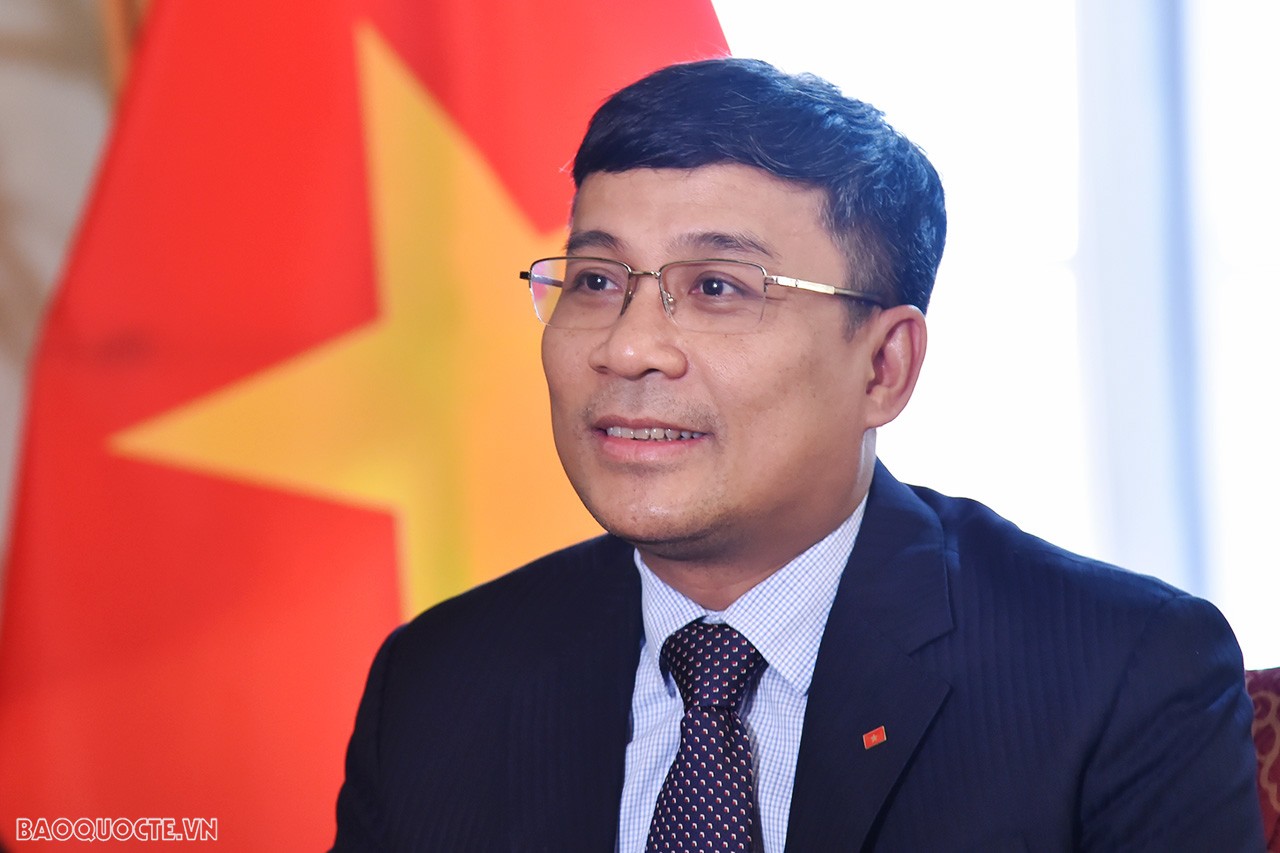 |
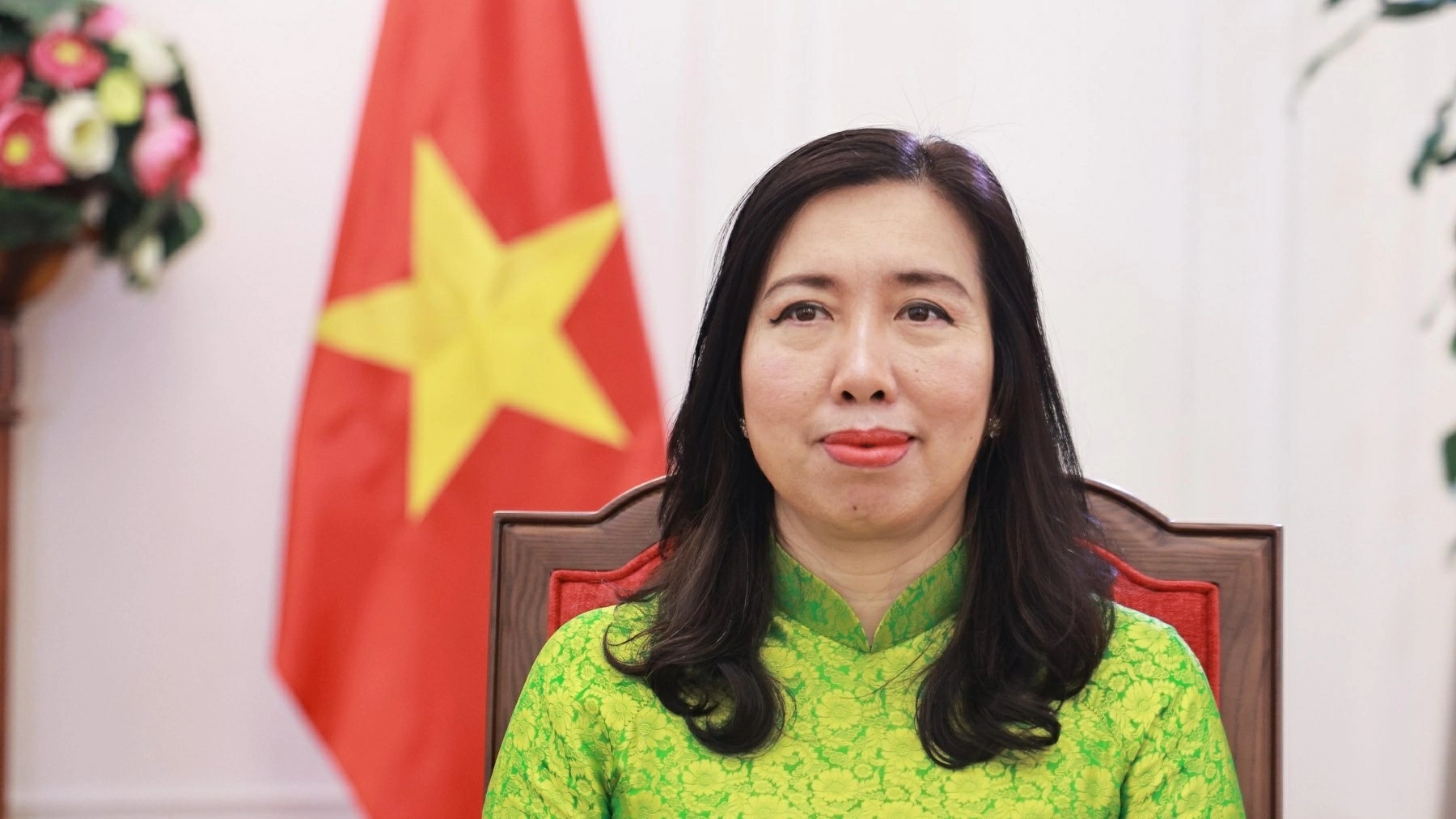
| Alternate Member of the Party Central Committee, Standing Deputy Minister of Foreign Affairs Nguyen Minh Vu. (Photo: Tuan Anh) |
On land, through determination and relentless efforts in negotiations, based on steadfast principles and flexible approaches, with a spirit of respect, goodwill, and adherence to international law, we have delineated the entire border with China, Laos, and Cambodia. We have completed the entire border demarcation and marker planting with China and Laos and accomplished 84% of the border demarcation and marker planting with Cambodia. Both countries are actively negotiating to resolve the remaining 16%, prioritizing the 6% related to landswaps under the 2011 MOU. We have signed legal instruments establishing border lines and border management regulations with neighbouring countries, thereby building and consolidating borders of peace, stability, friendship, cooperation, and development—contributing to Vietnam’s image as a peace-loving, deeply integrated, and reputable nation on the global stage.
At sea, the Ministry of Foreign Affairs has led and coordinated with relevant ministries and sectors to establish and defend Vietnam’s lawful, legitimate rights and interests in accordance with international law, particularly the 1982 United Nations Convention on the Law of the Sea (UNCLOS 1982).
The signing of international agreements such as the 1982 Vietnam-Cambodia Historical Waters Agreement, the 1997 Vietnam-Thailand Exclusive Economic Zone and Continental Shelf Boundary Agreement, the 2000 Vietnam-China Gulf of Tonkin Maritime Boundary Agreement, the 2003 Vietnam-Indonesia Continental Shelf Boundary Agreement, the completion of negotiations on the exclusive economic zone boundary with Indonesia in 2022, the official submission of Vietnam's Extended Continental Shelf Submission beyond 200 nautical miles in the Central South China Sea in 2024, and most recently, the government's announcement of the baseline for calculating Vietnam's territorial sea width in the Gulf of Tonkin in 2025 are all "historic" milestones in our process of establishing legal maritime zones and resolving overlapping maritime areas based on international law.
Additionally, Vietnam has promoted bilateral maritime cooperation mechanisms with neighbouring countries, such as the 1992 Agreement on Joint Oil and Gas Exploration and Exploitation with Malaysia, the 2000 Fisheries Cooperation Agreement in the Gulf of Tonkin with China, as well as international dialogue and cooperation programs on maritime issues.
These mechanisms are not only economically significant but also contribute to strengthening strategic trust, maintaining a peaceful and stable environment in the region, and facilitating the peaceful resolution of disputes and disagreements in the East Sea.
It can be said that these achievements reflect the strategic vision and courage of our Party and State, with the diplomatic sector honoured to pioneer their implementation.
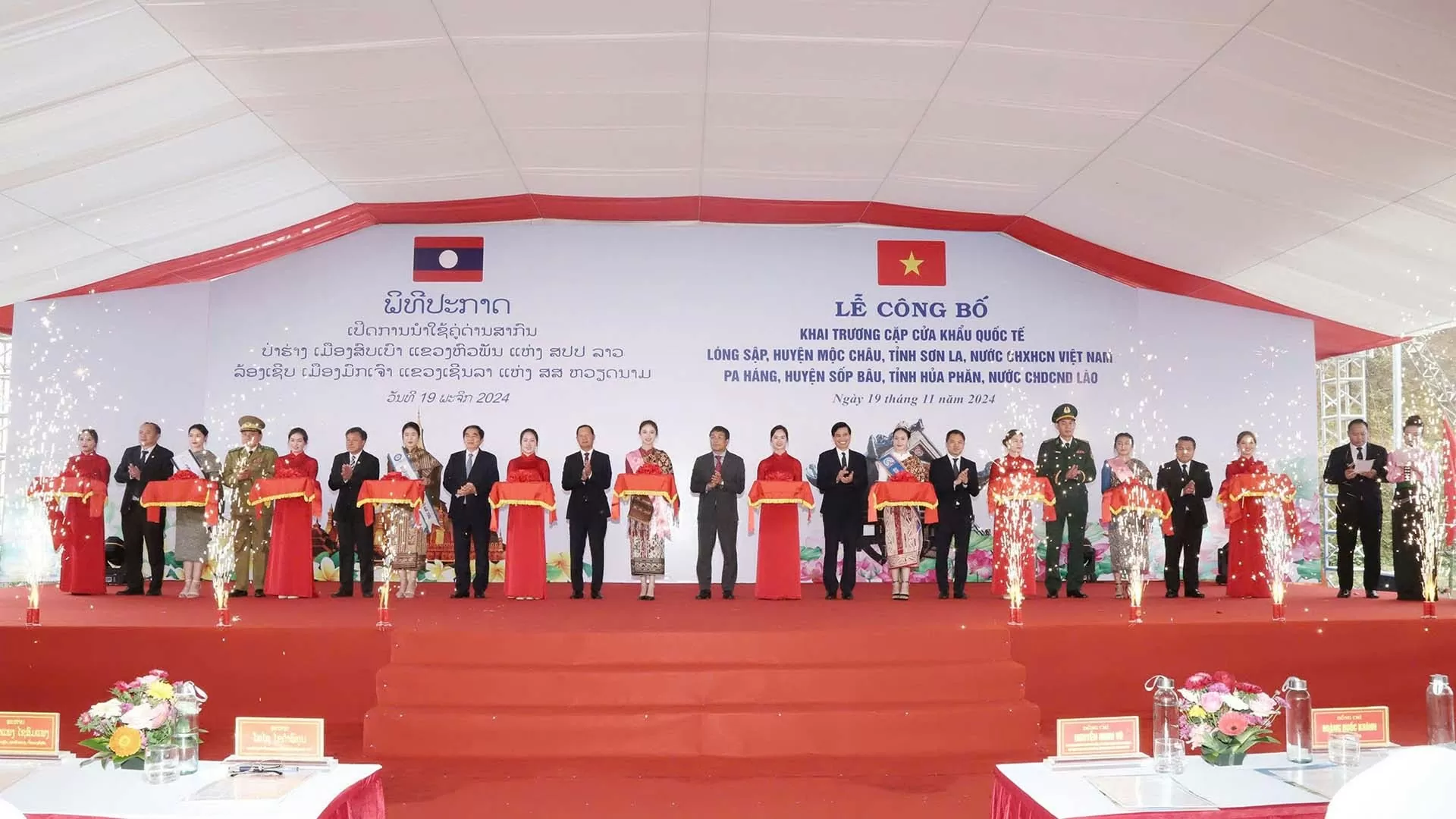 |
| Delegates cut the ribbon at the inauguration of the Long Sap (Vietnam) - Pa Hang (Laos) International Border Gate on November 19, 2024. (Source: National Border Committee) |
Deputy Minister, now that Vietnam and neighbouring countries have completed the entire land border delineation and have mostly completed border demarcation and marker planting, what will be the priority focus or breakthrough direction for the diplomatic sector in land border affairs in the coming years?
To date, we have achieved very important accomplishments in land border affairs with neighbouring countries as mentioned above.
In the coming time, besides continuing negotiations to resolve remaining border issues, including the 16% of the Vietnam-Cambodia land border that has not been demarcated and marked, the diplomatic sector identifies two strategic focuses in land border affairs:
First, maintaining a peaceful and stable environment in border areas by effectively and smoothly operating bilateral border management cooperation mechanisms, coordinating well in managing land borders based on legal documents on borders and related agreements signed between Vietnam and relevant countries; and promptly and satisfactorily handling arising situations on the ground.
Second, promoting "development cooperation" as a breakthrough and foundation to consolidate and maintain peace and stability. Based on the established border, the diplomatic sector will continue to closely coordinate with border localities and relevant ministries and sectors to implement economic diplomacy to meet the development needs of the country in general and each locality in particular.
The management of the border gate system, construction of border works, and infrastructure serving socio-economic development will continue to be effectively implemented, contributing to promoting cross-border trade, tourism, investment, and people-to-people exchanges alongside ensuring national defense and security in border areas.
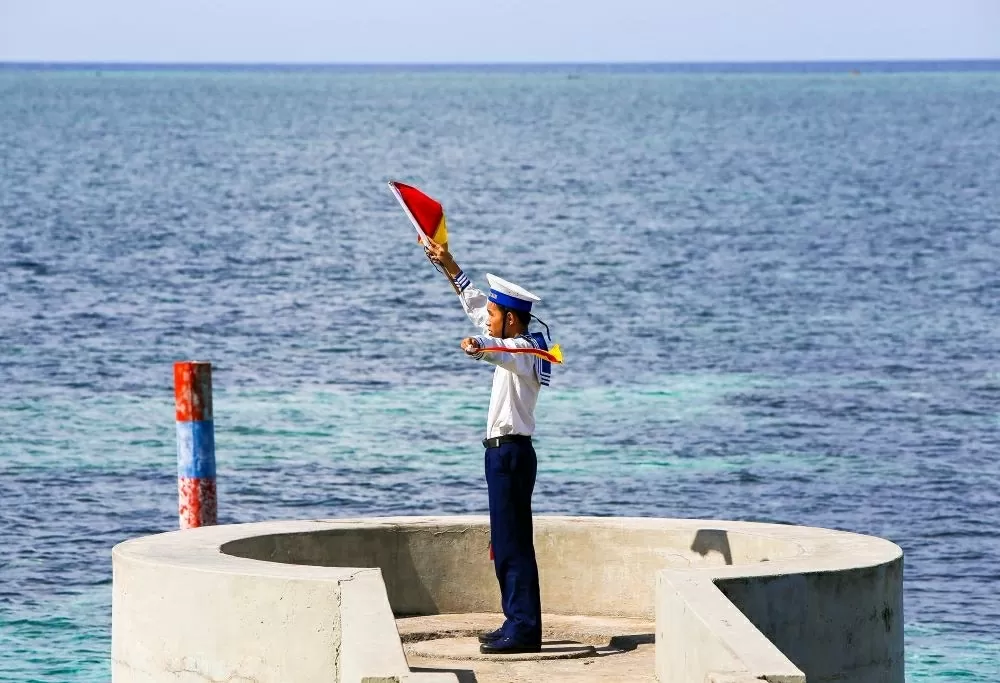 |
| Vietnam's diplomatic sector has led and coordinated with relevant ministries and sectors to establish and protect Vietnam's legitimate rights and interests at sea in accordance with international law, particularly the 1982 United Nations Convention on the Law of the Sea (UNCLOS 1982). (Photo: Nguyen Hong) |
In the context of the East Sea situation continuing to be complex, could you share the principles and approaches of Vietnam's diplomacy regarding the East Sea issue?
The East Sea holds strategic importance for Vietnam's security and development environment, profoundly affecting regional peace and stability and attracting common concern of the international community. To effectively address issues related to the East Sea and promote cooperation for peace and development in the region, we have continued to implement a number of political-diplomatic, legal, and public information measures.
On the political-diplomatic front, we adhere to the principle of "resolutely and persistently defending the sovereignty, sovereign rights, and jurisdiction at sea of Vietnam" alongside "maintaining a peaceful and stable environment, creating favourable conditions for national development and international integration". This is reflected in three main orientations.
First, persistently promoting the settlement of disputes by peaceful means, based on international law, especially UNCLOS 1982.
Second, actively participating in multilateral mechanisms such as the United Nations and clearly expressing our consistent stance at regional forums and mechanisms such as the ASEAN Inter-Parliamentary Assembly (AIPA), the ASEAN Regional Forum (ARF), the East Asia Summit (EAS)..., emphasizing that disputes should be resolved by peaceful means, without the use of force or threat of force, based on international law, especially UNCLOS 1982.
Third, promoting negotiations and exchanges to resolve existing issues and enhancing dialogue and cooperation at sea with countries within and outside the region, aiming to prevent conflicts, build trust, and seek long-term solutions for the East Sea issue.
On the legal front, Vietnam is committed to resolving maritime disputes by peaceful means, in accordance with international law, including UNCLOS 1982, and in practice, we have applied UNCLOS in resolving maritime delimitation issues with neighbouring countries.
In the future, we will continue to seriously implement the Declaration on the Conduct of Parties in the East Sea (DOC) and actively participate in the process of building the Code of Conduct in the East Sea (COC) between ASEAN and China, aiming for an effective, substantive document consistent with international law and UNCLOS 1982 as agreed by the parties.
Additionally, we will strengthen cooperation with international legal organizations and leading legal experts to complete legal dossiers, consolidate Vietnam's legal basis for maritime areas in the East Sea, and prepare legal options when necessary.
On the information-public communication front, we clearly define: safeguarding maritime sovereignty is the responsibility of the entire political system, people, and armed forces. Vietnam’s diplomatic sector has been, and will continue to be, active in providing information on the policies and positions of the Party and the State regarding maritime issues, affirming Vietnam’s sovereignty, rights, and legitimate interests at sea, and countering arguments and actions that violate Vietnam’s maritime and island sovereignty.
Through these efforts, we seek to convey the message of a peace-loving Vietnam, yet also remains resolute and persistent in defending its sovereignty, legitimate rights and interests—while actively cooperating to promote peace, stability, and development in the region.
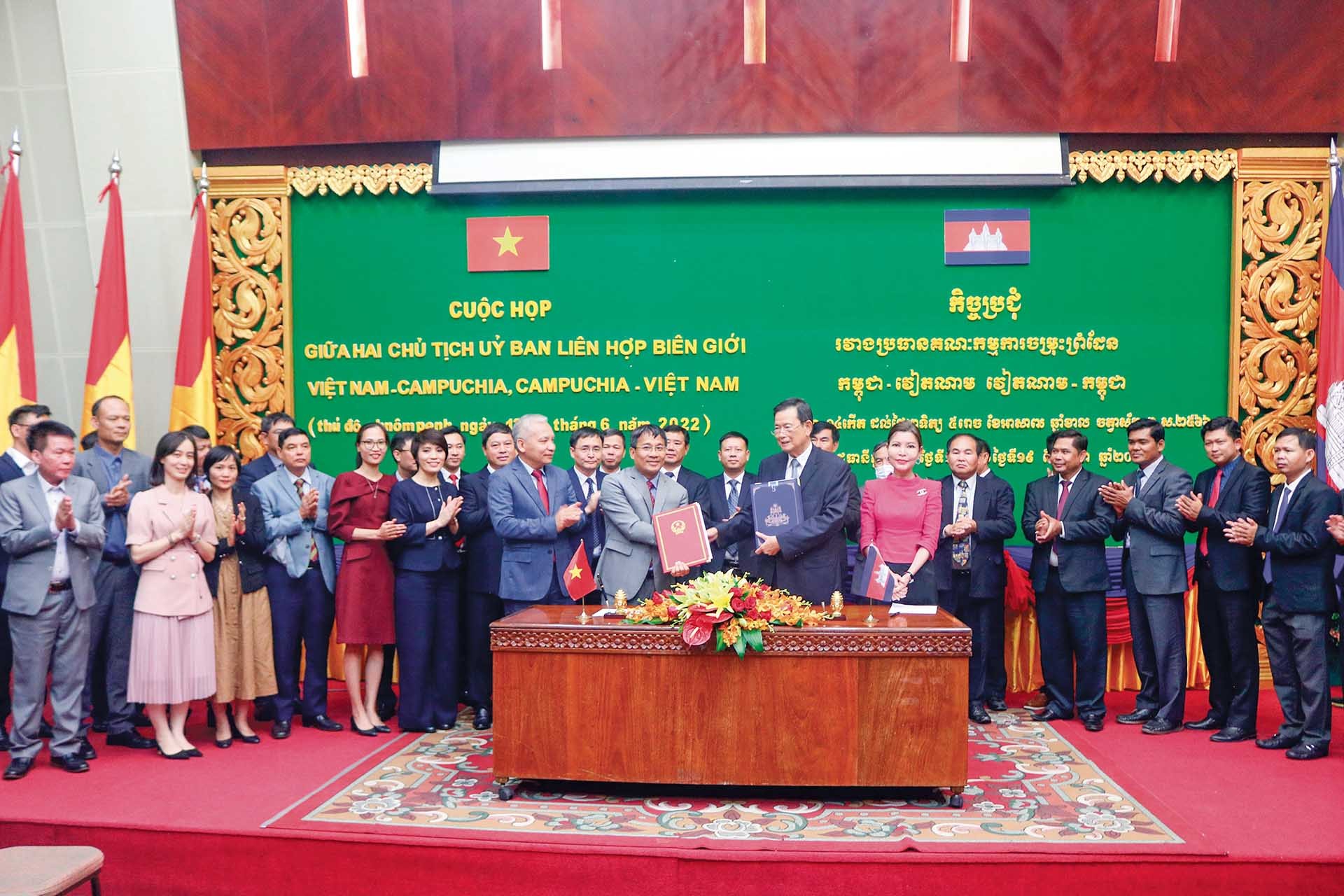 |
| The meeting of the two Chairmen of the Vietnam-Cambodia, Cambodia-Vietnam Joint Border Committee in June 2022. |
In border affairs, many experts consider Vietnam a model for peacefully resolving disputes. Could you share the experiences drawn from Vietnam's practices?
We steadfastly inherit the lessons of our ancestors in the struggle for independence, sovereignty, unity, and territorial integrity while pursuing a policy of amity and goodwill with neighbouring countries. We have consistently resolved all border and territorial issues by peaceful means based on international law, particularly the United Nations Charter, international legal provisions, and international maritime law for maritime disputes.
This approach has enabled us to successfully address many difficulties and obstacles in border and territorial affairs. The successful signing and implementation of the Land Border Treaty with Laos in 1977, with China in 1999, the completion of the entire Vietnam-China land border demarcation and marker planting in 2008, and Vietnam-Laos in 2007, as well as a series of maritime delimitation agreements between Vietnam and neighbouring countries, are clear evidence of the effectiveness of this approach.
More than anyone, our country understands the sacrifices and losses of war, so peacefully resolving disagreements and differences is always our top priority. On this basis, we have skillfully maintained good, friendly relations with neighbouring countries. In reality, all nations benefit from maintaining a peaceful and stable environment to create space for cooperation and national development. Vietnam recognizes that building trust is a crucial foundation for realizing this goal.
Therefore, we persistently establish and maintain bilateral and multilateral dialogue mechanisms, implement cooperation in various fields in border areas, and create conditions for sustainable development of trade, tourism, and people-to-people exchanges alongside ensuring national defense and security in border, maritime, and island areas.
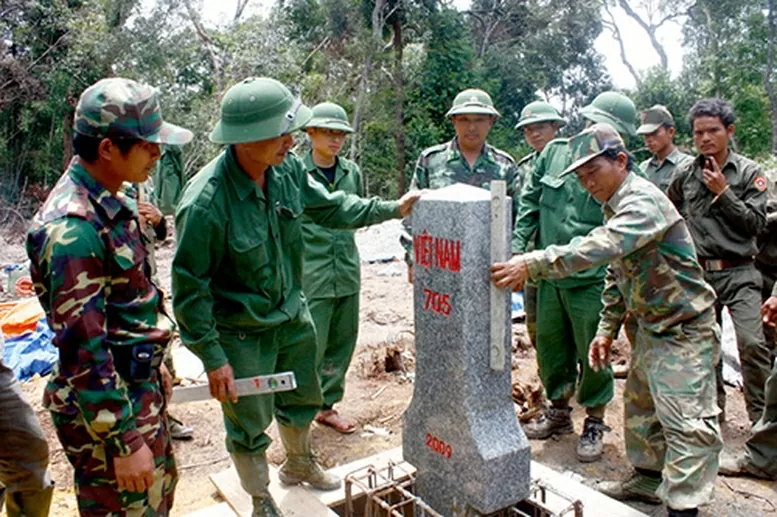 |
| The peaceful resolution of border issues and achieving the established border lines today is a clear testament to the intelligence, courage, and stature of Vietnam's diplomacy. (Source: VGP) |
One vital lesson is the need for close coordination between domestic and external fronts, across all levels, sectors, and localities to ensure unity in carrying out specific border and territory related tasks.
At the same time, it is necessary to link state diplomacy, party diplomacy with people-to-people diplomacy, that is, to promote the role of border residents, the scholarly community, and the media, to build strong public consensus, thereby creating a solid people's defense, defending borders with both "reason" and "emotion".
The peaceful settlement of border, territorial issues and clearly established national boundaries seen today stand as a vivid testament to the wisdom, resolve, and stature of Vietnam’s diplomacy, as well as to the unity and collective combined efforts of all levels, sectors, and localities toward the common goal of safeguarding the core values of national interests.
Amidst a rapidly changing international environment, Vietnam’s lessons of respecting international law; remaining steadfast in the principles of independence, sovereignty, unity, and territorial integrity; upholding peace, stability, and development as overarching objectives; and embracing cooperation as the essential means—retain their full relevance. Vietnam is ready to share these experiences with international friends for a more stable, just, and peaceful world.
Thank you very much, Standing Deputy Minister!
Tags:
Deputy Prime Minister
Foreign Minister Bui Thanh Son
Deputy Foreign Minister
Nguyen Minh Vu
border and territory-related issues
National Border Committee
East Sea
Code of Conduct in the East Sea (COC)
Declaration on the Conduct of Parties in the East Sea (DOC)
UNCLOS 1982
80th anniversary
Vietnamese diplomacy