




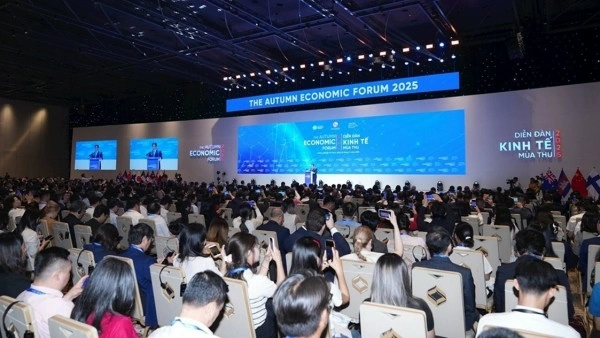


New opportunities for the Education Sector (Part 3): The greatest breakthrough of Resolution 71 is the change in mindset, paving the way for new oppor
WVR - The most significant breakthrough of Resolution No. 71-NQ/TW (Resolution 71) is the change in mindset, viewing education as a direct driver for forming "human capital" to serve the development of a knowledge-based economy, digital economy, and international integration.
Latest
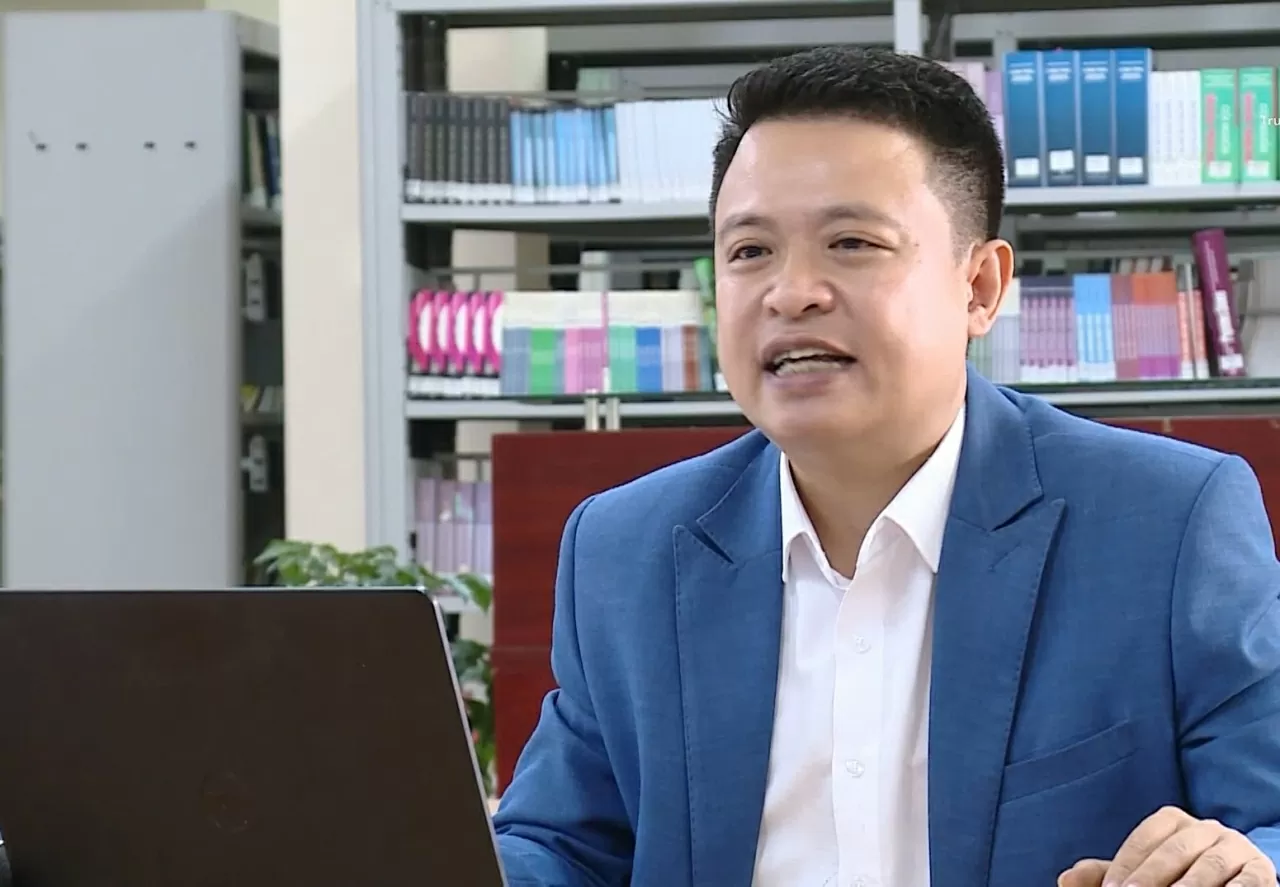 |
| Dr. Pham Hoang Manh Ha believes that Resolution 71 has set forth important and groundbreaking directions for Vietnam education to build a high-quality workforce. (Photo: Courtesy by author) |
This is the perspective of Dr. Pham Hoang Manh Ha, Lecturer at Thanh Hoa University of Culture, Sports and Tourism, shared with World and Vietnam Report regarding the historical significance of Resolution 71-NQ/TW for our country's education sector.
Realizing aspirations, opening opportunities for "Acceleration"
Resolution 71-NQ/TW is considered historically significant for the education sector. In your opinion, what is the greatest breakthrough this Resolution brings compared to previous policies and directives?
The greatest breakthrough of Resolution No. 71 is the change in mindset, from innovation within the sector to viewing education as a strategic pillar in national development and international integration. More specifically, the Resolution represents a comprehensive, integrated approach between education - training and science - technology and innovation. The Resolution's content is directly linked to developing a high-quality workforce for the country's industrialization and modernization in the digital era.
Previously, policies and resolutions on education often focused on expanding scale, improving training quality, renewing curricula or textbooks, or enhancing management mechanisms. Resolution 71 views education as a direct driver for forming "human capital" to serve the development of a knowledge-based economy, digital economy, and international integration. It is also the first time the Politburo emphasizes training high-level human resources in key scientific - technological fields, digital transformation, new energy, artificial intelligence, linked to practical needs.
Additionally, the Resolution affirms the need to innovate management mechanisms and mobilize resources. The state still plays a regulatory role while expanding space for socialization, public-private partnerships, university autonomy, and international educational integration. These new points will create a competitive and creative environment in training.
This Resolution emphasizes the goals of integration, innovation, and reaching international standards. What are the biggest challenges and opportunities for Vietnamese education to realize this aspiration, from your perspective?
In my opinion, Resolution 71 will open opportunities for "acceleration" in the digital era; allowing Vietnamese education to narrow the gap with international standards if new technologies are effectively applied in management, teaching, and research. We will also have favourable conditions for deep integration with international knowledge.
Expanding educational cooperation with the world is an opportunity for Vietnam to "export" high-quality human resources while "importing" advanced training models. If we seize the opportunity well, the national position will be elevated, and Vietnamese education can become a destination for international students in the region, playing a central role in training human resources in some key fields.
However, in implementing the resolution, we also face numerous challenges. Firstly, the gap between current educational quality and international "standards". This disparity is evident in factors such as foreign languages, soft skills, critical thinking, and independent research capabilities.
Secondly, regarding academic competition, many educational institutions lack mechanisms to attract high-level lecturers and have not effectively promoted the university autonomy model. Without fair academic competition, the issue of "brain drain" will continue to be a "well-known - much-discussed" story.
Thirdly, aiming for international standards while also affirming unique values, balancing "global" with "local". I believe these are the "bottlenecks" that, if not overcome, will make educational integration more of a pressure than an opportunity.
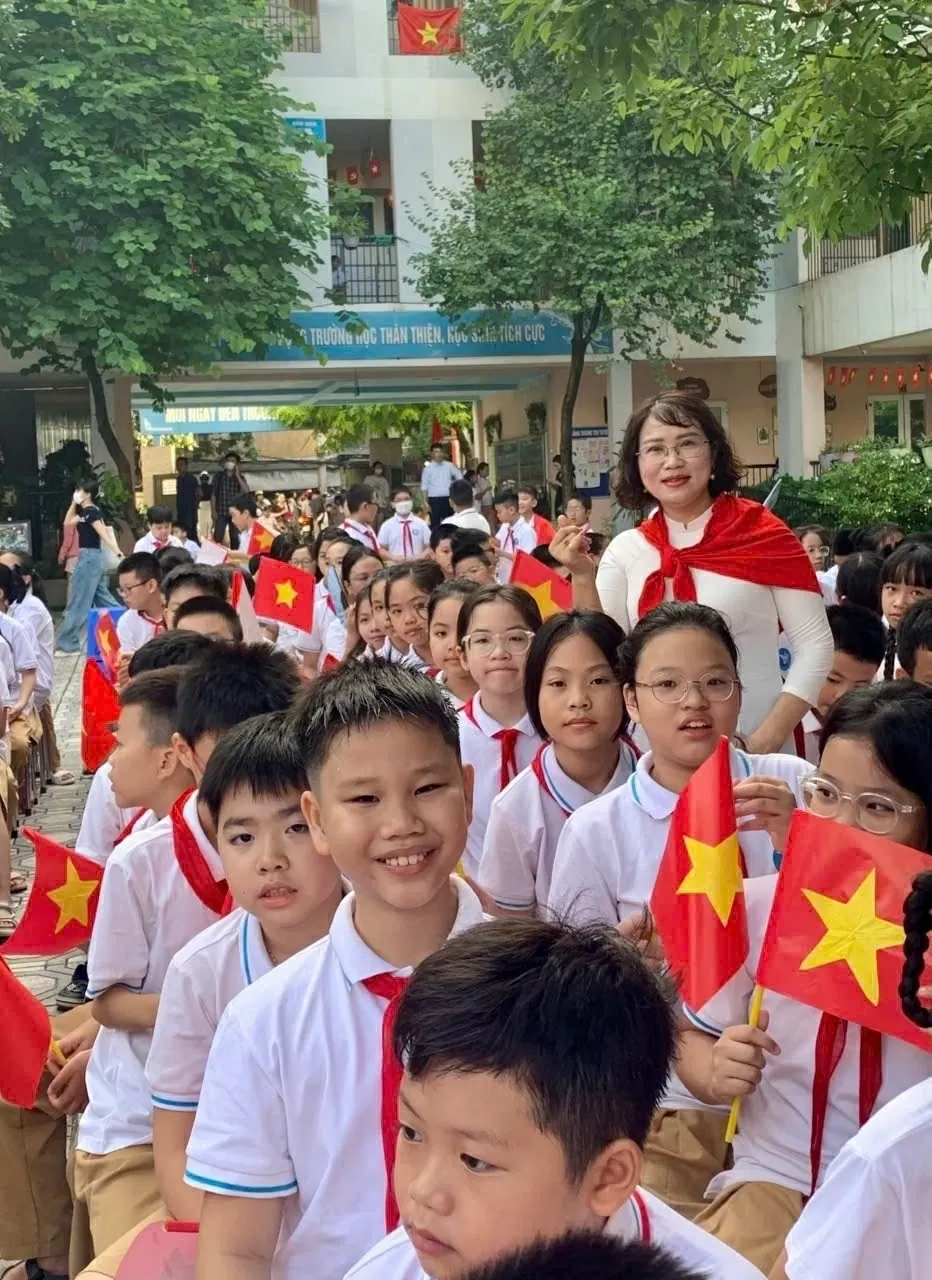 |
| Education should not stop at "transmitting knowledge" but must become the foundation for the national innovation ecosystem. (Photo: Pham Thanh Thuy) |
In the context of globalization and the Fourth Industrial Revolution, what directions has the Resolution provided to help Vietnam build a high-quality workforce to meet national development requirements?
It is evident that Resolution 71 has set forth important and groundbreaking directions for Vietnam to build a high-quality workforce in the context of globalization and the Fourth Industrial Revolution.
Specifically, the Resolution directs educational development linked with science - technology and innovation. Accordingly, education - training should not stop at "transmitting knowledge" but must become the foundation for the national innovation ecosystem. This means that programs and training content need to be directly linked to key scientific - technological fields such as artificial intelligence, renewable energy, automation… to create an elite workforce.
| "Expanding educational cooperation with the world is an opportunity for Vietnam to 'export' high-quality human resources while 'importing' advanced training models". |
The Politburo also directs international integration and standardization of human resources; standardizing the training system according to regional and international standards, expanding cooperation with leading universities and research institutes worldwide. Besides, instead of focusing on memorization, the Resolution requires innovation in teaching - learning methods towards developing capabilities, creativity, critical thinking, foreign languages, and digital skills. These are core competencies that enable learners to adapt and participate in the global value chain. In other words, this is a fundamental innovation direction in educational methods.
Another important new point is that the Resolution encourages an education model according to social needs, training linked with utilization. The close linkage between educational institutions and businesses and the labor market will help training programs closely follow current practical requirements. This Resolution also affirms the necessity of a special mechanism to identify, nurture, and utilize talents. I believe this is a crucial point because high-level human resources tend to move, and without attractive policies, it will be difficult to retain elite resources. It should also be noted that the Resolution sets the requirement for the education system to ensure equal access opportunities, "leaving no one behind".
In other words, the spirit of the Resolution is to build high-quality human resources based on four foundations: International integration - training standardization; linked with science - technology and innovation; comprehensive capability development for learners; talent development policies.
To elevate education to regional and international levels
To turn political determination into concrete actions, for Vietnamese education to reach international levels, what immediate steps should the education sector prioritize to realize the goals of Resolution 71?
In my opinion, the education sector should focus on several priority steps. First, standardize and enhance the quality of educators and educational management staff; gradually standardize management teams according to international standards, especially at the university level, to ensure governance capacity, autonomy, and integration.
Simultaneously, promote digital transformation in education, incorporating artificial intelligence and big data into learning management and quality assurance. This should be seen as the foundation for Vietnamese education to shorten the gap with the world. Besides, focus on prioritizing some key training fields, such as information technology, artificial intelligence, automation… Key universities should become training and research centers on par with the region.
Additionally, promote selective international cooperation, develop policies to attract international lecturers and scientists to teach and research in Vietnam. For training programs, strengthen the connection between education and businesses and the labor market, and to realize this soon, a coordination mechanism between universities - businesses - the State in workforce training should be issued. Accordingly, conditions should be created for businesses to participate deeply in program design, output standard evaluation, providing internship and recruitment opportunities.
Finally, complete and rigorously implement mechanisms to identify and utilize talents. Absolutely avoid the situation of "much thunder - little rain" with policies that "sound good" but are applied half-heartedly, lacking thoroughness.
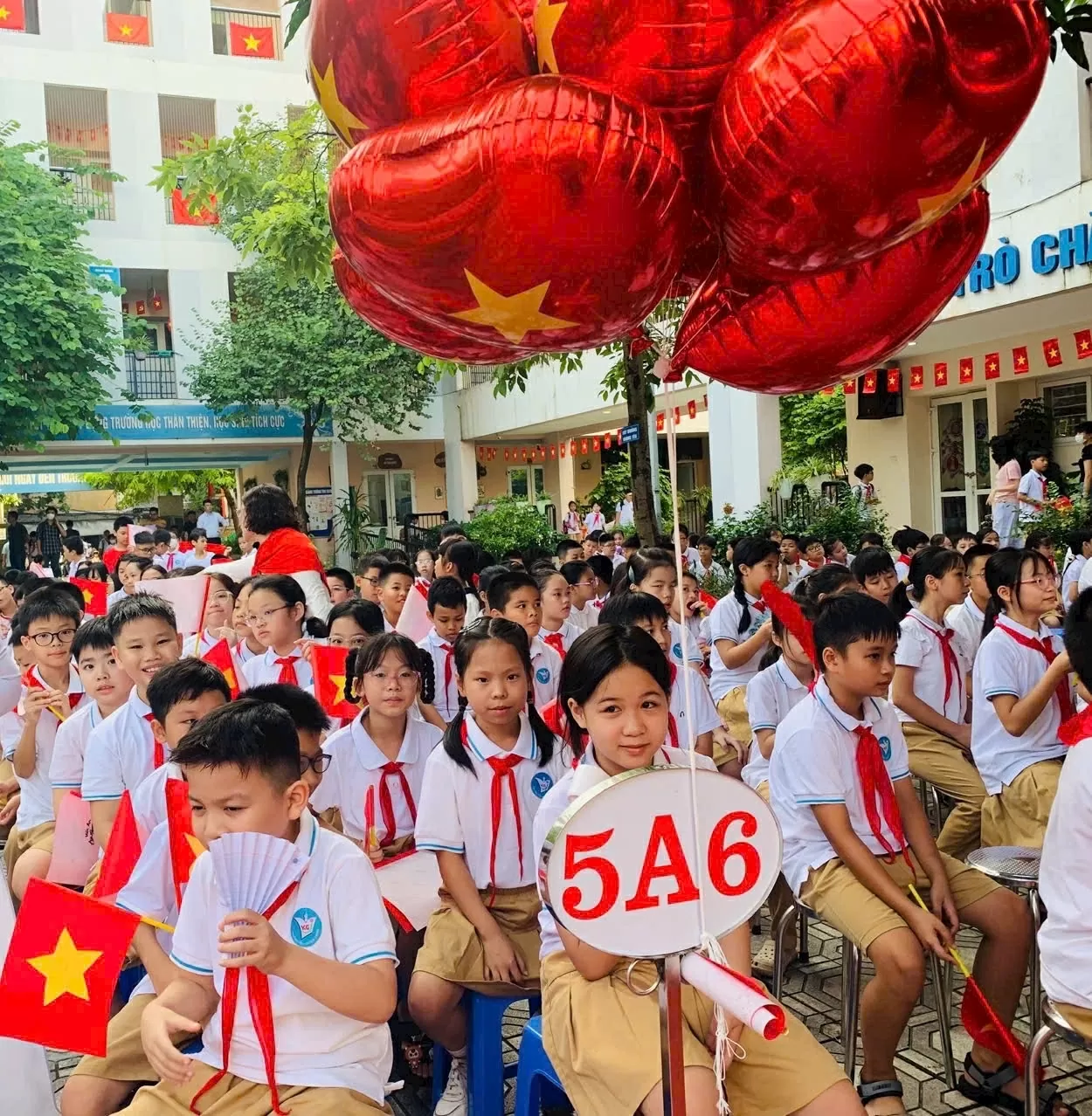 |
| Resolution 71 will lay an important foundation for Vietnamese education to elevate to regional and international levels. (Photo: Pham Thanh Thuy) |
What changes do you expect this Resolution to bring to learners, educators, and society in the next 5 - 10 years?
If implemented decisively, I believe Resolution 71 will lay an important foundation for Vietnamese education to elevate to regional and international levels. In the immediate future, in the next 5-10 years, learners will access programs and training methods according to regional and international standards, enabling them to compete equally in the global labor market.
Moreover, instead of focusing heavily on academic knowledge, learners will be trained in digital skills, foreign languages, critical thinking, creativity, and entrepreneurship. Digital transformation and creating an open learning ecosystem will open opportunities for lifelong learning. More importantly, as education becomes more closely linked with businesses, learners will reduce the risk of unemployment after graduation.
| "The Education sector needs to complete and rigorously implement mechanisms to identify and utilize talents. Absolutely avoid the situation of 'much thunder - little rain' with policies that 'sound good' but are applied half-heartedly, lacking thoroughness". |
For educators and management staff, they will be professionalized according to international standards as they must meet new standards for professional competence, foreign languages, digital skills, and "new pedagogical skills". Teachers and lecturers will gradually shift roles and positions; from "knowledge transmitters" in the old model to guides, accompanying learners in exploring knowledge.
Another issue, currently very "hot" in forums, is income and salaries for educators. Increased remuneration will correlate with elevated status. However, to achieve this, each educator will have to solve the problem of self-learning, self-innovation, adapting to technology, and new teaching methods.
On a societal level, when the quality of human resources is elevated, society will possess a high-quality workforce capable of participating in knowledge-based economies and key technological sectors. Vietnamese human resources will have stronger competitiveness, meeting international requirements and the global value chain. Solving the employment issue for learners after graduation will reinforce society's trust in education.
At this point, public opinion will view education as a driver for national development. Most importantly, Vietnam will shape a culture of lifelong learning, where acquiring, updating knowledge, and skills become regular needs of citizens. In summary, it will be a model of "dynamic learners - professional educators - learning society" that I hope Resolution 71 will create in the next 5-10 years; laying a solid foundation for Vietnam to rise.
| On August 22, Party General Secretary To Lam signed the Politburo's Resolution on breakthrough development in education and training (Resolution No. 71-NQ/TW). The tasks and solutions of Resolution No. 71 are as follows: 1. Enhance awareness, renew thinking and action, determine strong political determination for breakthrough development in education and training 2. Strongly innovate institutions, create special, superior mechanisms, and policies for education and training development 3. Strengthen comprehensive education in ethics, intellect, physique, and aesthetics, forming the value system of new-era Vietnamese people 4. Comprehensive digital transformation, universalize and strongly apply digital technology, artificial intelligence in education and training 5. Focus on building a team of educators, standardizing school facilities, enhancing the quality of preschool and general education 6. Reform and modernize vocational education, creating breakthroughs in developing a high-skilled workforce 7. Modernize and elevate higher education, creating breakthroughs in developing high-level human resources and talents, leading research and innovation 8. Promote extensive international cooperation and integration in education and training |