







A new era for the Education sector (Part 1): Resolution 71 shapes the landscape of Vietnamese education
WVR - Resolution 71-NQ/TW clearly outlines the education situation: Modern – integrated – digitalized – humane, aligned with the nation's development needs in the context of globalization.
Latest
| The Politburo has just issued Resolution 71-NQ/TW (Resolution 71) on breakthrough development in education and training. This resolution is of historical significance, reflecting the great aspirations and political determination of the Party and the State towards the cause of education. The breakthrough nature of Resolution 71 lies not only in individual policies but in its strategic vision, comprehensive thinking, and strong determination to usher in a new era for Vietnamese education, an era of integration, innovation, and international reach. The World and Vietnam Report is honoured to present a series titled "A new era for the Education sector". |
Part 1 - Resolution 71 shapes the picture of Vietnamese education
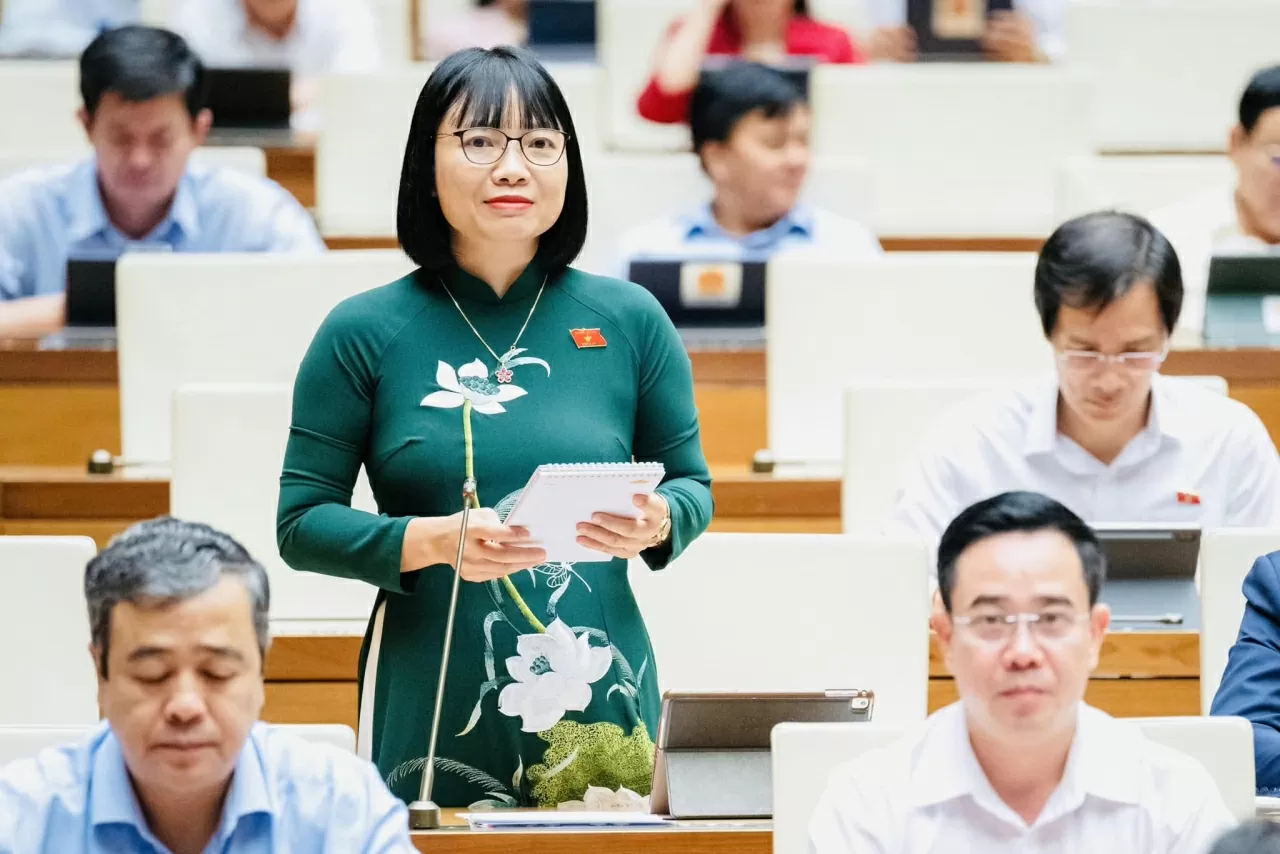 |
| National Assembly Delegate Nguyen Thi Viet Nga believes Resolution 71 not only resolves issues but also opens new opportunities for education. (Source: National Assembly) |
Untying the "Knots"
It can be affirmed that Resolution 71 is a particularly important document, as it is the first time the Politburo has issued a separate, comprehensive, and breakthrough resolution dedicated to education and training. This document not only sets out strategic directions but also establishes a new set of values and vision to overcome long-standing limitations in the education sector, while preparing the country for a new phase of development.
In the context of international integration and digital transformation, Resolution 71 emphasizes three prominent policy trends: Firstly, it must affirm that education and training are key drivers of national development. Previously, we often said education is the top national policy, but in Resolution 71, this idea is elevated to a breakthrough level: Education is placed in an organic relationship with science, technology, innovation, and international integration. This marks a shift from perception to action, from qualitative to quantitative, with the specific requirement of forming a high-quality workforce capable of competing in a global environment.
Simultaneously, education is oriented towards an open, flexible, and integrated model. Vietnamese education will no longer be confined within traditional frameworks but will be connected to the global education network. This is demonstrated through enhanced international cooperation, interconnected training, credit and degree recognition, encouraging local study abroad, and proactively acquiring advanced knowledge, science, and technology from around the world. The trend of "internationalizing education" will enable our students to compete globally, transforming Vietnam into a destination for knowledge.
Along with that, digital transformation becomes a central axis. This is a new point, reflecting strong adaptation to the era. Digital education, digital schools, open educational resources, and large educational data platforms will be comprehensively deployed. This not only facilitates lifelong education access for everyone but also helps Vietnamese education make breakthroughs in productivity, quality, and efficiency. The resolution also affirms that digital transformation is not just a supportive tool but the method of organizing and managing education in the new era.
Thus, it can be seen that Resolution 71 has clearly shaped the landscape of Vietnamese education in the coming period: Modern – integrated – digitalized – humane, aligned with the nation's development needs in the context of globalization.
For many years, the Vietnamese education sector has faced numerous "knots" hindering sustainable development. These include uneven quality, localized surplus – shortage of teachers, exam pressure, slow curriculum – textbook reforms, financial mechanisms not truly encouraging creativity, along with inadequate policies for educators. With the vision and clear directions of Resolution 71, I hope the resolution will truly be the "key" to untangle these bottlenecks.
| "Resolution 71 has introduced a completely new approach to the role of teachers and students in the educational process. Teachers are not only lecturers but must become guides, inspirers, skill trainers, and companions to learners. Teachers will need to continuously learn, update knowledge, apply technology in teaching, and more importantly, cultivate creative thinking in students". |
Firstly, untie the institutional knot. Resolution 71 calls for the establishment of a consistent, long-term legal and policy system for education. This will end the fragmented, unstable amendments, creating a solid legal framework for development.
Secondly, untie the knot of quality and equity. When resources are allocated more reasonably, and investment policies focus more on preschool, general education, and disadvantaged areas, I believe the gap in learning conditions will be narrowed. Every child, whether in urban or rural, mountainous, or island areas, will have access to quality education.
Thirdly, untie the knot of creative motivation. With the policy of creating a favorable environment for innovation, research, and creativity, I expect higher education and vocational training to become a launchpad for science and technology, and innovative start-ups.
Fourthly, untie the knot of policies for educators. This is a major highlight. When teachers are assured of income, and receive regular training and development, they will be fully dedicated.
Resolution 71 not only resolves issues but also opens new opportunities for education. It is an opportunity for Vietnam to have a generation of global citizens, mastering technology, with a desire to contribute. As a National Assembly deputy, I look forward to this resolution, when implemented, creating substantial, sustainable changes, most importantly, directly benefiting the people, students, and educators.
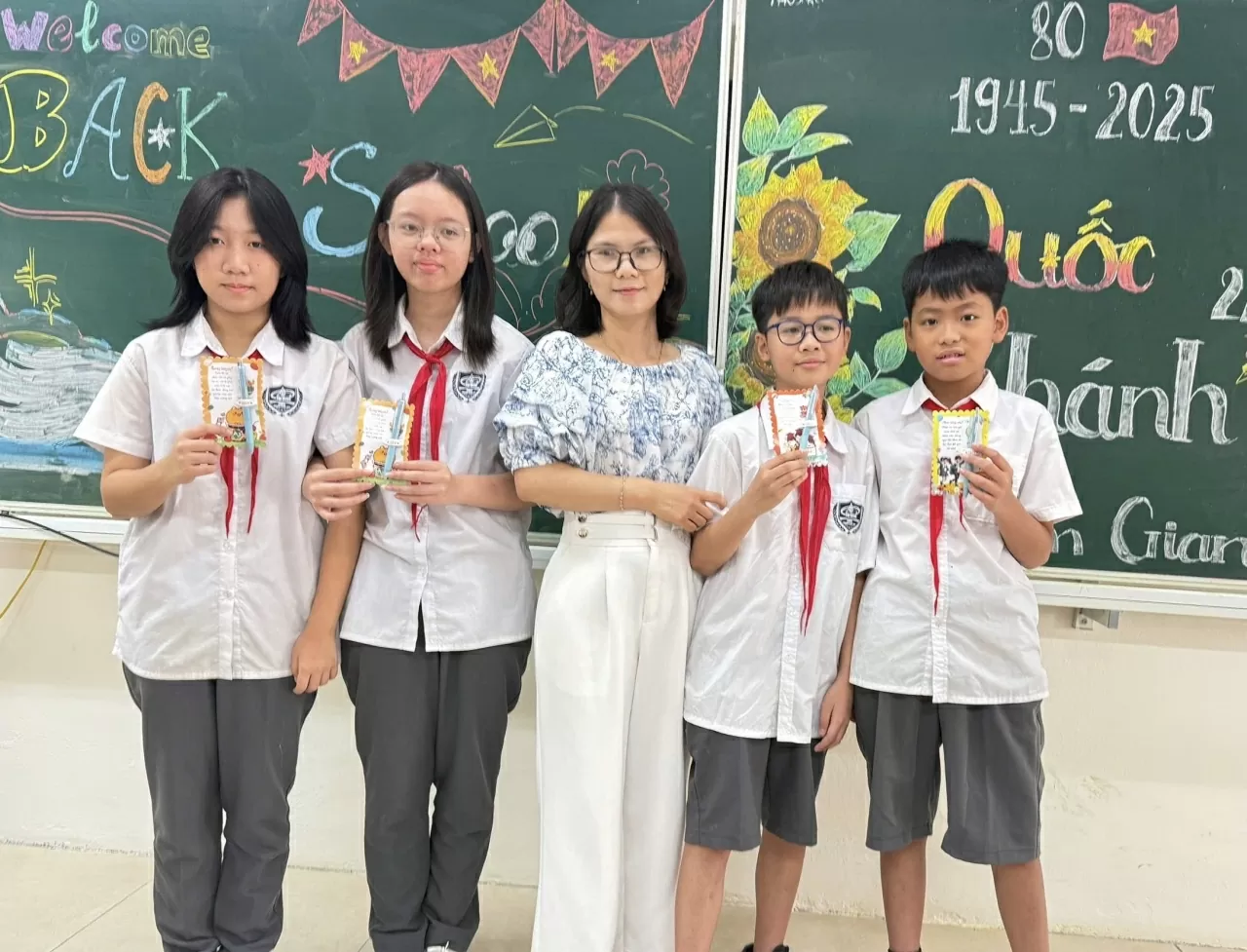 |
| Teacher Nguyen Thi Luu and students of Kim Giang Secondary School, Hanoi, jubilant on the first day of school. |
Establishing trends in education
I believe Resolution 71 has established five major trends in education for the coming period:
First, education closely linked with the development of high-quality human resources. The resolution clearly states the goal of training personnel with qualities, skills, creativity, and the ability to adapt to rapid changes in science, technology, and the labor market.
Second, lifelong education development. Not only limited to school education, the resolution calls for building a learning society, encouraging continuous learning, learning at all ages, with digital transformation as a key tool.
Third, fundamental innovation in teaching-learning methods. Shift from knowledge transmission to developing learners' capabilities and qualities; from heavy exams to diverse, comprehensive assessments.
Fourth, strong investment in higher education and vocational training. The resolution considers this a pillar to enhance national competitiveness, linking education with research, science, technology, and innovation.
Fifth, strengthening integration and internationalization of education. This will help Vietnamese education reach out to the world while absorbing the essence of humanity.
| "Education is not only the responsibility of the education sector but also the responsibility and right of the entire political system and every citizen. When society accompanies education, we will have a solid foundation to build a rapidly developing, sustainable, and humane country". |
The impact of these orientations on the country's science, technology, and economy is profound. With high-quality human resources, Vietnam will have the conditions to make breakthroughs in key sectors such as information technology, artificial intelligence, biotechnology, renewable energy… This is the basis for shifting the growth model from breadth to depth, from resource exploitation to knowledge and innovation.
Additionally, lifelong education will form a learning society, where every worker can adapt, retrain, and enhance skills to avoid falling behind in the digital era. This not only increases labor productivity but also ensures sustainable social welfare.
Resolution 71 has introduced a completely new approach to the role of teachers and students in the educational process. Previously, teachers were mainly "knowledge transmitters", while students were "receivers". Now, this relationship shifts towards companionship and creation.
Teachers are not only lecturers but must become guides, inspirers, skill trainers, and companions to learners. Teachers will need to continuously learn, update knowledge, apply technology in teaching, and more importantly, cultivate creative thinking in students.
Learners are no longer passive receivers but must become the center of the educational process. They need to actively seek knowledge, develop soft skills, digital capabilities, and critical thinking. Students in the new era need the ability to learn for life, learn through experience, practice, and in multicultural environments.
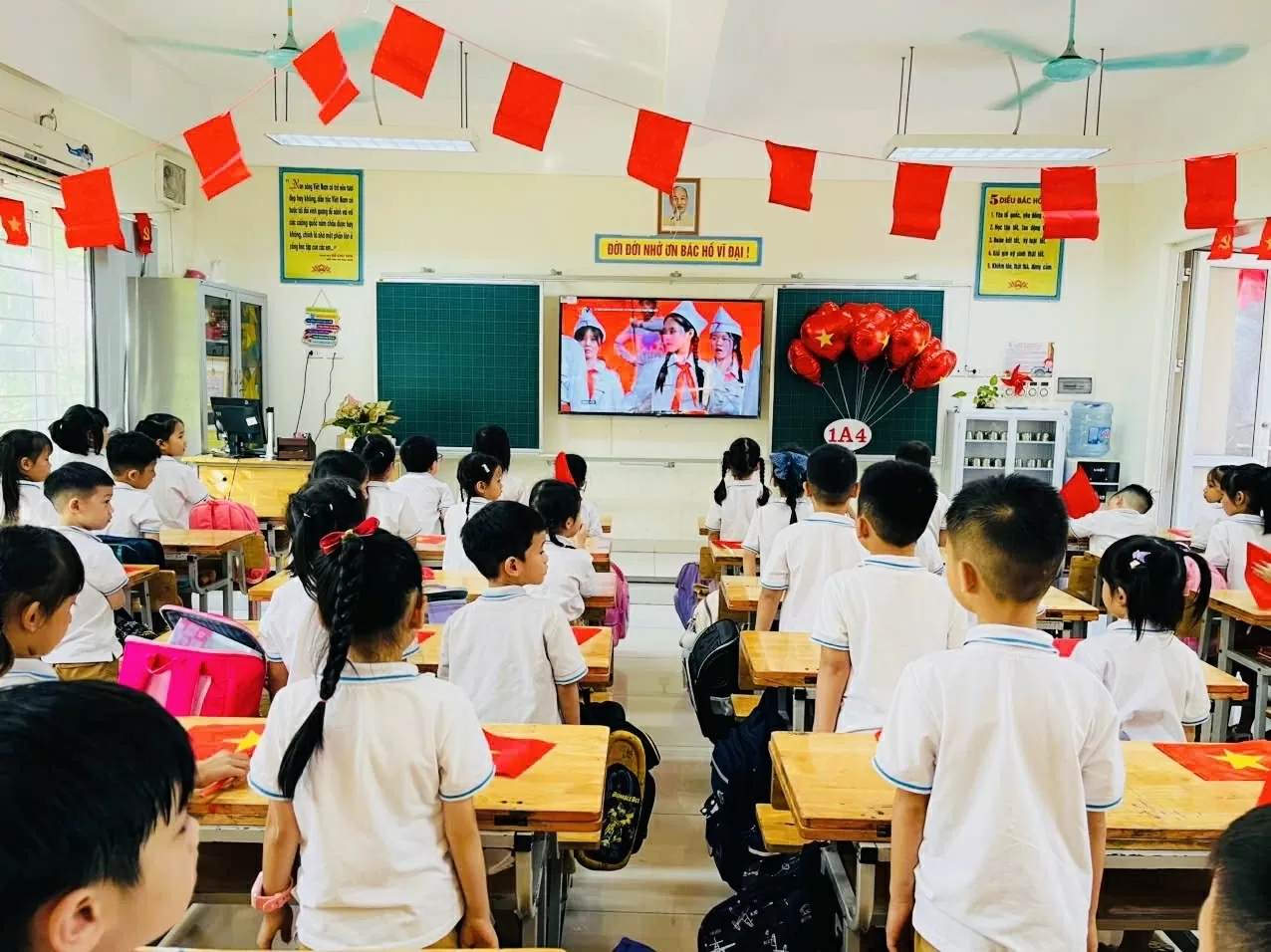 |
| Resolution 71 opens up a vast development space for students. (Photo: Phuong Quyen) |
Society accompanies education
For teachers and students to adapt, I believe supportive policies are needed. The state should ensure stable income, appropriate incentives, and build a system for professional development, digital skills, and modern pedagogical skills. Additionally, administrative pressure should be reduced, allowing teachers more time for teaching and creativity.
For students, scholarship policies, preferential credits, especially for disadvantaged groups, are needed; a comprehensive digital infrastructure system should be developed so that all students have access to digital learning materials; diverse learning forms should be encouraged, promoting scientific research, entrepreneurship, and creativity among students. Only when teachers are assured of their livelihoods and students are empowered to maximize their potential, can education truly become a driving force for national development.
I believe that Resolution 71 will bring fundamental and positive changes. For educators, the resolution will create a turning point. Educators will not only be seen as "those who teach" but as "creators of future generations". I hope that in the near future, incentive policies will help the teaching profession regain its noble status, while teachers will have the conditions to enhance their capabilities and adapt to digital transformation.
For students, the resolution opens up a vast development space. They will no longer be confined within rigid frameworks but will be empowered to actively learn, create, and integrate. I hope the young generation of Vietnam will become increasingly confident and resilient, carrying global knowledge while maintaining national identity.
For the whole society, Resolution 71 will spread a strong message that: Education is not only the responsibility of the education sector but also the responsibility and right of the entire political system and every citizen. When society accompanies education, we will have a solid foundation to build a rapidly developing, sustainable, and humane country.
As a National Assembly deputy, I hope this resolution will be institutionalized with specific, feasible policies, and closely monitored during implementation. When the resolution comes to life, Vietnamese education will have a breakthrough development, contributing decisively to the prosperity of the country.
| On August 22, General Secretary To Lam signed the Politburo's Resolution on breakthrough development in education and training - Resolution No. 71-NQ/TW, which includes the following specific goals: Goals by 2030- Expand equitable access, improve the quality of preschool and general education to reach advanced levels in Asia. Build a network of schools that basically meet the learning needs of students from all backgrounds and regions; at least 80% of general schools meet national standards. Complete universal preschool education for children aged 3 to 5 and compulsory education up to lower secondary school; at least 85% of people of age complete upper secondary education or equivalent, with no province or city below 60%. Achieve initial results in enhancing technological capacity, artificial intelligence, and English proficiency at the general education level. The education index contributing to the Human Development Index (HDI) reaches over 0.8, with the education inequality index reduced to below 10%. - Develop and train human resources, especially high-quality human resources, to meet the requirements of Vietnam becoming a modern industrialized, upper-middle-income country. The network of higher education and vocational education institutions is appropriately arranged and upgraded; strive for 100% of higher education institutions and at least 80% of vocational education institutions to meet national standards, with 20% of institutions invested to modern standards equivalent to developed countries in Asia. The percentage of people of age attending post-secondary education levels reaches 50%. The percentage of workers with college, university, or higher degrees reaches 24%. The percentage of students in basic sciences, engineering, and technology reaches at least 35%, including at least 6,000 PhD students and 20,000 students in talent programs. The human capital and research index contributing to the Global Innovation Index (GII) is on par with upper-middle-income countries. - Elevate higher education institutions to truly become national and regional research, innovation, and entrepreneurship centers. The network of higher education institutions plays a core role in the innovation ecosystem of regions and localities, providing high-quality human resources and talents to meet the needs of key sectors and fields; recruit at least 2,000 excellent lecturers from abroad. Increase by an average of 12% per year in international scientific publications, revenue from science, technology, and innovation; 16% per year in patent registrations, patent protection certificates. Strive for at least 8 higher education institutions to be in the top 200 universities in Asia, and at least 1 higher education institution to be in the top 100 universities worldwide in some fields according to reputable international rankings. Goals by 2035The education and training system continues to be modernized, making strong, steady progress in access, equity, and quality. Complete universal upper secondary education or equivalent; the education index contributing to the HDI reaches over 0.85; the human capital and research index contributing to the GII exceeds the average of upper-middle-income countries. Strive for at least 2 higher education institutions to be in the top 100 universities worldwide in some fields according to reputable international rankings. Vision by 2045Vietnam will have a modern, equitable, and high-quality national education system, ranking among the top 20 countries in the world. Every citizen will have the opportunity for lifelong learning, enhancing their level, skills, and maximizing personal potential. High-quality human resources and scientific and technological talents will become the core driving force and competitive advantage of the country, contributing to making Vietnam a developed, high-income country. Strive for at least 5 higher education institutions to be in the top 100 universities worldwide in some fields according to reputable international rankings. |


