


Meritorious Artist Nguyen Si Tien: 'Vietnamese theatre must preserve cultural soul in a modern form of expression”
In the context of performing arts facing increasing competitive pressure from digital entertainment platforms, Vietnamese theatre is also embarking on a journey of innovation to integrate internationally without losing its unique identity. In an interview with The World and Vietnam Report (Bao The gioi va Viet Nam), Meritorious Artist Nguyen Si Tien, Director of Vietnam Youth Theatre (Nha hat Tuoi tre), believes that the most important thing is not to make theatre “like international,” but to tell Vietnamese stories through modern, emotionally rich artistic language that can resonate with a global audience.
Latest
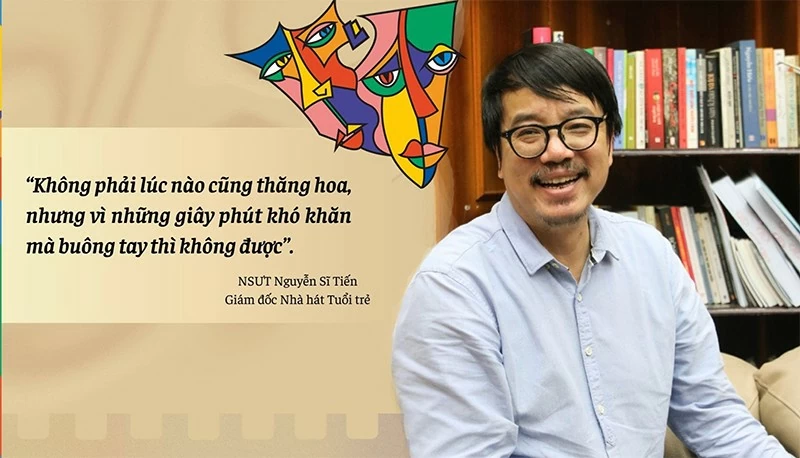 |
| Meritorious Artist, Director of Vietnam Youth Theatre Nguyen Si Tien (Source: People's Army Newspaper). |
Sir, how does the theatre perceive the role of Vietnamese theatre in connecting and promoting Vietnamese culture to international audiences through adapted works?
Theatre art has always been one of the most direct and emotionally rich forms of cultural exchange. For Nha hat Tuoi tre Vietnam, adapted works are not just simple artistic activities but also a bridge to tell Vietnamese stories to the world through contemporary theatrical language.
Over the years, Nha hat Tuoi tre has been one of the pioneers in accessing the essence of world theatre by staging classic works such as Romeo and Juliet, Hamlet, Macbeth by William Shakespeare, A Doll's House by Henrik Ibsen, or Thunderstorm… This is not only an opportunity for Vietnamese artists to learn international theatrical language but also a process of cultural dialogue right on the Vietnamese stage.
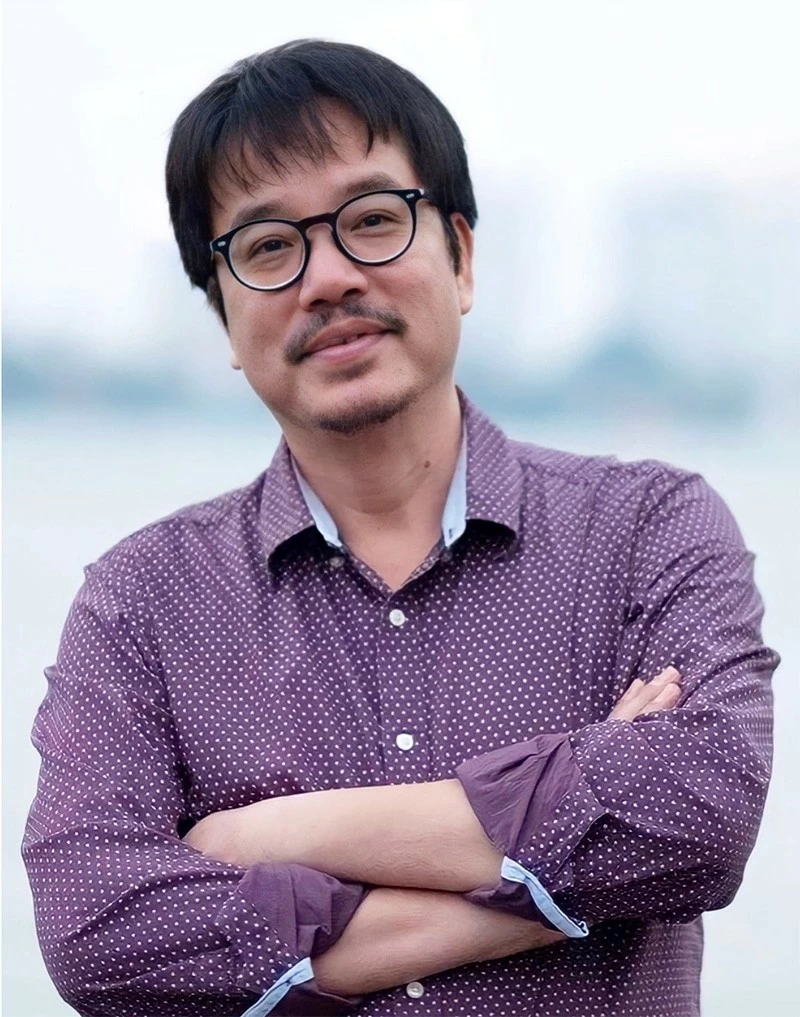 |
| Meritorious Artist Nguyen Si Tien, currently the Director of Vietnam Youth Theatre (Nha hat Tuoi tre). He graduated from Hanoi University of Theatre and Cinema, is a director and stage actor with many years of dedication to Vietnamese theatre, and is known to audiences through many impressive villain roles. |
In addition, the theatre also strengthens cooperation with many international partners through co-production projects with directors from Japan, Germany, Austria, the USA, Korea, Belgium… Works like Uncle Vanya, Hedda Gabler, The Caucasian Chalk Circle, “All My Sons,” or recently “Saving Grandma,” “The Goblin’s Child,” “Zorba the Detective Cat” demonstrate a very natural cultural blend through theatrical art.
Conversely, the theatre actively localises many famous world works for children, such as Pinocchio, Sans famille, The Cat Who Taught Seagulls to Fly, “The Wild Swans”… When staged in Vietnam, we always strive to incorporate the breath of life, emotions, and the Vietnamese spirit so that domestic audiences feel close, while international audiences can perceive the unique identity of Vietnamese theatre.
In my opinion, the special advantage of theatre is its ability to connect people directly. When international audiences are moved by a Vietnamese story, or Vietnamese audiences empathise with a work from Europe or Asia, art has transcended language and cultural boundaries.
In the process of developing modern theatre, what do you think is the biggest challenge for plays to both retain Vietnamese identity and engage with global audiences?
In my opinion, the biggest challenge is how to harmonise Vietnamese cultural identity with modern theatrical thinking. If we only maintain traditional storytelling without innovation in rhythm, form, and expressive language, it will be very difficult to reach today's young audiences. However, if we simply follow global trends, theatre can easily lose its individuality and cultural depth.
Therefore, the important thing is not to “internationalise” the form, but to find a modern way to tell emotions and values that are inherently Vietnamese.
Over the years, Nha hat Tuoi tre has always strived to approach new staging methods, from experimental theatre to musicals, but still focuses on emotions, character psychology, and the life of Vietnamese people. Even with classic world works like Uncle Vanya, Hedda Gabler, or The Caucasian Chalk Circle, we do not aim to replicate international models but seek to create empathy with today's Vietnamese audiences.
Another pressure is the strong competition from digital entertainment platforms. This forces the theatre to change its approach to the public, especially young audiences. In my opinion, today's audiences are not turning away from theatre; they just demand works that are more authentic, modern, and capable of touching their true emotions.
Therefore, today's theatre artists not only need to be professionally skilled but also have an integrative mindset, creativity, and a continuous learning spirit to adapt to the changes in contemporary art life.
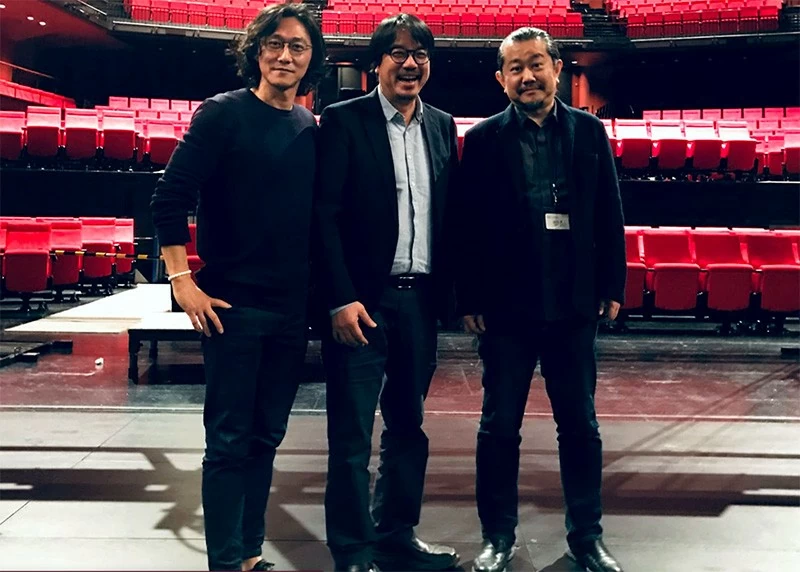 |
| Director - NSƯT Nguyen Si Tien (centre) with Japanese artists. (Source: People's Army Newspaper) |
What strategy does the theatre have to bring Vietnamese theatre closer to international audiences, especially through culturally blended works?
In the current context of globalisation, we believe that theatre is no longer just a performance activity within a country but has become a space for international cultural dialogue. Therefore, the strategy of Nha hat Tuoi tre is not simply to bring plays abroad but to build long-term creative collaboration models with international partners.
In recent years, the theatre has particularly focused on the co-creation model, where Vietnamese artists participate with international partners from the idea development, script adaptation, staging, to actor training and work promotion. We believe this is a more sustainable direction compared to short-term performance exchanges, as it helps young artists gradually develop international integration capabilities through their profession.
We also pay special attention to child audiences as they are the main service target of the theatre and the generation capable of naturally receiving multi-dimensional culture. Works like The Cat Who Taught Seagulls to Fly, Sans famille, “The Wild Swans,” “Cinderella - The Glass Slipper,” and Pinocchio… are all familiar stories to children worldwide, but when staged in Vietnam, the theatre always seeks to incorporate Vietnamese spirit, emotions, and life to create closeness with domestic audiences while maintaining international universality.
Additionally, the theatre is focusing on developing children's and family musicals as a strategic direction for the future. Collaborative projects with SangsangMaru Theatre, like “The Goblin’s Child,” “Zorba the Detective Cat,” or new projects like “My Dream,” “PUPU”, all aim to combine modern performance technology with human values close to Vietnamese life.
Especially, “My Dream” is a work that won the first prize in the 2024 children's theatre scriptwriting competition. Its adaptation into an international collaborative musical also clearly demonstrates the theatre's direction: using Vietnamese materials as the centre but telling it through modern artistic language to reach a wider audience.
We believe that the most important thing for Vietnamese theatre to reach international audiences is not to make itself “like international,” but to preserve the soul of Vietnamese culture in a modern and emotionally rich form of expression. Because in any country, people are always moved by love, family, childhood, and the desire to live. When art touches those emotions, cultural borders almost disappear.
Thank you very much.
| Vibrant Vietnamese Cultural Festival at Far Eastern Federal University (FEFU), Russia WVR - On April 30, in the jubilant atmosphere of National Reunification Day, the Vietnamese Student Association at Far Eastern Federal University (FEFU), Vladivostok, organized ... |
| The Journey and Choices of Chef Doan Thanh Dien In an era where cuisine is increasingly shaped by visuals, rapid media circulation, and short-lived trends, chef Doan Thanh Dien has chosen a different path: ... |