



Liberation of the South, National Reunification Day: From historical memory to a catalyst for a new era development
WVR - The spirit of April 30 should be recounted through vivid stories, continued through civic responsibility, and transformed into developmental capacity in a world full of changes, emphasised Dr. Pham Hoang Manh Ha on the occasion of the 51st anniversary of the Liberation of the South, National Reunification (April 30, 1975-April 30, 2026.
Latest
Liberation of the South, National Reunification Day (April 30) is not only a milestone marking the end of the war but also a profound symbol of peace, reunion, and the aspiration for unity.
In the context of an increasing generational gap, preserving and transforming that memory poses a new challenge: how to ensure history does not become a repetitive ritual but instead becomes an inspiration and a guide for the actions of today's youth. Dr. Pham Hoang Manh Ha shared his perspective on how to "translate" the spirit of April 30 into the language of the new era.
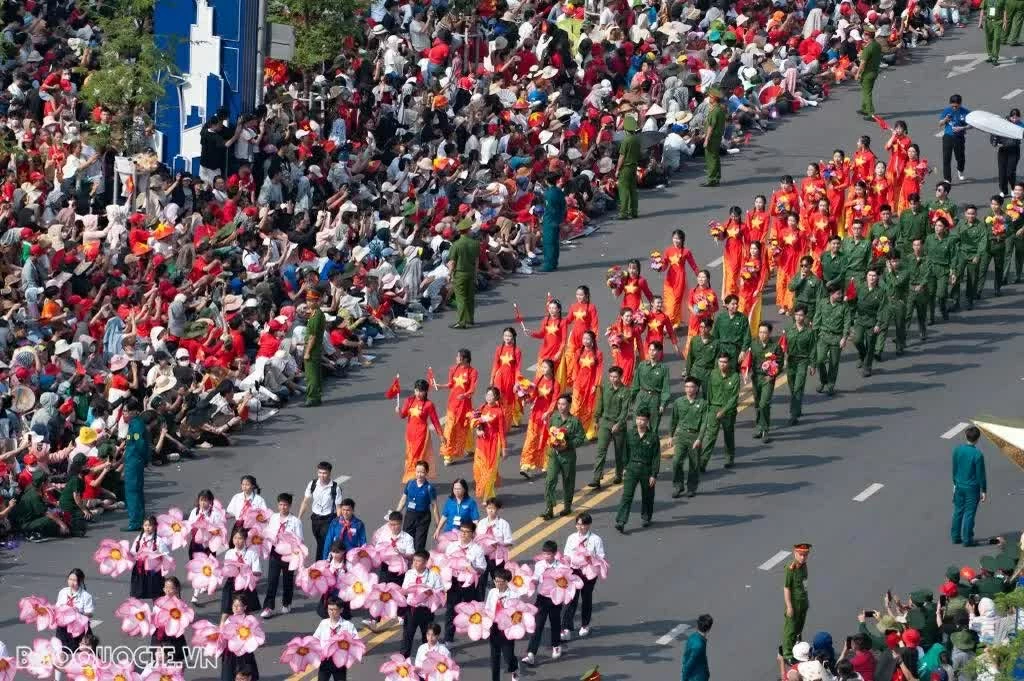 |
| The previous generation ignited the flame with ideals and sacrifices. Today's generation's task is to carry that flame further, illuminating new fields. (Photo: Nguyen Hong) |
New manifestations of patriotism
If April 30 is viewed merely as a historical milestone, it inadvertently "flattens" one of the deepest emotional layers of the Vietnamese people. It is not merely the end of a war but the day of "reclaiming the nation as one," closing a journey spanning generations where blood, tears, and unfulfilled dreams converge.
On a cultural-spiritual level, this day serves as a "foundational memory" of the nation: Not loudly present every day but quietly shaping how Vietnamese people understand peace, independence, and territorial integrity. Few symbols carry both specific historical significance and profound symbolic meaning like the image of reunification, not just North-South, but also the reunion of families and individuals once divided by war.
In the context of an increasing generational gap, the question arises: will the "memory of April 30" fade? In reality, memory does not disappear; it merely changes its form of existence. Those who lived through the war carry living memories, memories of direct experience. The generation born in peace approaches this day through textbooks, films, or family stories. The gap exists but is not insurmountable. The core issue lies in how history is recounted.
If memories are conveyed only through slogans or repetitive rituals, it is difficult to touch the emotions of the young. However, when told through specific stories—a soldier returning home, a family reunited, a city revived—history becomes more vivid and relatable.
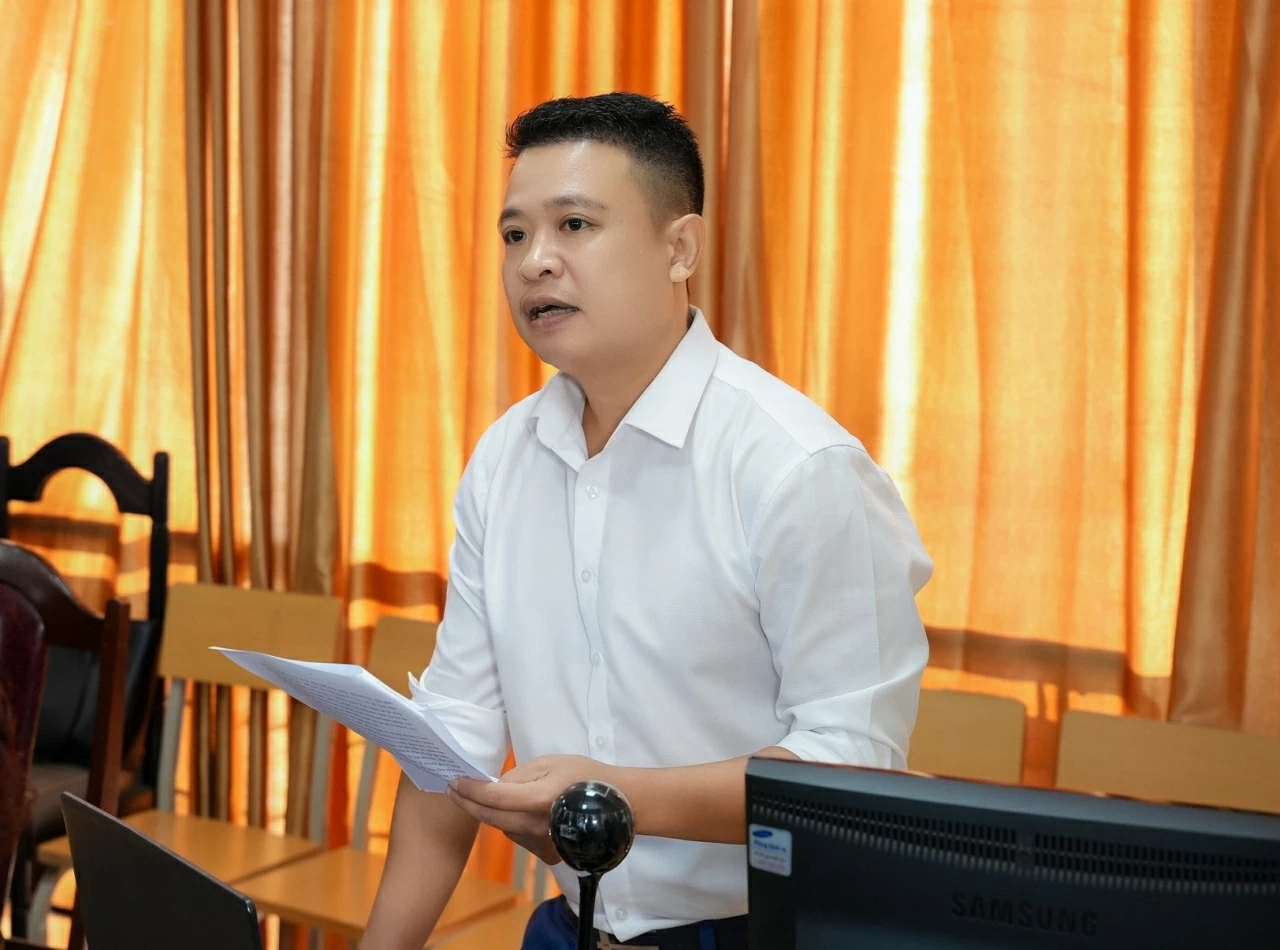 |
| Dr. Pham Hoang Manh Ha. (Photo: Courtesy by the author) |
On a deeper level, the day April 30 in modern life serves as a reminder of the value of peace. In a world still rife with conflict and instability, a nation's ability to maintain peace, stability, and continuous development is an achievement not to be underestimated. The younger generation needs to understand peace correctly. Therefore, April 30 should be viewed as a "dialogue space" between generations—a place where memories are shared, discussed, and approached openly, based on respect for history and a common aspiration for a developed nation.
If we imagine the Victory of April 30 as a river, the previous generation is the tumultuous upstream, while today's generation is the serene downstream, yet still carrying the historical sediment. The important thing is not just the direction of the river's flow but the awareness that everyone stands within the same current.
In this flow, the patriotism of the younger generation is not diminished but is expressed in different forms. If in the past, patriotism was associated with life-and-death choices like going to war, today it is manifested by standing firm in an open world full of opportunities but also challenges. The commonality between generations lies in the "cultural sediments": The spirit of prioritizing community and national interests over individual ones at crucial moments.
| “Patriotism is no longer measured by sacrifice on the battlefield, but by the quality of work and contributions in everyday life.” |
The spirit of "military-civilian unity" during the war—the vital bond—has not disappeared but has transformed into softer forms in peacetime. These include volunteer activities, relief campaigns, and cooperation during pandemics or natural disasters. In such cases, the "frontline" is not just the battlefield but can be a hospital, a flood zone, or any place where society needs help. "Military" no longer refers to soldiers with guns but to individuals on the front lines of social issues; "civilians" are no longer passive but become active agents ready to act.
The biggest difference lies in the mode of expression. Today's patriotism is not only shown through grand actions but is also present in everyday deeds: A startup project, a "Made in Vietnam" product, content spreading Vietnamese culture on digital platforms, or simply the awareness of adhering to the law and maintaining the national image.
However, the digital environment also poses challenges as patriotism can easily be "distorted" by emotions, extremism, or uncontrolled debates. Therefore, what is needed is not to awaken patriotism that has always existed but to guide it to become sensible, responsible, and constructive.
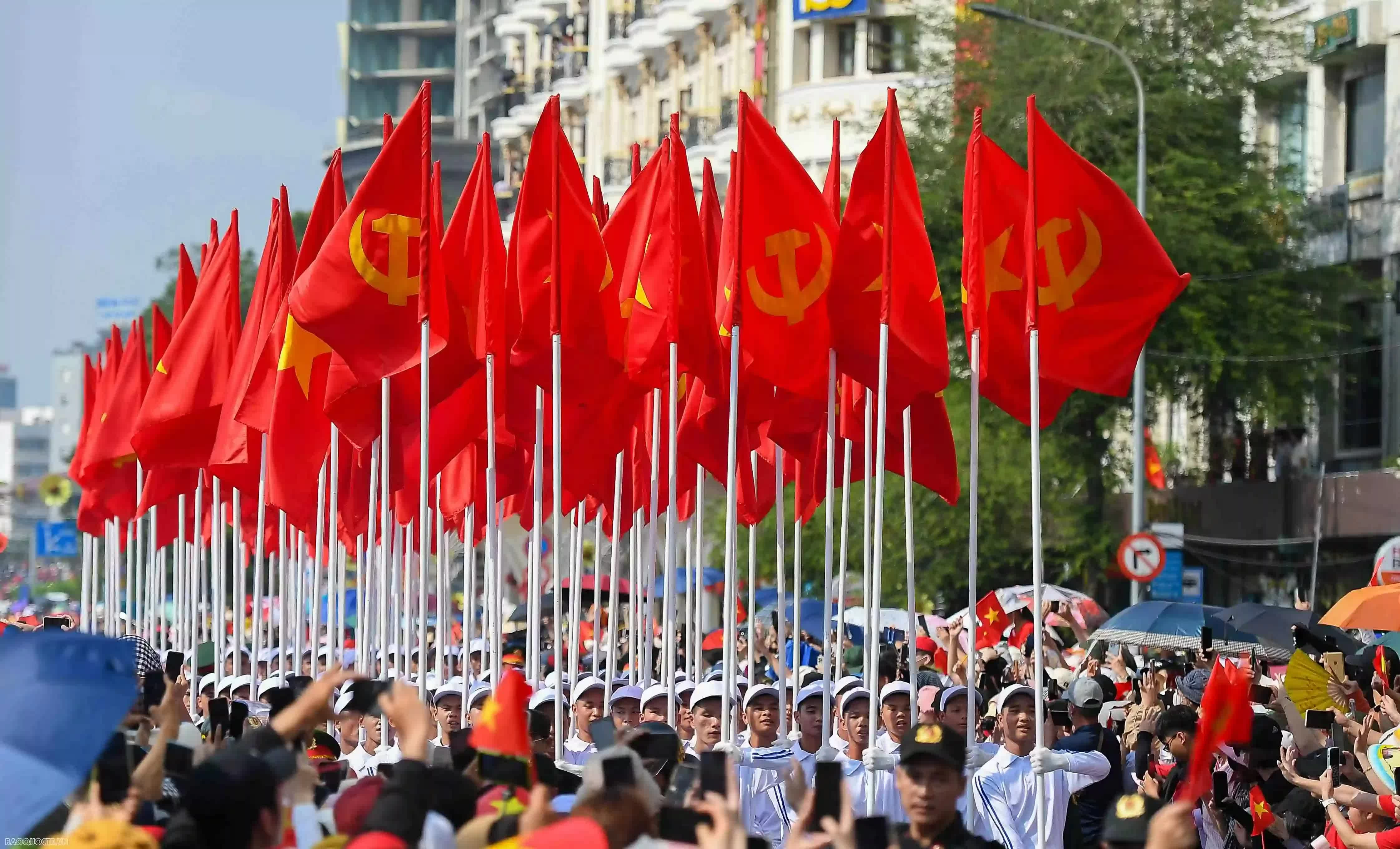 |
| In the context of national integration and development, transforming the spirit of the day April 30 from "historical memory" into a catalyst for action becomes urgent. (Photo: Nguyen Hong) |
Transforming memory into a catalyst for development
In nurturing that spirit, schools play a special role. Schools can be seen as a "responsible memory workshop," where history is not only transmitted but "reborn" through each generation. If teaching stops at memorization, history becomes rigid. But when knowledge is combined with experience, history returns to its essence: A story about people, choices, and the cost of those choices.
Experiential activities such as journeys to the roots, visiting historical sites, or commemorative programs, if organized correctly, will have a profound impact. A lecture can provide knowledge, but a moment of silence before rows of martyr tombstones can touch emotional depths. From there, gratitude naturally forms.
However, educating gratitude does not stop at emotions but must lead to civic awareness. Being grateful for the past without responsibility for the present easily turns into useless nostalgia. The important thing is to help young people answer the question: What will they do with what they have inherited?
From a foreign affairs perspective, history education and cultural experiences are also a "soft language" to tell Vietnam's story to the world. A young person who understands and shares history through personal experience will be much more convincing than stereotypical speeches. In this way, each individual becomes a "memory ambassador," carrying the image of a Vietnam that is both experienced and full of aspirations.
Nevertheless, there are still limitations when some activities remain formalistic, heavy on ceremony but lacking depth. The issue is not the quantity but the design of the experience: Does it create dialogue, reflection, and connection with reality? When schools fulfill their role well, gratitude will no longer be a slogan but a persistent "cultural reflex."
In the context of national integration and development, transforming the spirit of April 30 from "historical memory" into a catalyst for action becomes urgent. If this day is only preserved as a ritual, the memory will gradually fade. To turn memory into a catalyst, it needs to become an open question: In peacetime, what will the younger generation continue from the spirit of national unity?
If the previous generation completed the mission of gaining and maintaining independence, today's generation faces a different "battlefield": Economy, technology, culture, and national status. Therefore, the spirit of April 30 needs to be translated into the language of the era: Competitive capacity, work discipline, creativity, and civic responsibility.
Patriotism is no longer measured by sacrifice on the battlefield, but by the quality of work and contributions in everyday life. A researcher creating new knowledge, a worker maintaining integrity, all are specific manifestations of that spirit in peacetime.
For this transformation process to occur, two conditions are needed. First, the portrayal of history must be realistic enough for young people to see themselves in it. Second, the social environment must provide fair opportunities for them to contribute and be recognized. When these two factors converge, memory is no longer a distant past but becomes a vibrant resource.
Thus, the spirit of April 30 can be envisioned as a flame. The previous generation ignited it with ideals and sacrifices. The task of today's generation is to carry that flame further, illuminating new fields, ensuring the nation is not only unified in territory but also strong in internal strength and status in an ever-changing world.
Dr. Pham Hoang Manh Ha
Lecturer at Thanh Hoa University of Culture, Sports and Tourism