






Hanoi's craft villages: From 'living heritage' to a source of national soft power
Hanoi currently boasts approximately 1,350 craft villages, of which 331 are recognised as craft villages, traditional crafts, and traditional craft villages according to the criteria of Decree 52/2018/NĐ-CP. This scale not only reflects the rich history of Thang Long – Hanoi but also highlights the unique potential of a traditional craft ecosystem thriving amidst a dynamic and integrated urban environment.
Latest
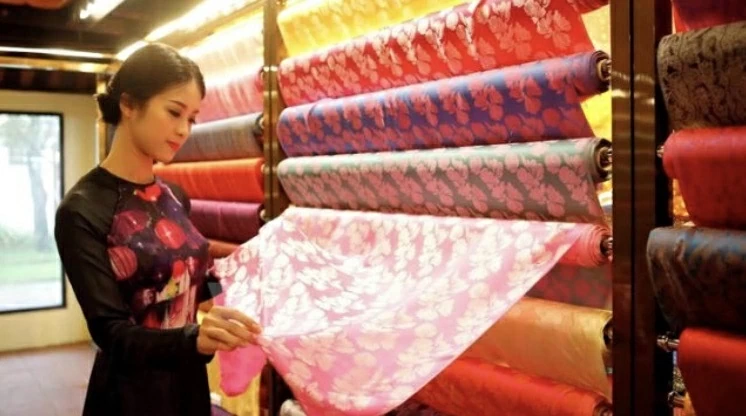 |
| Van Phuc Silk Village. |
From Bat Trang Pottery Village to Van Phuc Silk Village, from Quang Phu Cau Incense Village to Son Dong Craft Village, each craft village is a cultural space that embodies folk wisdom, craftsmanship, and community spirit. In the process of international integration, these villages not only preserve cultural memories but also help shape the image of a creative, culturally rich, and sustainably developing Vietnam.
Institutionalising preservation: From policy to action
In recent years, Vietnam has developed a relatively comprehensive policy framework to preserve and develop craft villages. At the national level, Decree 52/2018/NĐ-CP provides a legal basis for recognising and supporting the development of rural industries. Decision 801/QĐ-TTg (July 7, 2022) approved the Program for the Preservation and Development of Vietnamese Craft Villages for the 2021–2030 period, emphasising technological innovation, enhancing added value, and expanding markets.
For Hanoi, the amended Capital Law (2024) identifies cultural industries as a new pillar of the capital's development. In line with this, the city’s People's Committee issued Decision 282/QĐ-UBND (January 15, 2025) approving the comprehensive development plan for Hanoi's craft villages for the 2025–2030 period, with a vision to 2050.
Beyond documents, Hanoi has implemented plans for concentrated craft-village industrial clusters to reduce pollution; supported collective trademark registration and geographical indications; trained young human resources; and promoted trade both domestically and internationally. The city also integrates craft villages into its tourism development programs, OCOP, and digital transformation initiatives, thereby creating new growth momentum.
These steps demonstrate the local government's efforts to transform heritage into a development resource while ensuring harmony between preservation and modernisation.
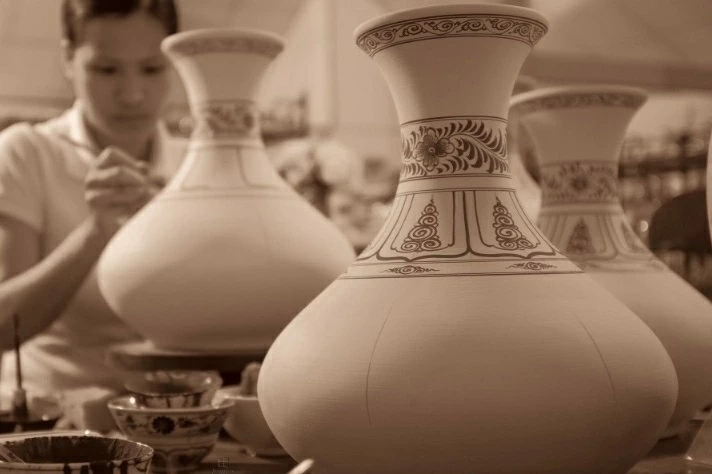 |
| Bat Trang Pottery Village. |
Craft guardians: Efforts from communities and artisans
Besides policy, the key factor for the sustainability of craft villages is the people.
In Bat Trang, many young artisans proactively learn industrial design, apply new firing technologies, and develop product lines that suit international tastes. In Van Phuc, silk weaving facilities invest in design improvements, blending tradition with contemporary fashion. In Son Dong, sculptors not only restore ancient statues but also participate in large-scale art projects.
Many families have expanded experiential models, welcoming international guests to participate in pottery-making, silk weaving, and fostering direct cultural exchange between Vietnam and the world. In the context of e-commerce development, many facilities have proactively promoted products on digital platforms, reaching global customers.
These efforts reflect the adaptability of craft village communities to market changes and integration trends.
Learning from International Experiences to Elevate
Experiences from Kyoto show that preserving traditional crafts can be linked with artisan recognition systems and integrated into cultural tourism. The One Village One Product (OVOP) model in Japan and the One Tambon One Product (OTOP) in Thailand have succeeded in standardising quality and building international brands for local products.
In Gwangju, craft villages are integrated into the creative industry ecosystem, organising festivals and experiential spaces to attract global tourists.
These models suggest to Hanoi the importance of design, creativity, and international marketing – factors that help tradition enter the global value chain.
From Preservation to Elevating Soft Power
For Hanoi, developing craft villages is not only about maintaining livelihoods for rural residents but also about affirming Vietnamese cultural identity in the context of globalisation.
Linking craft villages with experiential tourism, digital transformation, e-commerce, and protection of geographical indications is opening opportunities for Hanoi's handicrafts to access international markets. When organised and promoted methodically, each pottery product, silk piece, or sculpture becomes not just merchandise but a “cultural ambassador”.
In the capital's development strategy for 2030 and the vision to 2050, Hanoi's craft villages are identified as an essential component of the cultural industries. This field is increasingly contributing positively to economic growth and public diplomacy.
Thus, preserving and developing craft villages is not about nostalgia but an investment in the future. When tradition is empowered by creativity, technology, and international cooperation, Hanoi's craft villages will continue to shine as an irreplaceable part of Vietnam's identity in the process of global integration.
| Hanoi Police deploys plan to ensure absolute security for the 14th National Party Congress WVR - On January 12, Hanoi Police organized a conference to thoroughly disseminate and implement the comprehensive plan for deploying forces to ensure security and ... |
| Hanoi hosts artistic fireworks to celebrate the success of the 14th National Party Congress WVR - On January 23 evening, Hanoi organized a large-scale artistic fireworks display at the My Dinh National Stadium to celebrate the success of the ... |