







Hanoi Convention highlights Vietnam’s growing position in digital governance and strong commitment to multilateralism: Australian Ambassador
WVR - The United Nations Convention against Cybercrime, also known as the Hanoi Convention, will take place in Hanoi on 25–26 October under the theme “Combating Cybercrime - Sharing Responsibility - Shaping the Future.” On this occasion, Australian Ambassador to Vietnam Gillian Bird spoke with The World and Vietnam Report about the significance of the Convention and Vietnam’s growing position on the global cybersecurity landscape.
Latest
 |
| Australian Ambassador to Viet Nam Gillian Bird. (Photo: Australian Embassy in Viet Nam) |
Your Excellency, the signing of the United Nations Convention against Cybercrime in Ha Noi marks an important milestone. In your view, what is the greatest significance of this event, not only for global efforts to combat cybercrime but also for Viet Nam’s role on the international stage?
The signing of the United Nations Convention against Cybercrime in Hanoi, the Hanoi Convention, marks a pivotal moment in global efforts to address the escalating threat of cybercrime. In today’s interconnected world, cyber threats transcend borders, impacting governments, businesses, and individuals alike. This Convention is essential to promoting an open, secure, stable, and accessible cyberspace for all.
The Hanoi Convention also complements existing UN frameworks for responsible state behavior and reinforces the importance of multilateralism in tackling transnational challenges. Its emphasis on human rights safeguards and data privacy is particularly important, ensuring that efforts to combat cybercrime do not compromise fundamental freedoms.
Vietnam’s role as host of the signing ceremony is a testament to its growing leadership in digital governance and its commitment to multilateralism, which Australia welcomes and has been pleased to support for many years. This is reflected by our Assistant Minister for Foreign Affairs and Trade, the Hon Matt Thistlethwaite MP, visiting Hanoi to sign the Convention on behalf of Australia.
In the current context, the Hanoi Convention represents a timely and necessary step toward a safer, more secure digital future. It is not only a legal instrument but a symbol of global solidarity in defending the integrity of cyberspace for all.
The signing ceremony of the Hanoi Convention will be held on 25–26 October under the theme “Combating Cybercrime – Sharing Responsibility – Shaping the Future.” How do you perceive the message conveyed by this theme, especially as the world faces new challenges arising from AI and digital technologies?
Vietnam’s proposed theme for the signing ceremony of the UN Convention against Cybercrime “Combating Cybercrime - Sharing Responsibility - Shaping the Future” is both timely and visionary. The theme reflects a holistic understanding that cyber threats are not confined by borders and that no single nation can tackle them alone. It underscores the importance of shared responsibility, where governments, international organizations, private sector actors, and civil society must collaborate to build a safer digital environment.
Australia strongly supports this theme, as it aligns with our own strategic approach to combatting cybercrime and international cooperation. We also see this theme as a reflection of Vietnam’s leadership in the region. Hosting this event and proposing such a forward-looking message shows real commitment to global cooperation. Australia is proud to stand alongside Vietnam and other partners in this effort.
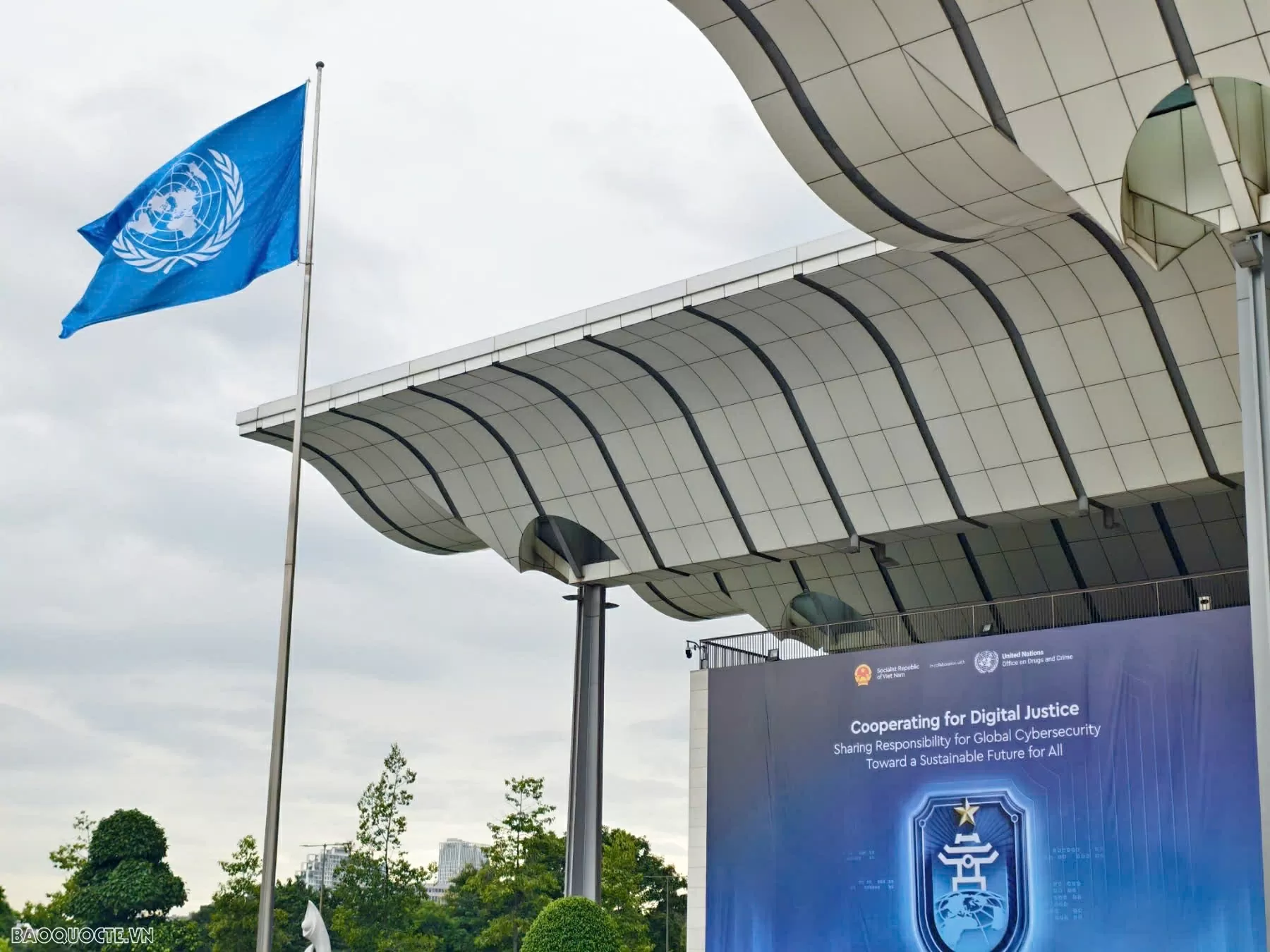 |
| The Hanoi Convention complements and reinforces existing United Nations frameworks while underscoring the importance of multilateralism in addressing transnational challenges. (Photo: Trung Tran) |
In recent years, cooperation between Viet Nam and Australia in the field of cybersecurity has grown increasingly substantive. From your perspective, what are the most notable outcomes that best reflect the spirit of the Comprehensive Strategic Partnership between the two countries in addressing cyber challenges?
Vietnam’s participation in the negotiation of the Hanoi Convention aligns closely with the broader framework of the Australia-Vietnam Comprehensive Strategic Partnership (CSP), which was signed in March 2024. The CSP includes commitments to deepen cooperation in digital transformation and innovation, cybersecurity and critical technologies, regional and international law and governance, and peacekeeping and multilateral engagement.
The launch of the Australia-Vietnam Strategic Technologies Centre in June 2025 is a key example of our practical cooperation. The centre is a dynamic hub that will drive digital transformation and foster technological and industry innovation and is a demonstration of Australia and Vietnam collaborating on digital connectivity and cybersecurity issues.
Australia looks forward to deepening our cyber cooperation with Vietnam, following the recent signing of the bilateral Memorandum of Understanding (MoU) on Cyber Affairs and Critical Technology Cooperation during the visit of Australia’s Minister for Foreign Affairs Senator Penny Wong in August 2025. The MoU will support enhanced cooperation on information sharing; cyber incident response and coordination; developing a sustainable skills and knowledge pipeline; and bolstering our engagement on standards in multilateral fora.
The Hanoi Convention, as a UN treaty on cybercrime, reinforces our shared interests in respecting international law, committing to a secure and inclusive digital environment and supporting multilateral frameworks to address global challenges.
Australia looks forward to attending the signing ceremony at the Ministerial Level and is supporting Vietnam to deliver a successful, well attended event. We have funded a UN Office on Drugs and Crime advance team to provide on the ground support; sponsored delegations from Pacific Island Countries to attend the signing ceremony; and funded Australia’s RMIT University to deliver a “Cybercrime Hackathon” side-event.
We are committed to working with Vietnam on cyber capacity-building, both in Vietnam and in the region, and working together on shaping, upholding, and defending international cyber rules, norms and standards, including through the Hanoi Convention.
Australia is among the countries with one of the most advanced policy and legal frameworks for combating cybercrime. Could you share some of Australia’s best practices or exemplary models that Vietnam and other regional countries could learn from in the process of implementing the Hanoi Convention?
Australia has a strong framework of criminal offences and law enforcement powers, including comprehensive computer, telecommunications and financial information offences in our Criminal Code which address both cyber-dependent crimes, such as computer intrusions and denial of service attacks, and cyber-enabled crimes such as online fraud and child sexual exploitation and abuse. Since the early 2000s, we have continuously updated our cybercrime offence framework to respond to the ongoing and serious threat posed by online child sexual abuse or due to emerging issues such as the non-consensual sharing of intimate images, for which Australia introduced offences for in September 2024.
Australia also engages strongly in international and intergovernmental forums such as the Council of Europe Convention on Cybercrime Committee and the United Nations Commission on Crime Prevention and Criminal Justice, to discuss issues and emerging trends in cybercrime, facilitate international cybercrime cooperation, support countries to criminalise cybercrime conduct and work collectively to reduce the ability for cybercriminals to take advantage of the transnational nature of cybercrime.
We strongly believe in a multistakeholder approach to effectively combat cybercrime, involving law enforcement and criminal justice policy responses, but also engaging with industry and civil society to uplift cybercrime detection and prevention capabilities.