







ASEAN-Russia Commemorative Summit: From Kazan, reflecting on the value of dialogue and trust
WVR - Prime Minister Le Minh Hung's visit to Kazan underscores Vietnam's role in promoting international dialogue and cooperation.
Latest
Prime Minister Le Minh Hung's participation in the ASEAN-Russia Summit commemorating 35 years of relations in Kazan, Russian Federation, from June 16-18, is not only a significant high-level diplomatic activity but also sends a clear message about a proactive, responsible Vietnam, loyal to traditional friends, steadfast in its foreign policy of independence, self-reliance, and actively contributing to peace, stability, and development cooperation in the region.
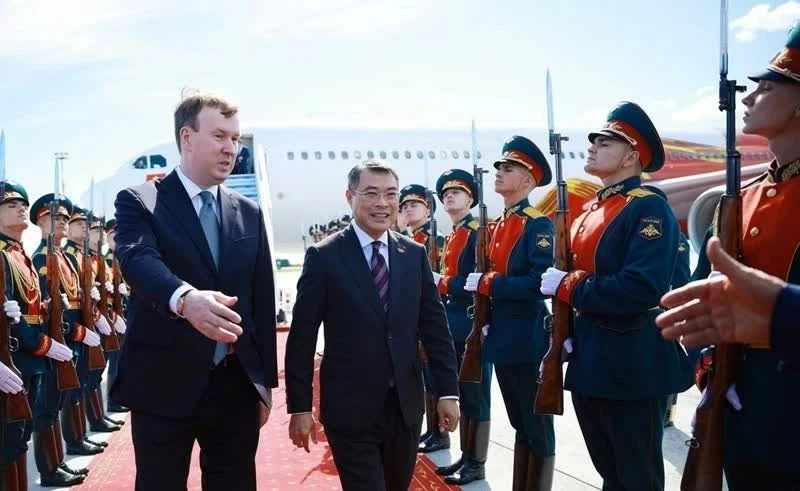 |
| Welcome ceremony for Prime Minister Le Minh Hung at Kazan International Airport. (Photo: Bao Chi) |
Dialogue – A civilized approach to building trust
In a world undergoing profound changes, the value of dialogue has perhaps never been more essential than it is today. Strategic competition among major powers is increasing, conflicts are prolonged, and disruptions in supply chains, energy, food, technology, and international trust are directly impacting every nation and region. In this context, the ASEAN-Russia Summit commemorating 35 years of relations held in Kazan carries significance beyond a typical commemorative event.
The ASEAN-Russia dialogue partnership was established in 1991 and upgraded to a Strategic Partnership in 2018. This summit, occurring nearly five years after the ASEAN-Russia online summit in October 2021, demonstrates the highest political commitment from both sides to the ASEAN-Russia Strategic Partnership. It also serves as evidence that dialogue and cooperation remain effective methods for creating a peaceful, secure, and stable environment conducive to development.
Prime Minister Le Minh Hung's visit thus conveys a clear message: Vietnam believes in dialogue, promotes dialogue, and seeks to translate dialogue into substantive cooperation. Dialogue is not to avoid differences but to understand each other better; not to delay action, but to find common ground, narrow gaps, and create more development opportunities. Dialogue, when based on respect for international law, independence, sovereignty, and the legitimate interests of all parties, is the most civilized way for nations to coexist, cooperate, and move towards the future.
This is also the consistent spirit in Vietnam's foreign policy: Independence, self-reliance, resilience; peace, friendship, cooperation, and development; diversification and multilateralization of foreign relations; being a friend, a reliable partner, and a responsible member of the international community.
During this visit, Vietnam not only participated in an important multilateral conference but also demonstrated the responsibility of a nation that values ASEAN, values its relationship with the Russian Federation, and hopes to contribute positively to strengthening trust and expanding the space for cooperation between the two regions.
Notably, Prime Minister Le Minh Hung's visit to Russia is also his first official visit to the Russian Federation in his new role – a partner with a traditional, close friendship and a Comprehensive Strategic Partnership with Vietnam. For Vietnam, the relationship with Russia is not only measured by diplomatic documents or cooperation mechanisms. It is also a relationship built on history, memories, sharing, trust, and affection between the peoples of the two countries over generations.
In the memories of the Vietnamese people, Russia is associated with years of study, work, research, cooperation, with experts, engineers, scientists, students, artists, projects, and friendships that have withstood the test of time. This cultural-humanistic foundation gives the Vietnam-Russia relationship a special depth. However, in the new era, traditional affection needs to be revitalized with modern drivers: trade, investment, science and technology, digital transformation, energy, education and training, tourism, cultural industries, and people-to-people exchanges.
Therefore, the important message of the visit is to renew traditional relations with a new development mindset. Loyalty does not mean standing still in nostalgia. Loyalty must be demonstrated through more effective cooperation programs, more flexible mechanisms, more specific projects, and more practical benefits for businesses, localities, and the people of both countries. This is how traditional friendship becomes a development resource in the new era.
On the ASEAN dimension, Prime Minister Le Minh Hung's participation continues Vietnam's proactive and responsible contributions at the 48th ASEAN Summit and the successful hosting of the 3rd ASEAN Future Forum in Hanoi. From Hanoi to Kazan, a consistent line of thought can be observed: Vietnam not only accompanies ASEAN but also contributes to promoting ASEAN's renewal of thinking, enhancing adaptability, strengthening solidarity, and asserting its central role in the evolving regional architecture.
For ASEAN to maintain its central role, it must first maintain unity. But today's unity is not just consensus in declarations but must be consensus in action. ASEAN needs to shift more strongly from process-oriented thinking to results-oriented thinking, from consultation to substantive coordination, from cooperation frameworks to problem-solving capabilities. This is also the spirit that Vietnam can contribute to the ASEAN-Russia relationship in the coming period.
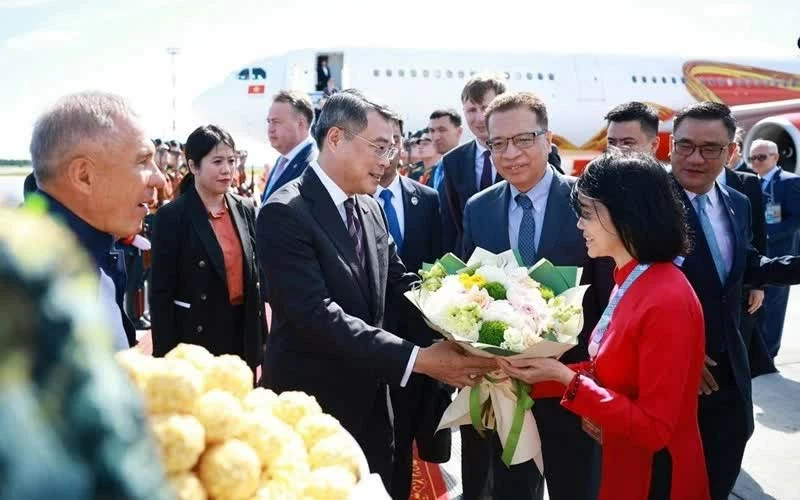 |
| Welcome ceremony for Prime Minister Le Minh Hung at Kazan International Airport. (Photo: Bao Chi) |
Vietnam – A reliable bridge, loyal partner, responsible member
One of the key highlights of this visit is Vietnam's role as a "bridge" in ASEAN-Russia relations. The overarching goal of the visit is to leverage Vietnam's bridging role, promote consensus, contribute practical directions, and create new momentum for ASEAN-Russia relations. This is especially significant as Vietnam will assume the role of coordinator for ASEAN-Russia relations from 2027 to 2030.
This bridging role is not coincidental. Vietnam is an active, responsible member of ASEAN, always considering ASEAN a strategic priority in its foreign policy. At the same time, Vietnam has a traditional friendship and Comprehensive Strategic Partnership with the Russian Federation. The intersection of these two foundations gives Vietnam a special position: understanding the needs, priorities, and interests of ASEAN while having deep trust with Russia. From this position, Vietnam can help connect interests, promote consensus, suggest initiatives, and make ASEAN-Russia cooperation more substantive.
In international relations, a bridge is not just someone standing in the middle. A bridge must be someone who creates more trust, opens new pathways, and helps parties see common interests and act together. With the role of coordinating ASEAN-Russia relations in the upcoming period, Vietnam will have greater opportunities to contribute to shaping cooperation priorities, especially in areas with potential but not yet fully exploited, such as trade, science and technology, digital transformation, non-traditional security, education and training, tourism, people-to-people exchanges, and especially energy.
These are areas that are not only meaningful for ASEAN-Russia relations but also closely align with Vietnam's development needs. An economy like Vietnam, which is rising strongly, needs to expand markets, diversify partners, ensure energy security, enhance scientific and technological capabilities, develop human resources, and strengthen educational, tourism, and cultural connections. Therefore, participating in promoting ASEAN-Russia relations also opens up more development space for the country.
Notably, Vietnam hopes to contribute to expanding cooperation space between ASEAN and the Eurasian region. As a leading ASEAN country in cooperation with the Eurasian Economic Union through the Vietnam-EAEU Free Trade Agreement signed in 2015, Vietnam has practical experience in promoting trade, investment, logistics, supply chains, and business connectivity. This can be a very specific contribution from Vietnam: turning good political relations into concrete flows of economy, trade, investment, technology, and people-to-people exchanges.
From a development perspective, international cooperation only truly matters when it is transformed into tangible benefits. A successful summit is not only about solemn declarations but also about removing barriers, creating new opportunities, providing businesses with more markets, localities with more partners, and people with more conditions for study, work, tourism, exchanges, and development. This is the very practical requirement of diplomacy in the new era: diplomacy must serve development, serve the people, and serve national interests.
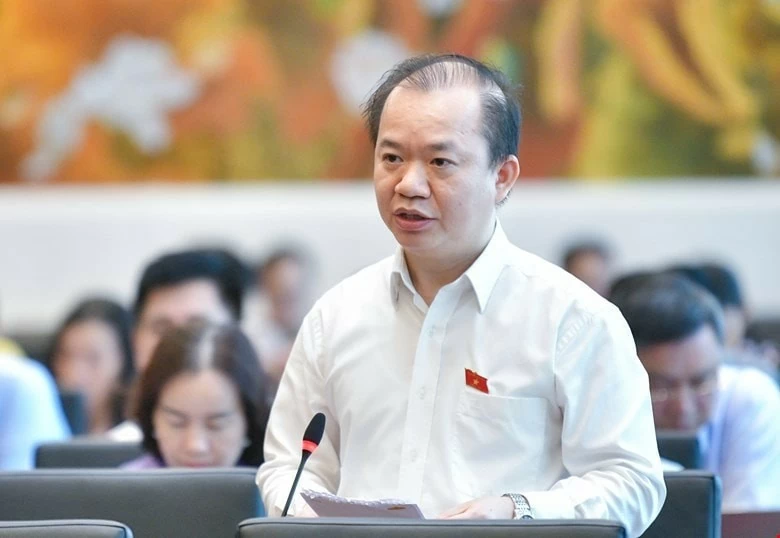 |
| National Assembly Deputy Bui Hoai Son. (Source: National Assembly) |
Prime Minister Le Minh Hung's visit is also expected to include important bilateral activities, including meetings with Russian President Vladimir Putin and working with the Head of the Republic of Tatarstan. These activities demonstrate Vietnam's multi-layered, substantive approach: strengthening strategic direction at the highest level while expanding cooperation with local entities with potential in industry, science, education, culture, tourism, and innovation.
In today's world, relations between countries are not only operated by governments. Localities, businesses, universities, research institutes, communities, and cultural-social organizations are all important entities. When cooperation reaches localities, businesses, universities, cultural spaces, and communities, foreign relations gain a sustainable social foundation. At that point, diplomacy is not just a matter of conference rooms but becomes a vibrant flow in the development life.
From Kazan, three key messages from Vietnam
First, Vietnam is steadfast in choosing peace, dialogue, and cooperation. In a world full of uncertainties, Vietnam does not choose extremism, confrontation, or isolation. Vietnam chooses the path of dialogue, balance, construction, respect for international law, and seeking common denominators for peace, stability, and development.
Second, Vietnam remains loyal to traditional friends but always renews its approach. The Vietnam-Russia relationship is a valuable asset built over generations. But this asset only truly holds sustainable value when enriched with modern, effective cooperation, suitable to the development needs of each country in the new era.
Third, Vietnam proactively contributes to ASEAN's future and the regional cooperation structure. As an active member of ASEAN and the coordinator for ASEAN-Russia relations from 2027 to 2030, Vietnam has the opportunity to clearly demonstrate its courage, intelligence, responsibility, and consensus-building capacity.
As the country enters a new era of development, foreign affairs are not just about expanding relations but also about expanding national development space. Every high-level visit, every multilateral cooperation mechanism, every dialogue initiative needs to be viewed in relation to the larger goal: enhancing the country's position, strengthening the peaceful environment, mobilizing external resources, harnessing internal strength, serving the people, and contributing responsibly to the international community.
Prime Minister Le Minh Hung's visit to Kazan is thus a noteworthy milestone in Vietnam's foreign activities in 2026. From Kazan, Vietnam's message is sent simply yet profoundly: cherishing the past, being proactive in the present, responsible for the future; valuing dialogue, promoting cooperation, strengthening trust; building a peaceful, stable, inclusive, and sustainable region with ASEAN and partners.
In today's world, trust is a precious resource. Dialogue is the way to preserve trust. Cooperation is the way to turn trust into development. And Vietnam, with its foreign policy forged through history, its growing position in ASEAN, and its loyal friendship with traditional partners, continues to contribute to making these values more practical, vibrant, and beneficial for the region and for the country's future development.


