






Finance and accounting for the promotion of sustainable development in the private sector
WVR - From September 26-27, the International Conference “Finance and accounting for the promotion of sustainable development in the private sector” took place at the Academy of Finance in Hanoi.
Latest
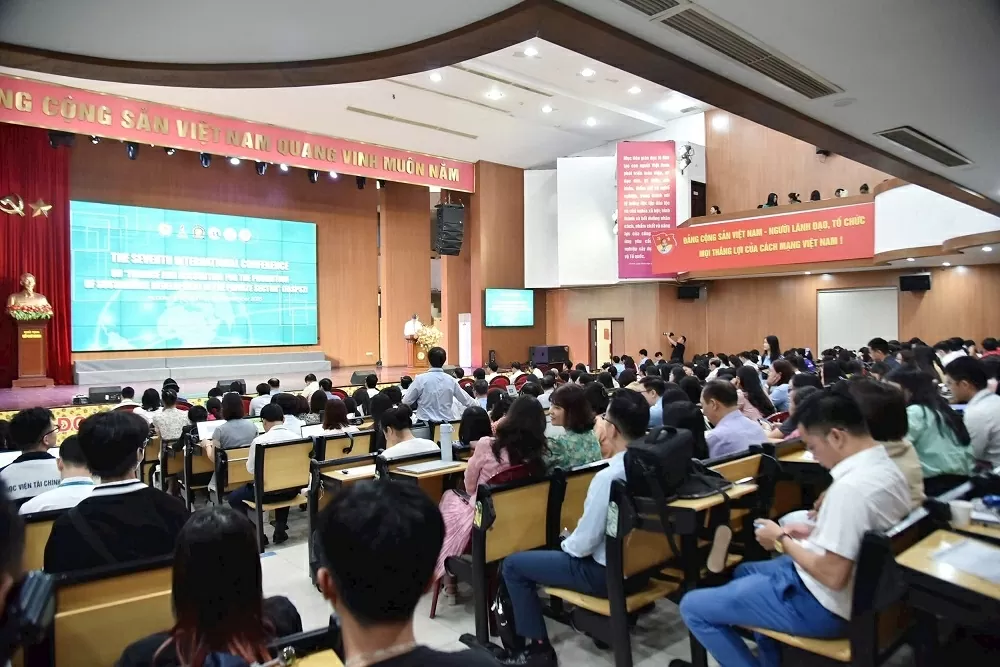 |
| Overview of the International Conference 'Finance and accounting for the promotion of sustainable development in the private sector”'. (Photo: Academy of Finance) |
The conference was co-organized by the Academy of Finance, the Academy of Policy and Development, the National Institute for Economics and Finance, the University of Finance – Marketing, University of Finance and Accounting and the University of Finance and Business Administration.
The symposium aims to provide an international forum for academics, researchers, practitioners, and policymakers to present high-quality research, exchange knowledge, and discuss critical challenges and opportunities in promoting sustainable development in the private sector through finance and accounting. It also serves as an excellent occasion for fostering collaboration between Vietnamese and international scholars.
The role of the private sector
In his opening remarks, Director of the Academy of Finance, Associate Professor, Dr. Nguyen Dao Tung emphasized that the private economy has gradually affirmed its role as a crucial driver of the nation's economic development.
The 5th Central Committee of the 12th Congress issued Resolution No. 10-NQ/TW on developing the private economy into a significant driver of the socialist-oriented market economy, with specific goals and five groups of solutions to encourage and support the development of the private economic sector. This is a highly significant resolution affirming the role and position of the private economic sector in the cause of national construction and defense.
From recognizing and creating opportunities for private economic development at the 6th Congress to emphasizing that the private economy “truly becomes a crucial driver in economic development” at the 13th Congress, timely and accurate policies have spurred the growth of the private economy, strongly affirming its position and role in the socialist-oriented market economy. Notably, Resolution No. 68-NQ/TW on private economic development is a strong affirmation by the Party of the pivotal role and foremost importance of the private economic sector in the country's development process.
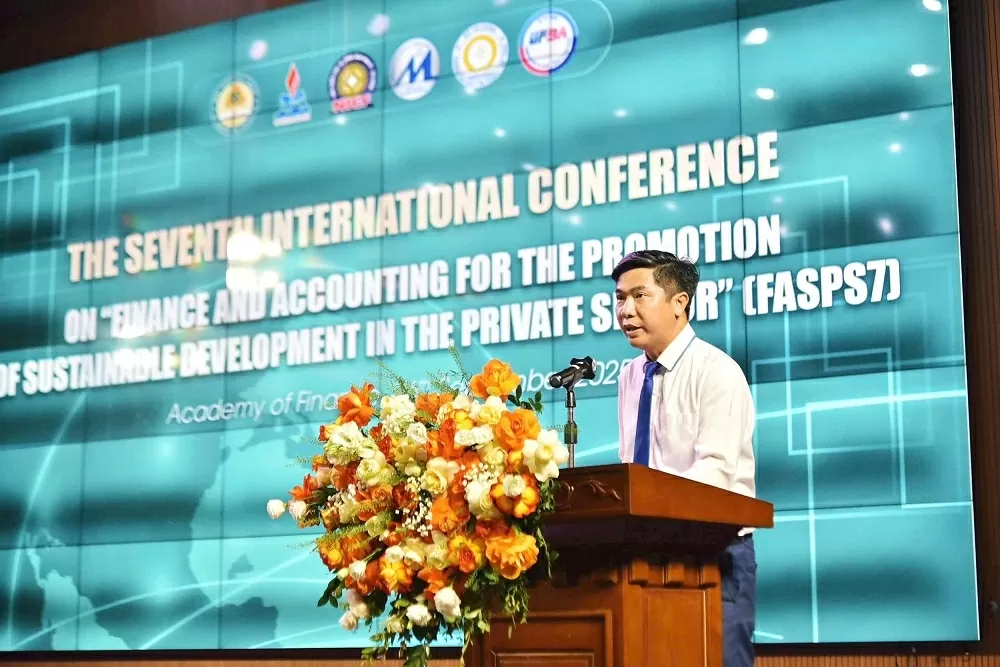 |
| Director of the Academy of Finance, Associate Professor, Dr. Nguyen Dao Tung delivered his opening remarks. (Photo: Academy of Finance) |
According to Associate Professor Dr. Nguyen Dao Tung, alongside resolutions on renewing the construction and implementation of laws to meet the demands of national development in the new era; on science, technology, innovation, and digital transformation; international integration marks a significant shift in national development thinking, unlocking social resources and creating new development spaces for Vietnam amid the rapidly changing and challenging era.
Currently, with over 940,000 private enterprises in operation, more than 5 million individual business households, and tens of millions of workers, this sector contributes about 50% of GDP, 30% of total budget revenue, and over 80% of employment for the entire society. Vietnam aims to have over 2 million enterprises by 2030, equivalent to 20 enterprises per 1,000 people. Among them, at least 20 large enterprises will participate in the global value chain.
The entrepreneurial team is growing stronger, aspiring to legitimate wealth, continuously enhancing business and management capabilities. Corporate social responsibility, business ethics, and culture are gradually being elevated. Nearly 40 years of implementing the renovation policy have increasingly affirmed the role of the private economic sector in Vietnam's economy. The achievements of the private economy are the clearest evidence of the correctness and suitability of choosing a socialist-oriented market economy model, serving as a basis for further research and improvement of the economic institution, thereby enabling Vietnam to continue integrating and developing.
However, the private economic sector still faces many limitations and challenges in its development process, requiring several solutions for this sector to make significant contributions to Vietnam's economy.
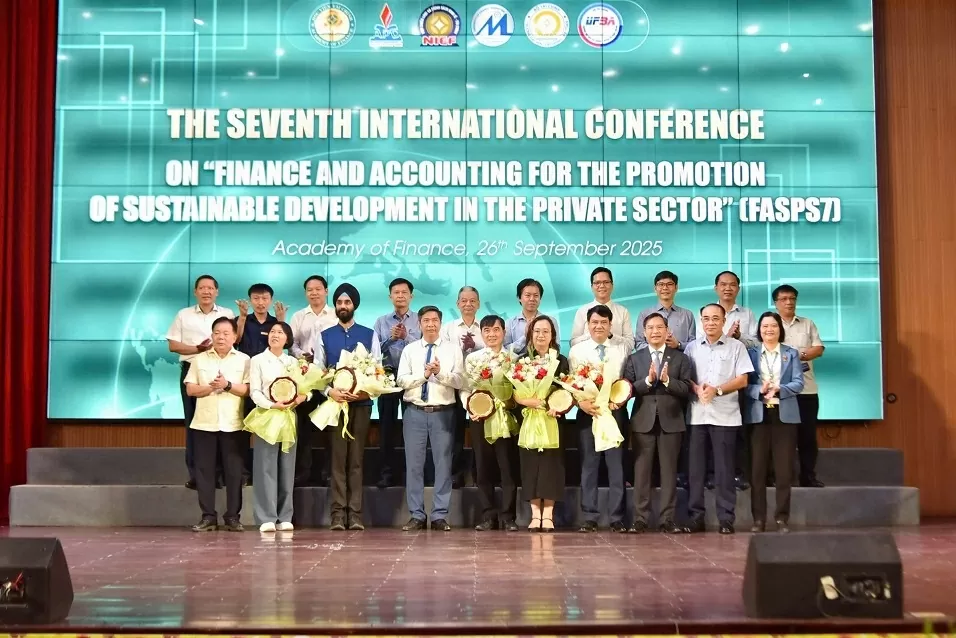 |
| Awarding scholars with outstanding contributions to the conference. (Photo: Academy of Finance) |
Sharing experiences, sparking ideas
The Director of the Academy of Finance expressed delight that this year's conference attracted the participation of numerous scientists from universities, academies, and research institutes both domestically and internationally, especially the collaboration of co-organizing schools and institutes. The conference attracted nearly 800 scholars from various countries participating in different forms through technology platforms and direct attendance.
The organizing committee received over 180 papers and selected, edited 168 quality papers for publication in this international conference's proceedings.
The conference was organized with two plenary sessions and six thematic discussion sessions, focusing on topics such as Accounting - Auditing in private enterprise management; Corporate Finance, International Finance, Business Administration, Tax Policy, and financial support for small and medium enterprises; Mobilizing capital for the private sector; Applying digital technology in financial management and information transparency, Macroeconomics and Microeconomics for private economic development.
The research papers, rich in scientific content, showcased diverse approaches to private economic development. The conference analyzed the context, opportunities, and challenges in developing Vietnam's private economy, particularly from financial, accounting, and management perspectives, aligning with Resolution No. 68-NQ/TW. It specifically focused on sharing international experiences in applying modern financial-accounting tools, digital technology, artificial intelligence, and big data analytics to enhance the competitiveness of the private sector.
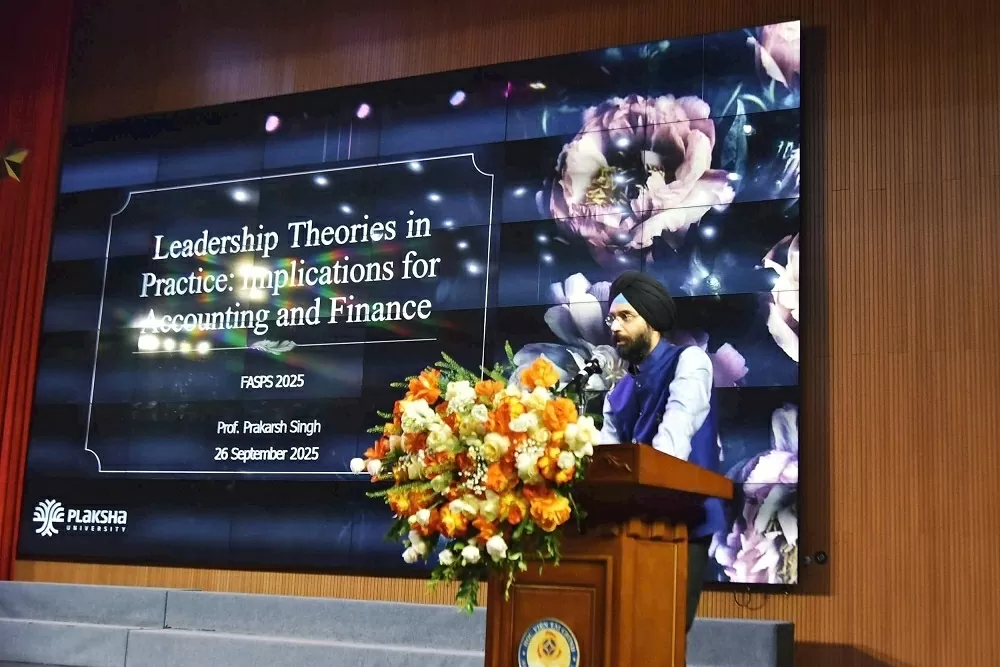 |
| Professor Prakarsh Singh, Chair Professor of Economics at Plaksha University (India) presented presented research on "Leadership theories in practice: Implications for accounting and finance". (Photo: Academy of Finance) |
At the conference, Professor Prakarsh Singh, Chair Professor of Economics at Plaksha University (India), presented research on the critical relationship and practical implications of leadership theories in the accounting and finance fields. By analyzing key leadership models such as transformational, transactional, and servant leadership in a corporate context, Professor Prakarsh Singh highlighted how leadership styles influence the quality of financial reporting, professional ethics, risk management, and investment decision-making performance.
According to the Indian scholar, in an environment pressured by high transparency and compliance, effective leadership principles are not only drivers of innovation but also key factors in building a culture of integrity necessary to maintain stakeholder trust.
He also proposed methods to integrate leadership theory into training and professional development programs, equipping accounting and finance professionals with the necessary skills to navigate the complex challenges of the global market...
At the conference, experts proposed solutions and policy recommendations: Completing laws on taxation, accounting, auditing, corporate finance; Enhancing financial information transparency of private enterprises; Promoting high-quality financial-accounting human resource training; Facilitating access to capital, especially credit and international capital; Linking scientific research with practical business management.
After summarizing and evaluating the research papers, the conference's expert council selected and awarded the nine best papers. These papers featured scientific research methods and in-depth content, sparking many future research ideas.
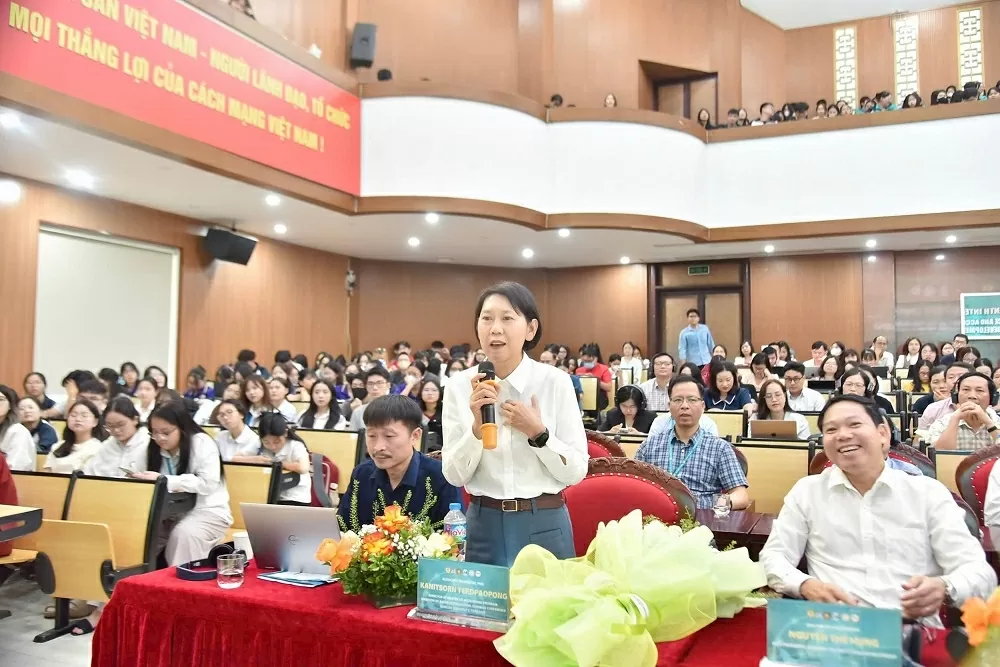 |
| Dr. Kanitsorn Terdpaopong from Rangsit University (Thailand) shared her thought at the conference. (Photo: Academy of Finance) |