

Prime Minister Pham Minh Chinh urges open institutions for robust private economic growth
WVR - Prime Minister Pham Minh Chinh emphasized the role of open institutions, procedural reforms, and supportive policies to drive robust private economic growth.
Latest
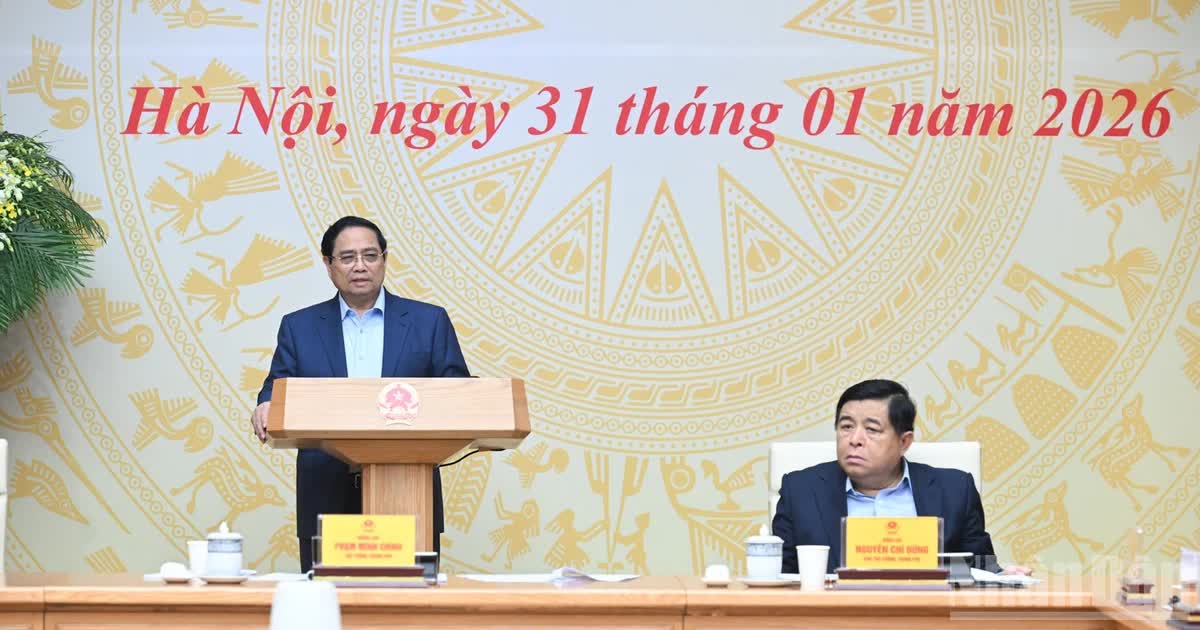 |
| Prime Minister Pham Minh Chinh speaking at the fourth session of the Steering Committee. (Photo: Tran Hai) |
On the morning of January 31, at the Government Headquarters, Prime Minister Pham Minh Chinh, Head of the National Steering Committee for the implementation of the Politburo's Resolution No. 68-NQ/TW on private economic development, chaired the fourth session of the Steering Committee. Also in attendance were Deputy Prime Ministers Nguyen Chi Dung and Ho Duc Phoc.
In his opening remarks, Prime Minister Pham Minh Chinh highlighted that by 2025, the country's economy had achieved significant milestones across various sectors, fulfilling the objectives set by the 13th Party Congress, laying the groundwork, momentum, and confidence for national development, including private economic growth.
According to the Prime Minister, trust is crucial, especially the trust of the international community and private enterprises. Over the past year, foreign direct investment (FDI), foreign indirect investment, and FDI disbursement have surged, reflecting businesses' confidence in the country's economic development.
The Prime Minister urged delegates to evaluate the bright spots to build on successes and draw lessons from leadership and direction. Is it about creating an open, equitable business investment environment with the spirit of “A facilitating state, pioneering enterprises, public-private partnership, a prosperous nation, happy citizens, and benefiting entrepreneurs”? The upcoming focus should be on promoting green transition and structural transformation in business activities. An analysis is needed of what has been achieved since the issuance of Resolution No. 68-NQ/TW, what remains unaccomplished, and what actions the State and citizens should take in the spirit of harmonizing benefits and sharing risks.
Regarding unresolved issues, the Prime Minister noted that administrative procedures in some areas for businesses remain problematic. Has the reduction of compliance costs for citizens and businesses, and infrastructure development to lower input costs been effectively implemented, and how is governance being managed?
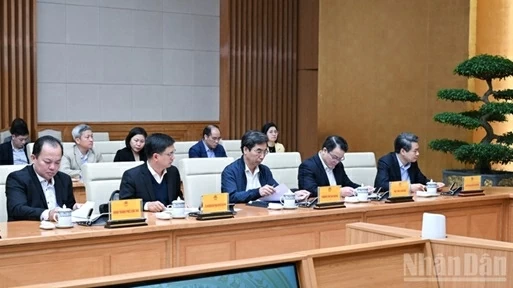 |
| Delegates attending the session. (Photo: Tran Hai) |
The Prime Minister emphasized the need to clarify how the motto “open policies, seamless infrastructure, smart management” has been comprehensively implemented. These are issues that require input and continuous improvement, especially in institutional frameworks; how to implement greening, digitization, resource optimization, and benefit harmonization in the execution process to ensure private economic development as the most crucial driver. Based on this, adjustments in the implementation of Resolution No. 68-NQ/TW are necessary.
The Prime Minister stated that the current situation is evolving rapidly, necessitating continuous institutional refinement to meet real-world demands and deliver tangible results.
From practical challenges, the Prime Minister hopes delegates will propose adjustments to make institutions more open, thereby promoting private economic growth, FDI, and foreign indirect investment.
The Prime Minister also announced that by February 9, procedures for the international financial centers in Ho Chi Minh City and Da Nang are expected to be completed, allowing these centers to operate stably.
The Prime Minister urged delegates to analyze how monetary and fiscal policies impact private economic development and what adjustments are needed. Monetary and fiscal policies must be harmonious and supportive to foster economic growth, especially as the global macroeconomic environment changes rapidly, requiring us to adapt accordingly.
The Prime Minister affirmed that in 2026, the government aims to maintain macroeconomic stability, control inflation, ensure major balances, manage public debt, government debt, foreign debt, and budget deficits; stability for development, development for stability, benefiting both citizens and businesses.
* The Ministry of Finance reported that to institutionalize the Politburo's Resolution No. 68-NQ/TW, the National Assembly issued Resolution No. 198/2025/QH15 on May 17, 2025, regarding special mechanisms and policies for private economic development. The government issued Resolutions No. 138/NQ-CP and No. 139/NQ-CP, assigning a total of 69 tasks to ministries, sectors, and localities. To date, central and local agencies have completed 41 out of 43 tasks for 2025 (over 96%).
Regarding the reduction and simplification of administrative procedures and improvement of the business environment: following the government's directives in Resolutions No. 138/NQ-CP, No. 139/NQ-CP, and No. 66/NQ-CP, ministries, sectors, and localities have focused on developing plans, implementing the reduction and simplification of administrative procedures, business conditions linked with digital transformation, and organizing administrative procedures independent of administrative boundaries; ensuring the stable and seamless operation of the administrative procedure reception and resolution system amid organizational restructuring.
The Prime Minister has issued 15 decisions approving plans to cut administrative procedures and business conditions under the management of 14 ministries, with plans to abolish 606 administrative procedures and simplify nearly 2,500 administrative procedures. The total number of administrative procedures to be reduced and simplified is nearly 3,100, related to production and business activities (expected to reach 63%); reducing 2,371/6,974 business registrations in conditional business sectors (expected to reach 34%).
The total time for resolving administrative procedures is expected to be reduced by 29,308 days/89,721 days (nearly 33%) and compliance costs by approximately 48.6/120 trillion VND per year (over 40%). Additionally, 520 legal documents are expected to be amended or supplemented; 34/34 localities have announced lists of administrative procedures independent of administrative boundaries.
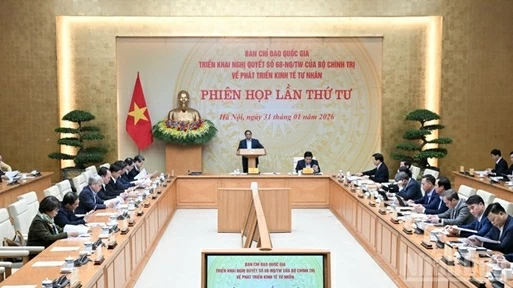 |
| Overview of the session. (Photo: Tran Hai) |
Business community assessment of the implementation of Resolution No. 68-NQ/TW: the implementation of Resolution 68 is showing positive changes, reinforcing trust and creating a ripple effect in society.
According to a public opinion survey by the Central Propaganda and Education Commission on January 16, 2026, there is a very high level of consensus, with 94% agreeing with the view that the private economy is one of the most important drivers of the economy.
A quick survey of businesses in November 2025 also recorded a more optimistic trend, reflecting improvements in regulatory response, administrative reform, and business collaboration; simultaneously, citizens and businesses expect the Resolution to continue creating breakthroughs in the business environment, innovation, and reducing legal risks.
The initial impact of the Resolution is reflected in the strong increase in the number of businesses and business households entering and re-entering the market; positive developments in the stock market; and the growing contribution of the private economic sector to the state budget.
Since May 2025, an average of 18,000 new businesses have been established each month, and over 8,300 businesses have resumed operations. Throughout 2025, more than 297,000 new and returning businesses were established, with a total additional registered capital estimated at nearly 6.4 trillion VND; by the end of 2025, the country had over 1 million active businesses. In January 2026 alone, over 54,000 businesses entered and re-entered the market (up 62% compared to the same period in 2025), with over 24,000 newly established (up 128% compared to the same period in 2025), and nearly 30,000 resuming operations (up 31% compared to the same period in 2025); approximately 1,000 business households transitioned to enterprises (about 25% of the total number of business households transitioning to enterprises throughout 2025), reflecting the Resolution's initial encouragement and motivation for business households to transition.
Vietnam's stock market experienced a strong resurgence after the issuance of Resolution No. 68-NQ/TW. By the end of 2025, the VN-Index reached nearly 1,785 points; the average trading value was about 29.5 trillion VND per session. Market capitalization reached nearly 10 trillion VND (about 70% of the 2025 GDP - 524 billion USD). The number of investor accounts exceeded 11 million (up 25% compared to the end of 2024); capital raised through stock and bond issuance exceeded 142.3 trillion VND (nearly double the same period); capital raised for the budget was estimated at 313 trillion VND; over 900 listed companies reported profits.
In the medium and long term, the stock market is expected to maintain a positive trend due to the upgrade from a frontier to a secondary emerging market, the potential to attract domestic and foreign capital flows, and the implementation of policies supporting businesses and improving the business environment in the spirit of Resolution No. 68-NQ/TW.
Regarding state budget revenue from the private economic sector: total budget revenue in 2025 from the non-state sector is estimated at 497.156 trillion VND (134% of the estimate; 127% compared to the same period). Revenue from households and individual businesses increased by more than 36% compared to 2024, marking the highest growth rate in the 2021-2025 period...