



Exploring unique rituals of Vietnam's ethnic groups
WVR - On April 18-19, the atmosphere at the Vietnam National Village for Ethnic Culture and Tourism became vibrant with a series of activities celebrating the Vietnam Ethnic Groups' Cultural Day.
Latest
From the Then profession transmission ceremony of the Tay people, the Ok Om Bok moon worship ceremony of the Khmer people, to the new rice celebration of the Chu Ru people and the double wedding custom of the Thai people... all have created a vibrant and colorful cultural tapestry.
The "Receiving and teaching new disciples" ceremony
The Then ritual is not only a unique form of folk belief but also a 'living museum' preserving the distinctive worldview and human view of the Tay community.
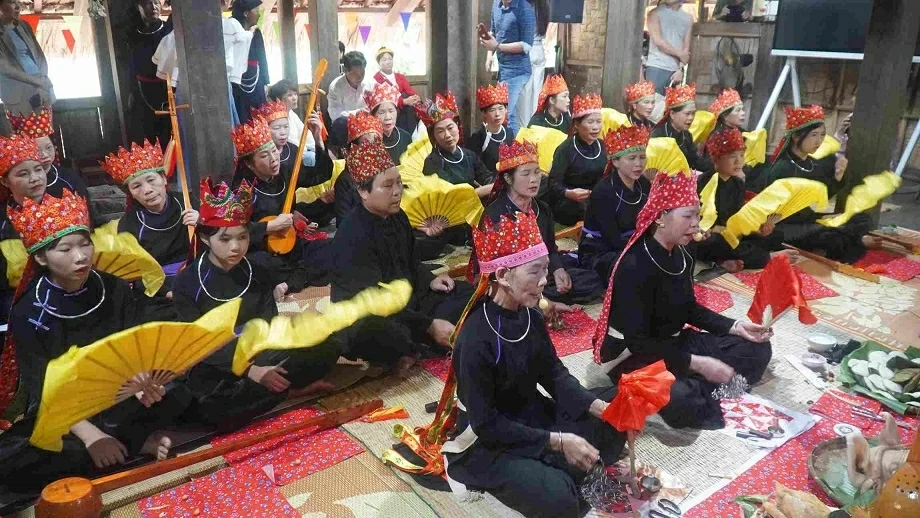 |
| The arrangement of offerings on the ancestral altar not only follows traditional protocols but also serves as a spiritual connection, expressing the community's reverence for their ancestors. (Photo: Thu Trang) |
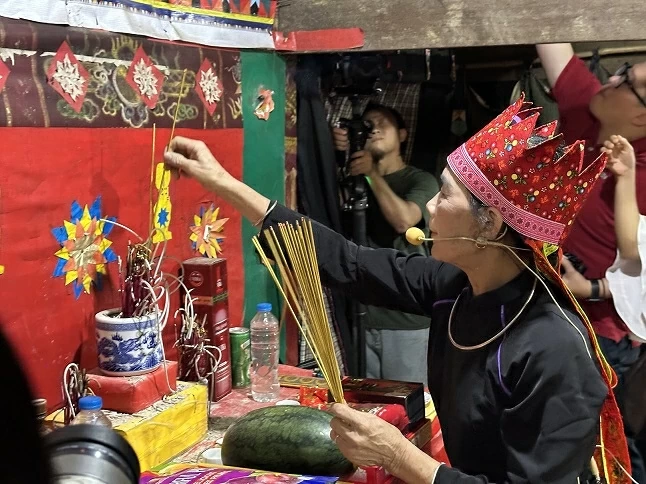 |
| The Then master offers a ceremony to report to the ancestral profession about the transmission of new disciples. (Thu Trang) |
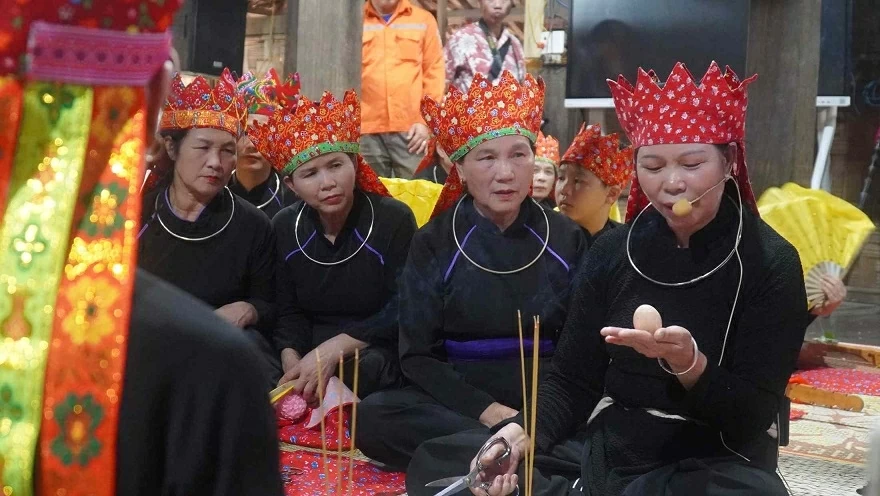 |
| The Then masters chant in unison, inviting the deities to bless the community with health, peace, and fortune. (Photo: Thu Trang) |
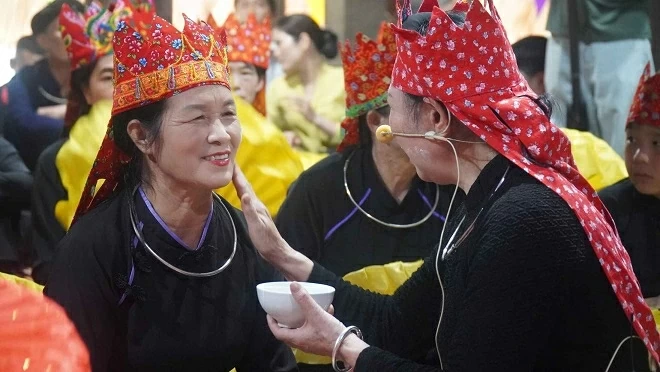 |
| The ceremony concludes with the distribution of blessings, marking the official recognition of the new disciple, who now bears the responsibility of preserving, practicing, and teaching Then to the community. (Photo: Thu Trang) |
Notably, the ritual of handing over the professional tools involves the Then master giving the new disciple a Tinh guitar, musical instruments, and other professional items. The Tinh guitar, in particular, is not only a means of spiritual connection but also symbolizes the transmission of knowledge and faith between generations.
The reenactment of the "receiving and teaching new disciples" ceremony not only contributes to the preservation of the Then heritage but also helps the public gain a deeper understanding of the values crystallized from music and beliefs. As a result, the awareness of preserving the cultural identity of the Tay people continues to be strongly propagated in today's life.
Thanksgiving to the Moon God by the Khmer community
The moon worship ceremony (Ok Om Bok) is one of the most important traditional rituals, deeply imbued with the cultural identity and spiritual life of the Khmer people in the South. It not only expresses gratitude to the Moon God but also affirms the awareness of preserving and promoting the traditional cultural heritage of the community.
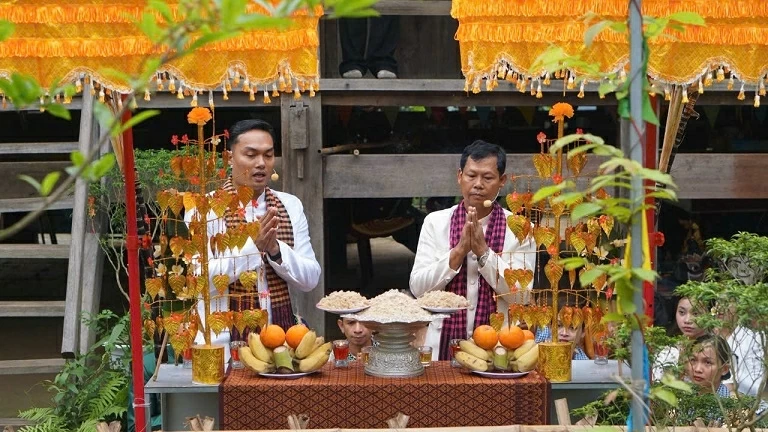 |
| The Ok Om Bok offering tray gathers the essence of the harvest season, highlighted by the traditional flattened rice cakes of the Khmer people. (Photo: Nguyen Trang) |
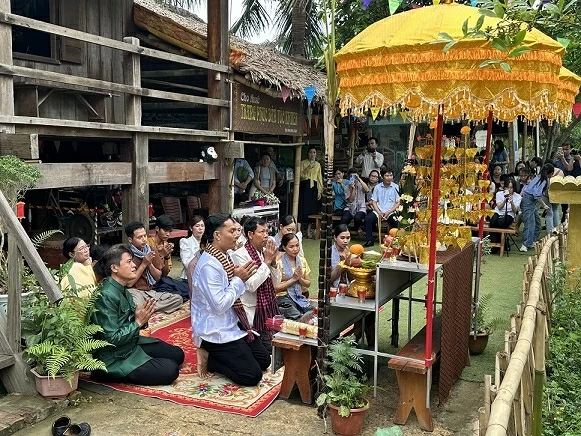 |
| Om Bok is not merely a religious ceremony but a testament to the close connection between the Khmer people and nature. The joyful atmosphere pervades the entire moon worship ceremony. |
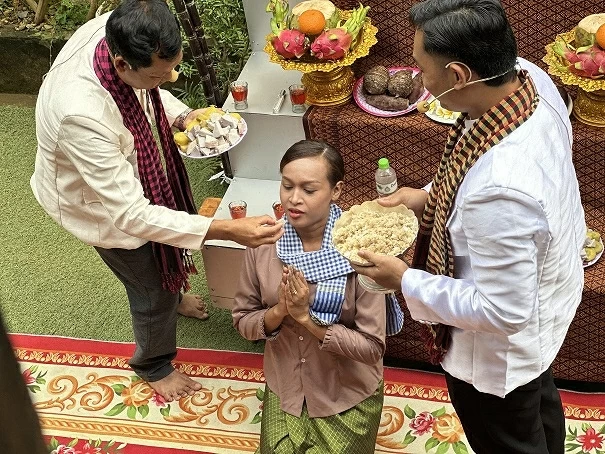 |
| After the solemn ceremony and the monks' blessings, the hosts gather everyone to perform the "Feeding Flattened Rice" ritual (Om Bok). (Photo: Nguyen Trang) |
The sound of gongs celebrating New Rice by the Chu Ru people
The reenactment of the new rice celebration not only preserves a ritual rich in value but also affirms the vitality of Chu Ru culture, bringing the unique beauty of the Central Highlands closer to the public.
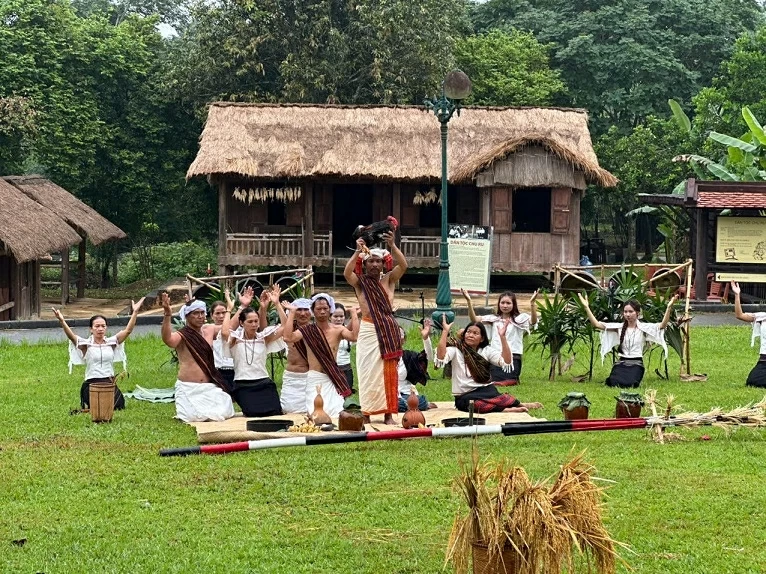 |
| The atmosphere of preparing offerings is bustling with bamboo-tube rice, can wine, and distinctive products made by the villagers themselves. (Photo: Thu Trang) |
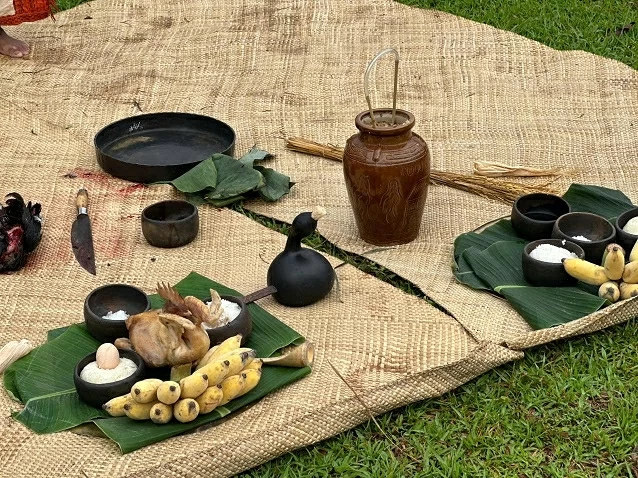 |
| The offering tray is neatly arranged with familiar items in the life of the Chu Ru people. (Photo: Thu Trang) |
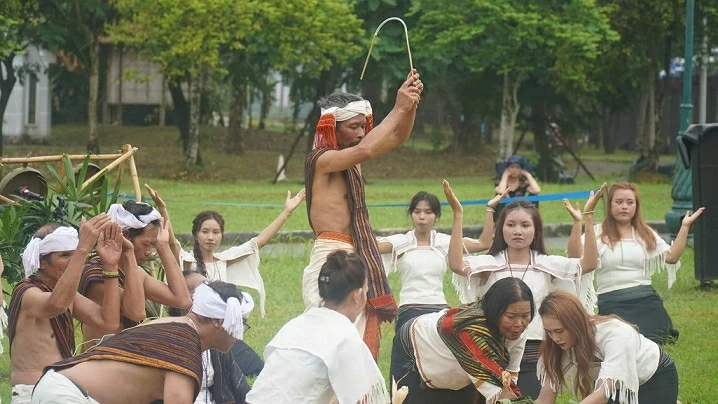 |
| The ritual begins with the village elder selecting the finest rice stalks from the field to offer. (Photo: Thu Trang) |
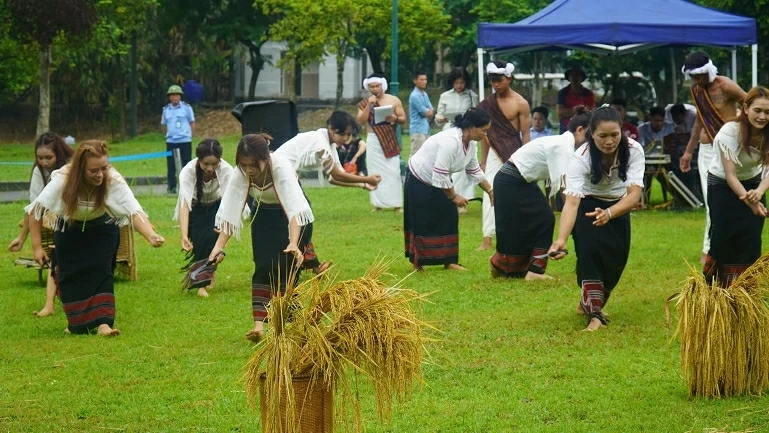 |
| In the sacred space, the villagers turn towards their roots, strengthening unity and preserving traditional values passed down through generations. (Photo: Thu Trang) |
The highlight of the ceremony is the ceremonial pole erected in the field, serving as a spiritual connection between humans, deities, and nature.
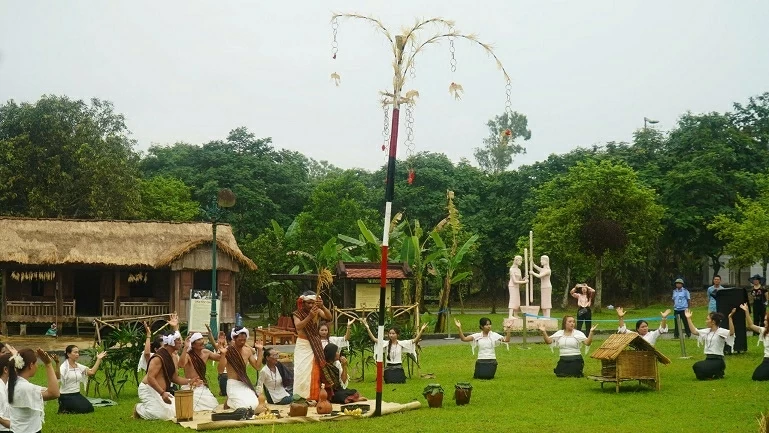 |
| Besides the ceremony, the program also reenacts vivid slices of the daily labor life of the Chu Ru people. (Photo: Thu Trang) |
The solemn ceremony concludes with the ritual of opening the wine jar, marking the beginning of community interaction and connection activities.
The "Double wedding" custom of the Thai people in Thanh Hoa
On the occasion of Vietnam Ethnic Groups' Cultural Day (April 19), the double wedding of the Thai people (Thanh Hoa) was vividly reenacted at the Vietnam National Village for Ethnic Culture and Tourism.
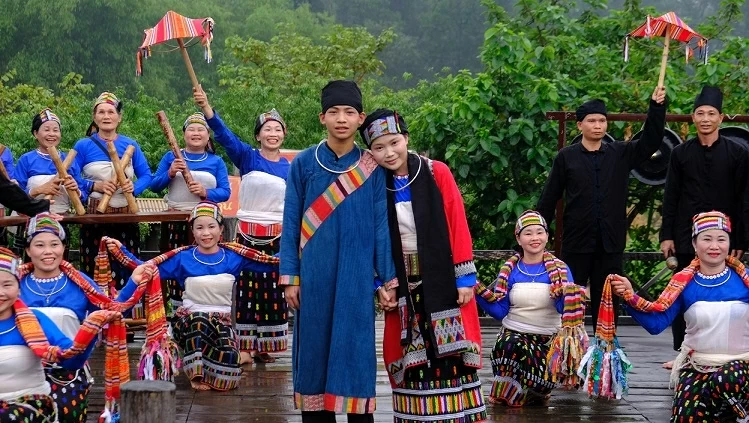 |
| After three years of living with the bride's family and diligently working to ensure prosperity, the young couple officially holds a grand second wedding for the bride to join the groom's family. (Photo: Thu Trang) |
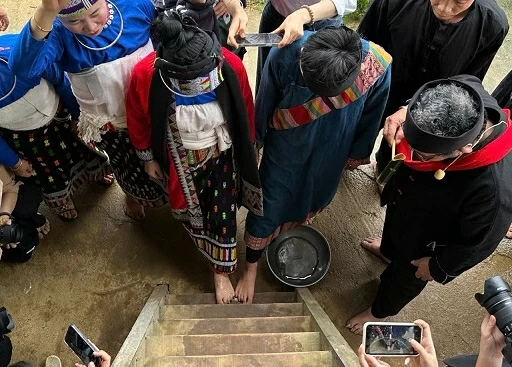 |
| When ascending the groom's house stairs, the bride performs the foot-washing ritual to show respect and report to the ancestors about the new family member. (Photo: Thu Trang) |
The double wedding custom is persistently preserved by the Thai people in Thanh Hoa as a living heritage, reminding of core values: marriage must begin with labour, responsibility, and happiness nurtured through sharing.
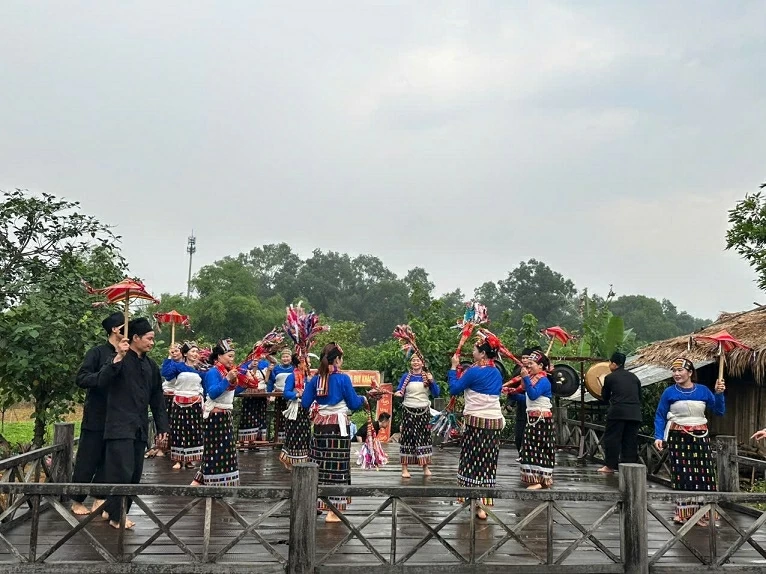 |
| The villagers joyfully celebrate, sharing in the happiness of the young couple. (Photo: Thu Trang) |
Beyond the significance of a commemorative event, the reenactment of unique rituals has created a culturally evocative space, where the public can not only witness but also touch the "soul" of the heritage.
In the heart of the capital, the common house of Vietnam's ethnic groups has fulfilled its mission as a place to gather and spread the essence of cultural values. It is not just about preserving the past, but preparing the most solid foundation for ethnic culture to maintain its unique identity.