



Dr. Trinh Le Anh: Cultural diplomacy must be more than a "stage" for identity display
WVR - Dr. Trinh Le Anh from the Faculty of Tourism Studies, University of Social Sciences and Humanities, Vietnam National University, Hanoi, believes that cultural diplomacy should not merely be a "stage" for showcasing identity, but rather an ecosystem of connections where each event becomes a link in the tourism value chain.
Latest
 |
| According to Dr. Trinh Le Anh, cultural diplomacy should truly become an effective and sustainable bridge for national tourism. (Photo: Courtesy by author) |
A catalyst for sustainable tourism growth
From the perspective of a tourism expert, how do you evaluate the role of cultural diplomacy as a "soft power" in enhancing the country's image and creating a competitive advantage for Vietnam's tourism?
Cultural diplomacy is essentially a form of soft power that fosters trust, empathy, and affection from the international community. Global soft power studies indicate that cultural image strength often leads in national brand positioning. In 2025, Vietnam was ranked 52nd out of 193 countries by Brand Finance, with "cultural appeal" being a significant driver of its score increase. From a tourism perspective, culture is the core engine.
The UN Tourism's Tourism & Culture Synergies report confirms that cultural tourism holds the largest share in international tourism. In fact, Vietnam welcomed 17.5–17.6 million international visitors in 2024, with 12.2 million in the first seven months of 2025, marking one of the highest growth rates in Asia-Pacific. Clearly, when cultural diplomacy is leveraged, it quickly transforms into a competitive advantage and actual market share.
In the context of deepening international integration, how should Vietnam exploit and integrate cultural elements in diplomacy to turn it into a driver for sustainable tourism development?
In my view, there are five key directions. First, heritage diplomacy. Continue to expand UNESCO dossiers and the creative cities network. The designation of Ha Long – Cat Ba as a World Natural Heritage (2023) or the recognition of Hoi An, Da Lat, Hanoi in the creative network by UNESCO has provided a "trust seal" for promoting destinations.
Second, culinary diplomacy. Collaboration with the MICHELIN Guide has led to 181 Vietnamese restaurants being featured, with 9 receiving one star and 2 receiving Green Stars in 2025, making cuisine a significant reason for tourists to visit.
| "The important thing is that strategies and cooperation models should not stop at slogans but must be measured by specific indicators such as the number of international visitors from each market, average spending, the number of cultural and tourism co-branded events, or international media indices. Experience from many countries shows that when cultural diplomacy and tourism share a common measure of success, coordination becomes more substantive, avoiding the situation of each doing their own thing." |
Third, policy diplomacy. The 90-day e-visa policy and 45-day visa exemption for 13 countries from 2023 is a major step forward, which should be tied to cultural promotion in target markets.
Fourth, green diplomacy, integrating international cooperation into sustainable development criteria, such as the green tourism model in Quang Nam aiming for GSTC standards.
Fifth, digital and film diplomacy. Collaborate on international films, promote destinations through streaming platforms. The film A Tourist's Guide to Love (Netflix) has spread the image of Hoi An, My Son, Ha Giang to millions of global viewers.
Can you share some real examples of how cultural diplomacy has helped promote Vietnam's image and created positive effects for the tourism industry in recent years?
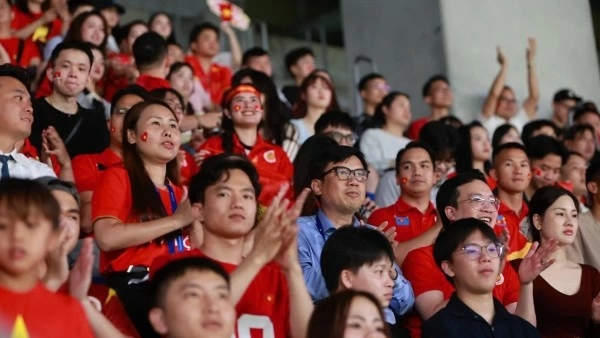
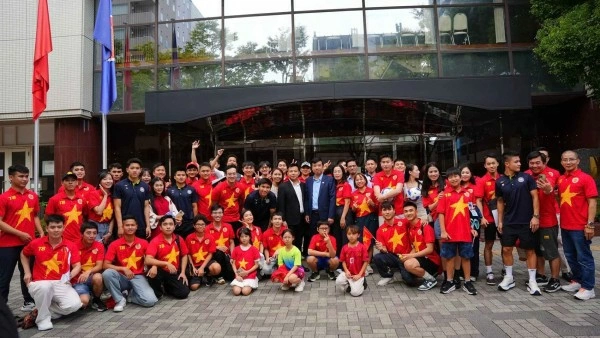
There are many notable activities. The Vietnam Festival in Japan (Tokyo, Osaka) in 2025 attracted hundreds of thousands of visitors, creating a major promotional boost for Vietnam's image; the Hue International Arts Festival 2024 with over 101,000 attendees affirmed the international value of cultural–art festivals; Vietnam Days Abroad organized by the Ministry of Foreign Affairs in Brazil, Saudi Arabia in 2024, combining art performances, cuisine, and business networking; the 2024 European tourism roadshow (Paris – Milan – Frankfurt) coordinated between diplomatic missions and the Vietnam National Administration of Tourism, promoting directly to local partners and media. Notably, the MICHELIN Guide's expansion to Da Nang and the announcement of 2 Green Star restaurants have elevated the "Vietnamese culinary tourism" brand...
These examples show that cultural diplomacy truly unleashes its power when linked with a series of coordinated activities from visa policies, tourism promotion, media, to the direct involvement of businesses. A cultural festival abroad, if only limited to art performances, will struggle to convert into visitor flows; but when airlines, travel companies, and local promotion agencies get involved, it immediately becomes a "gateway" bringing tourists to Vietnam.
This demonstrates that cultural diplomacy is not just a "stage" for showcasing identity, but an ecosystem of connections where each event becomes a link in the tourism value chain. As a result, the ripple effect is multiplied, enhancing the national image while providing concrete motivation for sustainable tourism growth.
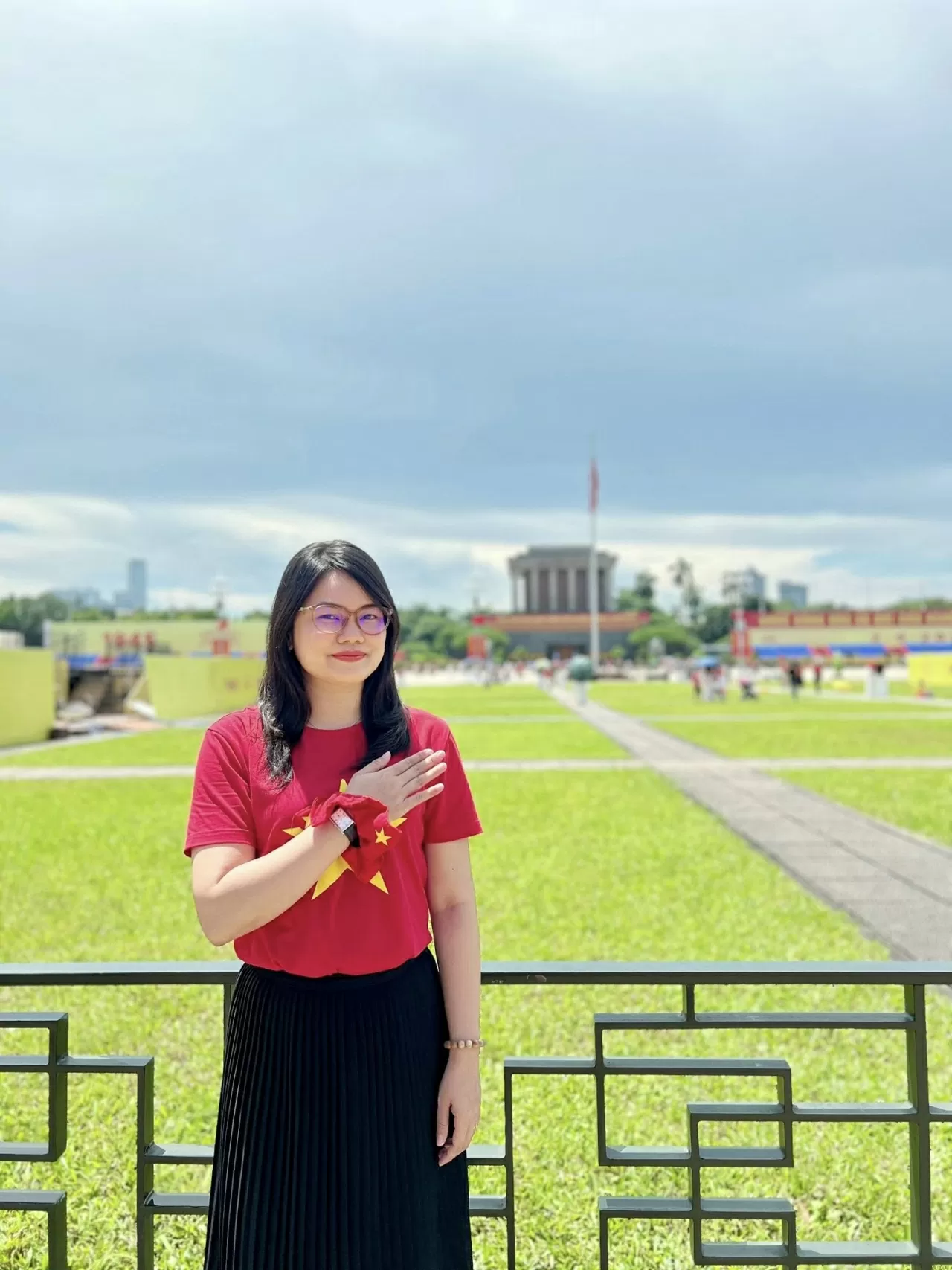 |
| Many people capture meaningful moments in front of Ho Chi Minh Mausoleum on the occasion of the 80th anniversary of the August Revolution and National Day 2/9. (Photo: Thu Hao) |
Cultural diplomacy becomes a "soft brand" alongside sustainable tourism
In your opinion, what strategies, policies, or cooperation models are needed between diplomatic, cultural, and tourism agencies to turn cultural diplomacy into an effective "bridge" promoting national tourism development?
First and foremost, we have an important policy framework: the Cultural Diplomacy Strategy to 2030 and the Cultural Development Strategy to 2030. What needs to be done is to concretize and effectively coordinate among the parties. I propose: Establish the "One Team Vietnam" model at representative missions, where cultural/tourism attachés act as "mini destination management organizations".
Establish an inter-agency committee on cultural–tourism industries to closely coordinate between the Ministry of Foreign Affairs, Ministry of Culture, Sports and Tourism, Vietnam National Administration of Tourism, and localities. Develop branded annual programs: Vietnam Days Abroad, Tourism Roadshows, Vietnam Culinary Week, closely linked with aviation activities and international media. Integrate sustainability and green criteria (according to GSTC standards) into all cooperation and promotional programs.
| "Vietnam can fully develop a model based on heritage, cuisine, and cultural identity to turn cultural diplomacy into a 'soft brand' alongside sustainable tourism." |
The important thing is that strategies and cooperation models should not stop at slogans but must be measured by specific indicators such as the number of international visitors from each market, average spending, the number of cultural and tourism co-branded events, or international media indices. Experience from many countries shows that when cultural diplomacy and tourism share a common "measure of success", coordination becomes more substantive, avoiding the situation of "each doing their own thing".
In Vietnam, the potential is huge but there is a lack of a "one-stop" coordination mechanism. If the "coordination bottleneck" between diplomacy – culture – tourism is resolved, we will have a closed value chain: Creating content, bringing it to the world through diplomacy, to attract visitors back to the country via tourism infrastructure.
Then, cultural diplomacy will truly become an effective and sustainable bridge for national tourism. This is also in line with international experience: Republic of Korea successfully built "Hallyu" (the Korean wave) by linking cultural diplomacy (K-pop, films, cuisine) with tourism promotion strategies, resulting in a surge of international visitors, reaching 17.5 million in 2019, double that of 2009. Japan's "Cool Japan" program also demonstrates how the government leverages cultural diplomacy from anime, fashion to cuisine to go hand in hand with tourism, making Japan one of Asia's top destinations.
These lessons show that Vietnam can fully develop its own model based on heritage, cuisine, and cultural identity to turn cultural diplomacy into a "soft brand" alongside sustainable tourism.
Looking to the future, what opportunities do you expect cultural diplomacy to bring to Vietnam's tourism, especially in attracting international tourists and affirming Vietnam's position on the world tourism map?
I expect cultural diplomacy to open up three key opportunities for Vietnam's tourism. First, increasing visitor numbers and elevating the national image. When soft power is effectively disseminated, the number of international visitors to Vietnam will not only increase in quantity but also improve in quality, attracting more high-spending, long-stay visitor segments.
| "In Vietnam, the potential is huge but there is a lack of a 'one-stop' coordination mechanism. If the 'coordination bottleneck' between diplomacy – culture – tourism is resolved, we will have a closed value chain: Creating content, bringing it to the world through diplomacy, to attract visitors back to the country via tourism infrastructure." |
At the same time, positioning Vietnam as a creative and sustainable destination. If we know how to leverage the UNESCO Creative Cities Network, combined with green standards like GSTC (Global Sustainable Tourism Council) or MICHELIN Green Star, we can build the brand "Vietnam – a destination of heritage and green creativity", competitive enough in the region.
Additionally, spreading culture through internationalized events. Festivals in Japan, Europe, or increasingly professionally organized and consistently promoted domestic festivals will become "soft touchpoints" to turn interest into actual trips.
The experiences of Republic of Korea with Hallyu or Japan with Cool Japan have proven: When cultural diplomacy and tourism are integrated into a national strategy, it can project the country's image globally and draw tourists in.
Vietnam also has the opportunity to do the same but in its own way, based on diverse heritage, unique cuisine, and hospitality. If we remain steadfast in that direction, cultural diplomacy will become a soft yet powerful lever, helping Vietnam assert its rightful position on the world tourism map.