






Science and technology diplomacy in the new era
WVR - In the context of strong globalization, innovation, adaptation, and active participation in the global technology ecosystem have become imperative for every nation, especially highly open economies like Vietnam.
Latest
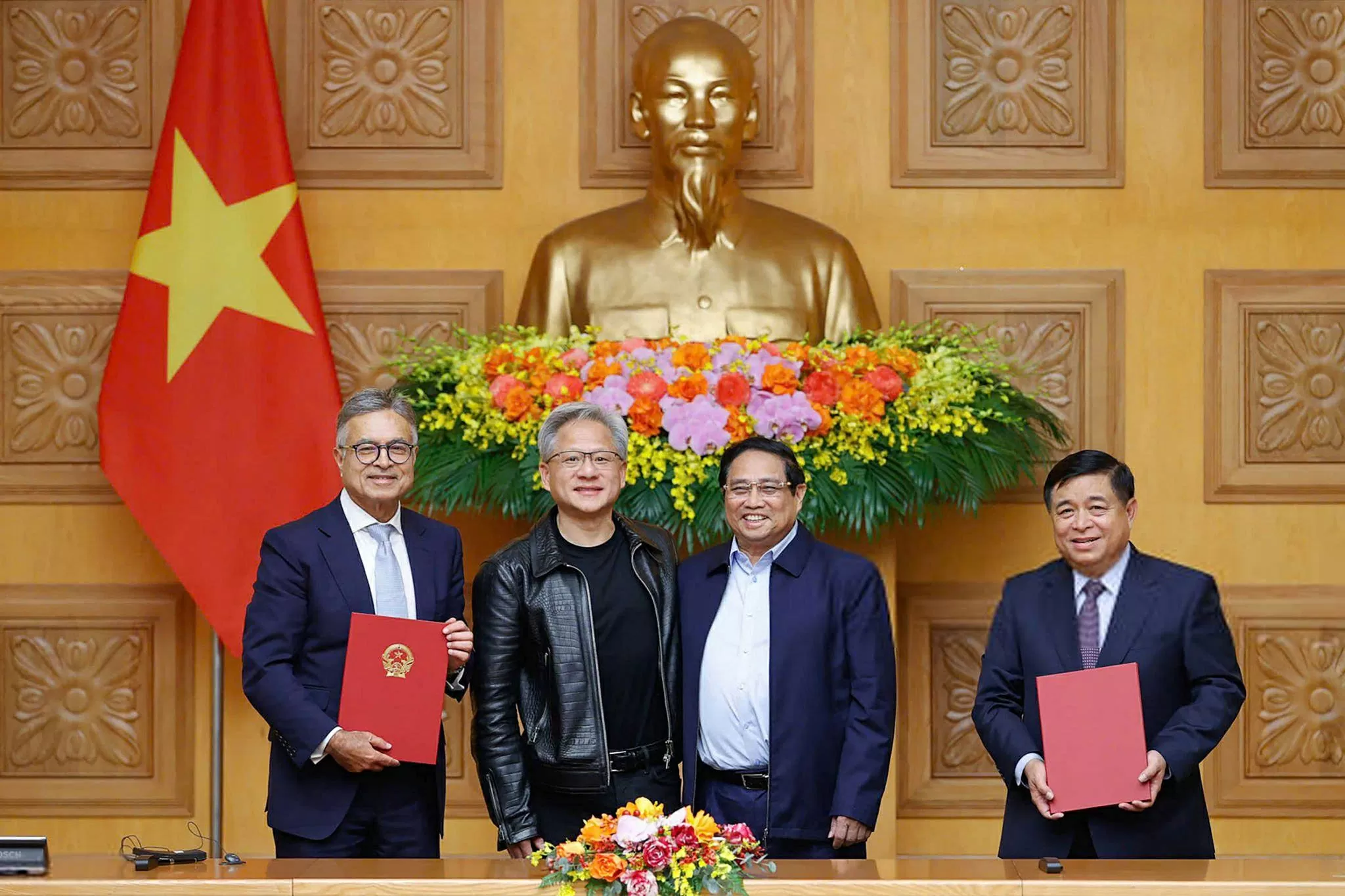 |
| Prime Minister Pham Minh Chinh and NVIDIA Chairman Jensen Huang witness the signing of an agreement between the Vietnamese Government and NVIDIA Corporation on cooperation to establish NVIDIA's AI Research and Development Center and AI Data Center in Vietnam, December 5, 2024. (Source: VGP) |
On this basis, Resolution 57 of the Politburo on breakthroughs in the development of science, technology, innovation, and national digital transformation; Resolution 71 of the Government on amending, supplementing, and updating the Government's Action Program to implement Resolution 57; along with the list of 11 strategic technologies and national strategic technology products have laid an important foundation for Vietnam to gradually implement a new foreign policy focus: Science and Technology Diplomacy.
Emerging technologies and strategic competition
The world is entering a new technological cycle with the potential to reshape the geo-economic and geo-strategic order for decades to come. Fields such as AI, quantum computing, synthetic biology, neurotechnology, and autonomous robotics not only promise revolutionary breakthroughs in productivity and creativity but are also becoming pillars of national power in the 21st century. Unlike previous technological waves, the current cycle is highly interdisciplinary, has strong dual-use capabilities, and spreads rapidly, creating both new opportunities and challenges for nations and global governance mechanisms.
Large-scale deep learning models can enable AI to become a semi-automated tool in production, research, management, and defense. Quantum technology, although still in its early stages, has opened up superior prospects in computing, encryption, and physical-chemical simulation. In biology, gene editing technology and precision medicine are restructuring the agriculture and healthcare sectors, while brain-machine interfaces reveal the potential for deep integration between humans and smart devices. Semiconductors and robotic systems play a foundational role, providing the physical infrastructure for these technologies to operate efficiently and synchronously.
However, technology is increasingly being "securitized", especially in the strategic competition between major countries, particularly between the US and China, as the focus gradually shifts from geopolitics to "geotechnology". Beyond the US-China competition axis, the global technology order is shifting towards selective multipolarity: the EU promotes "digital sovereignty" and ethical legal frameworks for new technologies; Japan combines AI with industrial reform and aging population response; mid-sized countries like South Korea, Singapore, and Malaysia strive to position themselves as regional innovation hubs. Meanwhile, developing or mid-tech countries face a challenging dilemma: constrained policy space by dual standards on data and platforms, yet opportunities for strategic choices to enhance their position, if they have the vision and invest wisely.
In summary, emerging technologies are expected to profoundly change international relations, both in terms of global governance and national sovereignty, security, and development. Participants are becoming more diverse and powerful, especially technology companies. Current global and national governance mechanisms have not kept pace with technological development. The trend of politicizing and securitizing technology in the strategic competition spiral is increasing. Technology opens up many opportunities, but the digital divide risks widening; the relationship between integration, digital connectivity, and data sovereignty is becoming more complex.
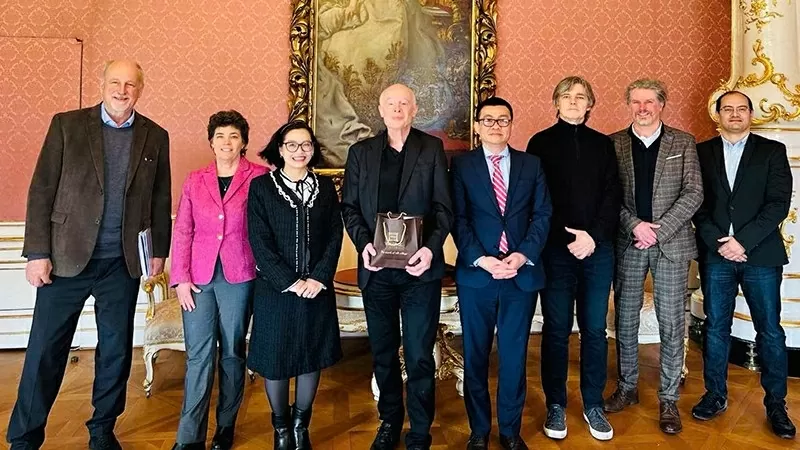 |
| Vietnamese Ambassador to Austria Vu Le Thai Hoang visits and works with the International Institute for Applied Systems Analysis (IIASA) headquartered in Austria, February 14, 2025. (Source: Vietnamese Embassy in Austria) |
Important pillar in foreign strategy
Rapid changes in reality require agile adaptability, with new thinking and approaches beyond conventional frameworks. Science and technology diplomacy is a new concept in Vietnam but has become an important pillar in the foreign strategy of many countries that aim to build their position through technological capability, such as the UK, Denmark, Italy, South Korea, Singapore, and India.
This mindset stems from the reality that in the 21st century, national competition is no longer just in the military or economic-trade fields but increasingly revolves around the ability to dominate foundational technologies: from AI, quantum computing, semiconductors to biotechnology and renewable energy. Nations that lead in the development, application, and dissemination of technology will play a key role in shaping standards, attracting high-tech production value chains, and protecting strategic interests and national security in a volatile global environment.
In common understanding, tech diplomacy is the use of diplomatic tools - dialogue, negotiation, international cooperation - to promote domestic technology development and build international standards for science and technology. Tech diplomacy considers technology a focal point of foreign policy, national security, and economic development. Its basic characteristics are multi-actor (among nations, international organizations, NGOs, businesses, research institutes, universities...), interdisciplinary, proactive, forward-looking; combining traditional and modern methods (such as Technology Ambassadors, virtual embassies...), with people-centered science and technology development.
Generally, countries pioneering in science and technology diplomacy often focus on three tasks: Researching and forecasting global technology trends; participating in shaping the "rules of the game", standards, and international governance institutions related to technology; and promoting cooperation, international integration in science and technology; connecting resources and expanding cooperation, creating both "soft power" and "hard power" for the nation.
Comprehensive and harmonious approach
For Vietnam, the new wave of technology is not only a scientific-technical revolution but also a turning point in development thinking and strategic position adjustment. Resolution 57 and the list of national strategic technologies reflect a clearer recognition of the core role of technology in ensuring security, independence, sovereignty, and prosperity in the 21st century. In this context, science and technology diplomacy need to be systematically and methodically established as a form of "niche diplomacy", implemented proactively, creatively, in line with Vietnam's capabilities and advantages.
To make science and technology diplomacy a strategic focus of foreign policy, a comprehensive approach is needed, harmoniously combining enhancing internal capacity, establishing an interdisciplinary coordination ecosystem, and expanding selective international cooperation, in line with national conditions and interests.
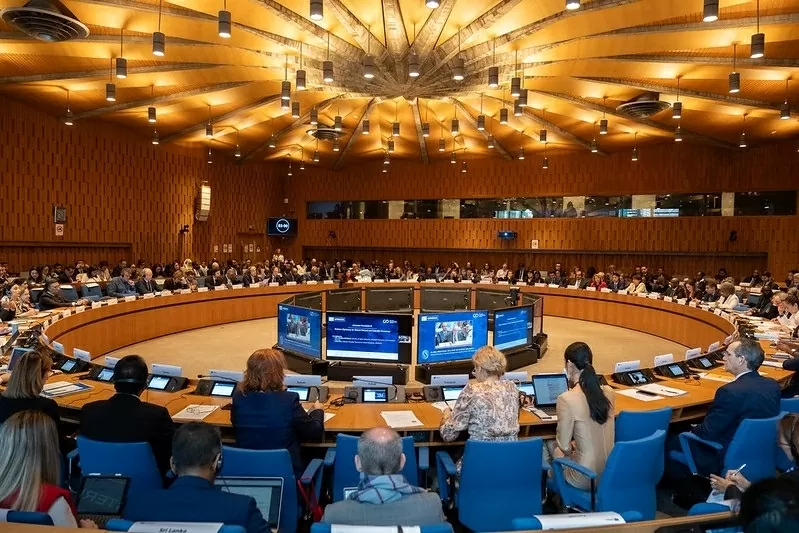 |
| The Vietnamese delegation attends the UNESCO Ministerial Conference on Science Diplomacy in Paris, France, from March 25-26, 2025. (Source: mst.gov.vn) |
In terms of approach, science and technology diplomacy should be seen as a new operational method of foreign thinking, where technology is a strategic component of national power and a factor shaping the structure of power and international institutions. International practice shows that this diplomacy places emerging technology at the center of foreign policy, security, and economic development. Therefore, implementation must be closely linked with economic-social development strategies, national defense-security, and national strategies on digital transformation, industrialization, and innovation. The Ministry of Foreign Affairs, along with a network of 98 Vietnamese representative agencies abroad, accompanies ministries, sectors, businesses, research institutes, and universities in the "public-private-institute-school" model in connecting research, technology transfer, and implementation.
In terms of focus, it is necessary to concentrate on five tasks: Researching and forecasting technology trends and their impact on international relations; learning international, bilateral, and multilateral experiences; participating in dialogue, negotiation to shape rules, standards, and governance laws for emerging technology in multilateral diplomacy; enhancing cooperation, international integration in technology as a strategic priority, shifting from "inviting investment" to "strategic technology partnerships", promoting and exporting Vietnamese technology; and connecting, attracting intellect, resources, and technology from the global Vietnamese intellectual network.
Regarding human resources, a strategy is needed to develop a team of foreign affairs officials knowledgeable in technology, and technology experts capable of participating in international dialogue, policy-making, and representing national interests at multilateral forums.
Under the pressure of global technology competition, science and technology diplomacy must be a strategic focus of Vietnam's modern foreign policy. This is not only a tool to support development but also a means to protect and promote national interests in a rapidly changing environment. Effective implementation requires interdisciplinary thinking, close coordination among actors, and most importantly, identifying the right priorities, choosing the right fields that match the country's strengths and needs. If successful, science and technology diplomacy will be an important lever to help Vietnam integrate more deeply and proactively into the emerging technology order.


