






Ministry of Foreign Affairs supports enhancing local integration capabilities
WVR - The Ministry of Foreign Affairs continues to play a pivotal role in accompanying, guiding, connecting, and supporting to sustainably enhance local integration capabilities.
Latest
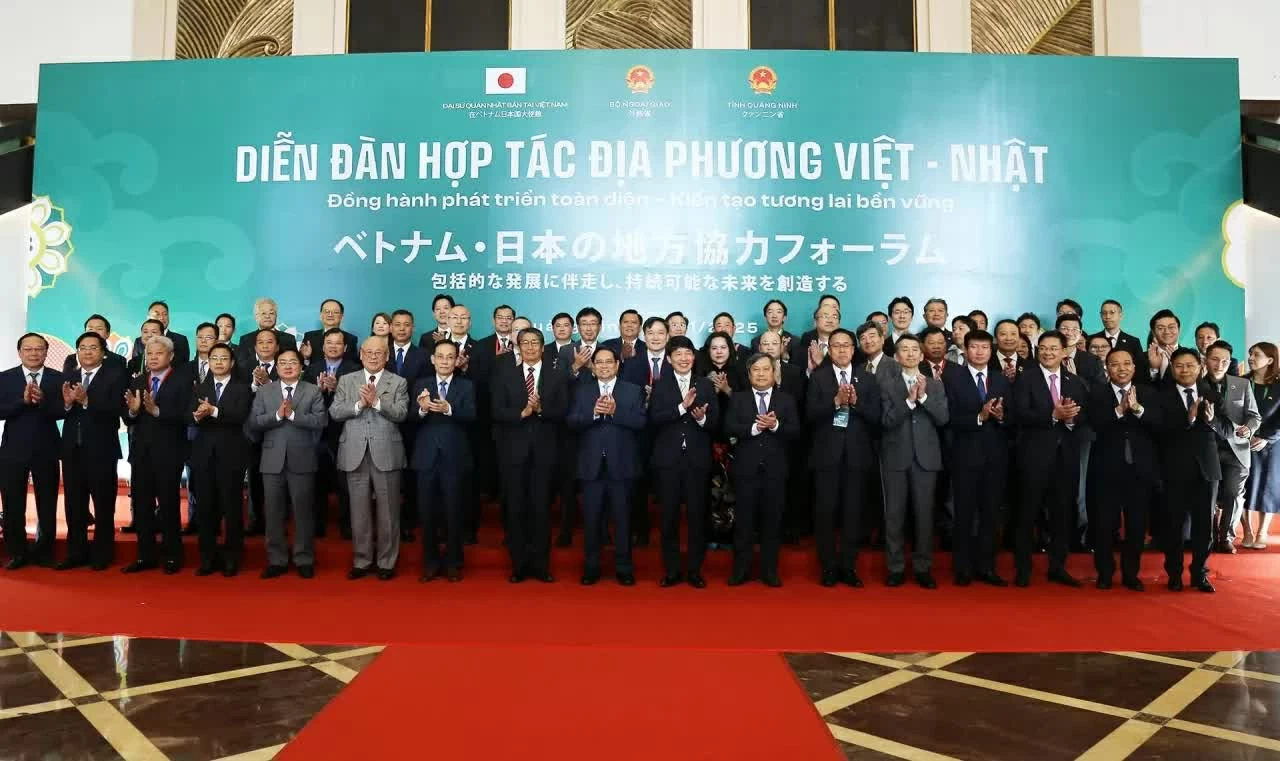 |
| Prime Minister Pham Minh Chinh poses with delegates attending the Vietnam-Japan Local Cooperation Forum, November 2025. (Photo: Thanh Long) |
"A trustworthy partner"
As the chosen location for the first Vietnam-Japan Local Cooperation Forum, Vu Dai Thang, then Secretary of the Quang Ninh Provincial Party Committee (now Chairman of the Hanoi People's Committee), harboured many hopes of expanding channels to attract foreign direct investment (FDI), particularly high-quality FDI from Japan, the "land of cherry blossoms".
Held at the end of November 2025, the forum was organized by the Ministry of Foreign Affairs in collaboration with the Japanese Embassy in Vietnam and the Quang Ninh Provincial People's Committee. It aimed to concretize the contents agreed upon by the high-level leaders of the two countries to strengthen the Strategic Partnership for peace and prosperity in Asia and the world, including local cooperation.
Mr. Vu Dai Thang shared that Quang Ninh Province has maintained a close cooperative relationship with the Japanese Embassy in Vietnam and has always received enthusiastic support from successive ambassadors and Japanese agencies and organizations. Japanese ODA projects through the Japanese Embassy in Vietnam, the Japan International Cooperation Agency (JICA), and Japanese organizations have provided significant resource support to Quang Ninh, contributing effectively and crucially to the province's socio-economic development.
According to Mr. Vu Dai Thang, the bridge between Japanese partners and Quang Ninh Province comes from effectively utilizing local foreign relations channels, with indispensable support from the "trustworthy partner" – the Ministry of Foreign Affairs.
Speaking at the plenary session on the overview of Vietnam-Japan local cooperation at the forum, Chairman of the Phu Tho Provincial People's Committee Tran Duy Dong affirmed that Phu Tho always regards Japan as a "strategic, trustworthy, and goodwill partner", and extended an invitation to investors and businesses to the land of Hung Kings.
After the merger of Phu Tho, Vinh Phuc, and Hoa Binh provinces on July 1, 2025, Phu Tho Province emerged with a new look and a grand ambition to become a growth pole and a driving force for the development of the Northern Midlands and Mountainous Region. To realize this goal and ambition, Mr. Dong emphasized the indispensable cooperation of international investors. He shared, "For a long time, we have successfully implemented foreign economic policies with the support of various departments, especially from the Ministry of Foreign Affairs."
From "single promotion" to "development partnership"
Reflecting on the journey of local foreign relations in 2025, Deputy Minister of Foreign Affairs Ngo Le Van assessed that localities have shifted from the mindset of "single promotion" to "development partnership" in implementing economic diplomacy. Investment, trade, and tourism promotion have been implemented in an integrated manner, linked with regional development, growth model transformation, and the requirement to enhance the quality and effectiveness of attracting external resources. Many localities have proactively utilized new-generation trade agreements, connected with multinational corporations and technology partners, gradually integrating economic diplomacy deeply into the development structure. Local foreign relations also contribute to market expansion, technology transfer, enhanced governance capacity, and the localities' position in regional and global value chains.
Party foreign relations have been strengthened with the direct participation and guidance of local leaders. Local-level contact and cooperation channels have become "soft conduits", helping maintain dialogue, enhance understanding, and mitigate the risk of interest conflicts. Localities focus on depth, sustainability, and the degree of interest alignment with foreign partners. Through the support of the Ministry of Foreign Affairs, 135 international agreements between localities and foreign partners have been signed.
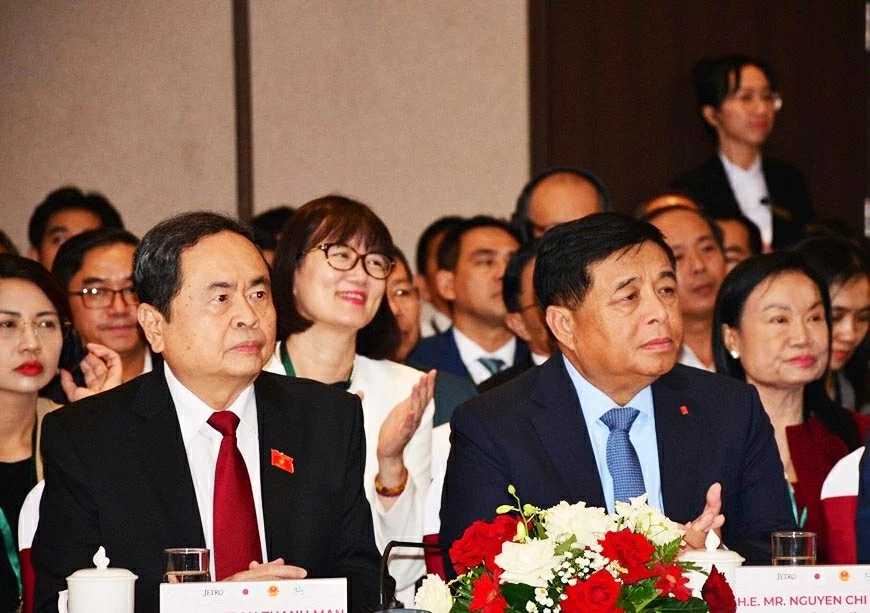 |
| National Assembly Chairman Tran Thanh Man attends the Japan-Mekong Delta Meeting in Can Tho, August 2025. (Source: VGP) |
In the context of implementing two-tier local government, in 2025, the Department for External Relations and Cultural Diplomacy, under Ministry of Foreign Affairs, spearheaded efforts to promote and support the practical and effective foreign relations work of localities. It successfully organized four major conferences connecting localities with international partners: the Korea Meeting in Hung Yen (5/2025); the Nghe An - Hong Kong Meeting in Nghe An (8/2025); the Japan-Mekong Delta Meeting in Can Tho (8/2025); and the Vietnam-Japan Local Cooperation Forum in Quang Ninh (11/2025), attracting 400-800 delegates to each event, with the first-time presence of Prime Minister Pham Minh Chinh and National Assembly Chairman Tran Thanh Man. Within these frameworks, over 1,000 direct connections between localities, businesses, and foreign partners were organized.
The Ministry of Foreign Affairs has accompanied and supported 23 localities in promoting 48 heritage-related dossiers; lobbied UNESCO to provide approximately USD 310,740 for Hue, Cao Bang, Lang Son, and Nghe An to address flood aftermaths and support sustainable development; supported localities in organizing major international events, and organized programs to introduce, promote investment, and advertise the culture and tourism of 15 localities in six countries; organized delegations of local foreign affairs and tourism leaders to Yunnan and Guangxi, China, to expand local-to-local cooperation.
The Ministry of Foreign Affairs has also actively and effectively implemented advisory, guidance, and direct support for localities. In 2025, the Department of Foreign Affairs and Cultural Diplomacy led and coordinated the service of 70 Ministry Leadership delegations visiting and working in localities; prepared content for 11 meetings between Ministry Leaders and local leaders in Hanoi; and organized numerous classes to update knowledge and foreign affairs skills for local foreign affairs officials.
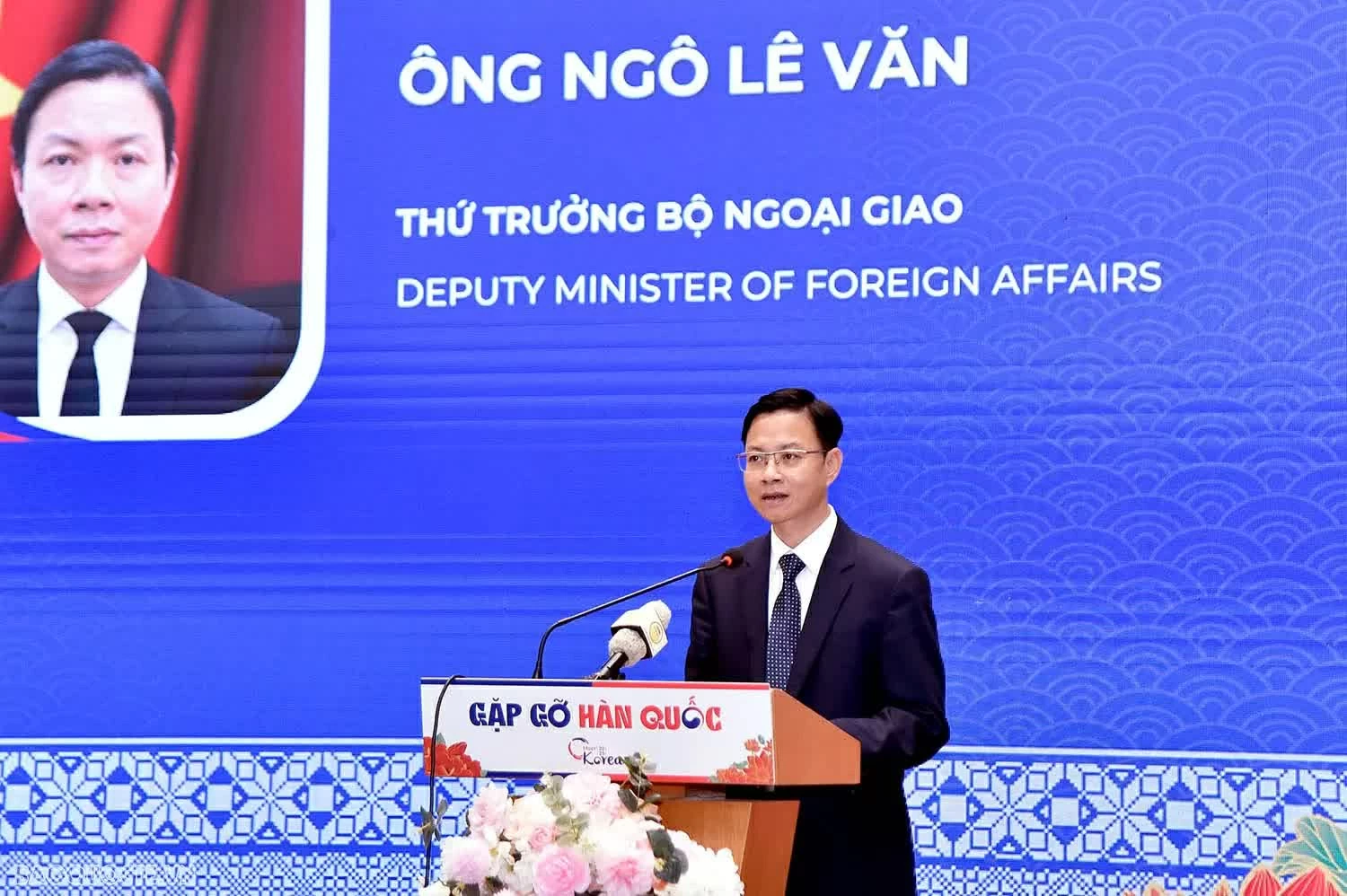 |
| Deputy Minister of Foreign Affairs Ngo Le Van speaks at the Korea Meeting 2025 (Hung Yen), May 2025. (Photo: Quang Hoa) |
Bringing the world closer to each locality
"In the journey of integration, if each locality is a ship venturing into the vast sea, then the Ministry of Foreign Affairs is the strategic helm that helps these ships maintain their course, follow the right itinerary, and accelerate at the right time. The Ministry of Foreign Affairs continues to play a role in accompanying, guiding, connecting, and supporting to sustainably enhance local integration capabilities," affirmed Deputy Foreign Minister Ngo Le Van.
According to the Deputy Minister, facing the rapid and unpredictable changes in the international environment, the Ministry of Foreign Affairs not only "opens the door" to foreign relations but also proactively regulates, helping localities identify opportunities, prevent risks, and effectively exploit international commitments.
Through the network of Vietnamese representative agencies abroad and close coordination with ministries and sectors, the Ministry of Foreign Affairs has been bringing the world closer to each locality. Cooperation and connection activities, with the leading and accompanying role of the Ministry of Foreign Affairs, help localities connect and gradually participate more deeply in regional and global linkages.
| "In the journey of integration, if each locality is a ship venturing into the vast sea, then the Ministry of Foreign Affairs is the strategic helm that helps these ships maintain their course, follow the right itinerary, and accelerate at the right time. The Ministry of Foreign Affairs continues to play a role in accompanying, guiding, connecting, and supporting to sustainably enhance local integration capabilities." Deputy Minister of Foreign Affairs Ngo Le Van |
The Ministry of Foreign Affairs also focuses on supporting localities in enhancing internal capabilities, from institutional improvement, strengthening state management of foreign affairs, to training staff to meet the increasingly deep integration requirements. This is the foundation for each locality to have the "courage" and "capacity" to stand firm against "storms", seize opportunities, and address challenges arising during the integration process.
With efforts from both the Ministry of Foreign Affairs and localities, local foreign relations work has recently undergone a clear transformation with proactive, flexible thinking and a focus on practical effectiveness. In close connection with the overall foreign policy of the Party and State, local cooperation contributes to building trust, creating intertwined interests, and consolidating a peaceful and stable environment from the grassroots level.


