






Viet Nam and the Decade of Culture for Sustainable Development: From initiating country to leadership
In a discussion with the World and Vietnam Report about the Decade of Culture for Sustainable Development, Deputy Minister of Foreign Affairs Ngo Le Van, Chairman of the Viet Nam National Commission for UNESCO, emphasized the priorities, approaches, and action orientations for Viet Nam to effectively implement the Decade. As initiating country, Viet Nam must achieve concrete results within its own borders.
Latest
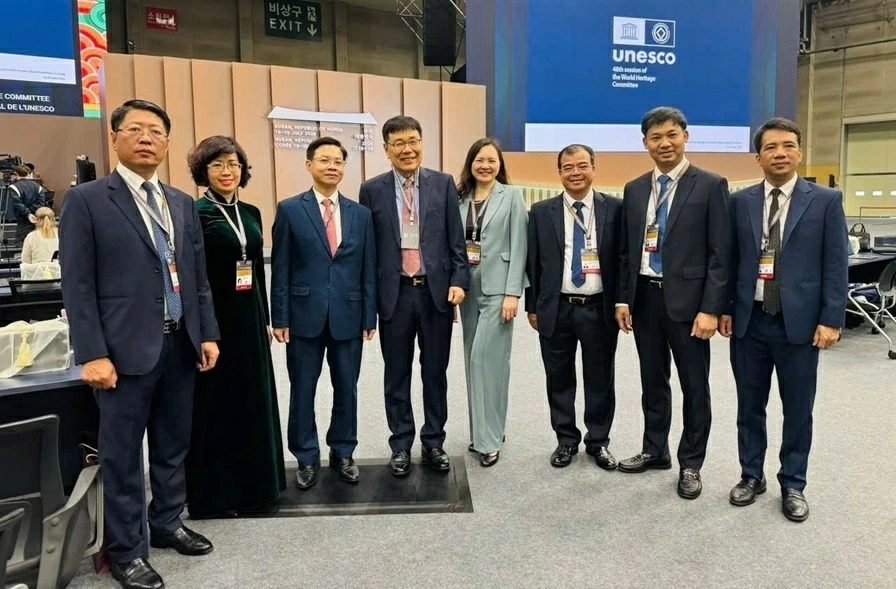 |
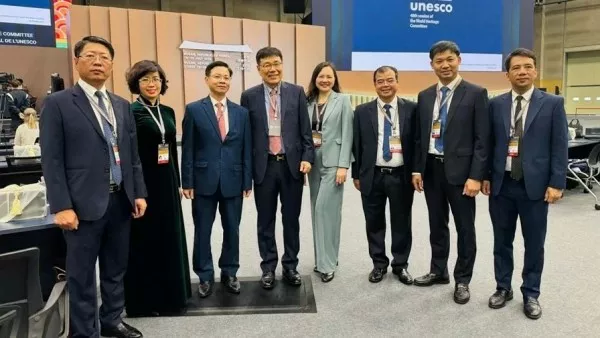
| Deputy Minister of Foreign Affairs Ngo Le Van, Chairman of the Viet Nam National Commission for UNESCO, leads the delegation attending the 48th session of the World Heritage Committee from July 19-29, 2026. (Photo: Chu Van) |
Mr. Chairman, as the initiating country of the International Decade of Culture for Sustainable Development (2027–2036), what approach and strategic priorities should Viet Nam define so that the implementation of the Decade makes a substantive contribution to the country’s development goals to 2030, with a vision to 2045?
For Viet Nam, the implementation of the Decade must first and foremost contribute to the realization of our national development goals to 2030, with a vision to 2045. We initiated this endeavor with the aspiration to more effectively harness the power of culture and human creativity, while contributing to the broader sustainable development efforts of the international community. As the initiating country, Viet Nam must deliver tangible outcomes right here at home.
| Our ultimate aspiration is for citizens to enjoy a richer cultural life, for cultural practitioners to have better conditions to create and remain dedicated to their vocation, and for heritage to have both dedicated stewards and sustainable resources for conservation. By delivering strong results domestically, we will gain practical experience to share with other nations and make a more substantive contribution to the overarching success of the Decade. |
To achieve this, culture must be accorded due priority from the very outset - when defining development orientations, formulating policies, and making investment decisions. In developing an urban area or a tourism destination, we must take into account the preservation of heritage, cultural spaces, and local livelihoods. Citizens must have a voice in decisions that affect them, along with opportunities to contribute and share in the benefits. This is how we translate into practice our people-centered development philosophy and uphold the central agency of communities.
In terms of priorities, Viet Nam intends to focus on five key pillars: cultural industries and the creative economy; the heritage economy and community livelihoods; culture and education; culture and inclusive development; and culture and climate change adaptation.
Cultural industries and the creative economy represent a vital pathway for Viet Nam to drive growth anchored in knowledge, technology, and human talent. Resolution No. 80-NQ/TW on the development of Vietnamese culture has set the target for cultural industries to contribute 7% of GDP by 2030. To attain this goal, policies must enable creators and enterprises to produce high-quality offerings, safeguard the fruits of their creative labor, and establish a strong foothold in the marketplace. Programs in support of the Decade must therefore place emphasis on human resource training, intellectual property protection, and facilitating access to capital and technology. Cooperation with UNESCO and international partners can provide direct support in these areas-ranging from policy experience sharing and creative network connectivity to the responsible application of digital technologies and artificial intelligence-thereby bringing Vietnamese cultural products to audiences both domestically and internationally.
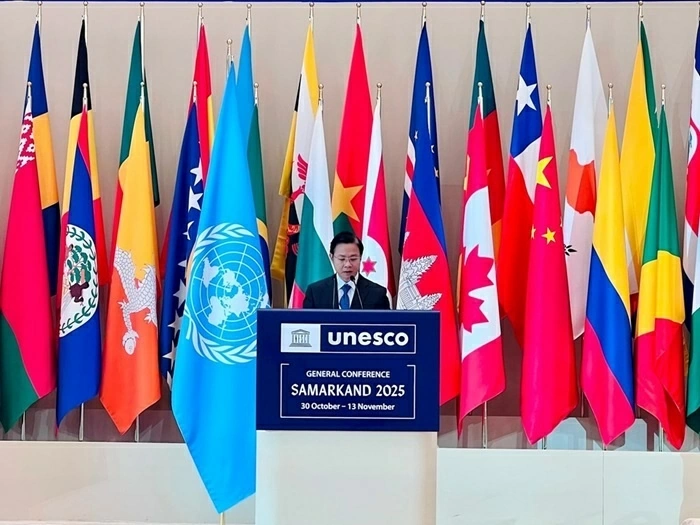 |
| Deputy Minister of Foreign Affairs Ngo Le Van, Chairman of the Viet Nam National Commission for UNESCO, speaking at the 43rd General Assembly of UNESCO. (Photo: Chu Van) |
With regard to the heritage economy, what I wish to underscore is that local people must be able to earn a sustainable living from their craft and benefit directly from the very values they preserve. Only then can conservation rest on an enduring foundation. Consequently, when developing handicrafts, tourism, or heritage-linked services, we must factor in community participation from the beginning, alongside mechanisms to reinvest resources into conservation and intergenerational transmission. The harnessing of heritage must respect authenticity, cultural identity, and indigenous community knowledge. When young people see viable opportunities to learn a trade, practice their craft, and secure a stable livelihood, they will have compelling reasons to stay committed and carry forward their heritage. The Decade offers an opportunity for localities to jointly explore, pilot, and share best practices in this domain.
In this context, how should domestic and foreign implementation be promoted, Mr. Chairman?
Domestic implementation should be closely aligned with the National Target Program on Cultural Development and other existing initiatives. In the immediate term, we should select a number of focal programs and localities for concentrated implementation, supported by designated lead agencies, dedicated resources, and well-defined targets. Based on empirical outcomes, ministries, sectors, and localities can jointly evaluate, refine, and replicate effective models.
On the external front, the Ministry of Foreign Affairs and the Viet Nam National Commission for UNESCO will proactively coordinate with UNESCO to formulate a Joint Plan of Action, propose Viet Nam’s participation in the Advisory Board for the Decade, and identify programs that Viet Nam can chair or co-chair. Together with co-sponsoring countries, we will promote the establishment of Groups of Friends of the Decade in New York and Paris to sustain coordination and mobilize broader partner engagement. Through these channels, Viet Nam can showcase its initiatives, articulate its cooperation priorities, and bridge international knowledge, expertise, and resources with domestic endeavors.
While state resources play a catalytic and guiding role, we must simultaneously foster enabling conditions for businesses and society at large to participate. Viet Nam needs to engage patrons as well as reputable individuals and organizations to amplify the significance of the Decade, connect partners, and mobilize resources. To secure long-term commitment, there must be concrete projects, clear objectives, and transparent accountability among all stakeholders. This forms the bedrock for advancing public-private partnerships in which communities actively participate and share in the benefits.
Our ultimate aspiration is for citizens to enjoy a richer cultural life, for cultural practitioners to have better conditions to create and remain dedicated to their vocation, and for heritage to have both dedicated stewards and sustainable resources for conservation. By delivering strong results domestically, we will gain practical experience to share with other nations and make a more substantive contribution to the overarching success of the Decade.
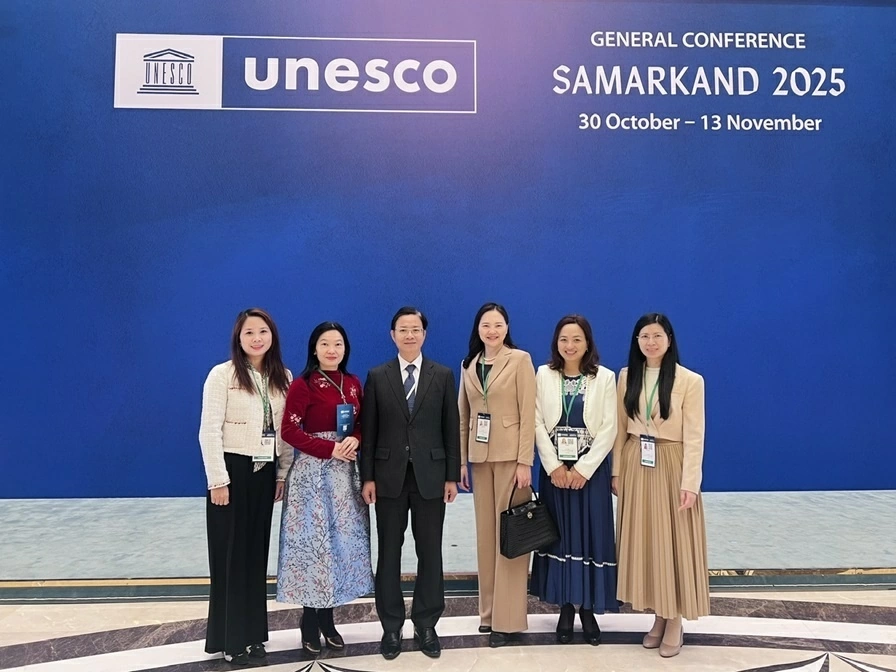 |
| The Presidium of the Viet Nam National Commission for UNESCO attends the 43rd session in Samarkand on October 30, 2025. (Photo: Chu Van) |
The year 2027 marks both the inauguration of the International Decade of Culture for Sustainable Development and Viet Nam’s hosting of APEC. In your view, Mr. Chairman, how can Viet Nam link these two milestones to advance regional cooperation in culture, the creative economy, and sustainable development?
The year 2027 presents an auspicious opportunity for Viet Nam to foster regional cooperation that integrates culture with economic growth. APEC brings together dynamic economies endowed with extensive expertise in innovation, technology, and market development, while its member economies also boast rich cultures, heritage, and traditional knowledge. In its capacity as host economy, Viet Nam is well-positioned to engage with partners in deeper dialogue on how to leverage these strengths in service of development and to generate new opportunities for people and businesses alike.
In June 2027, Viet Nam will host the High-Level Dialogue on Cultural and Creative Industries in Da Nang. This will serve as a policy exchange forum examining the contribution of culture to economic growth, as well as experiences in developing cultural industries and the creative economy - particularly in linking heritage preservation and promotion with technology application and innovation. Policymakers, business leaders, and experts will have the opportunity to deliberate on pressing practical issues. Through this Dialogue, we also aim to facilitate partner networking to forge concrete cooperative programs and projects. For instance, cultural institutions can partner with technology enterprises to present heritage through innovative formats, while localities can collaborate with partners to develop cultural tourism products, train human resources, or assist creative enterprises in accessing markets. Throughout implementation, all stakeholders must prioritize safeguarding heritage values, respecting community knowledge, and ensuring that local people participate and share in the benefits. These priorities align directly with the objectives of the Decade.
We can also promote youth ambassador programs in support of the Decade, thereby encouraging young people to champion and amplify the initiative, as well as to directly propose and participate in activities and projects implementing the Decade. Dedicated youth with innovative ideas and the ability to mobilize communities can collaborate on projects focusing on heritage education, cultural content creation, support for traditional craft villages, or exchanges among youth across APEC economies. Each initiative should address a specific need and be backed by committed partners to ensure long-term sustainability. Government agencies, youth organizations, universities, enterprises, and communities can join forces to provide technical expertise, partner connections, and resources for youth-led projects. By taking hands-on ownership of these endeavors, young people will gain a deeper appreciation of the Decade’s significance and find compelling ways to inspire those around them to get involved. Viet Nam can work alongside UNESCO and regional partners to foster such connectivity right from the inaugural years.
Alongside new initiatives, we should continue building upon the outcomes of the Asia-Pacific Dialogue on Heritage and Authenticity, co-organized by Viet Nam and UNESCO in Ha Noi this past September. Its recommendations on heritage cooperation, training young professionals, and sustaining regional dialogue provide a solid foundation for continued collaboration among stakeholders. The APEC 2027 Year can create further momentum to showcase these outcomes and broaden the engagement of relevant partners.
During our host year, we should effectively organize cultural diplomacy activities to deepen international friends’ understanding of Viet Nam and its people. Localities, organizations, and businesses should likewise seize this occasion to network and explore partnerships. It is our aspiration that the relationships forged in 2027 will continue to flourish, generating practical programs and projects to advance the Decade in the years to come.
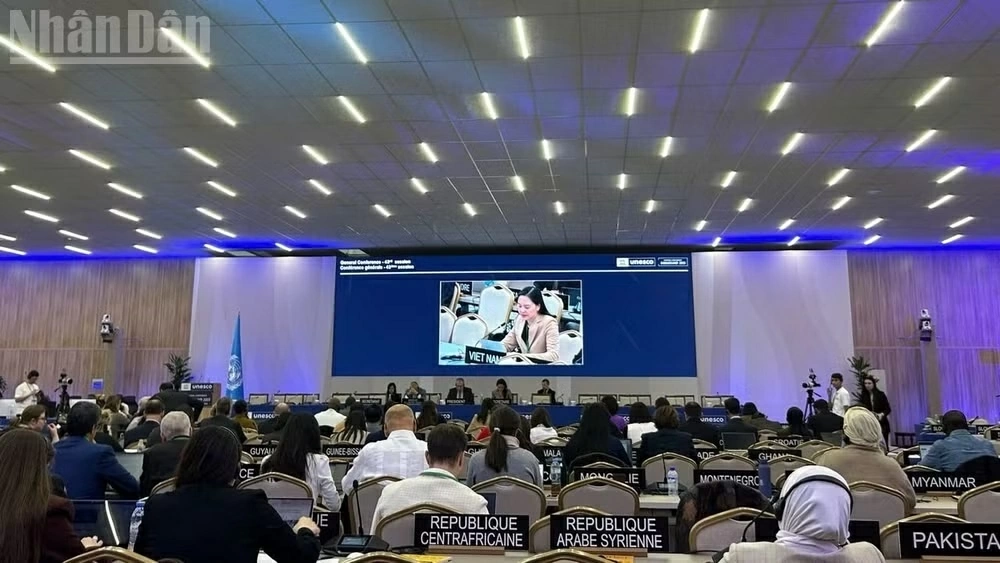 |
| Ambassador Nguyen Thi Van Anh, Head of the Permanent Delegation of Viet Nam to UNESCO, introduces the initiative “International Decade for Culture for Sustainable Development”. (Photo: Chu Van) |
The 2027–2036 Decade unfolds during the transitional period from the 2030 Agenda to the subsequent global development framework. What core contributions, in your view, should Viet Nam focus on to ensure that culture secures its rightful place in the post-2030 global development agenda?
The timeframe of the Decade, spanning from 2027 to 2036, carries profound strategic significance. During this period, nations will be simultaneously focused on achieving the Sustainable Development Goals by 2030 and deliberating on the trajectory for the subsequent era. Viet Nam must work with partners to ensure the effective implementation of the Decade from its very first years, thereby contributing empirical evidence and practical insights to the post-2030 deliberations.
Viet Nam supports advocating for the recognition of culture as a standalone goal in the post-2030 development agenda. This is vital for establishing clear policy priorities and allocating commensurate resources to culture. Viet Nam will take a proactive and pioneering role in promoting and amplifying the International Decade of Culture for Sustainable Development, working closely with UNESCO and the initiative’s co-sponsoring states to sustain dialogue, broaden international support, and jointly identify and execute substantive areas of cooperation. We will also contribute to formulating a Global Plan of Action for the Decade and take the lead on select thematic areas by implementing the Decade vigorously and effectively at home, thereby creating replicable models and offering valuable contributions to the international community.
In international deliberations, Viet Nam should work alongside partners to ensure that developing countries have both a meaningful voice and enabling conditions for participation. Many nations possess rich cultural heritage and traditional knowledge yet face constraints in financial resources, human capital, and technology. In this regard, we can advance South-South cooperation, triangular cooperation, and capacity-building support.
Bearing the responsibility of the initiating country, Viet Nam should consistently pursue these contributions throughout the Decade’s implementation. Together with UNESCO and our partners, we aspire to generate tangible outcomes and benefits for people everywhere, while helping to place culture in its rightful position within national development policies. This is also how Viet Nam contributes to our shared global endeavor for peace and sustainable development.
Thank you, Mr. Chairman!