





Craft Village infrastructure – The lever to lift Hanoi Tourism
WVR - In the cultural space of Thang Long-Hanoi, traditional craft villages not only preserve the essence of skilled craftsmanship but also symbolize the resilience, creativity, and humanity of the capital's people.
Latest
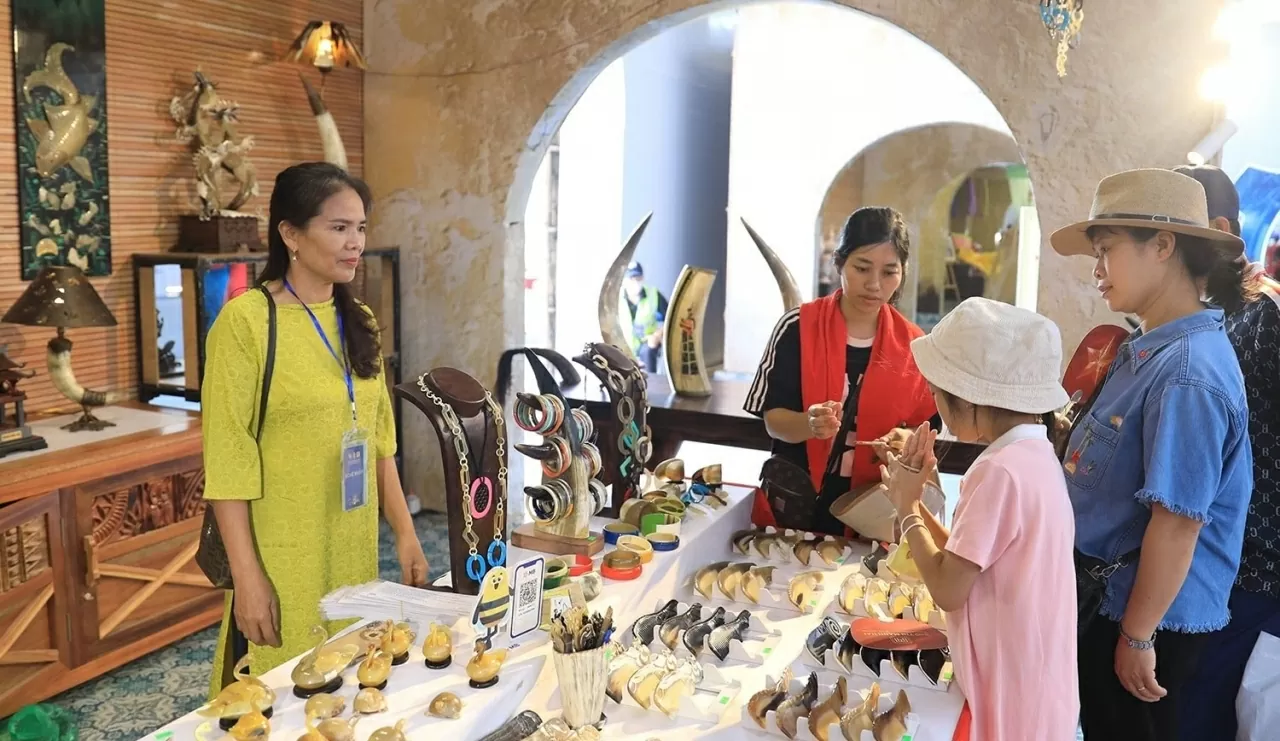 |
| Hanoi needs a boost in infrastructure for craft villages and tourism. (Photo: Quang Thai) |
For generations, craft villages have formed an organic relationship between craft, village, culture, and people, creating a unique and distinctive identity. However, to transform this potential into a sustainable economic resource, Hanoi requires a fundamental push, which is infrastructure for craft villages and tourism.
A space where culture and economy Converge
Hanoi currently ha over 1,350 craft villages and villages with crafts, of which 337 have been recognized as craft villages, traditional crafts, and traditional craft villages, providing employment for over 1 million workers and contributing tens of thousands of billions of VND annually to the rural economy. From Bat Trang ceramics, Van Phuc silk, Chang Son paper fans, Chuyen My mother-of-pearl inlay to Tranh Khuc Chung cake, and Uoc Le pork rolls, each craft village tells its own story of culture, folk knowledge, and creative spirit.
Craft villages are not only places where products are made but also vibrant cultural spaces that preserve traditional houses, customs, beliefs, and folk arts. The harmonious connection between "craft" and "village" has created a unique identity for the land of Thang Long, where "everyone practices a craft, every house preserves a craft".
There, each product is not merely a commodity but a work of art embodying the soul of the people, a culmination of history, labor, and aesthetics. This is precisely the value that modern tourism seeks: Experience, stories, and emotions.
Despite possessing valuable "soft resources", the reality is that most of Hanoi's craft villages still face many challenges in becoming attractive tourist destinations; both physical and tourism infrastructure in most craft villages remain weak and fragmented. According to tourism experts, the "biggest bottleneck" currently lies in infrastructure from transportation, landscape, environment to visitor support services.
Most craft villages are scattered across suburban districts such as Gia Lam, Thuong Tin, Thanh Oai, Chuong My, and Phu Xuyen. The roads leading to the villages are narrow, lacking signage, parking lots, public restrooms, or visitor reception areas. Many craft villages still intermix production and living areas, causing environmental pollution and affecting the overall aesthetics.
Beyond transportation, the lack of "soft" tourism infrastructure such as product introduction centers, craft experience spaces, community lodging, or specialty restaurants also makes it difficult for craft villages to retain visitors for long. Most visitors currently come for day trips, take photos, buy souvenirs, and leave, so the economic value of tourism does not match its potential.
The foundation for "Craft with soul, Tourism with wings"
For the infrastructure "boost" to be truly effective, craft village infrastructure must be viewed not just as roads and buildings but as a comprehensive ecosystem including production, tourism, and digital infrastructure.
Firstly, production-commercial infrastructure. Craft villages need to be planned towards green-clean-sustainable development, with production areas separated from residential areas, ensuring environmental protection and labor safety. Along with this is the construction of exhibition, introduction, and sales centers linked with cultural stories, origins, and craftsmen. When production is professionalized, products can easily enter the tourism and export markets.
Secondly, experiential tourism infrastructure. Craft villages need investment in visitor reception spaces, parking lots, restrooms, internal roads, bilingual signage, craft demonstration areas, and resting areas. The "one day as an artisan" tourism model—where visitors can make products themselves and hear stories about the craft—has proven to be highly attractive in many places like Bat Trang and Van Phuc. If infrastructure is synchronized, this model can be widely replicated.
Thirdly, digital and communication infrastructure. Digital transformation is opening new pathways for Hanoi's craft villages. Building digital maps of craft villages, developing websites, 3D virtual tours, or integrating electronic payments and QR codes for product origin tracing will make it easier for visitors to access, especially international tourists. This is also a way to "digitize craft heritage", allowing younger generations to access tradition in a modern way.
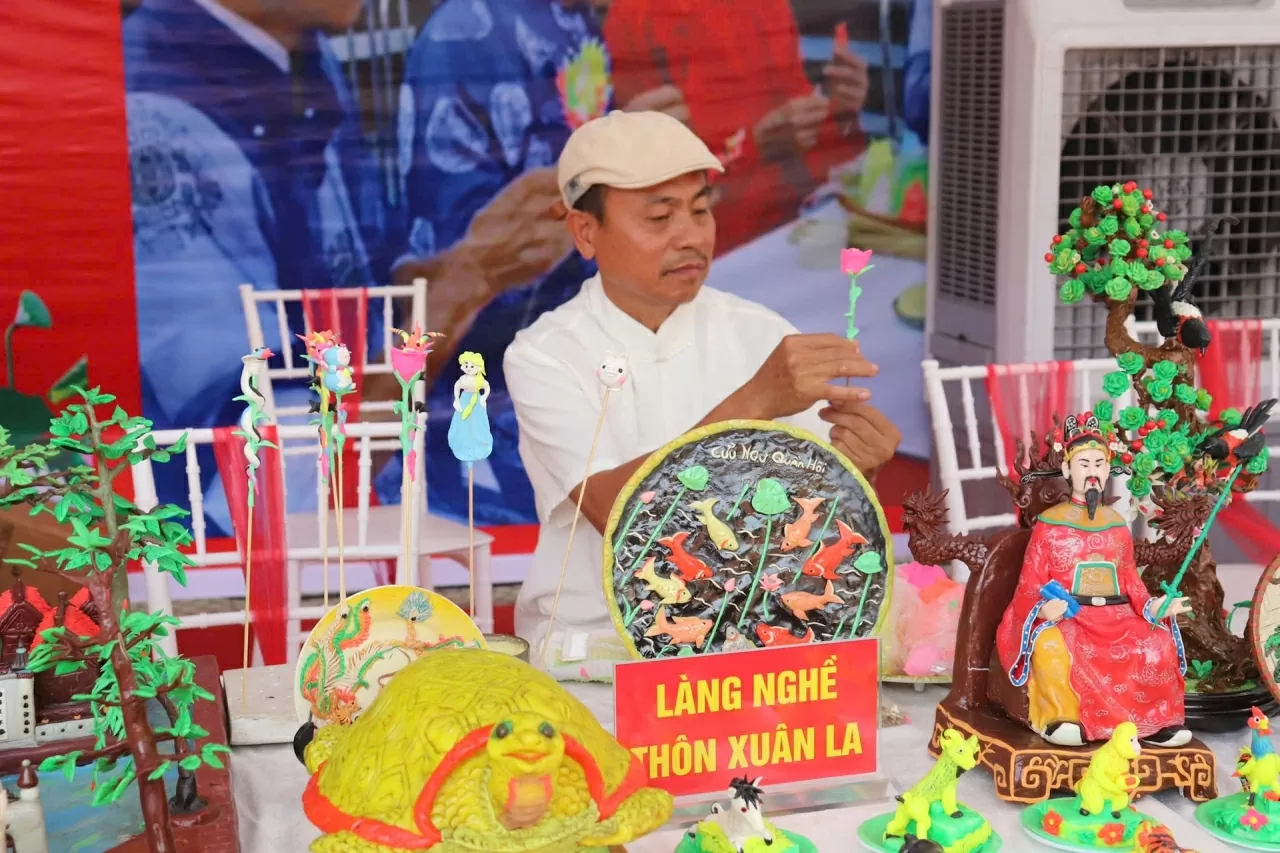 |
| The unique Xuan La To He craft village promises to be an attractive highlight of the Exhibition of New, Creative Handicraft Products and Designs - Phuong Duc Commune Craft Products 2025. (Photo: Son Tung) |
Mechanism and policies to "pave the way" for infrastructure
To realize the goal of making Hanoi the "Capital of Craft and Art", the city is implementing a comprehensive plan for craft village development from 2025-2030, with a vision to 2050, focusing on five infrastructure pillars.
Firstly, technical infrastructure: Expanding transportation, addressing environmental issues, and planning centralized production areas.
Secondly, tourism infrastructure: Display spaces, experiential routes, product introduction centers, lodging areas, culinary services;
Thirdly, digital infrastructure: Digital tourism maps, promotional platforms, virtual reality (VR/AR) technology for "remote experiences";
Fourthly, market connectivity infrastructure: Linking with travel companies, tourism associations, and e-commerce platforms.
Fifthly, cultural-human resource infrastructure: Training guides, artisans teaching performance skills and craft storytelling.
This is not just physical infrastructure but a "comprehensive ecosystem connecting craft, people, products, and visitors"—a prerequisite for developing craft village tourism in depth.
Many localities have boldly invested in upgrading infrastructure and services. Bat Trang pottery village has established a tourist street, exhibition center, and pottery-making experience area for visitors. Van Phuc silk village (Ha Dong) has been beautified, organizing an annual silk festival, attracting hundreds of thousands of visitors each year. Phu Vinh bamboo and rattan village (Chuong My), Chuyen My mother-of-pearl inlay village (Phu Xuyen), and Chuong conical hat village (Thanh Oai) are also gradually shaping cultural craft village tourism tours.
However, these models are still isolated, lacking regional connectivity. For craft village tourism to truly "take off", Hanoi needs a comprehensive strategy for infrastructure planning, linking craft villages in the "Thang Long cultural tourism chain".
A promising direction is connecting craft villages into clusters, following specialized tourism routes: "Thang Long Ceramics and Porcelain" route (Bat Trang – Kim Lan – Phu Lang), "Ha Dong Silk and Embroidery" route (Van Phuc – Quat Dong – Trieu Khuc), "Folk Cuisine" route (Uoc Le – Tranh Khuc – Phu Do)... Each cluster can become a complete experience, combining handicrafts, cuisine, and cultural activities.
Additionally, craft villages should be linked with urban creative spaces—where artisans, designers, and art students can collaborate to breathe "new life" into traditional products. When tradition meets modernity, craft villages will become the foundation of the cultural industry—a field in which Hanoi aims to become a regional center.
To make the infrastructure "boost" a reality, the roles of the government and businesses are indispensable. Hanoi needs to prioritize public investment funds for infrastructure projects connecting craft villages; simultaneously encouraging socialization in building tourism centers and craft experience spaces.
Preferential policies on land, taxes, and credit need to be specifically designed for businesses investing in craft village tourism. Particularly, there should be a fund for the preservation and development of craft villages, supporting artisans, young craftsmen, and projects digitizing traditional crafts.
Moreover, to enable craft villages to welcome international visitors, training local tourism human resources in communication skills, guiding, and foreign languages is crucial. Residents are the "cultural ambassadors" of their villages; when they are confident, friendly, and knowledgeable about their craft, they become the most sustainable human infrastructure.
For a long time, many craft villages have struggled between the dilemma of "preserving traditional crafts" and "developing a modern economy". But in reality, these two factors do not exclude each other; on the contrary, tourism is the path for crafts to live long and sustainably. When visitors come to learn, experience, and pay for handicrafts, craftsmen gain additional income, motivation to create, and a reason to pass on the craft to the next generation.
This can only happen when physical and service infrastructure is invested in synchronously, allowing visitors to "come easily, enjoy their stay, and return often". When infrastructure paves the way, culture and people will shine.
In its strategic vision, Hanoi aims to become the "Capital of Craft and Art"—a place that both preserves traditional values and pioneers in cultural creativity. To realize that vision, infrastructure is the foundation. When infrastructure is complete, tourism will be on the rise. At that time, Hanoi's craft villages will be a vibrant cultural symbol, contributing to elevating the capital's brand in the process of international integration.
| The comprehensive plan for craft village development in Hanoi from 2025-2030, with a vision to 2050, identifies 11 key solutions, focusing on completing craft village planning; improving infrastructure and environment; training human resources; digital transformation; product development linked with the OCOP program; trade promotion, international cooperation, and mobilizing socialized resources. Simultaneously, eight priority tasks are being implemented, including: Preserving and restoring traditional craft villages; developing craft villages linked with tourism and green economy; addressing environmental pollution; applying new technology; upgrading infrastructure; training, passing on crafts; promoting products and building brands. |