



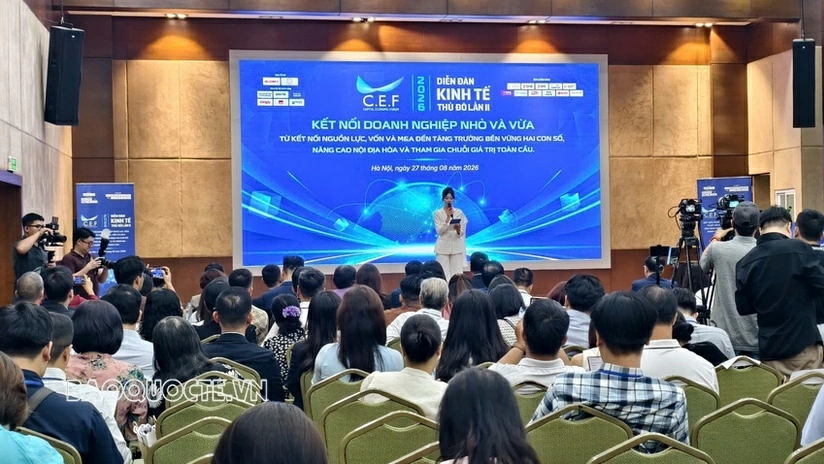
CEF III: Building stronger businesses for global competitiveness
CEF III involves the participation of diplomatic representatives, organisations, and international partners from 14 countries. Professor Dr Mac Quoc Anh believes that the internationalisation of CEF is not to increase the forum's formality but to open more substantial doors to development for Hanoi enterprises.
Latest
 |
| CEF III will take place on October 8 at Geleximco Group with the theme 'Growth Drivers from High-Quality Human Resources'. |
On the eve of the third Capital Economic Forum (CEF III), Professor Dr Mac Quoc Anh, Vice Chairman and General Secretary of HANOISME and Head of the Organising Committee (OC) of the CEF, shares with The World and Vietnam Report the highlights, messages, and expectations for the event.
CEF III has chosen the theme “Growth Drivers from High-Quality Human Resources” in the context of Hanoi enterprises seeking to enhance productivity, promote innovation, and increase competitiveness. From the OC's perspective, what are the biggest human resources bottlenecks facing the capital's business community, and what issues does CEF III aim to address?
In my opinion, the biggest bottleneck now is not simply that enterprises lack labour, but, more deeply, that they lack human resources suited to the new growth model. As the economy shifts strongly towards the digital, green, knowledge, and innovation economies, the requirements for workers have changed rapidly.
Enterprises need not only people with degrees but also those who can drive productivity, master technology, solve problems, innovate processes, and create new value for the business. Through practical interactions with the Hanoi business community, I have noticed several major bottlenecks.
Firstly, the gap between training and businesses' actual needs. Many businesses still have to retrain after recruitment. While schools train according to relatively long-term programs, technology, markets, and business models change monthly and quarterly. If this gap is not narrowed, it will become a very large “hidden cost” for businesses.
Secondly, there is a lack of human resources in fields that can directly drive productivity gains, especially in management and transformational management; digital technology, data, artificial intelligence, and automation; research and development; engineering and production; international markets, exports, and supply chains; and green growth and sustainable development.
Thirdly, there is a bottleneck in the enterprise's human resource management capacity. Some companies recruit talented individuals but have not created mechanisms for them to utilise their abilities. Some companies invest in machinery, software, and AI, but have not invested correspondingly in people to exploit that technology. Modern technology, but old management methods, will result in very limited investment efficiency.
Fourthly, small and medium enterprises are struggling to compete with large corporations and foreign-invested enterprises for human resources.
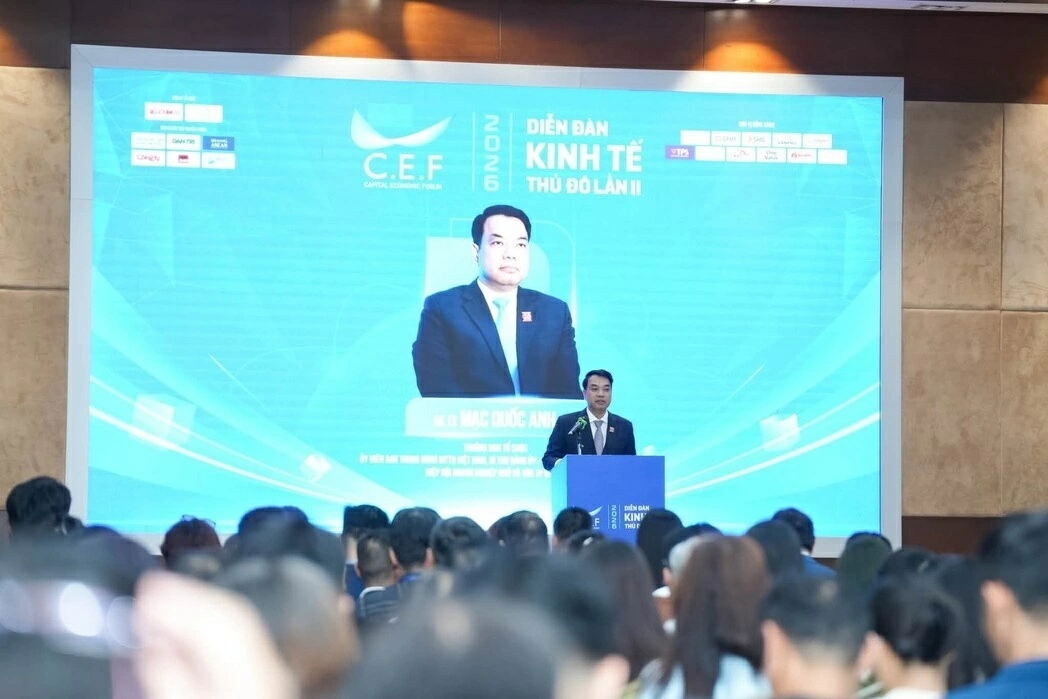 |
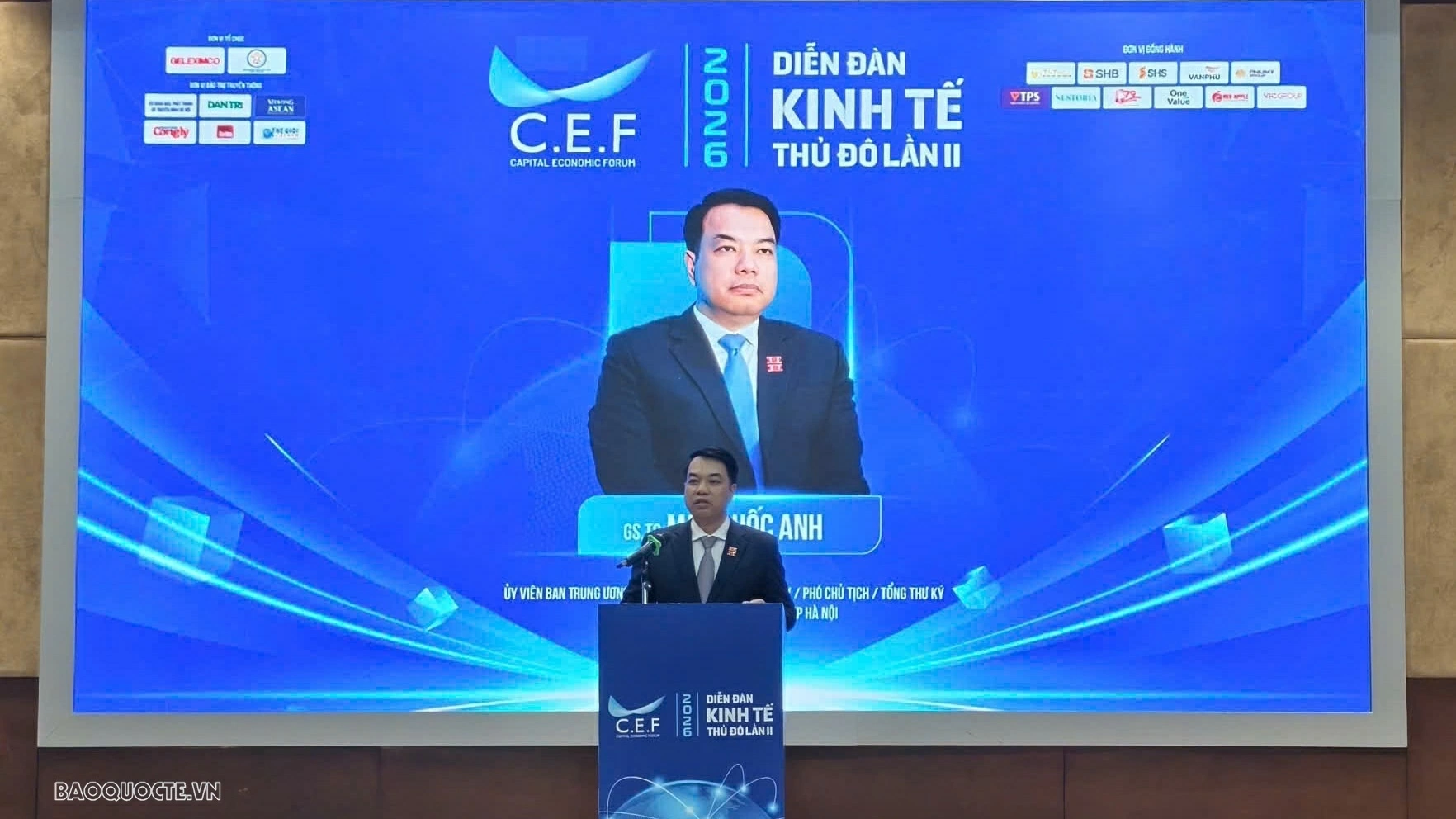
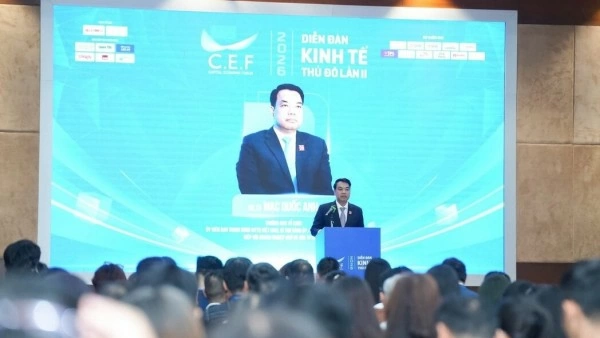
| Professor Dr Mac Quoc Anh, Vice Chairman and General Secretary of HANOISME, Head of the Organising Committee (OC) of the Capital Economic Forum, speaking at CEF II. |
Therefore, CEF III wants to address the issue at a higher level: Not just discussing recruitment and training, but discussing human resources as a direct driver of growth. We want to answer a very practical question: What kinds of human resources will Hanoi businesses need in the next 3-5 years? Where is the shortage? What changes do schools need to make? What changes do businesses need to make? What mechanisms does the state need to create? How can professional organisations, experts, and international partners participate?
The most important point is to form an ecosystem in which the State, enterprises, training institutions, research institutes, experts, and international organisations participate in developing human resources.
If this can be achieved, human resources will no longer be a mere “input” but must be transformed into productivity, innovation, competitiveness, and ultimately the growth of enterprises as well as the growth of the capital.
| The spirit of CEF III is very clear: Dialogue must create connections; connections must create cooperation programs; and cooperation programs must produce measurable results. This is also the direction that business forums need to transition to in the new phase: reducing formality and increasing depth; reducing merely “talking about issues” and increasing the ability to solve problems together. |
After two sessions of CEF I and CEF II, the issues raised for the business community have gained many new dimensions. What is new about CEF III in its approach and organisation of dialogue to move from identifying issues to seeking solutions? In this process, what role will the OC play in connecting businesses with management agencies, experts, organisations, and partners?
CEF III is a continuation and a qualitative development of the Capital Economic Forum. The first new point of CEF III is the shift from the mindset of organising a forum to building a dialogue mechanism capable of creating action after the forum. We do not want delegates to come, sequentially present prepared speeches, and then conclude.
CEF III must be where the questions of businesses are placed directly at the centre of the program; experts analyse, management agencies respond, training units propose solutions, and partners together determine the possibility of cooperation.
The second new point is interdisciplinary and multi-stakeholder. Human resources are not just a concern of the education sector, nor are they solely an issue for businesses; they also relate to labour policy, science and technology, innovation, finance, investment, production, trade, and international integration.
Therefore, CEF III creates a space for many stakeholders to sit together, not just to talk about “their issues” but to solve a common problem.
The third new point is that we particularly value the measurability of solutions. A proposal only truly has value when it identifies: Who will implement it, what will be done, where the resources will come from, when it will happen, and what results need to be achieved. Therefore, the OC's viewpoint is to try to turn discussion content into priority issue groups, from which to continue connecting after the forum.
In this process, HANOISME and the OC do not want to just play the role of “event organiser” but must become a bridge and a coordinating unit for the ecosystem.
With businesses, we gather real needs, real bottlenecks, and problems that need solving.
With management agencies, we convey those recommendations into structured, data-driven, and proposed issues to facilitate policy consideration.
With universities and training institutions, we want to turn business needs into “orders” for skills training, retraining, and skill enhancement.
With experts and research institutes, CEF creates a space to bring research knowledge closer to market needs.
With organisations, businesses, and international partners, we want to connect management models, technology, training programs, experts, and specific cooperation opportunities for Hanoi businesses.
The spirit of CEF III is very clear: Dialogue must create connections; connections must create cooperation programs; and cooperation programs must produce measurable results. I believe this is also the direction that business forums need to transition to in the new phase: reducing formality and increasing depth; reducing merely “talking about issues” and increasing the ability to solve problems together.
 |
| The internationalisation of CEF is not to increase the forum's formality, but to open more substantial doors to development for Hanoi enterprises. (Photo: Gia Huy) |
High-quality human resources are not just about recruitment or training, but are increasingly linked to productivity, technology, and the innovative capacity of enterprises. In your view, how should Hanoi businesses change their approach to developing and utilising human resources?
In my opinion, first of all, the mindset of business leaders must change. For a long time, many businesses have viewed human resources primarily from a cost perspective: how many workers, how large the salary fund is, and how much recruitment and training costs. But in a knowledge economy, people must be seen as strategic assets and a source of new value creation. A business investing in a production line can calculate its capacity.
Investing in software can help calculate its features. But the person who knows how to use that production line to increase productivity, knows how to use data to make decisions, knows how to apply AI to innovate processes, and knows how to turn an initiative into a commercial product. That is the resource that determines long-term competitiveness. I believe Hanoi businesses need to make at least three major transitions.
| Human resources truly become a growth driver only when knowledge is transformed into productivity, skills into efficiency, technology into value, and human initiatives into the enterprise's competitiveness. |
Firstly, shift from hiring people for positions to developing capabilities according to the business strategy. Enterprises must first answer how they will compete in the next 3-5 years. From that strategy, they can determine what groups of capabilities they need.
Secondly, human development must be linked with technology investment. I believe that in the AI era, the question should not be only whether technology can replace humans. The more important question is: How can businesses help a person create two, three, or even more times the value thanks to technology?
Small and medium enterprises should pay even more attention to this issue. We cannot compete with large enterprises in terms of personnel numbers. But we can fully compete with a leaner system that is better equipped with technology and has higher productivity.
Thirdly, shift from training as a trend to building a culture of continuous learning and innovation within the enterprise. In a world where technology changes very quickly, a training program cannot guarantee workers will remain knowledgeable for many years. The most important ability must be the ability to relearn, update, and adapt.
Enterprises need to allocate resources for retraining, skill enhancement, personnel rotation, and the development of successor teams, while designing mechanisms to recognise and translate employee initiatives into specific benefits. I also want to emphasise that high-quality human resources do not equate to high degrees.
The message I want CEF III to convey is: Human resources truly become a growth driver only when knowledge is transformed into productivity, skills into efficiency, technology into value, and human initiatives into the enterprise's competitiveness.
If Hanoi businesses can make that transition, we will not only have more high-quality labour but more importantly, form a generation of enterprises with higher productivity, stronger innovation, greater competitiveness, and sufficient capacity to participate more deeply in domestic and global value chains.
CEF III involves the participation of diplomatic representatives, organisations, and international partners from 14 countries. What substantial opportunities and connections does the OC expect this international dialogue space to create for Hanoi businesses, especially in accessing technology, developing human resources, attracting investment, expanding markets, and participating in international value chains?
In my opinion, the participation of diplomatic representatives, organisations, and international partners from 14 countries at CEF III should not be viewed solely in terms of the event's scale or internationality. More importantly, we must turn that presence into valuable connections, specific opportunities for cooperation, and new resources for the capital's enterprises.
In the current context, a business that wants to develop quickly and sustainably cannot only look at the domestic market. Technology, capital, management knowledge, human resources, and markets have all become global. Therefore, the direct interaction between Hanoi businesses and diplomatic agencies, international organisations, business associations, and foreign partners is highly significant.
 |
| The story of human resources at CEF III is essentially the story of a new growth model for Hanoi enterprises. (Photo: Gia Thanh) |
Firstly, the opportunity to access advanced technology and management models. For most small and medium enterprises, the difficulty is not always an unwillingness to innovate with technology, but rather uncertainty about which technology to choose, how much to invest, where to find partners, and how to reduce risks during the transition.
Through CEF III, we aim to establish direct channels of connection between Hanoi businesses and technology companies, innovation organisations, research institutes, and international partners. The goal is not to passively import technology but to pursue acceptance, mastery, and improvement, and to gradually participate more deeply in the technology creation process.
| CEF III does not end upon the program's closing. That moment must be seen as the starting point of the post-forum implementation process. If this can be done, each CEF session will create a new “layer of results”, and those results will continue to accumulate year after year. |
Secondly, cooperation in human resource development. If the central theme of CEF III is high-quality human resources, then international cooperation must play a very important role. Hanoi businesses can cooperate in programs for training experts, management, digital skills, artificial intelligence, high technology, smart production, green management, logistics, and international trade.
I particularly hope for short-term training models, on-the-job training, expert exchange programs, cooperation between businesses and universities, and “order-based training” models. These models can create faster and more direct impacts on businesses.
Thirdly, the opportunity to attract investment and connect capital. Hanoi has a great advantage in terms of human resources, markets, university systems, research institutes, and its position as the country's political, economic, cultural, and scientific centre.
However, to turn those advantages into high-quality investment flows, there needs to be good projects, good businesses, and a good mechanism to connect them. CEF III can serve as a platform to introduce potential businesses, innovative projects, technology cooperation needs, and new investment opportunities to international partners.
Fourthly, market expansion. I believe many Hanoi businesses have good products, but still have limited access to international markets. The gap between a good product and one that can enter the international distribution system involves standards, branding, legality, logistics, certification, intellectual property, and marketing capabilities.
Diplomatic agencies and international organisations can serve as “market bridges”, helping businesses better understand each country's requirements, find partners, and gradually build an international business network. Fifthly, and most importantly, is to support Hanoi businesses in participating more deeply in global value chains.
We do not just aim to sell more goods abroad. More importantly, Vietnamese businesses must gradually take on higher value-added stages: design, research and development, technology, branding, services, and supply chain management.
Therefore, I hope that after CEF III, specific connection groups can be formed between Hanoi businesses and partners from each country, from which to develop into cooperation programs in technology, human resources, investment, and markets.
The spirit of the Organising Committee is very clear: The internationalisation of CEF is not to increase the formality of the forum, but to open more substantial doors to development for Hanoi enterprises.
A notable point of CEF III is the planned announcement of the “Post-CEF III Action Framework”, selecting 5–7 priority issues, identifying focal points, responsibilities, and monitoring mechanisms. How does the OC expect these priority issues to be transformed into specific actions after the forum?
In my opinion, the real value of a forum does not lie in how many delegates attended that day, how many speeches were made, or how many recommendations were raised.
The more important value must be measured by the question: After the forum, what issues were resolved, what connections were formed, and what value did businesses receive? That is why we plan to build the “Post-CEF III Action Framework”.
The spirit is not to make too many general recommendations, but to select about 5-7 priority issues that truly impact the ability to develop human resources, enhance productivity, and enhance the competitiveness of Hanoi businesses.
For example, one set of issues may concern building a mechanism for connecting businesses and training institutions. Another group could be training and skill enhancement in AI, data, and automation.
One group may focus on developing business management teams. Another group is to support businesses in accessing experts, technology, or international cooperation programs. The important point is that each issue must be transformed from a recommendation into a task with a focal point for implementation.
I believe each post-forum content piece needs to answer at least five questions: what needs to be done; who is primarily responsible; who coordinates; what the timeline is; and what the expected outcome is. Without these elements, no matter how good the idea is, it is very easy to stop at the report stage.
HANOISME and the OC can play the role of gathering, coordinating, and monitoring progress. We will not replace the functions of management agencies, universities, or businesses, but can play the role of connecting stakeholders so that the content agreed upon at the forum continues to be implemented.
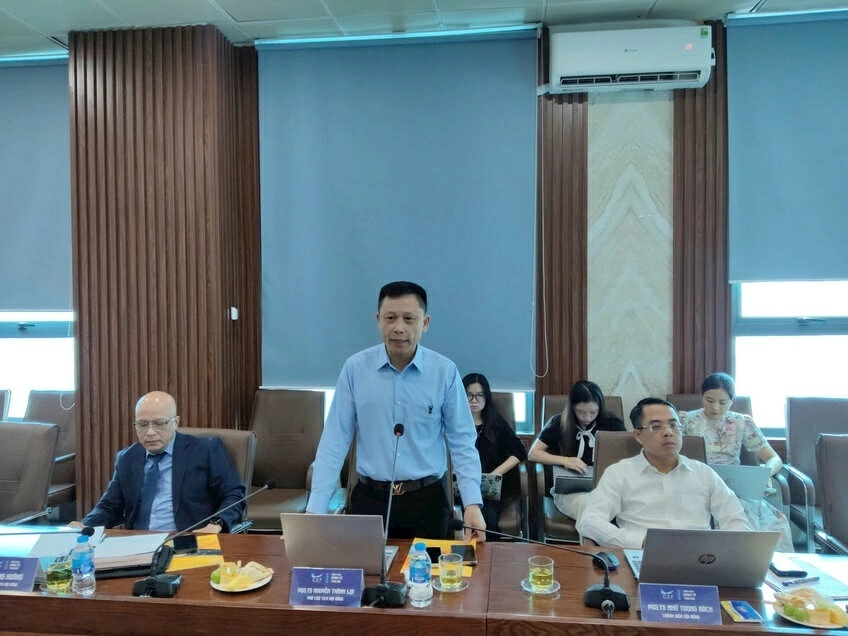 |
| Associate Professor Dr Nguyen Thanh Loi, Vice Chairman of the CEF Senior Expert Council, contributed to the preparatory meeting for the Forum. (Photo: Khac Kien) |
Another very important mechanism is to have feedback from the business community itself. Businesses must participate in evaluating which solutions are effective, which training programs are truly suitable, which procedures are still difficult, and what new issues are arising. This feedback will help ensure that CEF does not become a forum that only meets periodically, but rather a continuous cycle of identifying issues, proposing solutions, implementing, evaluating, and adjusting.
I also hope to establish small working groups for each issue. For example, an AI and data human resource development group, a group connecting businesses with universities, an international cooperation group, and a business management development group. Not every issue requires a large project.
In addition, technology needs to be used to monitor progress, update business needs, announce opportunities for cooperation, and establish a mechanism for regular interaction between the parties.
I want to emphasise one principle: CEF III does not end with the program's closure. That moment must be seen as the starting point of the post-forum implementation process. If this can be done, each CEF session will create a new “layer of results”, and those results will continue to accumulate year after year.
| After the forum, when discussing high-quality human resources, we should not focus solely on degrees or the number of trained workers. We must talk about labour productivity, the ability to master technology, innovation capacity, adaptability, and the level of contribution to the enterprise's added value. |
Looking further ahead, what do you hope CEF will develop into for the Hanoi business community? And what mark do you want CEF III to leave in shaping a high-quality human resource ecosystem, fostering innovation, and enhancing international connectivity for the capital's businesses?
I hope that in the future, CEF will not only be an economic forum organised periodically but can develop into a platform for dialogue, connection, and solution creation for the capital's business community. Hanoi has a very large business community, many universities and research institutes, leading experts, financial organisations, diplomatic agencies, and an international network of partners.
The issue is how to connect those resources more effectively. CEF can become one of the spaces to perform that function. I envision that in the future, CEF will have three roles.
The first role is to serve as a policy dialogue space. New issues in businesses need to be detected early, reflected in a timely manner, and addressed through direct exchanges with management agencies.
The second role is a resource connection platform. Businesses needing capital can meet investors; businesses needing technology can meet technology partners; businesses needing human resources can connect with training institutions; businesses wanting to export can meet promotion organisations and international partners.
The third role is to foster new development initiatives for Hanoi businesses. Each CEF session can choose a major economic issue to focus on solving: capital, market, M&A, value chain, human resources, digital transformation, green economy, innovation, or corporate culture. Thus, CEF will create a series of programs with continuity rather than separate events.
Specifically, for CEF III, I want the biggest mark to be a change in the business community's perspective on human resources. After the forum, when discussing high-quality human resources, we should not focus solely on degrees or the number of trained workers. We must talk about labour productivity, the ability to master technology, innovation capacity, adaptability, and the level of contribution to the enterprise's added value.
I also hope CEF III will create long-term connections among businesses, universities, research institutes, experts, and international partners, forming an ecosystem in which business needs are translated into training and research orders, and the knowledge of schools and experts is transformed into production, business, and innovation capabilities.
Further, we want to contribute to the formation of a generation of Hanoi businesses with three characteristics: more modern management, stronger use of technology, and deeper international integration. A city that wants to be highly competitive must have businesses that are highly competitive.
Businesses that want to be highly competitive must have people capable of driving productivity and creating new value. Therefore, I want to emphasise that the story of human resources at CEF III is essentially the story of a new growth model for Hanoi enterprises.
If CEF III can lay the foundation for an ecosystem in which people, technology, innovation, markets, investment, and international cooperation are connected, that will be the most lasting value the forum leaves behind.
And I believe that the ultimate goal of CEF is not just to successfully organise each forum, but to help create stronger capital enterprises with higher productivity, capable of reaching international markets, and increasingly contributing to Hanoi's fast and sustainable development goals in the new phase.
Thank you so much!
| CEF III will take place on October 8 at Geleximco Group with the theme “Growth Drivers from High-Quality Human Resources”. The World and Vietnam Report is one of the nine media sponsors of CEF III. |