




Turning cooperation opportunities into value
According to Le Dung, MSc in Business Administration, Director of the Institute of Business Intelligence, Founder and Chairwoman of the CEO 1983 Club, APEC 2026 will create additional opportunities for cooperation. However, to secure orders and retain customers, businesses must be prepared with the capacity to deliver.
Latest
 |
| Le Dung, MSc in Business Administration, Director of the Institute of Business Intelligence, Founder and Chairwoman of the CEO 1983 Club. (Photo: Supplied) |
APEC is an economic cooperation forum bringing together numerous dynamic economies, with vast markets and increasingly high business standards. In your view, what are the most notable opportunities that APEC 2026 could open up for Vietnamese businesses?
I believe one of the most notable opportunities offered by APEC 2026 is that Vietnamese businesses will have greater chances to connect with partners, access new technology and gain a better understanding of the requirements of markets across the region. The three priorities for APEC 2026 are openness, innovation and cooperation. Issues such as trade facilitation, digital transformation and supply chain connectivity are of practical significance to businesses. However, turning these opportunities into tangible business results requires time and coordination.
APEC is an economic cooperation forum comprising 21 member economies and operating on the principles of voluntary cooperation and consensus, but participation in APEC does not automatically confer tariff preferences. When selecting a market, businesses still need to check import regulations, customer requirements and the conditions for qualifying for preferential treatment under each relevant trade agreement.
In my view, Vietnamese businesses should focus on three key areas of opportunity.
First, opportunities to find customers and distribution partners. Business networking activities held within the framework of APEC and on the sidelines of its events can serve as the starting point for establishing business relationships. To turn these initial contacts into concrete partnerships, however, businesses must be prepared to address buyers' specific concerns: Is the product quality consistent? What production volumes can be supplied? How long will delivery take? And who will be responsible if problems arise? Therefore, preparation before a meeting is just as important as the meeting itself.
Second, cooperation to strengthen technology, skills and management capabilities. For small and medium-sized enterprises, a valuable partner may sometimes be one that helps improve product quality, optimize production processes or understand how to manage a new distribution channel. Such partnerships can lay the foundation for long-term growth.
Third, participation in value chains through specialized capabilities. Businesses can begin by taking on a stage of the value chain that matches their strengths and then gradually upgrade their capabilities. For example, in the agricultural sector, beyond the quality of raw materials, businesses can develop capabilities in processing, traceability and compliance with distributors' requirements. The value they are able to capture will depend on the stage of the value chain in which they participate, their bargaining power and the extent to which they control their products and markets.
APEC economies have different needs and varying levels of market access. Businesses should select target markets based on their actual capabilities and resources, test market demand on a manageable scale before expanding. In my view, APEC 2026 will create additional opportunities for cooperation. However, to secure orders and retain customers, businesses must be prepared with the capacity to deliver.
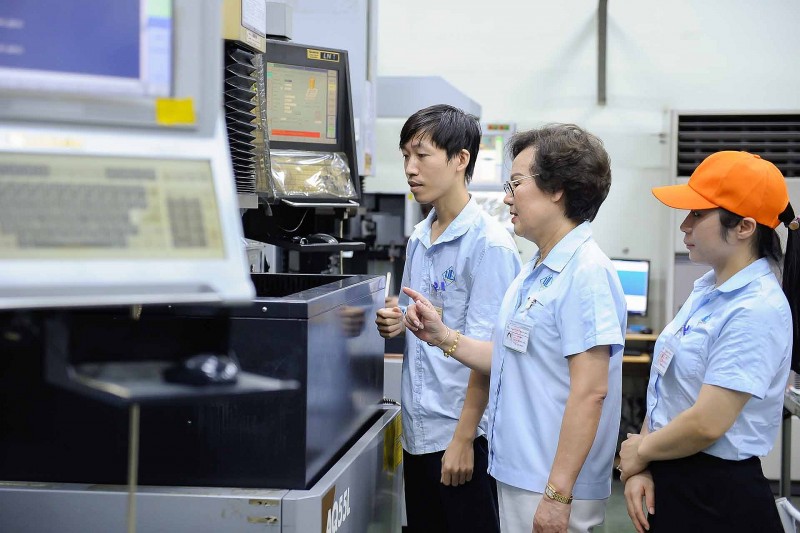 |
| A key opportunity offered by APEC 2026 is that Vietnamese businesses will have greater opportunities to connect with partners, access new technologies and gain a deeper understanding of market requirements across the region. (Photo: Nguyen Hong) |
What are the biggest obstacles currently preventing Vietnamese businesses from expanding into APEC markets? What changes should they make to enhance their competitiveness?
From the perspective of business training and networking, I believe one key bottleneck that needs to be addressed as a priority is the gap between a company's ability to manufacture products and its ability to organize and conduct business in international markets. The level of difficulty varies across industries and businesses, but the common question remains: When order volumes increase, can the company’s management system keep pace?
Having a good product is a necessary condition, but not sufficient on its own. To sustain relationships with business partners, companies must also demonstrate consistent product quality, reliable delivery schedules, cost control and the ability to handle unexpected problems. A large order can become a source of pressure if production processes, working capital and management capacity are not sufficiently prepared to keep up.
Therefore, the first change must begin with a shift in management mindset. Business leaders need to clearly determine what factors their companies will compete on, which customer segments they intend to serve and how long they are prepared to invest in developing those capabilities. Cost advantages remain important, but they must be reinforced by productivity, quality and responsiveness. If businesses focus solely on lowering prices without improving operational efficiency, they will lack the resources needed for development.
In terms of technology, businesses need to start by identifying specific problems. If deliveries are frequently delayed, they must first determine whether the causes lie in production planning, inventory management or coordination between departments before choosing an appropriate solution. With artificial intelligence (AI), companies need to identify suitable applications, assess data quality, establish security requirements and define accountability for reviewing AI-generated outputs. They should conduct small-scale trials, measure their effectiveness and only then expand investment.
Regarding human resources, in addition to foreign-language proficiency and professional expertise, businesses need employees who understand contracts, can coordinate tasks effectively and handle issues arising in dealings with international partners. Middle management teams are particularly important, as businesses will find it difficult to expand if every decision has to wait for the owner or chief executive.
In addition, businesses need to fully account for the costs and risks of international transactions, ranging from transportation, inspection and exchange-rate fluctuations to payment and complaint handling. Higher revenue does not necessarily translate into higher profits or more stable cash flows. Businesses also need to understand their contractual obligations, rules of origin when claiming preferential treatment and the legal requirements applicable to their goods and services.
In my view, preparing for international integration is also a process of improving the quality of internal business management. The stronger this foundation, the greater a business's ability to seize opportunities in external markets.
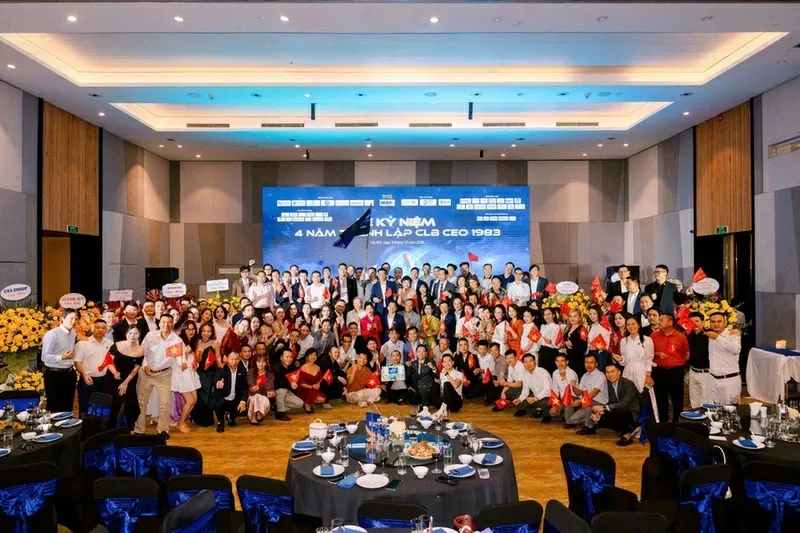 |
| The CEO community needs to invest in the capabilities of individual businesses and in how cooperation among members is organized. |
How do you assess the role of the business community in elevating the position of Vietnamese enterprises within APEC? What capabilities and long-term cooperation strategies should the community of chief executive officers (CEOs) develop?
In my view, entrepreneurs play a direct role in building the reputation of Vietnamese businesses in international markets. Partners evaluate us through very specific aspects, such as product quality, delivery schedules, transparency and our attitude when resolving disagreements. Trust over the long term is built through the accumulation of these practices across multiple transactions.
With 18 years of experience in business training and networking, I am particularly interested in how knowledge is applied in businesses. In my roles as Director of the Institute of Business Intelligence, Founder and Chairwoman of the CEO 1983 Club under the Hanoi Business Association (HANOIBA), I believe that a knowledge-sharing session is truly valuable when it helps participants find solutions to their own business problems. The same applies to networking activities: the parties involved need to understand each other's capabilities and identify specific tasks they can undertake together. Therefore, the CEO community needs to invest in both the capabilities of individual businesses and in how cooperation among members is organized.
At the enterprise level, leaders must be capable of making strategic choices: which markets are suitable, which competitive advantages can be sustained and when the business is ready to expand. Decisions to enter international markets must be accompanied by resource plans and clearly defined acceptable risk limits.
Equally important is the ability to foster organizational learning and innovation. CEOs need to build teams capable of adopting technology, adapting products and improving processes. Knowledge gained from a training course or a study tour must be translated into specific tasks, with clearly assigned responsibilities and mechanisms for monitoring results.
At the community level, trust can open the door to cooperation, while clear principles make it more sustainable. When doing business together, the parties still need specific agreements on quality, finance, responsibilities and mechanisms for resolving disagreements. The closer the personal relationships, the more important it is to establish clear commitments from the outset.
 |
| A street in Shenzhen, Guangdong Province, China, decorated with APEC 2026 symbols. (Source: VCG) |
In terms of long-term strategies, CEO communities can establish industry-based or market-oriented cooperation groups, conduct joint customer and market research, share experience and build complementary supply capabilities. Their objectives should be sufficiently specific, such as jointly meeting the requirements of a particular buyer or developing a distribution channel.
To help raise business standards, enterprises can start by adopting transparent and responsible business practices and sharing verified experience. Challenges and recommendations should be compiled and supported by evidence through business associations and appropriate consultation mechanisms, including channels for submitting proposals to Vietnamese representatives on the APEC Business Advisory Council (ABAC). ABAC serves as a platform through which the business community provides advice to APEC leaders. The development of technical standards, however, must follow the relevant professional procedures and should be distinguished from ABAC's role in policy consultation.
Sustainable development should also begin with measurable actions, such as using raw materials more efficiently, reducing waste, ensuring labor conditions and providing transparent information. Effective implementation not only improves operational efficiency but also enables businesses to engage with partners on the basis of tangible results.