


CEF III: Addressing human resource challenges to drive substantive growth in Hanoi
WVR - On the afternoon of October 8, in Hanoi, the third Capital Economic Forum 2026 (CEF III) officially opened under the theme “Growth drivers from high-quality human resources”.
Latest
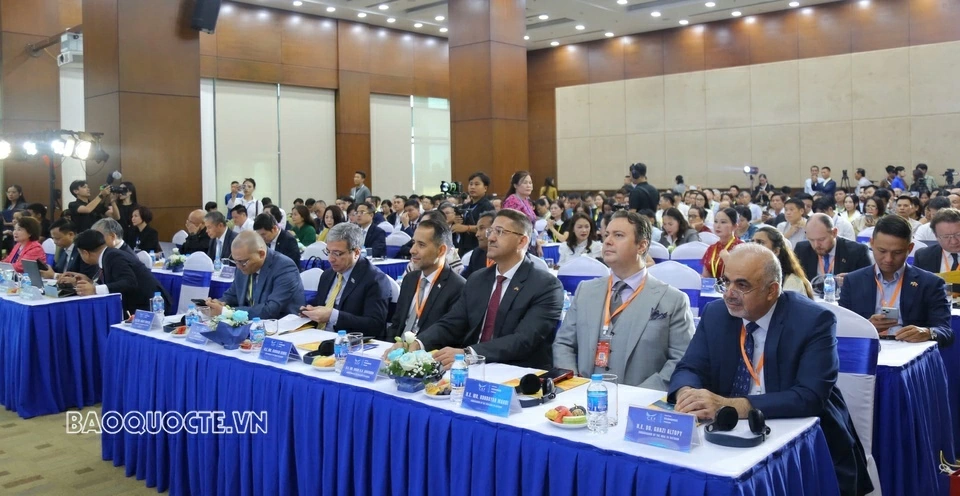 |
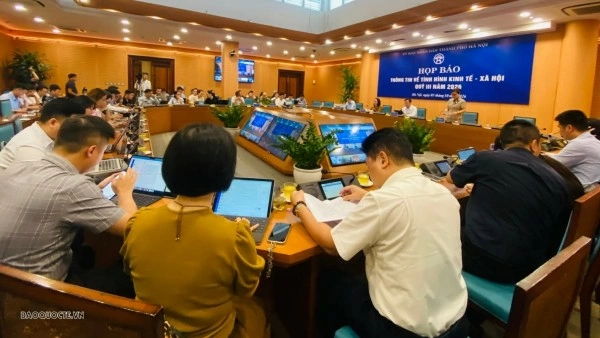
| Delegates attending the third Capital Economic Forum 2026 (CEF III). (Photo: Trung Anh) |
CEF III is directed by the People's Committee of Hanoi and the Vietnam Chamber of Commerce and Industry (VCCI); the Hanoi Association of Small and Medium Enterprises (HANOISME) serves as the focal point for organization and coordination, along with a network of 18 co-hosting units.
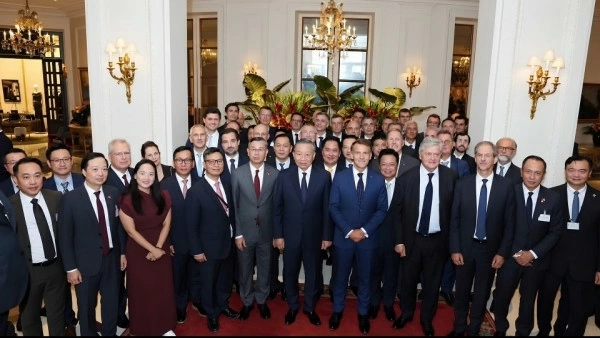
Attending CEF III are representatives of leadership from various departments, associations, businesses, experts, investors, banks, and investment funds. The forum gathers over 300 delegates from 15 countries, focusing on discussions about human resources in relation to technology, capital, management, production, market, and the ability of enterprises to participate in the global value chain.
Solving the human resources puzzle for the capital
In his opening speech at the Forum, Prof. Dr. Mac Quoc Anh, Vice President and General Secretary of HANOISME, Head of the Organizing Committee of CEF III, stressed that in the context of Hanoi aiming for double-digit growth, the human resources puzzle needs to be viewed from the requirement of creating genuine growth.
According to Prof. Dr. Mac Quoc Anh, high-quality human resources should not be viewed merely through degrees, titles, or a group of management personnel. The core factor is the implementation capacity and the ability to transform human capabilities into productivity, added value, and competitiveness of enterprises.
Therefore, high-quality human resources must include various groups, from leadership, management, finance, investment to digital technology, AI, data, automation; from sales, marketing, e-commerce, export, logistics to teams of engineers, technicians, and skilled workers in production.
“Each group of human resources must be viewed with very specific questions: What productivity do they create, what added value, what competitiveness, and how do they contribute to the growth of the enterprise,” Prof. Dr. Mac Quoc Anh stated.
The Vice President and General Secretary of HANOISME noted that the human resources puzzle cannot be separated from other resources of the economy. Technology can help businesses change production methods, capital facilitates investment expansion, and the market opens opportunities to increase revenue, but to turn those resources into actual results still requires human capabilities.
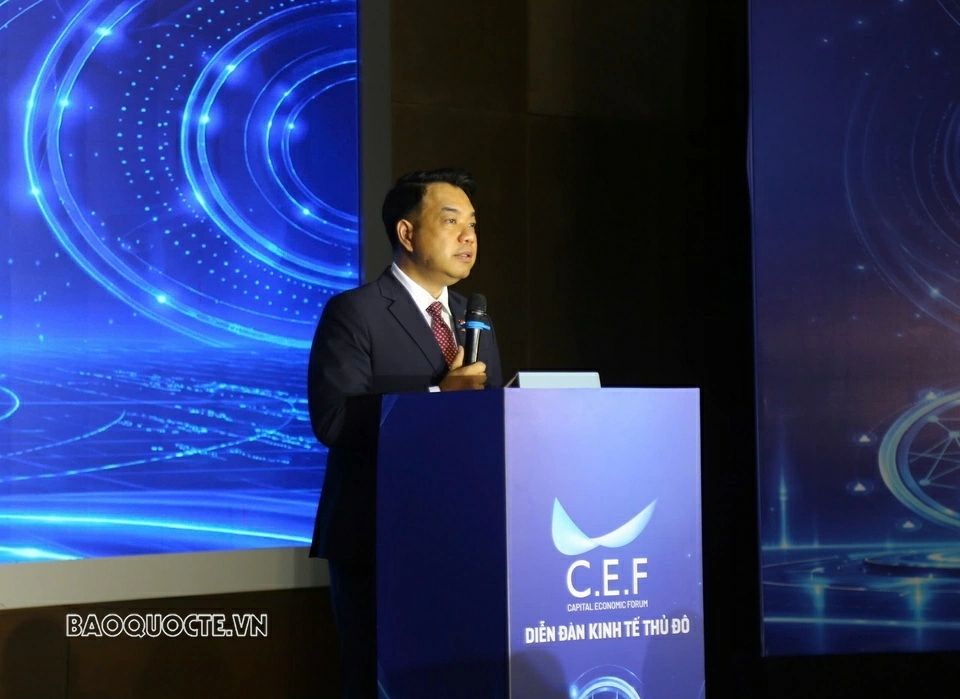 |
| Prof. Dr. Mac Quoc Anh, Vice President and General Secretary of HANOISME, Head of the Organizing Committee of CEF III, delivers the opening speech at the Forum. (Photo: Trung Anh) |
Thus, high-quality human resources must be placed in direct relation to productivity, technology, capital, market, and value chains. This is no longer merely a recruitment-training story but an economic issue, determining the ability to expand and enhance the competitiveness of enterprises.
“Especially, as Hanoi aims for double-digit growth, it is necessary to clearly answer where the capital’s enterprises are weak in terms of productivity, technology, capital, market, chain linkage, and human resources. Only then can the necessary human capabilities be identified to overcome bottlenecks and create new growth drivers.
One of the important requirements is to shift from the mindset of ‘having human resources’ to ‘having the right capabilities’. Enterprises need to specifically determine which skills they are lacking, which positions need high-quality human resources, which capabilities need retraining, and which can be supplemented through links with training institutions,” Dr. Mac Quoc Anh emphasised.
This is also how CEF III approaches the human resources puzzle in relation to technology, management, finance, market, production, and supply chains.
The professional content focuses on recruiting the right people, training the right capabilities, and transforming capabilities into productivity, added value; developing high-tech, AI, data, and automation human resources; management, finance, and M&A human resources; market, e-commerce, export, logistics human resources; along with technical, production, retail, and value chain human resources.
Importantly, according to Prof. Dr. Mac Quoc Anh, the solution does not stop at identifying that enterprises are ‘lacking people’, but must answer what kind of people enterprises need; what capabilities are lacking; where to recruit; how to train and retrain; how to utilize and retain human resources.
The final effectiveness also needs to be measured by specific indicators such as labor productivity, revenue, product quality, capital absorption capacity, or the ability to participate in the value chain, rather than just the number of trained workers.
According to Dr. Mac Quoc Anh, the requirement is to transform human resources from an input factor into a growth-driving capability. “The measure of success for CEF III does not lie in the number of speeches or messages delivered, but in the ability to turn conclusions into actions after the Forum,” Mac Quoc Anh emphasized.
Highlighting international connectivity activities
A notable point of CEF III is the approach to human resources not only stopping at recruitment and training but placing people at the center of the process of creating productivity, innovation, enhancing competitiveness, and forming new growth drivers.
According to the Organizing Committee, this is also the next development step in the content flow of the three Capital Economic Forums. If CEF I focused on AI, e-commerce, and digital tools to support businesses in expanding markets; CEF II aimed at connecting capital, M&A, investment, developing suppliers, and increasing localization rates, then CEF III delves into the question of human resources capable of mastering technology, operating capital, developing markets, and helping businesses participate more deeply in the value chain.
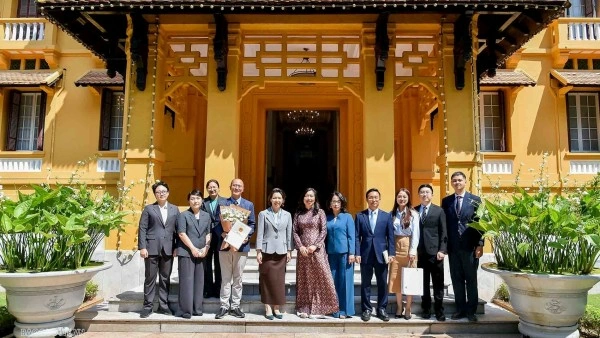
A highlight of CEF III 2026 is the international connectivity activities. According to the Organizing Committee, the forum is attended by ambassadors and diplomatic representatives from 15 countries, helping to expand the space for exchanging experiences and connecting between capital enterprises and international partners, especially in areas of high-quality human resources, science - technology, innovation, investment, trade, and global value chains.
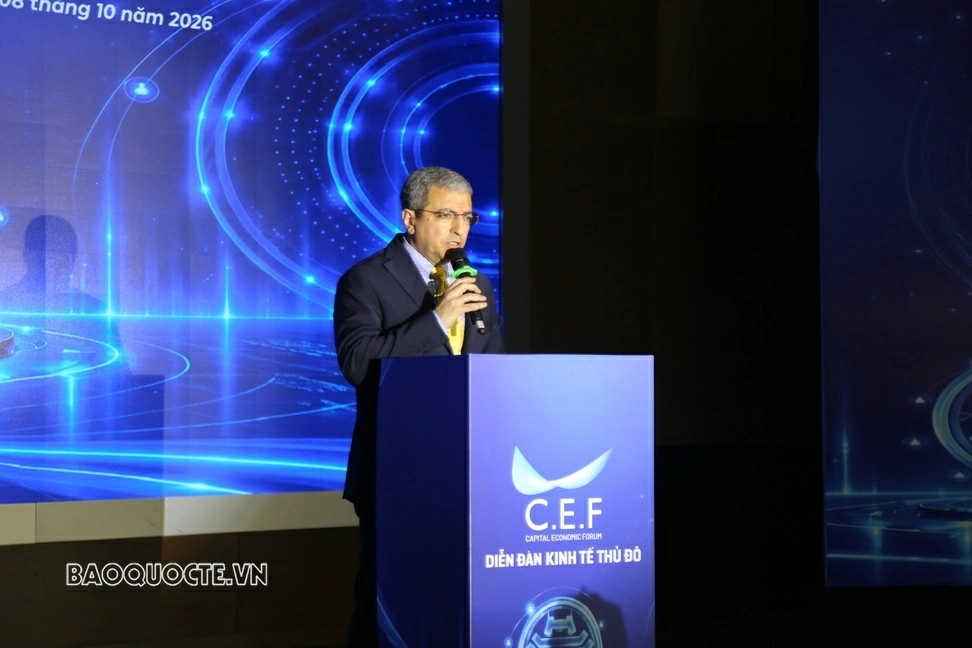 |
| Ambassador of the Republic of Kazakhstan to Vietnam Kanat Tumysh speaks at the Forum. (Photo: Trung Anh) |
Speaking at the Forum, Ambassador of Kazakhstan to Vietnam Kanat Tumysh emphasised that Kazakhstan focuses on strengthening the connection between education, research, and the practical needs of an ever-changing economy; equipping the younger generation with digital skills and specialized techniques; and creating conditions for talents to shine.
Human resources are not only built in the classroom environment. This strategic asset can only grow strongly when universities, the business community, and government agencies join hands in action, and when each individual has the opportunity for lifelong learning.
According to Ambassador Kanat Tumysh, Kazakhstan has established the Artificial Intelligence University in the capital Astana. He invites young Vietnamese to study and research there.
“This is also a promising field for cooperation between Kazakhstan and Vietnam. Our two countries can fully connect educational institutions, the business community, along with teams of experts, scientists, scholars, and young intellectuals closer together,” the Ambassador said.
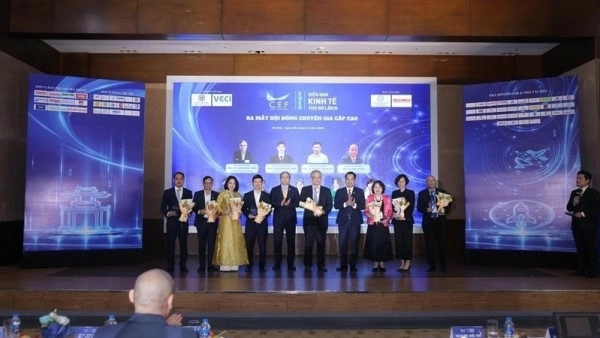
At the forum, the CEF High-Level Expert Council was also launched, consisting of 9 members who are experts in economics, science - technology, management, education, communication, and business representatives. The council plays a role in advising, critiquing, orienting, and synthesizing expertise for the forum's activities.
In addition, a network of 18 co-hosting units representing various fields such as information technology, retail, M&A, supporting industries, logistics, textiles, handicrafts, women-owned businesses, and employment services will participate in CEF III activities.
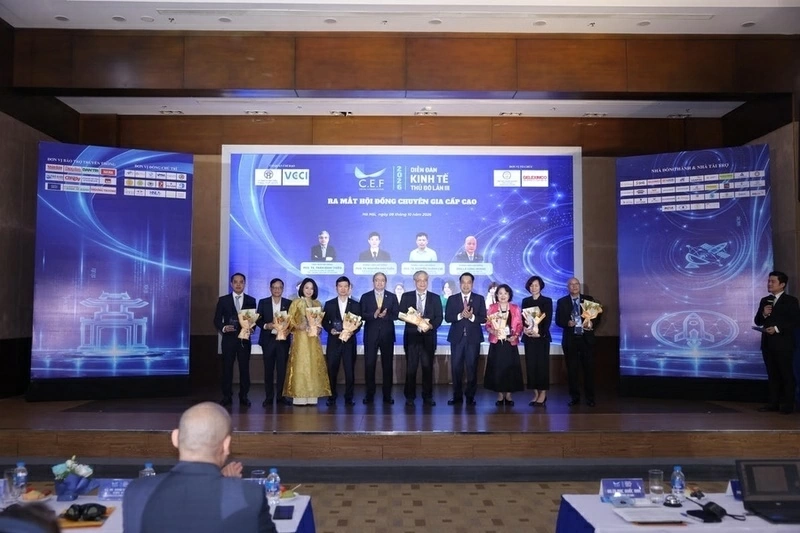 |
| Launch of the CEF High-Level Expert Council. (Photo: WVR) |
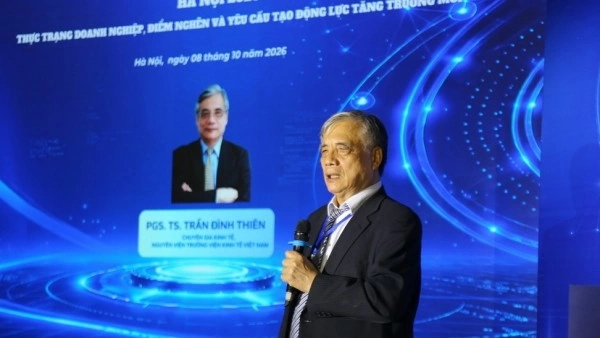
In terms of expertise, CEF III dedicates a central report with the theme “Hanoi 2026: Current State of Enterprises, Bottlenecks, and the Need to Create New Growth Drivers”, focusing on identifying the strengths, limitations, and gaps that need to be addressed in the capital's business community.
Three thematic reports focus on key links in the human resources puzzle, including developing human resources to enhance productivity and added value; improving management, finance, and M&A capabilities for enterprises to absorb capital and restructure; strengthening the link between enterprises and training institutions to develop teams of engineers, technicians, and skilled workers for production, retail, and the global supply chain.
Notably, CEF III aims to turn discussion content into specific actions. In the final expert synthesis session, 5 to 7 priority issues will be selected, associated with pilot programs, identifying practical implementation, and delineating responsibilities between the State, associations, enterprises, and training institutions.
The goal is to form a “Post-CEF III Action Framework”, in which post-forum initiatives have implementation focal points, follow-up activities, and specific monitoring mechanisms. Through this, the Forum hopes to create additional dialogue space between management agencies, enterprises, training institutions, and international partners, linking human resource development with the requirements of increasing productivity, technological innovation, and enterprise competitiveness.