



CEF II 2026: From business connections to substantial deals and linkages
The Capital Economic Forum II – CEF II 2026 will focus on connecting small and medium enterprises with capital sources, investors, leading enterprises, and markets, aiming to form M&A deals, investment cooperation, supplier development, and deeper participation in the global value chain.
Latest
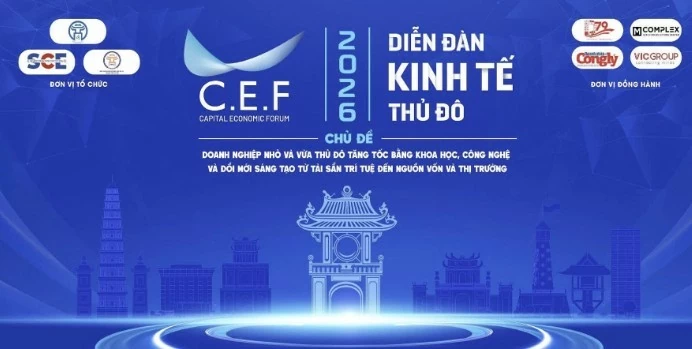 |
On August 27 in Hanoi, the Hanoi Association of Small and Medium Enterprises (HANOISME) will organise the Capital Economic Forum II – CEF II 2026 with the theme “Connecting Small and Medium Enterprises – Promoting M&A, Investment and Cooperation, Enhancing Localisation and Participating in the Global Value Chain”.
The forum will take place from 1:30 PM to 5:00 PM on August 27 in GELEXIMCO Group, 36 Hoang Cau, Hanoi. The program is chaired by HANOISME, in collaboration with Saigon - Hanoi Securities Joint Stock Company (SHS), Nestoria Vietnam Co., Ltd., and GELEXIMCO Group as the venue partner.
According to the Organising Committee, CEF II 2026 is a continuation of the first event's results, designed to be more in-depth and substantial. While many business forums often focus on dialogue, information sharing, and networking, CEF II emphasises what businesses can do next, with whom, and with what resources after the meeting.
This is also a specific activity in response to Hanoi City's Plan No. 303/KH-UBND dated August 4, 2026, on the Emulation Movement “Determined to Achieve the Goal of Sustainable Double-Digit Growth” for the period 2026-2030. Hanoi's plan focuses on creating a favourable development environment for businesses, while promoting science and technology, digital transformation, green economy, knowledge economy, circular economy, and local governance towards sustainable development.
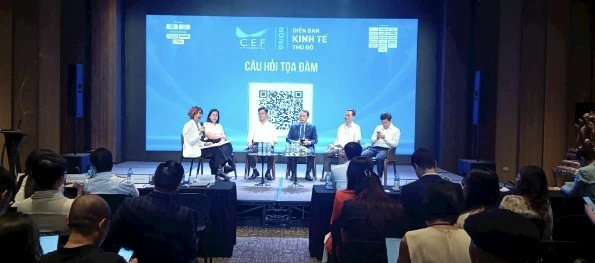 |
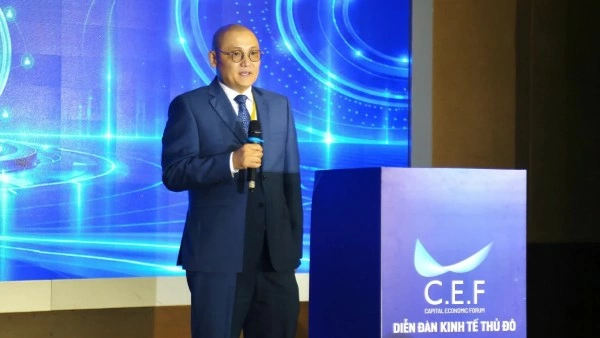
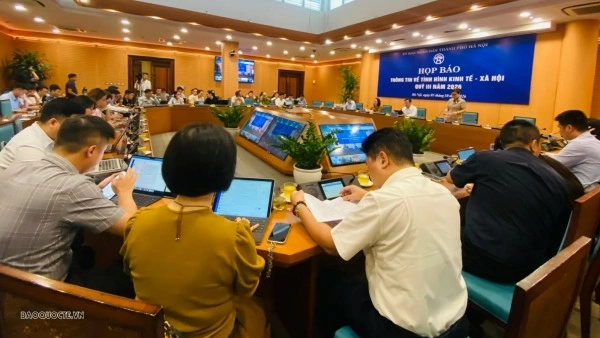
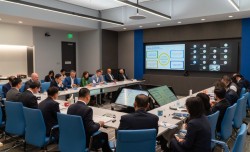
| Delegates participating in a discussion at CEF I. |
Bringing M&A and capital closer to SMEs
One notable highlight of CEF II is that M&A is seen not only as a business buying and selling activity but also as a tool to help small and medium enterprises restructure and supplement their capital, technology, management capacity, markets, and strategic partners.
In reality, many small and medium enterprises still face difficulties in accessing capital and investors. Issues such as financial transparency, business valuation, capital structure, risk management, data, and readiness for investment can become barriers when businesses enter the capital market or seek strategic partners.
Therefore, CEF II aims to help businesses identify and standardise the necessary requirements before approaching investors, financial institutions, or M&A partners. This is a noteworthy approach in the context where businesses not only need capital to expand but also require technology, management, market, and competitive capacity.
Within the framework of the Forum, the Deal Room/Matching 1:1 area will be reserved for about 10-20 profiles with high readiness levels. The profiles are received, diagnosed for needs, screened, and standardised before seeking suitable partners, organising direct meetings, and continuing to monitor the transaction development process.
Each meeting is directed to clearly identify needs, authorised persons, partner criteria, initial documents, and next objectives; the results are recorded in the minutes of the next step.
According to the Organising Committee, businesses in need of capital raising, seeking investors or strategic shareholders, financial restructuring, conducting M&A, finding distributors, customers, consulting units, or leading enterprises are encouraged to register their information and connection goals in advance.
Conversely, banks, investment funds, securities companies, large enterprises, and professional service units can proactively select suitable profiles for deeper exchanges. The ultimate goal is to turn a business meeting into an investment profile, a supply contract, a cooperation agreement, or an M&A deal that is implementable.
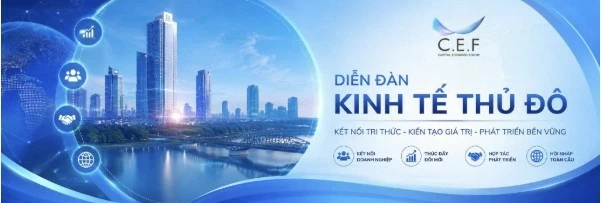 |
| The Capital Economic Forum (CEF) of the Hanoi Association of Small and Medium Enterprises (HANOISME) officially has the website domain cefhanoi.vn aims to build a regular connection platform between businesses and investors, financial institutions, experts, regulatory agencies, and supply chain partners. |
From “small enterprises” to suppliers in the global value chain
Another important axis of CEF II is the development of the supplier system in Vietnam and the increase in the localisation rate.
According to the Organising Committee, in the modern value chain, to become a supplier for large corporations, Vietnamese enterprises not only need good products but must simultaneously meet many standards regarding quality, progress, traceability, management, production capacity, environmental and social responsibility, and the ability to maintain a stable supply.
Therefore, localisation is not simply replacing an imported input with a domestic product. More importantly, it is the process of upgrading enterprise capacity to participate in higher-value-added stages of the supply chain.
This is a particularly meaningful issue for the small- and medium-enterprise community in Hanoi, as the city is promoting a growth model that relies more on science and technology, innovation, and digital transformation.
At the Capital Economic Forum held on July 31, 2026, with the theme of AI application and e-commerce, Hanoi also raised the issue of connecting small and medium enterprises with policies, technology, capital sources, and markets; activities at the forum aim to support businesses in accessing digital solutions, financial institutions, investment funds, large corporations, and distribution systems.
CEF II continues to expand this connection direction but shifts the focus more strongly towards investment, M&A, supplier development, and international cooperation.
Not just an afternoon: aiming for 100-day follow-up
The standout difference of CEF II lies in how the Organising Committee quantifies the Forum's outputs.
The event is expected to bring together about 150-200 delegates, including at least 80 small and medium enterprises, along with about 20 booths showcasing suppliers' products, projects, and capabilities.
The Organising Committee aims to receive at least 30 profiles/demand forms, organise at least 20 B2B connections, provide in-depth consulting to at least 10 enterprises, and secure at least 5 memorandums of understanding, cooperation agreements, or principal profiles.
Notably, 100% of eligible profiles will be assigned a focal point for follow-up at 30, 60, and 100 days after the Forum. Thus, the effectiveness of CEF II is evaluated not only by the number of delegates or the number of meetings held on August 27 but also by the results achieved thereafter.
This approach aligns with the trend of organising economic forums in an “action-oriented” manner, in which connections must be translated into specific programs, projects, or transactions. In previous economic activities in Hanoi, tracking the results of business support after 30, 60, and 100 days has also been set as a measure of effectiveness.
Establishing a Continuous Connection Platform
CEF II is not limited to the direct event space. The website cefhanoi.vn is designed to become the Forum's information and digital connection channel, where businesses can continue to update on programs, investment opportunities, M&A, demand for suppliers, partners, and markets, as well as support programs.
This opens the possibility of forming a continuous connection ecosystem, rather than an event that lasts a few hours and then ends. Information about business needs can continue to be digitised, classified, and connected with suitable partners after the Forum.
According to the Organising Committee's orientation, CEF II brings together many resource groups, including regulatory agencies, business associations, experts, entrepreneurs, businesses, investors, banks, securities companies, consulting organisations, business support units, and media.
HANOISME takes the lead role; SHS coordinates expertise in capital markets, corporate finance, and M&A; Nestoria Vietnam and One Value Vietnam coordinate demand surveys, investment connections, international cooperation, supplier development, exports, and B2B; GELEXIMCO Group oversees the venue and organisational arrangements.
For the small and medium enterprise community, the Forum aims at four main values: accessing information and professional advice on M&A, investment, and capital sources; direct connection with partners, investors, and leading enterprises; raising awareness of the requirements to become a capable supplier; and creating a channel for businesses to reflect difficulties, propose solutions, and maintain connections after the event.
In the context of Hanoi setting a sustainable double-digit growth target for the period 2026-2030, the requirement for the business sector is not only to increase scale but also to enhance productivity, quality, and competitiveness. CEF II thus proposes a noteworthy approach: connecting resources to create transactions, upgrading businesses to participate in the value chain, and maintaining connections to turn meetings into tangible business results.
The Organising Committee's message also emphasises this spirit: The Forum does not stop at an event but aims to become a connecting platform with continuity; the ultimate value must be expressed through subsequent work sessions, cooperation projects, connected capital sources, newly formed suppliers, and business proposals being directed to the right agency, the right focal point.
CEF II 2026, therefore, is expected not only to be a forum for businesses to “meet each other” but also to meet the right partners and address the right needs, and to create measurable next steps.
| The power of media from a diverse journalism network A notable aspect of CEF II 2026 is the collaboration among six media-sponsoring agencies, including Hanoi Newspaper, Radio and Television Agency, Dan Tri Newspaper, Cong Ly Newspaper, The World and Vietnam Report, Mekong ASEAN Magazine, and Tiep Thi & Gia Dinh Magazine. The participation of media agencies with diverse strengths and readership groups creates a multidimensional media network, enabling the Forum's story to reach the business community, investors, regulatory agencies, experts, and the public simultaneously. According to the Organising Committee, the press is not only expected to report on the event but also to accompany it before, during, and after the Forum, building content lines on sustainable double-digit growth, M&A, capital mobilisation, supplier development, increased localisation, and international integration, while reflecting connection results at 30, 60, and 100-day milestones. In this network, The Gioi and Vietnam Newspaper – the press agency of the Ministry of Foreign Affairs – has a unique advantage in bringing CEF II's story from a business forum to a broader foreign community, including internationally operating businesses and foreign partners. The core strength of the Newspaper is foreign news, with a system of sources, a team of reporters, and a network of collaborators within the Ministry of Foreign Affairs and at Vietnamese Representative Missions abroad. |

| General urban planning of Quang Ninh: Creating a new growth pole in the northern region WVR - The approval of the General Urban Planning of Quang Ninh by the Prime Minister, extending to 2050 with a vision to 2075, marks ... |
| Ho Chi Minh City: Leveraging foreign affairs to drive development WVR - In a rapidly changing world, a locality's competitiveness is measured not only by its economic scale or growth rate, but also by its ... |