




Dak Lak: Connecting the highlands with the blue sea to unleash development aspirations
From the fertile highlands, rich in agricultural produce, to its coastline stretching along the East Sea, Dak Lak is opening up new development opportunities. A strengthened economic foundation, increasingly evident interregional advantages and growing interest from the business community are providing fresh momentum for the province to tap its potential effectively and position itself as a dynamic growth pole for the Central Highlands and the South Central Coast.
Latest
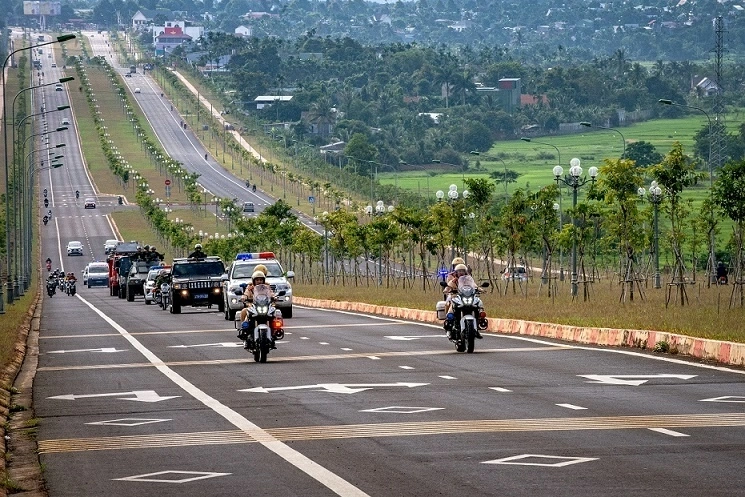 |
| The merger of Dak Lak and Phu Yen has opened up a vast new development space, connecting the highlands with the coast. (Photo: Xuan Anh) |
The potentials of an expanded development space
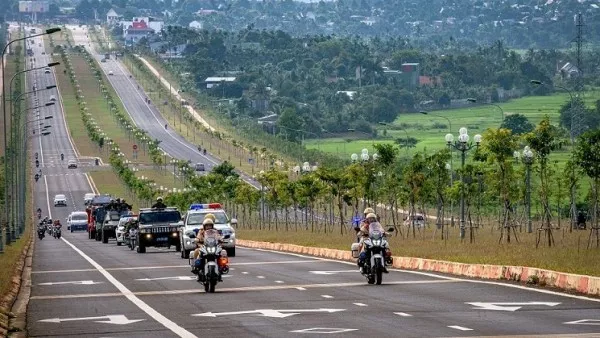
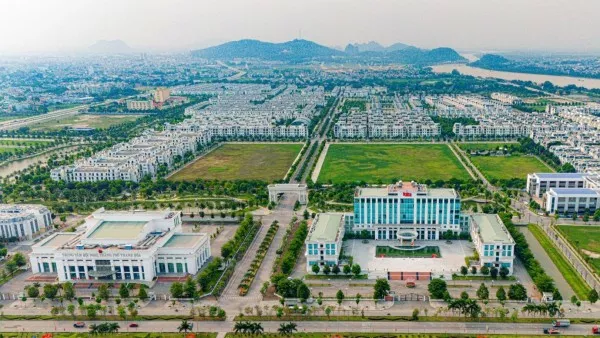
The merger of Dak Lak and Phu Yen has opened up a vast new development space, connecting the highlands with the coast, agriculture with the marine economy, and raw material production areas with transport networks and trade gateways. With an area of more than 18,096 km², a population of over 3.3 million, 102 communes and wards, and 45 ethnic groups living together, the province is now better positioned to reorganise its resources, leverage the complementary strengths of different areas and generate new growth drivers.
Dak Lak boasts diverse geographical features, with more than 71 kilometres of border with Cambodia and 189 km of coastline. Together with Buon Ma Thuot and Tuy Hoa airports, the North–South railway and Vung Ro Port, which has a natural water depth of 12–19 m, the province is well placed to connect production centres, raw material areas, domestic markets and international trade routes. The new development space therefore lies not merely in an expanded geographical area, but also in the potential to link complementary advantages that were previously spread across different localities.
In recent years, the provincial economy has maintained its growth momentum, laying the groundwork for the next phase of development. During the 2021–2025 period, GRDP grew by an average of 5.81% annually, while its value reached VND 226.875 trillion in 2025, up 73% from 2020. GRDP per capita stood at VND 79.6 million. Total social investment over the five-year period amounted to VND 284.638 trillion, while total state budget revenue reached VND 74.422 trillion. These figures reflect the resources accumulated over time, while underscoring the need to improve growth quality and capital utilisation efficiency in the next stage.
Agriculture remains one of the province's outstanding advantages. With more than one million hectares of agricultural land, over 40% of which is red basalt soil, Dak Lak is well positioned to develop key crops linked to processing and exports.
Alongside coffee, durian and black pepper are also strengthening the competitiveness of local agricultural products. Durian cultivation covers 41,821 hectares, with an output of 446,214 tonnes, while black pepper accounts for 28,804 hectares, producing 78,745 tonnes. These resources provide a foundation for the province to further develop raw material areas, improve product quality, expand processing and build agricultural brands.
Alongside agriculture, industry and energy are emerging as additional drivers of the economic structure. During 2021-2025, the industry and construction sector grew by an average of 7.14% annually, with industry alone recording growth of 9.49%. The province has 25 hydropower plants with a combined capacity of 1,223.67 MW; 16 grid-connected solar power projects; 6,515 rooftop solar power systems with a total capacity of 758.634 MWp; and operational wind power projects with a combined capacity of 428.8 MW. Its renewable energy potential could become an important competitive advantage.
Positive momentum continued in the first nine months of 2026. GRDP grew by 8.22% year-on-year; the Industrial Production Index (IIP) rose by 14.07%; and total retail sales of goods and consumer service revenue reached approximately VND 163.2 trillion, up 17.55%. Export turnover stood at USD 2.312 billion, an increase of 6.25%. Tourism welcomed more than 8.34 million visitors, up 35.94% and exceeding the full-year target. International arrivals increased by 54.92%, while tourism revenue reached VND 15.837 trillion, up 38.13%.
These results demonstrate the growing momentum across multiple sectors while pointing to opportunities to connect highland tourism products with coastal destinations, develop services and expand markets. Dak Lak is also home to distinctive cultural assets, including the UNESCO-recognised Space of Gong Culture in the Central Highlands and the Art of Bai Choi in Central Vietnam, as well as 176 officially recognised historical and cultural relics. These assets provide valuable resources for developing tourism in tandem with heritage preservation, creating livelihoods and promoting the cultural values of the province's ethnic communities.
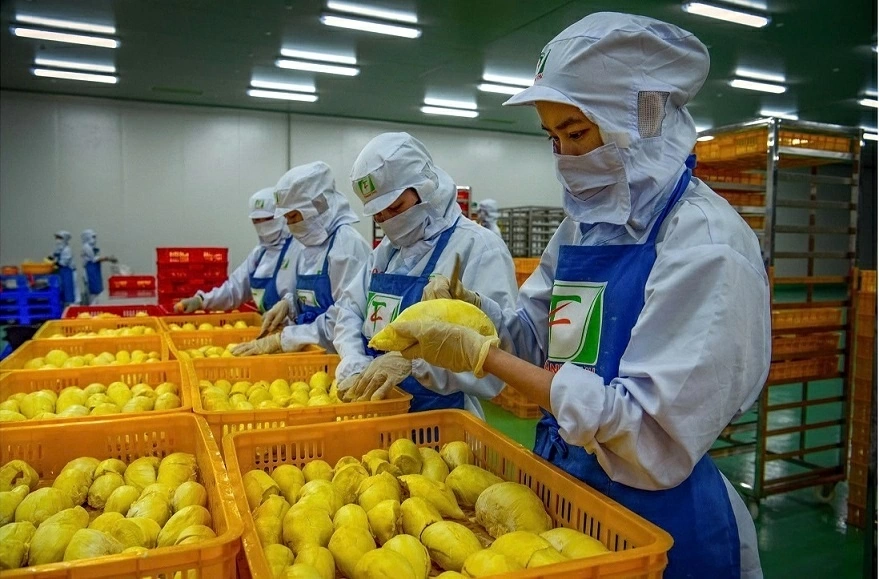 |
| Durian processing for export by an enterprise in Dak Lak Province. (Photo: Xuan Anh) |
Unlocking resources and building a growth pole
Natural advantages and growth achievements will only translate into real strength when they are channelled into projects, value chains and new production capacities. Under the provincial master plan for the 2021–2030 period, with a vision to 2050, Dak Lak aims to organise its development space around three economic zones, three corridors, two growth centres and three growth poles. This orientation is designed to strengthen connectivity within the province, link the highlands with the coastal areas, and promote the role of urban, production and service centres.
By 2030, the province aims to become a dynamic locality and a centre for the green economy, logistics services, healthcare, education, tourism, culture and sports, and science and technology in the South Central Coast and Central Highlands. To achieve this goal, the province has identified a shift towards a growth model that relies more heavily on science and technology, innovation, digital transformation, the green economy, the circular economy and the marine economy.
Attracting investment is one of the province’s key priorities. The initial list of projects calling for investment during the 2026–2030 period comprises 257 projects, with an estimated total investment of VND 1,031.766 trillion across six sectors. This is an indicative list intended to guide investment promotion; it does not mean that all the proposed investment capital has been approved or that the projects are already being implemented.
At the investment promotion conference held on 27 June, the province presented investment policy approval decisions and investment registration certificates for 25 projects, with total registered capital of VND 40.294 trillion. In addition, 78 projects received memoranda of understanding, cooperation agreements or approval to conduct investment surveys and feasibility studies, with initial proposed investment capital totalling approximately VND 1,020.864 trillion.
In the first nine months of 2026, the province approved the investment policies for 43 projects, with total capital exceeding VND 33.3 trillion. Several industrial parks received investment policy approval or were officially launched, including Hoa Tam Phase 1, Phu Yen High-Tech Industrial Park, Hoa Xuan Dong, Hoa Xuan Tay and Phu Xuan. Of the 27 key projects in the industrial sector, 18 have become operational. These developments provide a further basis for establishing production clusters, promoting agricultural processing, developing industry and strengthening connectivity with logistics networks.
To enhance its investment appeal, the province aims to cut administrative processing times in the areas of land, investment and construction by at least 50%. Alongside administrative reforms, the public disclosure of planning information, efforts to resolve obstacles facing businesses and improvements in workforce quality will help create a transparent and stable investment environment. The key is not simply to attract more projects, but also to ensure that they are aligned with the province’s development orientation.
Science and technology, innovation and digital transformation have been identified as new drivers of growth. Dak Lak has issued plans to implement 131 tasks under the implementation of Resolution No. 57-NQ/TW, announced eight major challenges to be addressed during the 2026–2030 period, and established an Innovation Centre and a Science and Technology Exchange. Digital infrastructure continues to expand: all villages and hamlets have access to fibre-optic networks, all residential areas are covered by 4G, and 5G coverage has reached 96.5%. This provides a foundation for applying technology in governance, production, trade and services, particularly in smart agriculture, product traceability and tourism promotion.
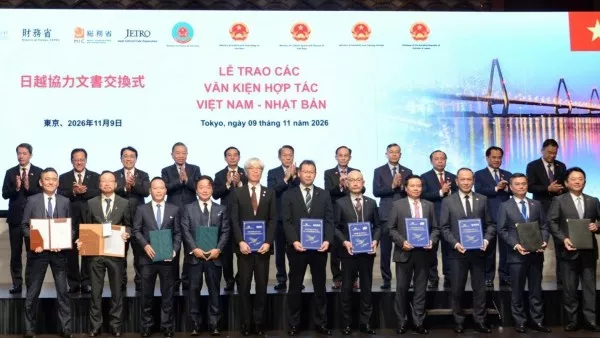
The expanded development space also requires Dak Lak to broaden its international connectivity, mobilise resources and strengthen substantive cooperation. During the 2021–2025 period, the province approved 153 aid grants with a total committed value of USD 13.71 million, and signed five agreements with foreign agencies and organisations, as well as 27 international agreements.
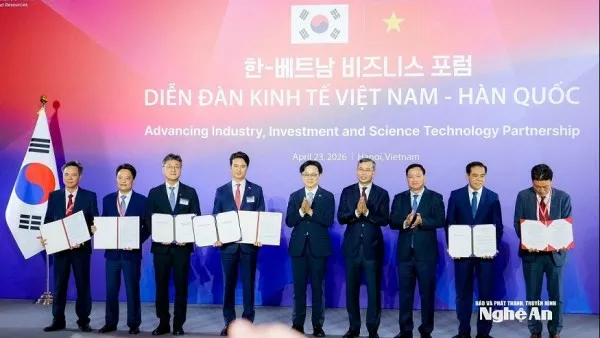
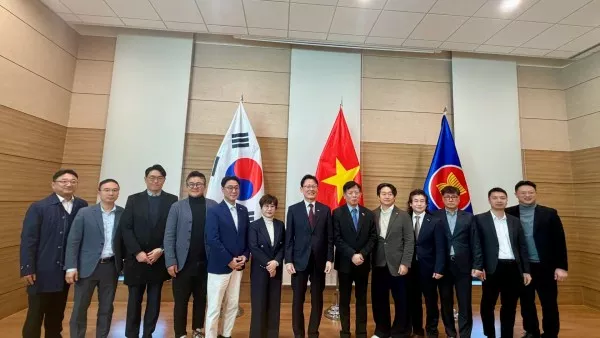
In external economic cooperation, APEC member economies are potential partners, particularly in renewable energy, processing industries, high-tech agriculture, logistics, information technology and tourism. Investment promotion activities in the Republic of Korea and China, together with efforts to promote the province’s image, can help expand its network of partners, markets and development resources.
From the vast highlands to the blue sea, Dak Lak has an opportunity to bring its distinctive advantages together into an integrated development model. Seizing this opportunity requires a long-term planning vision, synchronised connectivity infrastructure, a favourable investment environment and an approach that makes the quality of growth the ultimate measure of success. By unlocking resources, preserving its cultural identity and harnessing the strengths of both the highlands and the coastal areas, the province can build a stronger foundation for turning its aspiration to become a dynamic growth pole in the region into concrete and sustainable results.