





20 years of Viettel Global's journey to the world
In 2006, Viettel began investing overseas with a team of just six people, choosing Cambodia as its first market. Twenty years later, Viettel has developed a business network spanning 11 countries across three continents, holding leading market shares in seven markets. The foundation of these achievements was a choice made from the very beginning: Go where the challenges are greatest first.
Latest
Leaders of APEC economies will gather in Shenzhen, China, on November 18-19 for the 2026 APEC Economic Leaders' Week, under the theme “Building an Asia-Pacific Community, Promoting Shared Prosperity”. Viettel Global's story offers a concrete example of how a company from a developing economy can invest overseas in ways that bring mutual benefits.
Going where the challenges are greatest first
In its early years of overseas expansion, Viettel faced a wide range of challenges, including inadequate infrastructure, unfamiliar business environments, and language and cultural differences. In many target markets, telecommunications networks had yet to cover large parts of the territory, while telecommunications projects required substantial capital investment and many years to recoup their costs.
Viettel chose a path that went against the conventional, safer approach. Rather than focusing on urban areas offering quicker returns, the company built infrastructure from the ground up, extending its networks to rural areas, remote regions and disadvantaged communities. Each market had its own economic conditions, geographical characteristics, and competitive landscape, requiring a tailored approach.
Metfone entered Cambodia after several other telecom operators, but quickly established an advantage through its extensive network coverage. Unitel partnered with a local Lao partner and rose to become the market leader. After 17 years, Unitel's network covered 100% of the population and 95% of the country's territory, accounting for approximately 57% of the telecommunications market share in Laos. Lumitel entered Burundi when the market was still facing considerable challenges. In Peru, Bitel focused on bringing high-speed connectivity to rural areas, where such services were not yet widely available. Together with Movitel in Mozambique, Telemor in Timor-Leste and Halotel in Tanzania, each brand adopted a local name, recruited local personnel and developed distribution channels closely aligned with the host market.
The approach has remained consistent across markets: identifying unmet needs, leveraging infrastructure as a competitive advantage, and developing services tailored to each country's circumstances.
Host countries have recognized this approach through positive assessments from their leaders. “Today, when people talk about telecommunications in Burundi, they talk about Lumitel,” remarked Burundi's President Évariste Ndayishimiye. In Cambodia, Deputy Prime Minister Tea Seiha noted that Metfone had brought telecommunications and information technology services to communities across the country, thereby improving people's lives. In Laos, General Secretary, President Thongloun Sisoulith commended Unitel's role in developing new technologies and expanding access to digital services for the public.
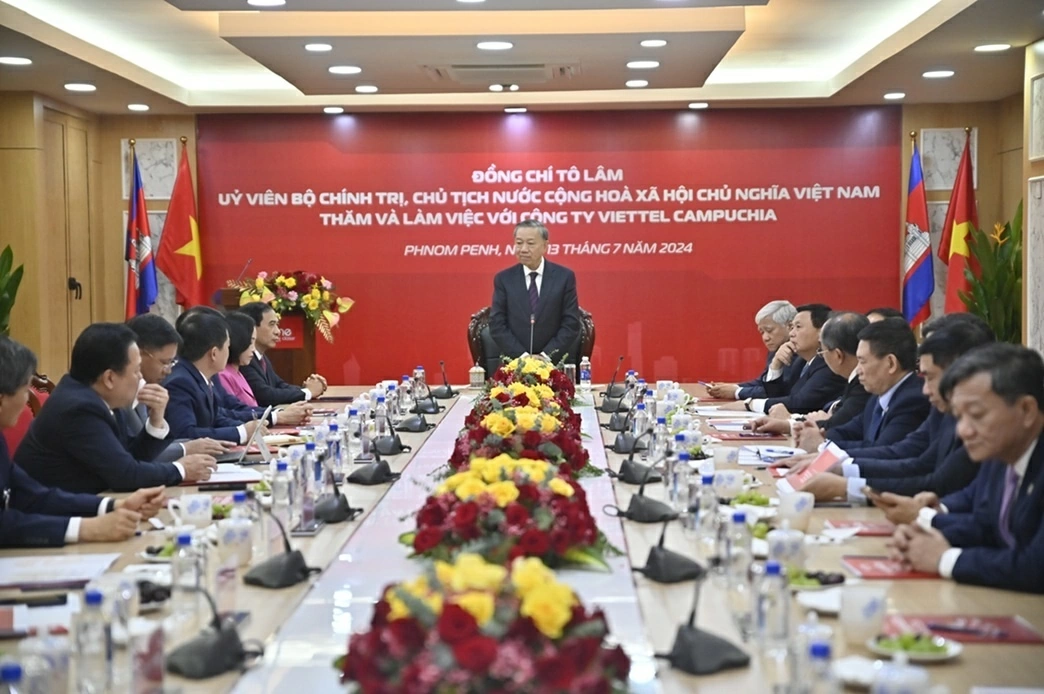 |
| President To Lam visits Viettel Cambodia on July 13, 2024. (Photo: Viettel Global) |
Measuring performance through cash flows and recognition
As network coverage expanded, the rules of the game began to change. In the early stages, competitive advantage lay in the speed of network deployment. In the new phase, technological capabilities, service ecosystems and the ability to address the needs of customers, businesses and host-country governments will determine future growth potential.
Viettel Global is transitioning from a telecommunications operator (Telco) to a technology company (Techco), expanding into areas such as digital finance, e-wallets, digital television, super apps and information technology solutions. Across its markets, the company now has 25 million e-wallet subscribers, enabling it to become more deeply integrated into people's daily lives, from payments and entertainment to access to online services. 5G services are now available in six markets, including Peru, Laos, Timor-Leste, Burundi and Tanzania. In Peru, Bitel is involved in developing smart city solutions in Pucallpa, applying technology to urban management. In other markets, the company continues to expand its digital finance services and platforms built on the existing telecommunications infrastructure.
This transition is clearly reflected in business performance. Viettel Global's revenue increased from approximately VND 28 trillion in 2023 to VND 44.271 trillion in 2025, while its after-tax profit reached VND 11.25 trillion in 2025. This growth momentum has continued: in the first nine months of 2026, net revenue exceeded VND 38.073 trillion, up nearly 20% year-on-year, while after-tax profit reached nearly VND 9.802 trillion, up approximately 32%. The company's total assets are approaching the VND 100 trillion mark.
The clearest measure lies in cash flows. During 2024-2025, overseas markets transferred USD 854 million back to Vietnam, with six markets having recouped their investments. Many projects have moved beyond the capital-intensive infrastructure development phase and entered a period of stable operations, generating their own resources for reinvestment.
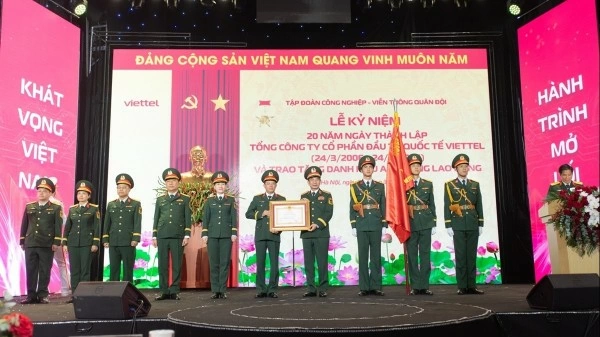
Business performance has been accompanied by formal recognition. To date, Viettel Global and its market-based subsidiaries have received more than 70 honors conferred by governments in the countries where they operate, along with 220 international awards. At the 2026 International Business Awards (IBA), Viettel's overseas investment operations won 22 of the group's 31 awards. Viettel Global itself secured a Gold Stevie Award in the Growth Achievement category. In Vietnam, in 2026, both Viettel Global and Viettel Cambodia were awarded the title of Hero of Labor.
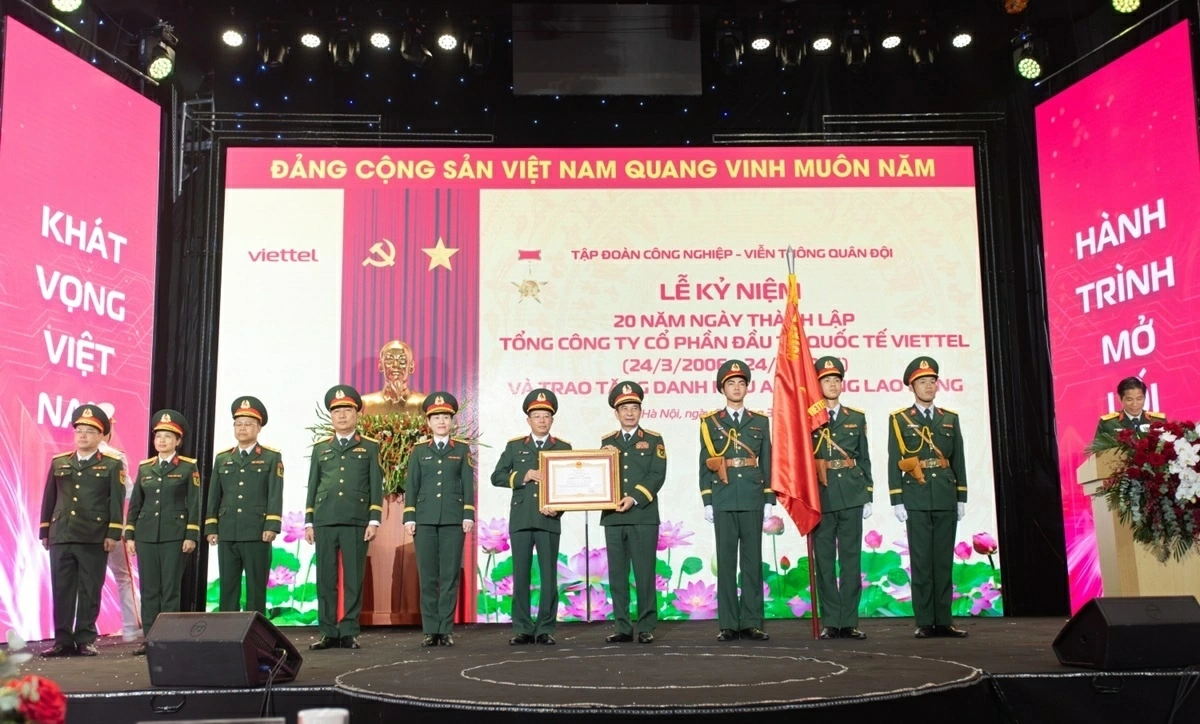 |
| Viettel Global receives the Hero of Labor title at the ceremony marking 20 years of global business operations, March 28, 2026. (Photo: Viettel Global) |
“Ambassadors” and a new chapter in the Caribbean
In November 2024, during his official visit to Peru and attendance at the APEC Economic Leaders' Meeting, State President Luong Cuong visited Bitel. He noted that Bitel had gone beyond its business mandate to become a “bridge” between Vietnam and Peru. He also emphasized that every Vietnamese staff member working there should see themselves as an “ambassador”, helping to reinforce Vietnam's image as a friendly, resilient, creative, and reliable country. Also in 2024, Bitel officially launched 5G services in Peru, bringing new technology and Vietnamese deployment expertise to the country.
The model of businesses taking the lead, with diplomacy providing support, has been replicated in various countries. In Burundi, Vu Thanh Huyen, Vietnam's Ambassador to Tanzania concurrently accredited to Burundi, has helped connect Lumitel with government ministries, agencies and local authorities, promoting delegation exchanges and supporting the company in implementing telecommunications and digital transformation projects. After more than a decade, Lumitel has become a major telecommunications operator in Burundi, extending network coverage to rural areas, remote regions and underserved communities. In 2025, it became the first operator in the country to launch 5G services.
Building on this foundation, Viettel Global is entering a new chapter. Over the years, the company has focused on deepening its presence in existing markets by optimizing investment efficiency, upgrading infrastructure, developing 5G, and expanding digital finance and technology solutions. The Go Global 2.0 strategy therefore carries two parallel tasks: upgrading its business model in markets where it has already established a foothold and expanding into new markets.
The Dominican Republic is a new market and also Viettel's third market in the Americas. Viettel Global has established a legal entity, Viettel Dominicana, and is preparing to deploy 4G/5G networks using the 700 MHz, 2.3 GHz, and 3.6 GHz frequency bands under a 20-year license. During the first two years, the project will focus on building infrastructure and providing core services, including mobile telecommunications, fixed broadband Internet, and e-wallets, before expanding into technology solutions and digital services in subsequent phases. Once officially operational, the Dominican Republic will become Viettel's 11th international telecommunications market.
In 2006, Viettel ventured overseas with limited resources and international experience. In 2026, Viettel Global is entering the Dominican Republic with operational infrastructure across multiple countries, market-leading brands, investment management capabilities, and a considerably stronger financial foundation.
The direction for the next phase is clear. On October 9, during his visit to Unitel in Laos, Prime Minister Le Minh Hung noted that the company had become a vivid symbol of Vietnam-Laos cooperation. He also called on the company to work with the Lao Government to address major economic challenges, take the lead in artificial intelligence, digital finance, cloud computing and digital logistics, and invest in human resource development so that local people can gradually master technology and management.
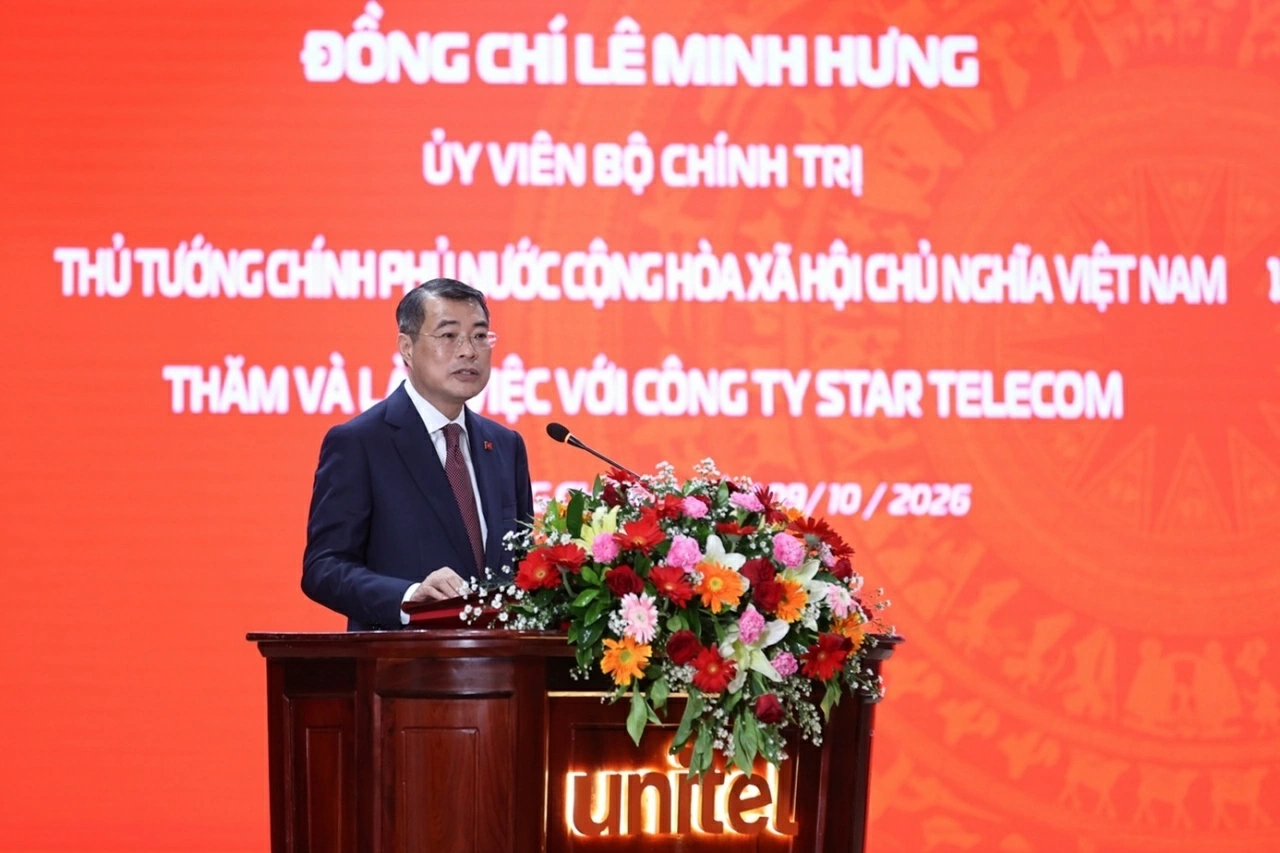 |
| Prime Minister Le Minh Hung visits and works with Viettel Laos - Unitel in October 2026. (Photo: Viettel Global) |
These expectations also reflect Viettel Global's strategic direction: consolidating its presence in existing markets, expanding into new technology sectors, and selecting investment opportunities based on long-term efficiency. Telecommunications will remain the foundation, but it is no longer the limit of the company's business activities.
From a team of six people and a single market in 2006, Viettel Global has come a long way. The challenge ahead lies in continuing to build its position through technological capabilities, business performance, and tangible contributions to the development of the countries in which it operates.
Tags: